As the highly anticipated 2022 Formula 1 season prepared to launch under a revolutionary new set of technical regulations, pre-season testing sessions offered the first tantalizing glimpses into the pecking order. Amidst the intense scrutiny and speculation, Red Bull team principal Christian Horner provided his candid assessment of the early front-runners and the most intriguing technical innovations. His observations, particularly regarding the formidable pace of Ferrari and the radical design choices made by Mercedes, set the stage for what promised to be an exhilarating championship battle.
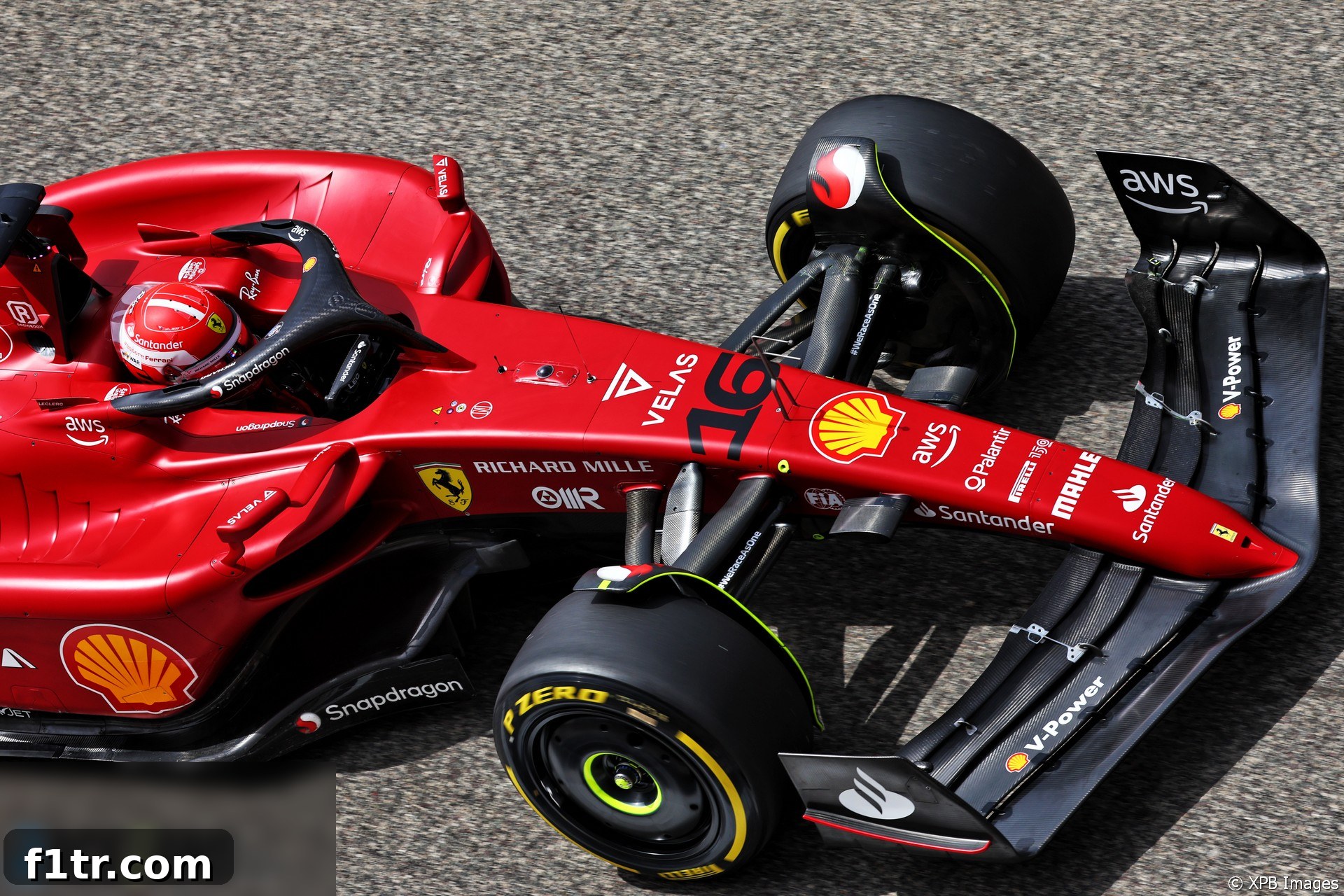
Horner’s sharp eye, honed by years at the pinnacle of motorsport, quickly identified Ferrari as a standout performer during the crucial pre-season tests. The Scuderia’s new challenger, the F1-75, consistently demonstrated impressive speed and stability on track, turning heads across the paddock. From the initial shakedown at the Circuit de Catalunya to the more representative conditions of the Bahrain International Circuit, the Italian team’s machinery appeared remarkably composed and competitive. This strong showing suggested a significant leap forward for Ferrari, signaling their intent to reclaim a dominant position in Formula 1 after several challenging seasons. Horner openly acknowledged their progress, stating, “For me, the car that looks the most settled on circuit is the Ferrari at the moment. They’ve had a very strong testing period so far, both in Barcelona and in Bahrain. I would say they’ve looked extremely competitive on track, demonstrating excellent reliability and consistent lap times, which are crucial indicators of genuine performance.”
While Ferrari’s form was undeniable, the biggest talking point of the testing period revolved around Mercedes and their revolutionary W13 design. The reigning constructors’ champions unveiled a dramatically updated package in Bahrain, featuring significantly slimmer sidepods that immediately sparked widespread discussion and debate. This bold engineering approach, a clear departure from the concepts adopted by most other teams, including Red Bull, sent ripples through the pit lane. Horner, always attuned to the competitive landscape, commented on the immediate impact of this reveal. “The jungle drums speak fairly loud on these kind of things in Formula 1, and there’ve been rumors of fairly radical interpretations,” he noted, acknowledging the intense buzz surrounding Mercedes’ innovative solution. Visually, the W13’s slender profile was a striking contrast to the more conventional designs seen elsewhere, prompting questions about its potential aerodynamic advantages and the inevitable compromises made in its layout. However, Horner maintained a cautious stance on its immediate performance implications, adding, “Even so, it obviously visually is quite a departure from the concepts we and other teams have taken. That doesn’t mean to say it’s naturally better or worse – it’s just a different interpretation. Of course, there are compromises that have been made with their layout to accommodate that. So, it’s impossible to draw any conclusions other than it looks very different.”
Crucially, Horner also took the opportunity to clarify widespread media reports that had incorrectly attributed comments to him suggesting Mercedes’ new sidepod design contravened the sport’s regulations. Dispelling these claims, he affirmed that, from Red Bull’s perspective, the innovative Mercedes W13 appeared to be fully compliant with the stringent technical rules. “Comments have been quoted that certainly weren’t made,” Horner asserted, emphasizing the importance of accuracy in reporting. “I think that the car is obviously innovative; it’s an interesting solution. As far as we’re concerned, the Mercedes car looks like it complies with the regulations. It’s just a different interpretation, a different solution to achieving the desired aerodynamic efficiency within the new rules framework. This level of innovation is precisely what the new regulations were designed to encourage, pushing teams to explore novel engineering pathways.” This clarification underscored the respect for engineering ingenuity, even from a direct competitor, while also reining in premature judgments about legality.
Despite Ferrari’s impressive run and the visual audacity of Mercedes’ design, Horner stressed the inherent unpredictability of pre-season testing. He highlighted that the cars were still in their nascent stages of development, and the true performance potential of each contender remained largely unrevealed. The rate of development throughout the 2022 season was predicted to be exceptionally rapid and intense, a characteristic often associated with significant regulatory changes. This meant that any early advantage could quickly dissipate or be overturned as teams refined their packages. “You have to remember these cars are still very immature,” Horner cautioned. “The rate of development will be fast and intense, and I expect that to change significantly as the season progresses. Mercedes, with their formidable resources and track record, are going to be a huge factor in this championship, I have no doubt, regardless of their current visible performance. It would be foolish to underestimate their capability to extract pace when it truly matters.”
The Red Bull principal’s assessment extended beyond the immediate rivalry at the top, touching upon the broader competitive landscape. While the spotlight often shines brightest on the perennial front-runners, Horner acknowledged that other teams were also demonstrating promising signs. He pointed out that McLaren appeared to have a strong package, and Alpine had also shown impressive pace during testing sessions. This suggested a potentially tighter midfield battle, with multiple teams capable of challenging for points and even podiums. The new regulations, designed to promote closer racing and greater parity, seemed to be achieving their objective, fostering an environment where a wider array of teams could shine. The element of surprise and the unknown were palpable, creating an atmosphere of heightened anticipation for the first race of the season.
Ultimately, Horner reiterated the prevailing sentiment across the paddock: definitive conclusions could only be drawn when the cars hit the track for competitive qualifying sessions. Testing, by its very nature, involves varying fuel loads, engine modes, and strategic programs, making direct comparisons difficult and often misleading. “It’s just impossible to tell for sure,” Horner concluded. “I think what you can say is that it’s only going to be next Saturday [in qualifying] that you’ll get the first true snapshot when the fuel comes out, people run as close to the weight limit as they can, and we’ll see how competitive they are. We’ve all got a complete clean sheet of paper with these new cars. I don’t think Mercedes have fully shown their hand here, and it would be naive to think otherwise. I think Ferrari are the form team you’d have to say at the moment, looking incredibly strong. Hopefully, we can be in there as well. It looks like McLaren have a strong car, Alpine have been quick, so it’s genuinely impossible to predict the full pecking order right now. This uncertainty, however, is precisely what makes the upcoming 2022 Formula 1 season so incredibly exciting and full of potential for captivating racing from the very first Grand Prix.”
2022 F1 season
- Mercedes told me “you’re wrong” about 2022 car’s problems – Hamilton
- FIA confirms all 10 F1 teams complied with 2022 cost cap
- Steiner “not ashamed” of panning “slow” Schumacher in Drive to Survive
- Albon believes year out of F1 improved him as a driver
- Hamilton sees diversity gains in F1 years on from his ‘traumatising’ experience of racism
Browse all 2022 F1 season articles