Formula 1 is a sport defined by relentless innovation and the constant pursuit of performance. As the 2022 season progressed, the Austrian Grand Prix at the iconic Red Bull Ring presented another crucial battleground for teams looking to gain an edge. This weekend saw several key contenders arriving with significant upgrades to their cars, aiming to boost reliability, enhance aerodynamic efficiency, or unlock new levels of speed. While some teams like Ferrari and Mercedes opted to stick with their current specifications, championship leaders Red Bull, alongside McLaren, Alpine, and Williams, unveiled a suite of revisions designed to fine-tune their machines for the unique challenges of the Spielberg circuit and the remainder of the demanding season.
The FIA confirmed that only four out of the ten teams introduced tangible revisions to their cars for this pivotal race. Mercedes, Ferrari, Aston Martin, Alfa Romeo, and Haas all ran unchanged cars, suggesting either confidence in their existing packages, different development timelines, or strategic decisions related to the cost cap. However, for those who brought updates, the stakes were high, with every tenth of a second potentially impacting championship standings and team morale.
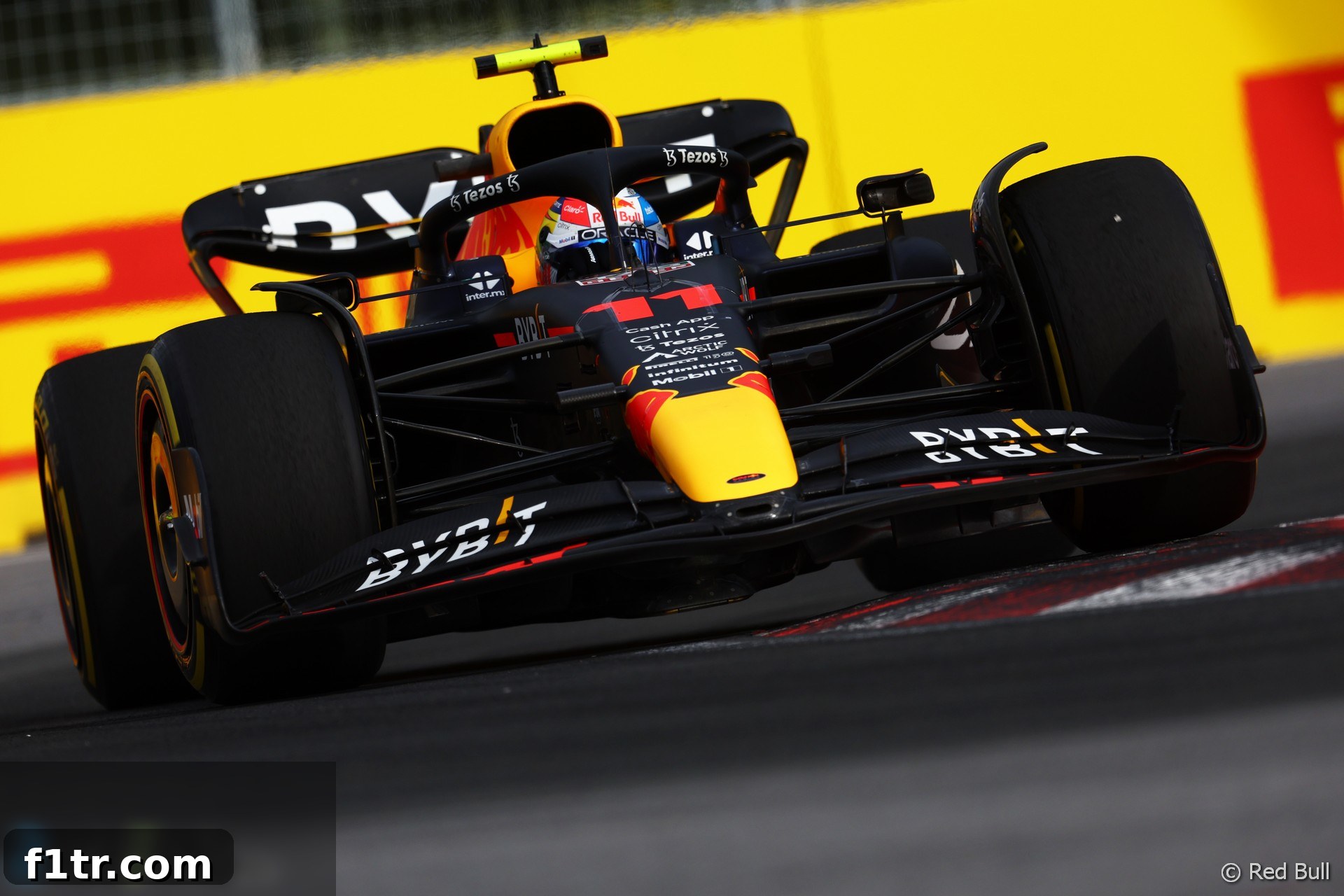
Red Bull Racing, in particular, arrived at their home circuit with a keen focus on addressing critical reliability issues that had plagued their RB18 earlier in the season. Despite their dominant performance in many races, technical failures had already cost them valuable points. Sergio Perez, for instance, experienced a race-ending technical failure at the Canadian Grand Prix, marking the team’s fourth such incident. Furthermore, Perez’s car was compromised by reliability problems during the Miami Grand Prix, highlighting a recurring concern that the team was determined to stamp out. These setbacks underscored the fact that raw pace alone isn’t enough in Formula 1; consistent reliability is paramount for a championship bid. Consequently, two of Red Bull’s three significant updates for Austria were explicitly aimed at bolstering the RB18’s robustness and ensuring their drivers could push the car to its absolute limits without fear of mechanical failure.
Williams, meanwhile, continued their aggressive development push. Having introduced a massive upgrade package on Alexander Albon’s FW44 at the preceding British Grand Prix, which unfortunately suffered extensive damage in an early race crash, the team worked diligently to repair his chassis. For Austria, Williams brought a further, albeit minor, change to their car. The unfortunate incident at Silverstone meant that teammate Nicholas Latifi, who was originally slated to receive the comprehensive upgrade package at the subsequent French Grand Prix, might now face a longer wait to get his hands on the updated specification as the team prioritizes repairs and data collection from Albon’s car.
F1 Teams’ Austrian Grand Prix Updates: A Detailed Look
The quest for performance in Formula 1 is a continuous engineering arms race, and each upgrade package represents countless hours of simulation, design, and manufacturing. Here’s an in-depth breakdown of the specific changes introduced by the teams at the Red Bull Ring, alongside their stated reasons and intended effects:
Red Bull Racing
Red Bull’s updates for their home race were strategically vital, focusing on both performance and, crucially, reliability. The high-altitude, high-speed nature of the Red Bull Ring, combined with its heavy braking zones, demands a robust and well-cooled package.
Coke/Engine Cover
Reason for change: Reliability
Difference: “Central cooling exit option added”
Description: The RB18 received a crucial modification in its engine cover design. An option for a central cooling exit in the top body was made available specifically for the Austrian Grand Prix. This change directly addresses the reliability concerns previously encountered, particularly in hot conditions or high-demand circuits. By adding a central cooling exit, the team has introduced greater flexibility in managing the car’s thermal performance. This modification involves a strategic trade-off: it enhances cooling capabilities, which is vital for component longevity and engine stability, but it also impacts overall aerodynamic efficiency compared to relying solely on the louvres in the sidepods. The Red Bull Ring, with its intense braking and acceleration zones, places significant thermal load on the power unit and associated components, making this reliability-focused cooling upgrade a sensible and necessary step for the team to ensure maximum performance throughout the race distance without risk of overheating.
Floor Fences
Reason for change: Performance – local load
Difference: “Minor revision to the floor fence leading edge geometries.”
Description: Aerodynamics underneath the car are paramount in modern Formula 1, contributing a vast proportion of a car’s overall downforce. The floor fences play a critical role in controlling airflow, directing it optimally into the diffuser and managing the intricate vortex structures that generate ground effect. For Austria, Red Bull introduced a minor revision to the leading edge geometries of their floor fences. The primary objective of this subtle but impactful change is to improve flow stability across all ride heights. In essence, by refining these geometries, the team aims to reduce turbulent flow and ensure a more consistent aerodynamic performance, irrespective of how the car’s attitude changes under braking, acceleration, or cornering. This increased flow stability, coupled with a reduced loading near the leading edges of the fences, translates directly into improved local downforce generation and overall aerodynamic efficiency, offering a performance advantage that is crucial for lap time gains.
Front Corner
Reason for change: Reliability
Difference: “Brake disc heatshield revision”
Description: Braking performance is a critical factor at the Red Bull Ring, which features several heavy braking zones. Given the unique demands of the circuit, including its elevation changes and short lap, managing brake temperatures is essential for both performance and reliability. Red Bull’s front corner update focused on a revised brake disc heatshield. This modification involves enlarged disc clearance and improved cooling mass flow to the brake assembly. The purpose is twofold: enlarged clearance helps to prevent potential rubbing or contact issues that could lead to wear or damage, while improved cooling ensures that the brake discs and calipers operate within optimal temperature ranges. This not only enhances braking consistency and effectiveness throughout a race stint but also safeguards against overheating failures, further addressing the team’s overarching reliability goals and allowing drivers to attack corners with greater confidence.
McLaren
McLaren continued their relentless development push to climb the constructors’ championship standings, bringing targeted updates to enhance specific aspects of their MCL36’s performance.
Rear Corner
Reason for change: Performance – flow conditioning
Difference: “Modification to rear brake duct scoop surface.”
Description: The rear corner of an F1 car is an aerodynamically complex area, influencing airflow over the rear wing and into the diffuser, as well as managing brake temperatures. McLaren’s modification involved a specific adjustment to the surface of the rear brake duct scoop. This change aims to improve local flow conditioning in that critical area. By optimizing how air interacts with the scoop, the team seeks to achieve a dual benefit: enhanced aerodynamic performance due to cleaner airflow around the rear of the car, and improved brake cooling performance. Better brake cooling is essential for maintaining consistent brake feel and avoiding temperature-induced wear over a race distance, while refined local airflow contributes to overall downforce and reduced drag, offering a tangible performance boost.
Rear Wing
Reason for change: Reliability
Difference: “Trim to the rear wing endplate.”
Description: Even seemingly minor adjustments can have significant effects in Formula 1 aerodynamics. McLaren implemented a small trim to the lower edge of their rear wing endplate. While classified under “reliability,” this change is intrinsically linked to ensuring optimal aerodynamic performance and component integrity. The primary objective is to increase clearance to components in close proximity to the endplate. In the high-speed, high-downforce environment of F1, subtle flex or vibrations can cause components to interfere, leading to wear, damage, or unwanted aerodynamic disruptions. By trimming the endplate, McLaren aims to prevent such issues, thus ensuring the rear wing operates as intended throughout the race and preventing any potential aero efficiency losses or component failures due to insufficient clearance. This small change helps to guarantee the long-term reliability and consistent performance of the rear aerodynamic package.
Alpine
Alpine arrived in Austria looking to cement their position as a leading midfield contender and continue their strong development trajectory with a key aerodynamic update.
Rear Wing
Reason for change: Performance – local load
Difference: “A revised outboard top rear wing with a bigger end plate notch compared to the previous version of this downforce level.”
Description: Alpine’s update focused on a revised rear wing configuration. Specifically, they introduced an outboard top rear wing featuring a bigger end plate notch compared to the version previously used at a similar downforce level. This modification is a classic example of sophisticated aerodynamic optimization. By offloading the top rear wing on its outboard ends, the designers are able to achieve a reduction in drag. Simultaneously, the bigger end plate notch works to generate more downforce. This seemingly contradictory outcome is highly desirable in Formula 1: gaining downforce without a proportional increase in drag (or even reducing drag) is the holy grail for aerodynamicists. This updated rear wing promises to deliver a more efficient aerodynamic package, providing better cornering grip without sacrificing straight-line speed, which is particularly beneficial on circuits like the Red Bull Ring that combine fast straights with technical corners. This upgrade underscores Alpine’s commitment to extracting maximum performance from their chassis.
Williams
Williams, facing a challenging season, continued to roll out upgrades in their bid to close the gap to the midfield, with an important change targeting overall car balance and airflow management.
Front Suspension
Reason for change: Performance – flow conditioning
Difference: “Compared to the launch assembly, we have updated the majority of the front suspension leg cladding surfaces.”
Description: The front suspension elements, while primarily mechanical, also play a significant aerodynamic role, influencing the airflow that travels over and around the car’s bodywork. Williams introduced updates to the majority of the front suspension leg cladding surfaces, a significant departure from their launch assembly. These changes are intended to directly address and reduce local flow separations around these critical components. Flow separation occurs when airflow detaches from a surface, creating turbulence and reducing aerodynamic efficiency. By refining the cladding surfaces, Williams aims to ensure a smoother, more attached airflow. Crucially, these improvements are also designed to enhance the “onset flow” to the rear of the car. This means creating a cleaner, more consistent airflow that reaches the rear aerodynamic structures (like the floor, diffuser, and rear wing), allowing those components to work more effectively. This holistic approach to aerodynamics, starting from the very front of the car, is vital for improving overall downforce, stability, and balance, which are areas Williams has been keen to address.
The Unchanged and the Championship Picture
While Red Bull, McLaren, Alpine, and Williams diligently worked on their car development, other significant teams like Ferrari, Mercedes, Aston Martin, Alfa Romeo, and Haas opted for stability, running unchanged specifications. For Ferrari and Mercedes, this could indicate a strategy of focusing on extracting maximum performance from their current package through setup optimization and driver feedback, or perhaps that their development cycles were targeted towards different races. Given the stringent cost cap regulations, teams must carefully choose where and when to introduce updates, balancing immediate gains with long-term development plans. Ferrari, in particular, remained confident in the F1-75’s fundamental pace, believing that their performance deficit to Red Bull was now negligible, making incremental setup improvements potentially more valuable than introducing new parts at that specific juncture. Mercedes, after their significant upgrade in Barcelona, might have been focusing on fully understanding and optimizing their W13 before introducing further radical changes.
The constant evolution of Formula 1 cars is a testament to the engineering brilliance and competitive spirit that defines the sport. Each update, whether for reliability or performance, is a strategic move in the complex chess game of the championship. The Austrian Grand Prix served as another thrilling chapter, showcasing how teams are continuously pushing the boundaries of what’s possible, all in pursuit of those crucial fractions of a second that can mean the difference between victory and defeat. The impact of these changes, particularly Red Bull’s focus on reliability, would undoubtedly resonate through the remainder of the season, shaping the fierce battles for both the drivers’ and constructors’ titles.
2022 Austrian Grand Prix Related Articles
- FIA affirms three sprint races on 2023 Formula 1 calendar
- “Oh, so unlucky!” How Alonso’s cursed Austrian Grand Prix unfolded on his radio
- Ferrari believe their performance deficit to Red Bull is now “negligible”
- Another fan’s experience of harassment last weekend – and why F1 must act
- AlphaTauri “desperately” need upgrades after “disaster” weekend, urges Gasly
Browse all 2022 Austrian Grand Prix articles