The F1 Power Play: Unpacking Toto Wolff’s Controversial Stance After the Russell-Bottas Clash
The 2021 Emilia Romagna Grand Prix delivered its share of on-track drama, but it was the aftermath of the collision between George Russell and Valtteri Bottas that truly ignited a firestorm of debate. While the high-speed incident itself was a significant moment, it was Mercedes Team Principal Toto Wolff’s swift and surprisingly critical comments that sent shockwaves through the Formula 1 paddock, exposing intricate layers of influence and raising critical questions about sporting integrity and the ethics of power in modern F1. This analysis delves into Wolff’s controversial remarks, their far-reaching implications, and the complex web of relationships that define his unique position within the sport.
The Imola Incident and Wolff’s Immediate, Unbalanced Reaction
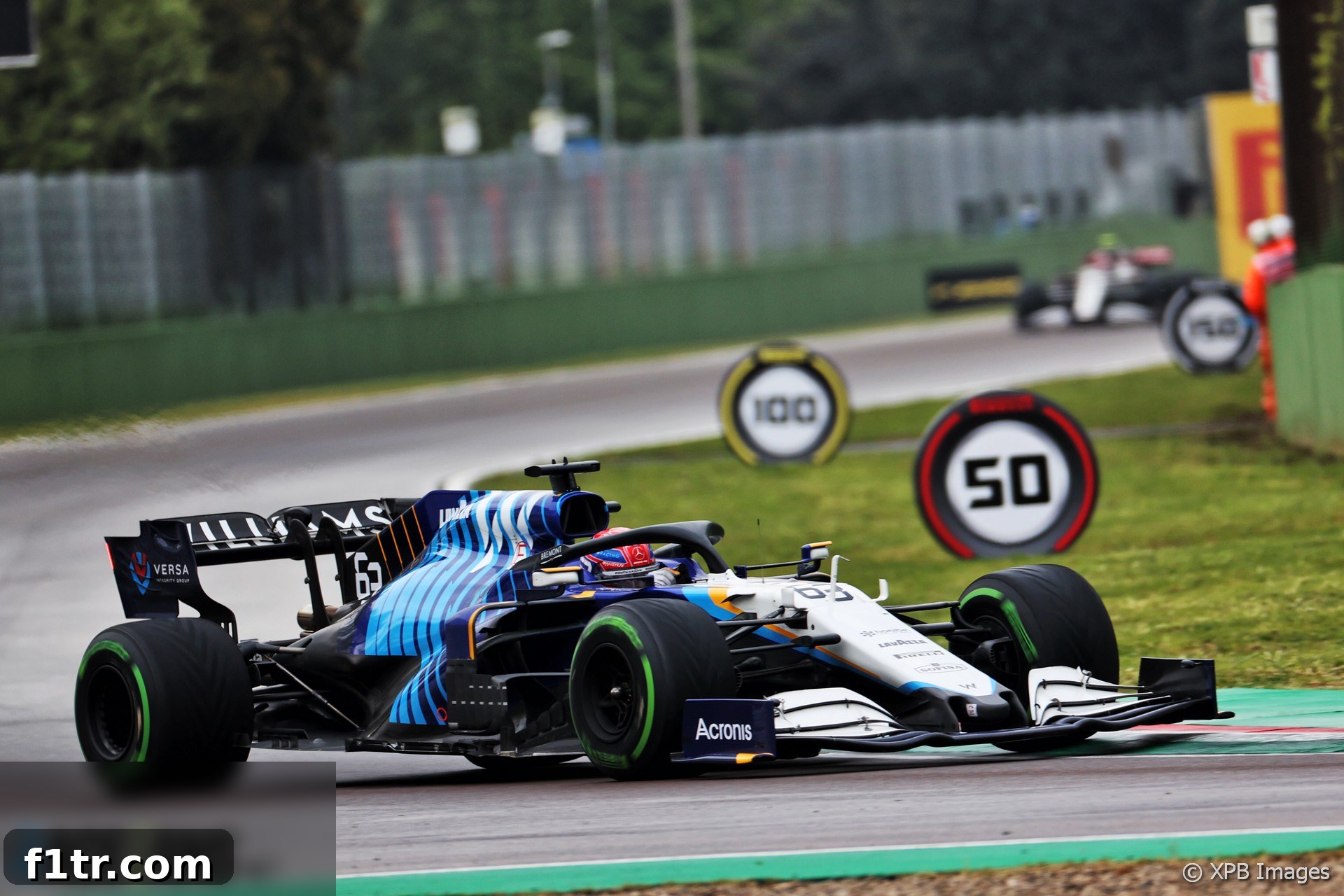
On Lap 33 at Imola, with the track transitioning from wet to dry, conditions were treacherous. Williams driver George Russell, battling intensely for a rare points finish for his team, attempted an ambitious overtake on Mercedes’ Valtteri Bottas. The two cars made contact at high speed, resulting in a dramatic crash that triggered a red flag and briefly halted the race. Crucially, the FIA stewards, after a thorough review of the incident, deemed neither driver predominantly to blame, classifying it as a racing incident. This official stance suggested a mutual misjudgment in challenging circumstances, typical of competitive racing.
However, Toto Wolff’s post-race assessment sharply diverged from the stewards’ neutral verdict, focusing his criticism disproportionately on Russell. “The whole situation should have never happened,” Wolff began, acknowledging Bottas’s “bad first 30 laps” but quickly pivoting to Russell. His primary contention was not just the risk taken, but the identity of the car being challenged: “George should never have launched into this manoeuvre considering that the track was drying up… it meant taking risk and the other car in front of him was a Mercedes.” This direct instruction, implying a driver should show deference based on brand, immediately sparked widespread discussion.
Unpacking the “Global Perspective”: A Threat to Competitive Racing?
Wolff’s admonition to Russell, a Mercedes-backed junior driver, to maintain a “global perspective” and avoid challenging a factory Mercedes car carries profound implications for the competitive spirit of Formula 1. This was more than a team principal expressing frustration; it was a powerful figure suggesting that a driver, even when legitimately battling for position, should back off if the car ahead belongs to the same parent company or is part of the same extended ecosystem. Such a directive fundamentally undermines the very ethos of racing, where every driver is expected to fight for every position, irrespective of the car’s livery, engine supplier, or corporate affiliations.
Is a young driver truly “learning” when taught to yield on track to a car from a more powerful partner team? This sentiment, openly expressed, raises significant questions about the future of racing purity and the unwritten rules that might be imposed by corporate alliances. Russell, driving for Williams – a team that desperately needed every single point – was simply performing his role as a professional racing driver. His ambition, far from being a flaw, is precisely what makes him such a highly-rated prospect for a future top-tier seat. To imply that he should have prioritized Mercedes’ strategic interests or avoided risking damage to their car over his own team’s competitive aspirations sets a dangerous precedent that could stifle genuine racing and erode the perception of fair play on the grid.
The Shadow of the Cost Cap and Car Damage: A Disparity in Perspective
Beyond the immediate racing dynamics, Wolff also highlighted the financial repercussions of the crash, particularly in the new cost-cap environment introduced in Formula 1. “Our car is a write-off in a cost cap environment; that is certainly not what we needed. And probably it’s going to limit upgrades that we are able to do,” he stated, hinting at potential long-term impacts on Mercedes’ development program. While understandable from a team principal’s perspective to manage resources, this strong focus on the financial burden on Mercedes, a team with vastly superior resources and a long history of dominance, felt somewhat tone-deaf when contrasted with Williams’ significantly different situation.
Williams, operating on a far tighter budget, even below the new $145 million cap, also suffered major damage that would undoubtedly strain their resources. Yet, their head of vehicle performance, Dave Robson, exhibited a markedly different public approach. He acknowledged the frustration of finishing with nothing but emphasized the positive: “To finish with nothing is obviously deeply frustrating. But I suppose the only positive is the car was good, the pace was good. At least the accident came as a result of us attacking, and of all the cars to attack it was the Mercedes, which is not something we’ve been able to do for a long time.” This stark contrast underscores the varying priorities and the immense pressure on smaller teams to capitalize on every opportunity to compete, even if it means clashing with a powerhouse like Mercedes. Their struggle for every tenth and every point makes Russell’s aggressive move not just understandable, but commendable from a sporting perspective.
Russell’s Public Statement: Voluntariness Under Scrutiny
George Russell’s post-race statement offered a glimpse into his immediate thoughts: “Today wasn’t my proudest day. I knew it would be one of the best opportunities to score points this season and, when these points matter as much as they do to [Williams] right now, sometimes you take risks. It didn’t pay off and I have to take responsibility for that.” While seemingly contrite, the phrasing “I have to take responsibility” subtly implies a degree of external influence or expectation rather than full, unprompted acceptance. Given Wolff’s immediate and very public criticism, even going so far as (jokingly) suggesting Russell could be demoted to the Renault Clio Cup, it is fair to question the extent of the voluntariness in Russell’s self-reproach.
This incident vividly spotlights the delicate position of young drivers tied to major manufacturers. Their loyalty and actions are constantly scrutinized through multiple lenses: their current team’s needs, their parent team’s strategic interests, and their own career progression. It’s a complex balancing act, and Russell’s statement likely reflects the multifaceted pressures he faced, particularly when Mercedes is the gatekeeper to his future in Formula 1. The inherent conflict between driving for Williams’ desperate need for points and potentially damaging a Mercedes car, which could influence his own promotion prospects, places young talents in an unenviable position.
Toto Wolff’s Unprecedented Web of Influence: A Pervasive Conflict of Interest?
Perhaps the most concerning aspect of the entire saga is the unprecedented web of influence wielded by Toto Wolff, which raises serious questions about potential conflicts of interest within Formula 1. Wolff wears multiple hats, giving him unparalleled reach across the grid. He is not only the Team Principal and CEO of the Mercedes-AMG Petronas F1 Team, but also a 33.3% shareholder in the championship-winning outfit. Beyond his direct involvement with Mercedes, he is also part of a syndicate that actively manages Valtteri Bottas’s career, having financially supported Bottas’s formative years in motorsport. Simultaneously, George Russell is a Mercedes-backed junior driver, highlighting his inherent ties and obligations to the manufacturer.
The influence doesn’t stop there. Mercedes supplies crucial power units to Williams (Russell’s team) and Aston Martin F1 Team (formerly Racing Point), where Wolff also holds a significant shareholding as part of a consortium. This intricate and interlocking network means Wolff potentially holds significant sway over three of the ten teams on the grid. No other individual in Formula 1 possesses such a combination of team ownership, management, and direct driver management across multiple entities. For comparison, Ferrari supplies power units to customer teams, but its F1 managing director, Mattia Binotto, holds no equity in those teams or direct driver contracts. Honda and Alpine operate similarly, focusing primarily on their own, or one partner team.
This unique situation positions Wolff to exert considerable political and strategic pressure, particularly on customer teams reliant on Mercedes for crucial components and the career pathways of their drivers. The potential for such influence to compromise sporting impartiality is immense. When a team principal, shareholder, and driver manager has interests so deeply intertwined across multiple entities, it creates a scenario where decisions, comments, and even implied threats could be seen through the lens of self-interest rather than pure sporting competition.
Sporting Integrity, Team Orders, and the FIA’s Role
While “team orders” within a single team have been permitted in Formula 1 since 2010, any form of race-fixing, external influence on competitive outcomes, or coercion remains strictly prohibited. Wolff’s comments, implying that a driver should yield to a car simply because it bears a Mercedes star, arguably tread a dangerously fine line, if not cross it entirely. Such remarks could be interpreted as an attempt to influence race outcomes outside the legitimate boundaries of sporting competition. The very essence of Formula 1 lies in the gladiatorial contest between drivers and teams, operating under a transparent and fair set of rules.
The FIA, as the sport’s governing body, has a fundamental responsibility to uphold sporting integrity and ensure a level playing field. In light of Wolff’s multifaceted roles and his public statements following the Imola crash, a clarification on the permissible boundaries of influence and potential conflicts of interest seems not just advisable, but necessary. Drivers must be free to race the entire grid without fear of repercussions from powerful figures whose numerous interests might be misaligned with fair and open competition. To leave such pervasive influence unchecked could set a troubling precedent for the future of Formula 1, potentially diminishing the sport’s credibility and the public’s trust in its competitive nature.
“The measure of a man is what he does with power,” as the classical philosopher Plato famously observed. On that Sunday evening in Imola, Wolff’s exercise of power and his subsequent comments left many in the F1 world pondering the true nature of competition in an increasingly commercialized and interconnected sport, where alliances sometimes appear to overshadow pure sporting rivalry.
Conclusion: A Call for Clarity and Fair Play in Formula 1
The Emilia Romagna Grand Prix collision between George Russell and Valtteri Bottas was, on the surface, a racing incident that could have happened to any two drivers. However, Toto Wolff’s subsequent public statements transformed it into a pivotal moment that illuminated the complex, and at times problematic, interplay of power, politics, and competitive ambition in Formula 1. His direct criticism of Russell, particularly the implication that one should defer to a ‘Mercedes’ car, coupled with his vast and unparalleled web of influence across multiple teams, has sparked vital conversations about sporting ethics, potential conflicts of interest, and the fundamental freedom of drivers to race unequivocally.
As Formula 1 continues to evolve, expanding its global reach and commercial appeal, ensuring that the spirit of pure competition remains paramount will be crucial for its long-term credibility and appeal. The FIA must address these complex issues with transparency and clear guidelines to safeguard the sport’s integrity, ensuring that corporate allegiances or personal agendas do not overshadow the thrilling, unadulterated racing that fans expect and deserve. The Russell-Bottas incident, amplified by Wolff’s comments, serves as a stark reminder of the constant vigilance required to uphold the core values of competition at the pinnacle of motorsport.
Related F1 Articles
- Latest F1 Driver Transfers and Rumors
- Understanding F1 Technical Regulations: A Deep Dive
- How the F1 Cost Cap is Reshaping the Grid
- The Future of F1 Power Units: Challenges and Innovations
- Browse all News Focus articles