Mercedes Fined for Tyre Pressure Breach Amidst Dramatic Brazilian Grand Prix Start
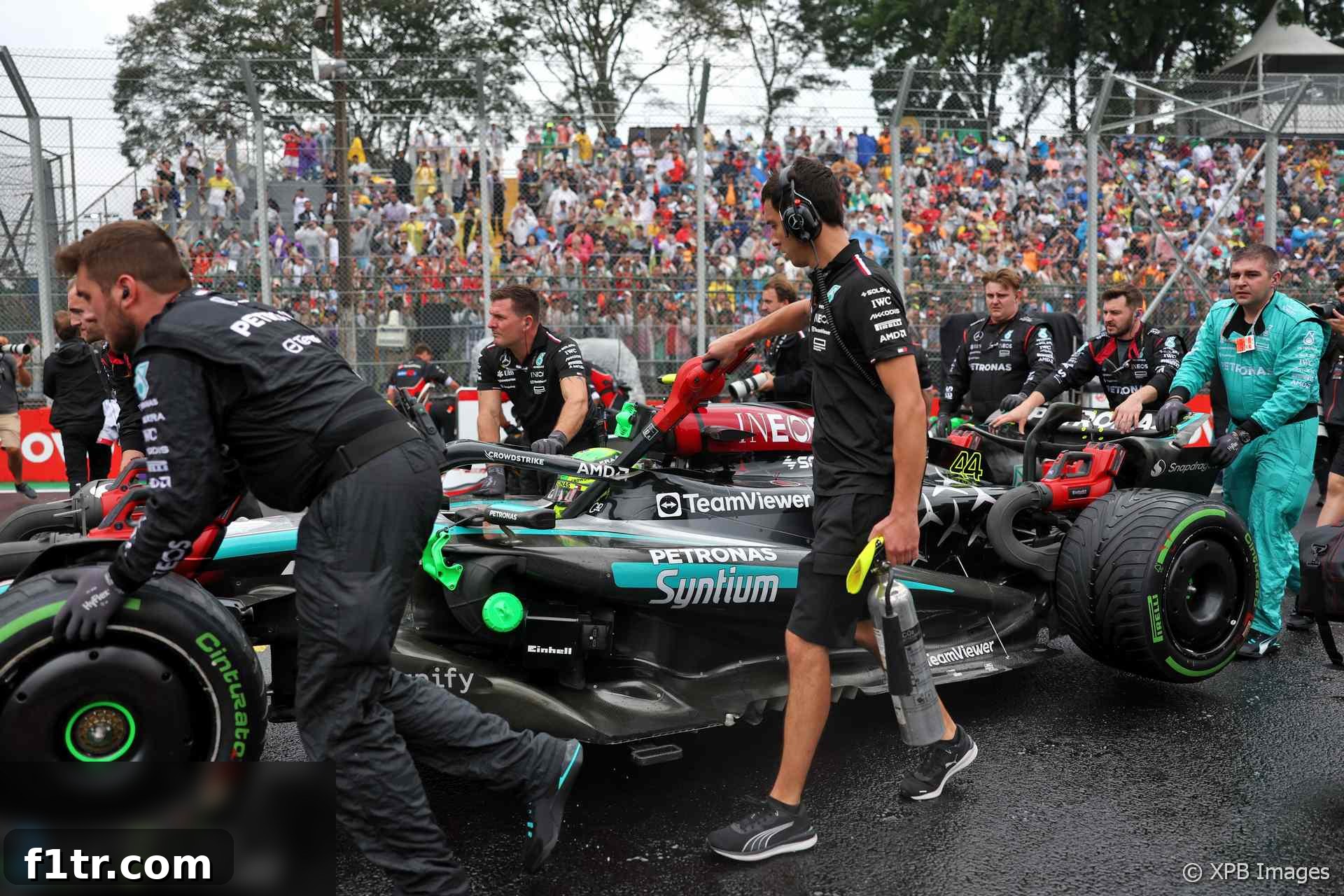
In a turn of events following a chaotic start to the Brazilian Grand Prix, the Mercedes-AMG Petronas Formula One Team has been issued a €10,000 (£8,388) fine by the FIA stewards for violations concerning tyre pressure regulations. The infraction, which involved adjustments made to the tyre pressures on the cars of Lewis Hamilton and George Russell after their wheels had already been fitted, marked a breach of technical directive 003, a crucial guideline governing technical procedures within Formula 1.
The incident unfolded against a backdrop of significant confusion and disruption during the pre-race sequence. The initial start of the race was aborted due to unforeseen circumstances, leading to a scramble for teams to adapt to revised procedures and a condensed timetable. Adding to the complexity, drivers subsequently completed an extra formation lap, an action that itself became the subject of a separate investigation by the stewards, further highlighting the unusual and challenging conditions faced by all competitors on the grid.
Understanding the Violation: Technical Directive 003 and Tyre Pressure Rules
Technical Directive 003 (TD 003) outlines specific protocols that teams must adhere to regarding the preparation and management of tyres. These rules are fundamental to ensuring fair competition and, more importantly, driver safety. Tyre pressures are meticulously regulated in Formula 1 because they directly impact a car’s performance, grip, and overall handling characteristics. Incorrect pressures can lead to anything from excessive tyre wear and reduced traction to dangerous blowouts at high speeds. Therefore, the FIA enforces strict guidelines to prevent any team from gaining an unfair advantage or compromising safety through improper tyre management.
The specific breach by Mercedes involved altering the tyre pressures after the wheels had been attached to the cars, a procedure explicitly forbidden under normal operating conditions. This particular rule aims to ensure that tyre pressures are set and verified in a controlled environment, preventing any last-minute adjustments that could fall outside the prescribed technical parameters or create an imbalance in competition.
Stewards’ Deliberation: Unusual Circumstances Lead to a Procedural Fine
Upon reviewing the incident, the FIA stewards acknowledged that a breach of this nature would typically warrant a sporting penalty, which could range from grid place drops to time penalties during the race. However, their final decision to issue a fine rather than a sporting sanction reflected a careful consideration of the highly unusual combination of circumstances that prevailed before the race. The stewards’ detailed explanation shed light on the complexities that influenced their judgment.
Factors Mitigating a Sporting Penalty
Several critical factors played a role in the stewards’ decision not to impose a sporting penalty, which is often seen as a more severe form of punishment in F1:
- Aborted Start and Compressed Schedule: The original race start was aborted, leading to an immediate 10-minute notice for a new start. This drastically compressed the preparation window for all teams.
- Grid Access Logistics: The specific layout of the circuit and the access points to the grid from the pit lane presented significant logistical challenges. The gate to access the grid was not opened immediately, further delaying teams’ ability to reach their cars within the already shortened timeframe. The FIA themselves conceded that, given such short notice and the practical constraints, it was “extremely difficult if not impossible for the teams to follow the procedure prescribed in the technical directive.”
- Pressures Within Legal Limits: Crucially, the FIA technical delegate confirmed that while Mercedes had indeed adjusted the tyre pressures, the final pressures set on both Hamilton’s and Russell’s cars were well “within the allowed parameters.” This indicates that the team’s actions, though procedurally incorrect, did not result in an unfair performance advantage or safety risk from out-of-spec tyre pressures.
The stewards emphasized that these mitigating factors created an unprecedented scenario. They noted, “Given the unusual circumstances surrounding the compressed time table, aborted start, the grid access logistics and given the stipulation from the technical delegate that the tyre pressures were within the correct parameters, the stewards determine that a fine for a breach of procedure is appropriate in this case.” This nuanced approach highlights the FIA’s commitment to both upholding regulations and exercising pragmatism in exceptional situations.
Precedent and Future Implications
The stewards were careful to clarify that this decision should not be viewed as a precedent for future similar breaches. They explicitly stated, “This decision should not be considered as a precedent for any similar breach in the future as the circumstances are considered unique.” This declaration underscores the one-off nature of the events at the Brazilian Grand Prix and reinforces the FIA’s intent to enforce technical directives rigorously under normal competitive conditions.
For teams, this incident serves as a stark reminder of the intricate and often unforgiving nature of Formula 1 regulations. Even experienced outfits like Mercedes can fall afoul of procedural rules when confronted with unexpected variables and tight deadlines. The constant evolution of technical directives and the increasing scrutiny by the FIA necessitate meticulous planning, robust internal procedures, and the ability to react swiftly and correctly under immense pressure.
The Broader Context of Formula 1 Regulation
This episode also provides insight into the complex regulatory framework of Formula 1. The FIA, as the sport’s governing body, sets the rules, while the race stewards are responsible for their interpretation and enforcement during events. Technical directives, like TD 003, clarify specific aspects of the regulations, guiding teams on how to operate within the spirit and letter of the law. The role of the technical delegate is equally vital, providing expert assessment on whether technical parameters are met.
The balance between strict rule enforcement and acknowledging the practical realities of a fast-paced, high-pressure sport like Formula 1 is a delicate one. In this instance, the stewards demonstrated a capacity for discretion, recognizing that while a rule was technically broken, the context made a harsh sporting penalty disproportionate. This nuanced application of rules helps maintain the integrity of the sport while also allowing for human error and unforeseen circumstances to be considered.
Ultimately, the fine levied against Mercedes closes the book on this particular procedural infraction, allowing the focus to return to the thrilling on-track action. However, it undoubtedly leaves teams with renewed caution regarding the strict protocols surrounding tyre management and the myriad of technical regulations that govern every aspect of Formula 1 racing, especially when faced with the unpredictable nature of a Grand Prix weekend.
2024 Brazilian Grand Prix
- “I didn’t really want to come back” – Hamilton explains cryptic Brazil radio message
- Ocon’s role in Gasly’s Q2 exit was almost another ‘flare-up’ at Alpine – Oakes
- Interlagos must improve “very bad” new track surface for 2025, say F1 drivers
- “That’s how we silence them”: Verstappen’s stunning Brazil win from start to finish
- Verstappen now has as many wins as F1’s first six world champions combined
Browse all 2024 Brazilian Grand Prix articles