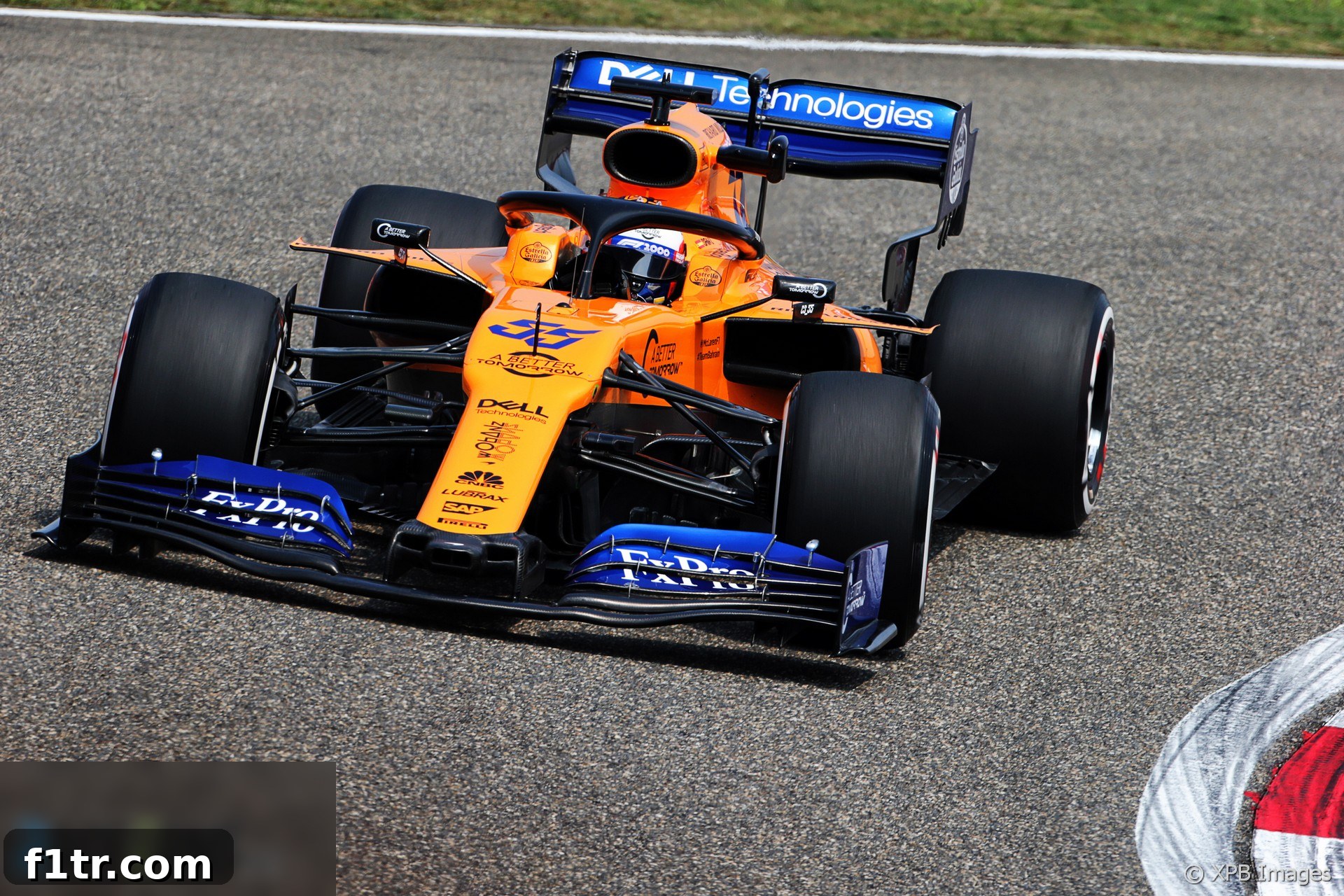
Carlos Sainz Jnr has offered a candid assessment of McLaren’s performance at the Shanghai International Circuit, suggesting the demanding track layout starkly illuminated some underlying weaknesses within the team’s car, particularly after both drivers failed to advance into the top ten during a challenging qualifying session. The Spanish driver, a key figure in McLaren’s ongoing rebuilding efforts, openly acknowledged the team’s struggles as they prepared for the Chinese Grand Prix.
Advert | Become a Supporter & go ad-free
“We knew before coming here that this track could expose our weaknesses a lot more than the other two tracks that we’ve been to this season,” Sainz explained, highlighting a pre-race understanding of Shanghai’s unique challenges. The circuit, renowned for its long straights followed by technical corners and demanding high-speed sections, often serves as a true barometer for a car’s overall aerodynamic efficiency, mechanical grip, and power unit performance. This foreknowledge meant the team approached the weekend with cautious optimism, rather than outright confidence. “So we kind of, not expected to be weaker, but we expected to struggle a bit more,” he added, indicating a realistic appraisal of their competitive standing against a backdrop of a tightly contested midfield.
Despite these initial apprehensions, Sainz admitted that the team’s performance in Friday’s practice sessions had provided a glimmer of hope and some much-needed encouragement. “After FP2 yesterday, I think everyone in the team was really encouraged about the pace and I was very encouraged today also,” he stated, referring to the second free practice session where McLaren’s cars showed promising speed. These sessions, however, can often be misleading, with varying fuel loads, engine modes, and track conditions potentially masking a car’s true one-lap qualifying pace. The dynamic nature of Formula 1 weekends means that optimism from practice often needs to be tempered with the reality of qualifying, where every tenth of a second is fiercely contested.
However, the transition from practice to the high-stakes qualifying proved to be a stark reality check. The team had anticipated a tougher fight to reach Q3, the final qualifying segment reserved for the fastest ten cars. Yet, the outcome of P14 and P15 for the two McLaren machines was still a source of disappointment, falling short of their revised expectations. “To be P14 and P15 is maybe a bit more disappointing because I was thinking about P11, P12 for the start tomorrow after FP3 and after the first laps of quali,” Sainz elaborated, pinpointing the gap between his perceived potential and the actual result. The difference between starting on the cusp of the top ten and several positions deeper in the midfield can have significant implications for race strategy, track position, and the likelihood of scoring valuable championship points.
Reflecting on his own performance, Sainz believed he extracted the maximum from the MCL34 chassis during his qualifying runs. “I put some seriously good laps together today and I think we just didn’t have the pace. So we’ll analyse why,” he asserted, underscoring the team’s commitment to understanding the performance deficit. This deep dive into data and telemetry is a standard procedure in F1, aimed at identifying specific areas for improvement, whether in car setup, driver technique, or operational efficiency. The initial encouragement from FP2, he suggested, might have painted an overly optimistic picture. “We knew coming into here that this track would expose our weaknesses so probably FP2 yesterday gave us a bit more encouragement than we should, and today we came a bit back to reality,” Sainz concluded, offering a pragmatic view of their Saturday struggles.
Despite the setback in qualifying, Sainz remains cautiously optimistic about the prospects for the main race. His hope hinges on the effectiveness of specific setup changes implemented by the team, modifications designed to enhance the car’s performance over longer race stints rather than maximizing single-lap speed. This strategic compromise is a common tactic in Formula 1, where teams often trade a slight qualifying disadvantage for a stronger race pace, especially on tracks known for high tire degradation or demanding physical conditions.
“[The race] can be another story,” Sainz affirmed, signaling a belief that Sunday’s Grand Prix might unfold differently. “We did a few changes in the set-up from yesterday to today to try and improve the race pace. That maybe made us look slower today and stronger tomorrow. So let’s hope it’s like that and we can keep pushing.” These adjustments could involve tweaking suspension settings, aerodynamic balance, or even engine mapping to optimize for fuel consumption and tire wear over a full race distance. A car that might struggle for ultimate pace in qualifying could, with the right setup, become a consistent performer in the race, better managing its tires and potentially offering more overtaking opportunities. The unpredictable nature of F1 races, with safety cars, strategic pit stops, and varying tire compounds, also presents avenues for teams starting further down the grid to make significant gains.
McLaren’s 2019 season has been marked by ambitious goals and a clear commitment to climbing back up the grid. The Shanghai weekend, while revealing some inherent challenges, also serves as a crucial learning experience. Every circuit offers a different set of demands, and understanding how the car performs under these varied conditions is vital for long-term development. Sainz’s calm and analytical approach, even in the face of disappointment, reflects the team’s professional ethos. Their ability to dissect their performance, adapt their strategy, and maintain focus on the race ahead will be instrumental in turning these learning curves into tangible improvements. The competitive midfield battle in Formula 1 means that even small gains can translate into significant results, making every strategic decision and setup change a critical factor in their quest for points.
Advert | Become a RaceFans supporter andgo ad-free
2019 F1 season
- Crying in the Melbourne car park at 2019 grand prix was my career low – Ocon
- McLaren Racing reports reduced £71 million loss in 2019
- Kvyat: Hockenheim podium last year was “my biggest achievement” so far
- How the FIA’s new encrypted fuel flow meter targets Ferrari’s suspected ‘aliasing’ trick
- “He smashed my office door”: 23 must-see moments from ‘Drive to Survive’ season two
Browse all 2019 F1 season articles