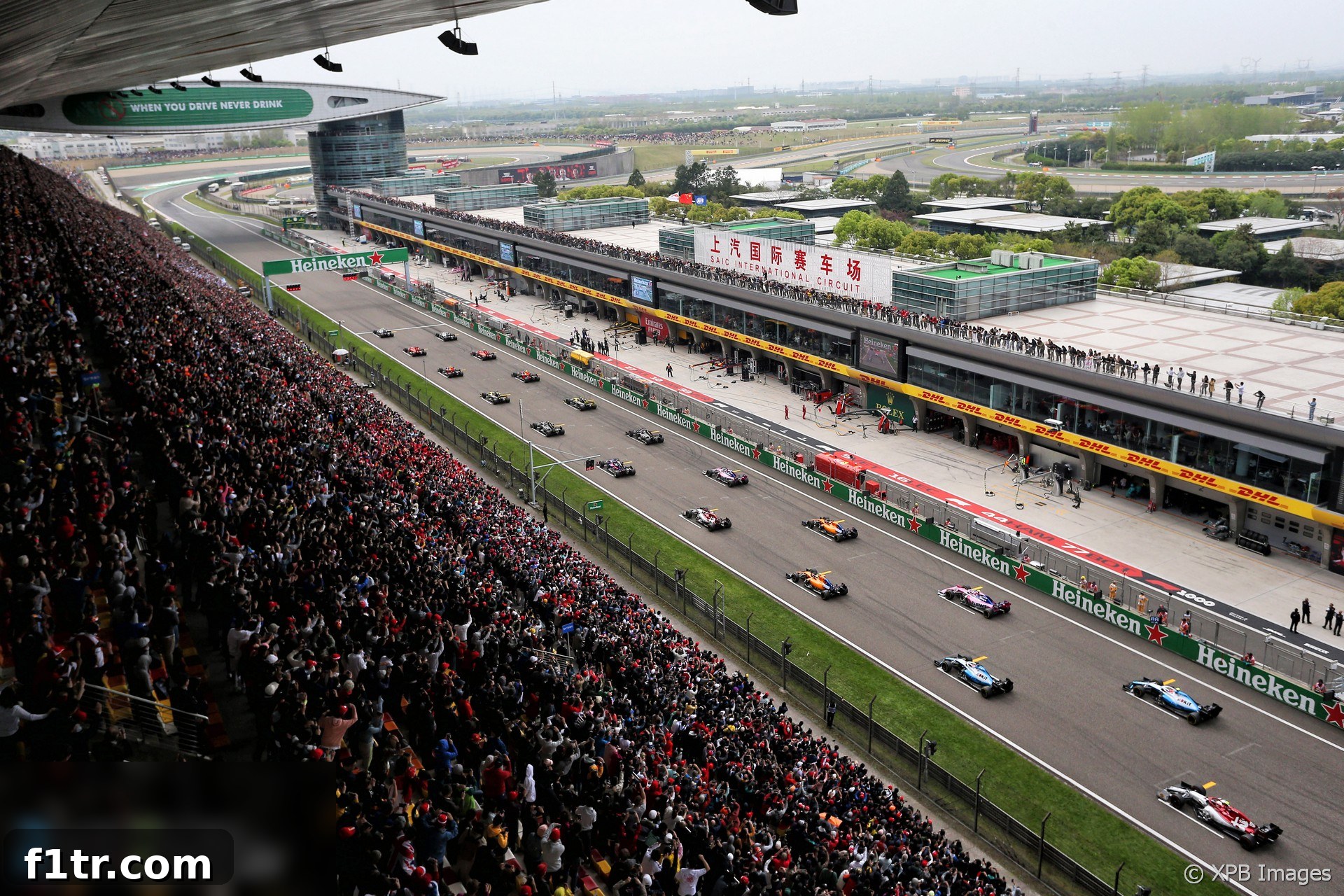
Valtteri Bottas and the Unseen Challenge: Analyzing the 2019 Chinese Grand Prix Start
The exhilarating rush of a Formula 1 start is often a make-or-break moment for drivers, especially those on pole position. Every millisecond counts, and the slightest misstep can cost valuable track position. For Valtteri Bottas, the 2019 Chinese Grand Prix start became a memorable, albeit frustrating, example of how unforeseen track conditions can dramatically alter a race’s trajectory. Despite clinching pole position, Bottas found himself relinquishing the lead almost immediately to his Mercedes teammate, Lewis Hamilton, an incident he attributed directly to a specific, almost invisible, feature on the Shanghai International Circuit’s grid: a thick white line.
The Crucial Moment: Bottas’s Disappointing Start
Having showcased formidable pace in qualifying, Bottas was poised to control the race from the front, a critical advantage in the tightly contested 2019 F1 season. However, as the lights went out for the 2019 Chinese Grand Prix, his meticulously planned start unravelled. Instead of pulling away decisively, Bottas experienced significant wheelspin, allowing Hamilton, starting from second, to surge past him with relative ease. This early setback effectively dictated the rhythm of the race and put Bottas on the back foot from the outset, transforming what should have been a commanding lead into a chase.
Bottas’s Immediate Reaction and Explanation
In the aftermath, a visibly perplexed Bottas provided a detailed explanation for his compromised start. He highlighted a specific environmental factor that he believed was solely responsible for his misfortune. “There was a thick white line just in front of my grid box,” Bottas explained, detailing the sequence of events that led to the wheelspin. This line, painted on the asphalt, proved to be a critical point of lost traction. “When you’re still accelerating, and when I went over the white line, I got some wheelspin on the formation lap start,” he recounted, indicating a prior warning sign.
The experience on the formation lap, where tyres are still warming up, might have been dismissed as an anomaly. However, the exact same issue recurred with dire consequences at the race start. “For the race start, I thought maybe it’s going to be better with warmer tyres. But it wasn’t so once I hit the white line, got the wheelspin, took too long to recover it, lost a few metres of distance, so Lewis got me.” This candid assessment underscored the instantaneous and irreversible damage caused by the loss of grip, proving that even with optimal tyre temperatures, the painted line presented an insurmountable challenge for a perfect getaway.
The Peculiar Problem: White Lines on the Grid
The issue of painted lines on track surfaces, particularly on the grid, is not entirely new in motorsport, but its impact can vary significantly depending on the track, the type of paint used, and even weather conditions. Bottas’s experience brought this subtle yet potent challenge into sharp focus. He noted that such thick white lines are an infrequent sight across the Formula 1 calendar, suggesting a unique characteristic of the Shanghai circuit at the time. “I think it’s only very few tracks there is such a thick white line and maybe the paint changes also from one track to another,” he observed, pointing to the variability of track design and materials.
Understanding Tire Grip and Track Surfaces
The phenomenon Bottas described is rooted in the fundamental physics of tire grip. Racing tires, especially those designed for Formula 1, rely heavily on friction with the asphalt. Any alteration to the track surface, such as a painted line, can drastically reduce this friction coefficient. Paint, by its very nature, is typically smoother and less abrasive than raw asphalt, and its chemical composition might offer less adhesion, especially when exposed to the immense torque of an F1 engine at launch. Furthermore, paint can react differently to heat and pressure, potentially becoming slicker. For a driver trying to precisely manage wheelspin at the absolute limit of traction, hitting such a surface mid-acceleration is akin to driving on ice for a fraction of a second, with immediate and detrimental effects on the launch.
The disadvantage was particularly acute for Bottas due to his pole position. “It’s more obvious on the pole position it’s there but it definitely made an effect and it’s less effect for the cars behind because when I’m on the white line from pole, that’s when you need the most of the traction. So I guess a bit unlucky with that,” he concluded. This highlights a critical aspect: drivers further down the grid might have already cleared the initial acceleration phase by the time they reach a similar painted line, or their initial acceleration point might not coincide with such a problematic surface. For the pole sitter, who needs maximum traction from a standstill, hitting that line during the most crucial phase of the start sequence is a severe impediment.
Learning from Experience: Bottas’s Proposed Solution
Despite the immediate disappointment, Bottas, known for his methodical approach, quickly devised a strategy to mitigate the risk should he encounter similar conditions in the future. His proposed solution demonstrates the ingenious and sometimes unconventional thinking required at the pinnacle of motorsport to overcome such specific challenges. He believes he can prevent a recurrence by performing a ‘burnout’ over the offending line during the formation lap.
The “Burnout” Strategy: A Technical Perspective
A burnout, in racing terms, involves deliberately spinning the driven wheels to generate heat and clean the tire surface. In Bottas’s context, performing a burnout precisely over the white line would serve a dual purpose. Firstly, the friction and heat generated by the spinning tires could potentially abrade the painted surface, making it less slick. More importantly, it would lay down rubber from the F1 tires onto the white line. This deposited rubber would then create a consistent, high-grip surface identical to the rest of the track, effectively neutralizing the low-friction paint. “If I do it again on the formation lap I will just light up the rear tyres and leave black lines on it,” he stated, outlining a simple yet effective plan to ‘rubber in’ the problematic patch for future starts.
This proactive approach underscores the level of detail and adaptability required in Formula 1. Drivers and teams constantly analyze every variable, from atmospheric pressure to the subtle nuances of track surface materials, to extract peak performance. Bottas’s plan reflects a deep understanding of tire dynamics and track preparation, turning a potential weakness into an opportunity for strategic advantage.
Broader Implications for F1 Racing and Driver Adaptation
The incident at the 2019 Chinese Grand Prix served as a powerful reminder of how seemingly minor details can have monumental consequences in Formula 1. It highlights the incredibly fine margins that separate victory from defeat, and the constant need for drivers to adapt to ever-changing conditions. Beyond Bottas’s individual experience, it also sparks broader discussions within the sport regarding track design, surface uniformity, and even the role of the FIA in standardizing grid markings to ensure fair competition.
The 2019 Chinese Grand Prix: A Turning Point?
For Valtteri Bottas, the 2019 season was a critical juncture in his career. He started strongly, showing renewed vigor and a genuine challenge to Lewis Hamilton’s dominance. The Chinese Grand Prix was the third race of the season, and a strong start from pole could have significantly boosted his championship aspirations and confidence. Losing the lead so early, due to an external factor, was undoubtedly a psychological blow. While he recovered to finish second, the initial loss of position undeniably altered the race outcome and potentially contributed to the season’s unfolding narrative, where Hamilton ultimately secured another world championship.
Looking Ahead: F1’s Continuous Pursuit of Perfection
Incidents like Bottas’s at Shanghai reinforce the relentless pursuit of perfection in Formula 1. Every year, teams, drivers, and governing bodies learn from past events, pushing the boundaries of technology, strategy, and understanding of the physical world. From meticulous pre-race track inspections to sophisticated tire modeling and driver feedback, the sport continually evolves to optimize performance and ensure fair play. Bottas’s ingenious solution to the white line problem is a testament to the quick thinking and adaptability that define elite F1 drivers, showcasing their ability to turn unforeseen obstacles into lessons learned for future success.
Ultimately, the 2019 Chinese Grand Prix start became more than just a momentary lapse in grip; it became a case study in how the smallest details can have the biggest impact, and how a top-tier athlete like Valtteri Bottas adapts and innovates to master the unpredictable world of Formula 1 racing.
Further Reading: Related Insights from the 2019 F1 Season
- Crying in the Melbourne car park at 2019 grand prix was my career low – Ocon
- McLaren Racing reports reduced £71 million loss in 2019
- Kvyat: Hockenheim podium last year was “my biggest achievement” so far
- How the FIA’s new encrypted fuel flow meter targets Ferrari’s suspected ‘aliasing’ trick
- “He smashed my office door”: 23 must-see moments from ‘Drive to Survive’ season two
Explore more articles from the 2019 F1 season