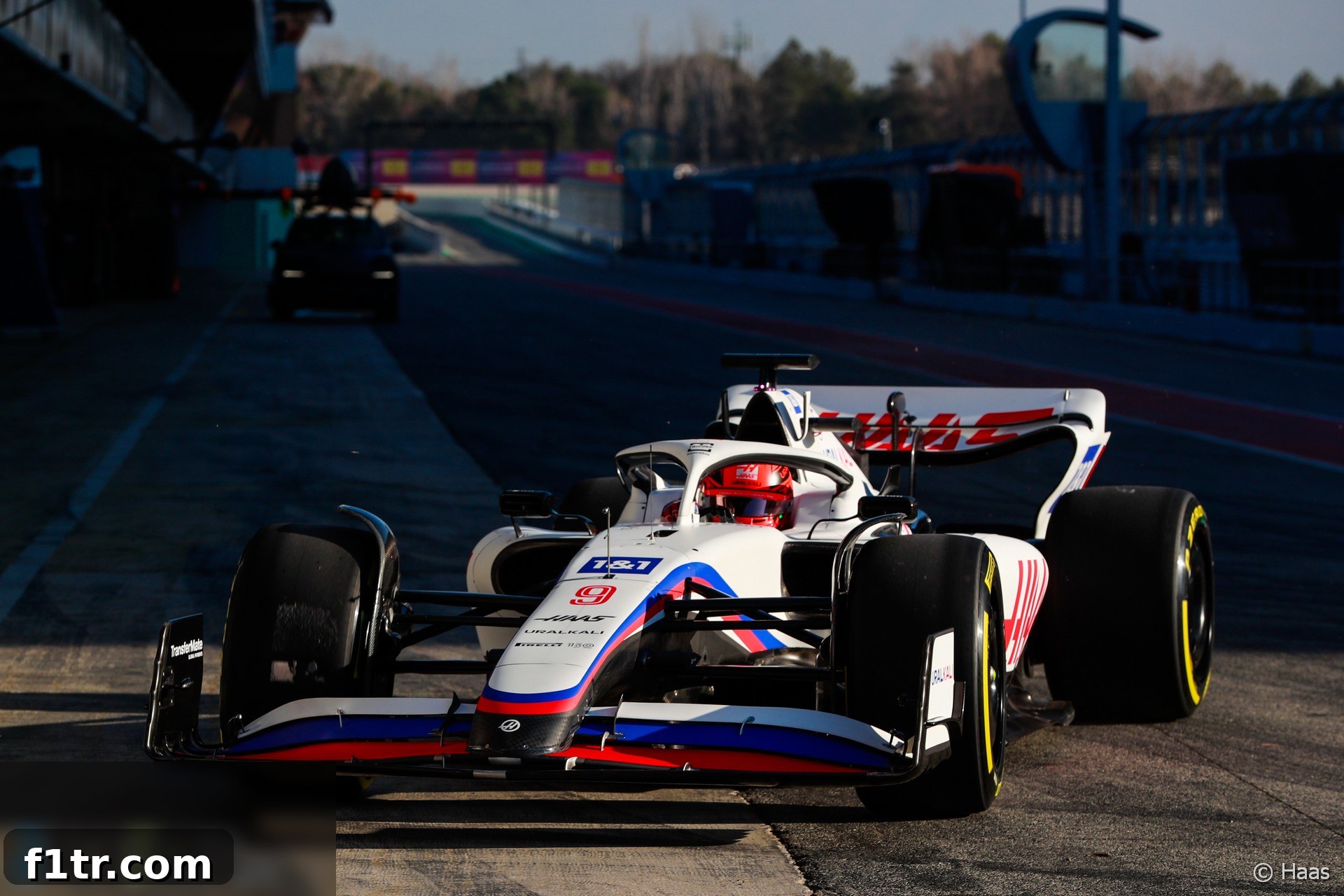
Haas VF-22 Makes Track Debut Ahead of Revolutionary 2022 F1 Season
The highly anticipated 2022 Formula 1 season is on the horizon, bringing with it a wave of radical new technical regulations designed to level the playing field and enhance the racing spectacle. Among the first contenders to unveil their challenger, the Haas F1 Team, has now taken a crucial step forward: their new VF-22 car has officially hit the track for its inaugural shakedown. This significant moment occurred at the iconic Circuit de Catalunya in Barcelona, signaling the true start of preparations for what promises to be an exhilarating and unpredictable championship.
This initial outing marks a pivotal milestone not just for Haas, but for the entire F1 grid. While many teams have presented stunning digital renderings, seeing the actual car in its physical form, making its first tentative laps, generates immense excitement and offers the first real glimpse into how the new regulations translate from concept to tangible machinery. For Haas, a team that consciously sacrificed its 2021 season to fully focus resources on this regulatory reset, the VF-22’s debut carries even greater weight, representing their fervent hope for a more competitive future and a dramatic rise up the Constructors’ standings.
Shakedown Success: The VF-22’s First Laps at Circuit de Catalunya
The Haas F1 Team conducted a vital shakedown test of their brand-new VF-22 today at the renowned Circuit de Catalunya, a venue synonymous with Formula 1 testing and Grand Prix racing. Behind the wheel for this momentous occasion was Nikita Mazepin, entrusted with the responsibility of completing the car’s maiden laps. A shakedown, often referred to as a “filming day” due to restrictions on mileage and tyre use, serves a critical purpose in a team’s pre-season schedule. It allows engineers to conduct initial system checks, verify that all components are functioning as intended, and ensure fundamental safety parameters are met before more intensive testing commences.
Unlike full pre-season tests where performance data is aggressively sought, a shakedown is primarily about functionality and reliability. It provides an invaluable opportunity for the team to iron out any immediate mechanical or electrical issues, validate basic aerodynamic concepts in a real-world environment, and give the driver a preliminary feel for the car. For a machine built to entirely new regulations, these initial laps are indispensable. The Circuit de Catalunya, with its diverse mix of high-speed corners, technical sections, and a long main straight, offers an ideal proving ground for these fundamental checks, allowing the team to gather initial data and assess the car’s balance and responsiveness in various conditions. This controlled environment is crucial for building confidence in the new design before competitive pressures mount.
Haas F1’s Ambitious Strategy for the 2022 Season
The 2022 Formula 1 season represents a fresh start for every team, but perhaps none more so than for Haas F1. After a challenging 2020 and a strategically compromised 2021 season – where the team consciously chose not to develop their car, instead diverting all resources towards the radically different 2022 regulations – the VF-22 is the embodiment of their long-term vision. This bold decision, while resulting in a difficult and point-less 2021 campaign, was a calculated gamble. The hope is that by being an early adopter and committing fully to the new rulebook, Haas can make a significant leap up the competitive order, closing the gap to the midfield and shedding its reputation as a perennial backmarker.
Haas were notably the first team to present renderings of their new car for the upcoming championship, an early reveal that stirred anticipation within the F1 community. Now, seeing the car running in the flesh confirms the dedication and effort put in by the team at their various bases, from their Kannapolis headquarters to their operations in Maranello and Banbury. The team’s unique operating model, leveraging its close technical partnership with Ferrari for crucial components like the power unit, gearbox, and some suspension elements, plays a significant role in its ability to compete in Formula 1. This synergy will be more crucial than ever as they navigate the complexities of the new regulations, aiming to extract maximum performance from their Ferrari-supplied powertrain and their self-developed aerodynamic package, designed to optimize the ground effect.
The Road to Bahrain: Pre-Season Testing Kicks Off
With the shakedown successfully completed, attention now turns to the official pre-season testing sessions. The first phase of pre-season testing is scheduled to commence at the very same Circuit de Catalunya in Barcelona, just days after the VF-22’s initial run. This marks the beginning of a crucial period where teams will truly begin to understand their new machinery, pushing the cars harder and for longer durations than a shakedown permits. The Barcelona test serves as the first comprehensive data-gathering exercise, allowing teams to evaluate reliability, understand tyre degradation, and start dialling in car setups tailored to the new regulations and the characteristics of the 18-inch Pirelli tyres.
Significantly, Haas is one of three Ferrari-powered teams on the grid, alongside the Scuderia itself and Alfa Romeo. All three of these teams have now successfully completed initial runs of their new cars ahead of the scheduled tests, indicating a promising level of preparedness from the Ferrari engine department and a proactive approach from its customer teams. This collective early running could provide a crucial advantage, allowing them to identify and address any fundamental issues sooner than competitors who might have chosen a later track debut. The intensity of pre-season testing is unparalleled, with teams running through vast programs covering aerodynamics, cooling, braking, and countless other parameters, all aimed at optimizing performance for the opening race in Bahrain and laying the groundwork for the entire season.
The 2022 Technical Revolution: Ground Effect and Beyond
The 2022 Formula 1 season is defined by its sweeping technical regulation changes, arguably the most significant overhaul in decades. At the heart of these changes is the reintroduction of ‘ground effect’ aerodynamics. This design philosophy utilizes sculpted underfloors to generate downforce, effectively sucking the car to the track surface, as opposed to relying heavily on complex front and rear wings that create turbulent air, making it difficult for cars to follow closely. The ultimate goal is to allow cars to race more closely, creating more overtakes and thrilling wheel-to-wheel action for the fans, thereby improving the overall racing product.
Beyond ground effect, other key changes include simplified front and rear wings, meticulously designed to minimize dirty air and wake turbulence. The cars also feature new 18-inch wheels with low-profile Pirelli tyres, replacing the previous 13-inch setup. This change is not just aesthetic; it profoundly impacts suspension geometry, tyre behaviour, and overall car dynamics, presenting a steep learning curve for all teams. Additionally, increased safety standards, a standardized component list, and strict cost cap limitations further shape the competitive landscape, pushing teams to innovate more efficiently and strategically. For a team like Haas, these regulations represent a rare opportunity to start on a more equal footing, where clever interpretation and efficient execution of the rulebook could yield substantial rewards, potentially redefining their position in Formula 1.
First Glimpse: What the VF-22’s Track Debut Reveals
The initial pictures and video footage of the Haas VF-22 on track provide the first tangible insights beyond the carefully curated digital renderings. While a shakedown offers limited opportunity for detailed analysis of performance, the car’s physical presence on track confirms several key design elements. The sleek, simplified aerodynamic surfaces, characteristic of the new regulations, are immediately evident. The larger 18-inch wheels give the car a distinctly modern profile, aligning with the new era of Formula 1. For fans and analysts alike, these first images are a treasure trove, allowing them to compare the real-world execution against the earlier digital concepts and against competitor designs as they emerge. The white, red, and blue livery stands out, a familiar yet fresh look for the American squad as they embark on this new chapter.
Pictures: 2022 Haas VF-22 on Track Debut
Pictures: Haas F1 Team / RaceFans
Video: Watch the 2022 Haas VF-22 in Action
Witness the historic first laps of the Haas VF-22 as captured in this official team footage from their shakedown at Circuit de Catalunya. The video provides a dynamic perspective of the car’s initial on-track performance, offering fans a moving glimpse of the new era of Formula 1 machinery and the sound of the Ferrari power unit.
And we are GO!
The #VF22 takes to the track for the very first time in Barcelona 💪#HaasF1 pic.twitter.com/SewwEaAjEW
— MoneyGram Haas F1 Team (@HaasF1Team) February 21, 2022
This early footage provides invaluable insights into the car’s aesthetic and initial performance, sparking discussions and predictions among F1 enthusiasts worldwide regarding the potential of the new regulations.
Looking Ahead: Hopes and Challenges for Haas in 2022
As the Haas VF-22 embarks on its journey into the 2022 Formula 1 season, the team carries a mixture of cautious optimism and immense pressure. The new regulations offer a genuine opportunity for smaller teams to close the performance gap, but they also present a steep learning curve. The success of the VF-22 will largely depend on how effectively Haas can understand and exploit the complex ground effect aerodynamics, manage tyre degradation with the new 18-inch wheels, and integrate their Ferrari power unit package into a cohesive, competitive whole. Reliability will be paramount, especially in the early races, as teams grapple with the inherent demands of entirely new designs.
For Gunther Steiner’s squad, this year is about proving their long-term strategy was correct. Consistent performance, scoring points regularly, and demonstrating a clear trajectory of improvement throughout the season would be considered a successful campaign. The competition will be fierce, with every team eyeing an advantage from the new rules and striving to be the first to unlock their full potential. However, Haas’s early track debut and dedicated focus on the VF-22 offer a promising start, igniting hope that the American team can indeed carve out a more competitive niche and establish itself as a formidable midfield contender in the exciting new era of Formula 1.
Related Articles on the 2022 F1 Season
- Masi ‘basically gifted the championship’ to Verstappen says 2021 FIA steward Sullivan
- Las Vegas race backers looking to extend F1 deal beyond 2025
- Why Mercedes put ‘a reminder of joy and pain’ on display in their factory lobby
- Verdict on error in GT race suggests Mercedes would have lost 2021 Abu Dhabi GP appeal
- Title ‘stolen’ from Mercedes made us ‘underdogs people cheer for’ – Wolff
Browse all 2022 F1 season articles