Unveiling the Future: The Secrecy and Spectacle of the 2022 F1 Car Launches
The dawn of the 2022 Formula 1 season marked a pivotal moment in the sport’s history, heralded by the introduction of its most radically revised technical regulations in decades. As teams prepared to unleash their groundbreaking new machines, the air was thick with anticipation – not just from fans and media eager for a glimpse, but also from rival teams meticulously studying every detail. This unique period leading up to the season became a captivating game of cat and mouse, a delicate balance between showcasing innovation and guarding design secrets.
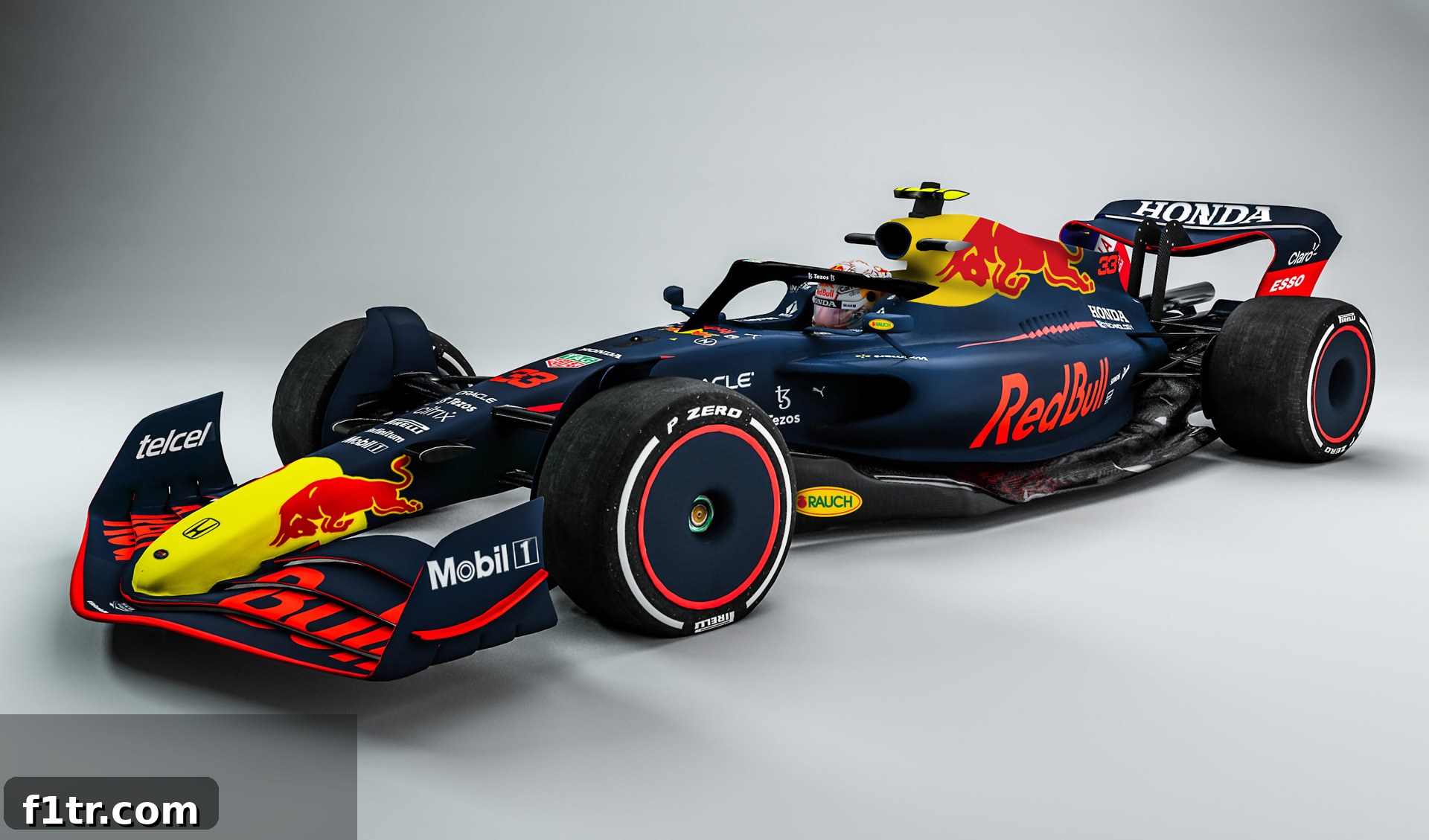
Red Bull Racing, often a front-runner both on and off the track, seemed poised to be among the first to reveal their contender. However, the true nature of these “reveals” was far from straightforward. The 2022 cars were not merely evolutions of their predecessors; they were born from a blank slate, designed to fundamentally reshape the sport. This monumental shift transformed the traditional car launch season into an unprecedented spectacle of strategic deception and calculated disclosure.
A New Era for Formula 1: The Revolutionary 2022 Technical Regulations
The core of the 2022 season’s excitement stemmed from the heavily revised technical regulations, a vital component of Liberty Media’s overarching plan to revitalize Formula 1. For years, the sport grappled with issues of competitive imbalance and a perceived lack of wheel-to-wheel racing. Dominance by a handful of teams often led to predictable outcomes, diminishing the thrill for many fans. The new regulations were specifically engineered to combat these challenges, promising a more level playing field and more intense on-track action.
Central to these regulations was the reintroduction of ground effect aerodynamics, a concept last prominently seen in F1 in the early 1980s. This design philosophy aims to generate significant downforce from the underbody of the car, rather than relying predominantly on complex front and rear wings. The goal is to reduce the turbulent “dirty air” that makes it incredibly difficult for cars to follow closely and overtake. By simplifying the top-side aerodynamics and mandating larger 18-inch wheels with low-profile tires, the regulations sought to create cars that could race in tighter proximity, fostering the kind of thrilling competition F1 fans crave.
These changes weren’t merely aesthetic; they demanded a complete rethinking of car design from the ground up. Every aerodynamic surface, suspension component, and chassis element had to be re-evaluated within the strict new framework. The stakes were astronomically high, as any team that successfully unlocked the potential of these new rules could gain a monumental competitive advantage, potentially reshaping the championship landscape for years to come. This context underscores why the car launch period became a strategic battleground, where information was the most valuable currency.
The Art of Secrecy: Why Teams Guard Their Designs
In the cutthroat world of Formula 1, secrecy is paramount. Every millisecond gained on track is the result of countless hours of research, development, and innovation. An early hint about a design direction a team has taken, especially under such drastically new regulations, could provide invaluable information for a rival who has pursued a different path. This isn’t just about protecting intellectual property; it’s about safeguarding a competitive edge that could define a season, or even an era.
Teams understand that their competitors employ legions of engineers and analysts, all eager to dissect every available image and data point. A subtle curve, a unique intake, or an innovative suspension geometry, if revealed prematurely, could inspire rivals to adapt or modify their own designs, effectively neutralizing a hard-won advantage. This competitive dynamic is amplified in an environment governed by a budget cap, where every development decision carries significant financial weight. Wasteful development based on a suboptimal design can severely impact a team’s ability to introduce crucial upgrades throughout the season.
The intense pressure to get the 2022 regulations right from the outset meant that teams approached their car launches with an unprecedented level of caution. They weren’t just launching a new car; they were launching the culmination of years of strategic planning and engineering effort, all designed to exploit a rulebook no one had ever worked with before. The margin for error was slim, and the desire to keep their cards close to their chest was stronger than ever.
Strategic Development: Focusing on Early-Season Upgrades
The profound impact of the new regulations also influenced teams’ development strategies. McLaren, for instance, openly discussed their approach of building fewer parts than usual for the initial iteration of their design, choosing instead to concentrate more resources on early-season upgrades. This pragmatic decision highlights the iterative nature of F1 car development and the importance of understanding real-world performance data.
Many teams made similar calculations. They recognized that the first version of their 2022 car, the “launch spec,” would likely be a relatively conservative starting point. The true performance gains would come from rapid development and optimization once the car hit the track and engineers gathered critical data. By allocating resources towards understanding and improving the car early in the season, rather than perfecting an initial design that might quickly become outdated, teams aimed to maximize their car’s development curve throughout the championship. This also meant that what was seen at a car launch was merely a snapshot, not the full picture of a team’s ambition and potential.
The Evolution of Car Launches: From Grand Reveals to Digital Deception
The ways in which Formula 1 teams present their new cars have undergone a significant transformation over the years. Historically, physical launch events were elaborate affairs, often featuring grand unveilings with media, sponsors, and even public appearances. However, even before the pandemic, a shift towards more controlled, virtual events was already underway. Reasons ranged from cost efficiency to logistical simplicity, but a crucial factor was the increasing desire for teams to control the narrative and, crucially, the visual information released about their new designs.
With the 2022 regulations, the traditional methods of obscuring design details became largely obsolete. In previous years, teams might have presented a new chassis clad in old-specification aerodynamics, or simply rolled out the previous year’s car in a new color scheme for a mere ‘livery launch,’ carefully avoiding any reference to it being their new machine. Such tactics were possible because the underlying car shapes hadn’t changed drastically. However, the sheer scale of change for 2022 made these options unrealistic. The distinctive new aerodynamic profile of the 2022 cars meant they were instantly recognizable, making it impossible to convincingly dress up an older model.
The Power of Virtual Reveals: Control and Manipulation
Virtual launches gave teams total control over what was seen of their cars. This meant a limited array of angles, tightly focused on sponsors’ logos, often with key features deliberately obscured or digitally manipulated to prevent rivals from gaining any analytical advantage. Teams have long grown wise to the tactics employed by fans, journalists, and of course, rival teams – brightening pictures, adjusting contrast, and zooming in to uncover hidden details. This led to an amusing cat-and-mouse game, exemplified by Alfa Romeo’s witty inclusion of the message ‘nice try’ hidden on a darkened teaser image of its C39 in 2020, a trick later emulated by Mercedes in their own social media posts.
The controlled environment of a virtual launch allowed teams to dictate the pace and depth of information disclosure. They could showcase their new livery and driver line-up while keeping the intricate aerodynamic solutions under wraps until the last possible moment. This strategic release of information became a critical component of their pre-season preparations, ensuring that potential competitive advantages were preserved as long as possible.
Beyond the Glare: Renderings, Show Cars, and Testing Liveries
Amidst the fanfare of car launches, it became crucial for observers to approach every reveal with a healthy dose of skepticism. It was not uncommon for teams to present sophisticated computer-generated renderings of their cars rather than actual physical machines. In some cases, teams displayed one of the many generic 2022 show cars – standard models provided by F1 to showcase the new regulations – adorned with their latest livery. These show cars, while visually appealing, offered no real insight into the specific aerodynamic philosophies or engineering solutions developed by individual teams.
Another increasingly popular method of obscuring design details was the use of ‘testing liveries.’ Teams like Red Bull, Alfa Romeo, and Alpine (formerly Renault) have frequently adopted these liveries, characterized by darker colors and complex, often abstract patterns. The primary purpose of such designs is visual camouflage: the intricate patterns break up the car’s lines and surfaces, making it incredibly difficult for rival teams, photographers, and analysts to discern specific aerodynamic shapes, curves, and design features. This intentional visual disruption buys teams precious time, preventing competitors from immediately understanding their innovative solutions before the car even hits the track.
The True Unveiling: When the Cars Hit the Track
When the new 2022 rules were first announced, many teams seized upon them as a golden opportunity to become more competitive. For teams that had struggled in previous seasons, these regulations offered a reset button, a chance to leapfrog rivals. Consequently, many halted work on their previous year’s cars early – or in some extreme cases, never even began significant development – in order to pour all their development effort and resources into understanding and optimizing their 2022 machines. This intense focus meant that teams were not about to squander that hard work by letting their design secrets slip a moment earlier than absolutely necessary.
Therefore, despite the elaborate launch events, sophisticated renderings, and camouflaged testing liveries, the true unveiling of Formula 1’s new era of car design didn’t happen until the cars hit the track for the first time during pre-season testing. It was at venues like the Circuit de Catalunya in Barcelona that the real shapes, the true intentions, and the underlying philosophies of each team’s 2022 challenger began to emerge. Only then, under the harsh scrutiny of real-world conditions and rival team analysis, could the curtain truly be drawn back on the innovations that would define the season. If there was ever a launch season not to take at face value, it was undeniably this one.
Get all the 2022 F1 race weekend session details plus test and launch dates on your mobile device using the RaceFans F1 Calendar
Image: F1 via Twitter
2022 F1 season
- Mercedes told me “you’re wrong” about 2022 car’s problems – Hamilton
- FIA confirms all 10 F1 teams complied with 2022 cost cap
- Steiner “not ashamed” of panning “slow” Schumacher in Drive to Survive
- Albon believes year out of F1 improved him as a driver
- Hamilton sees diversity gains in F1 years on from his ‘traumatising’ experience of racism
Browse all 2022 F1 season articles