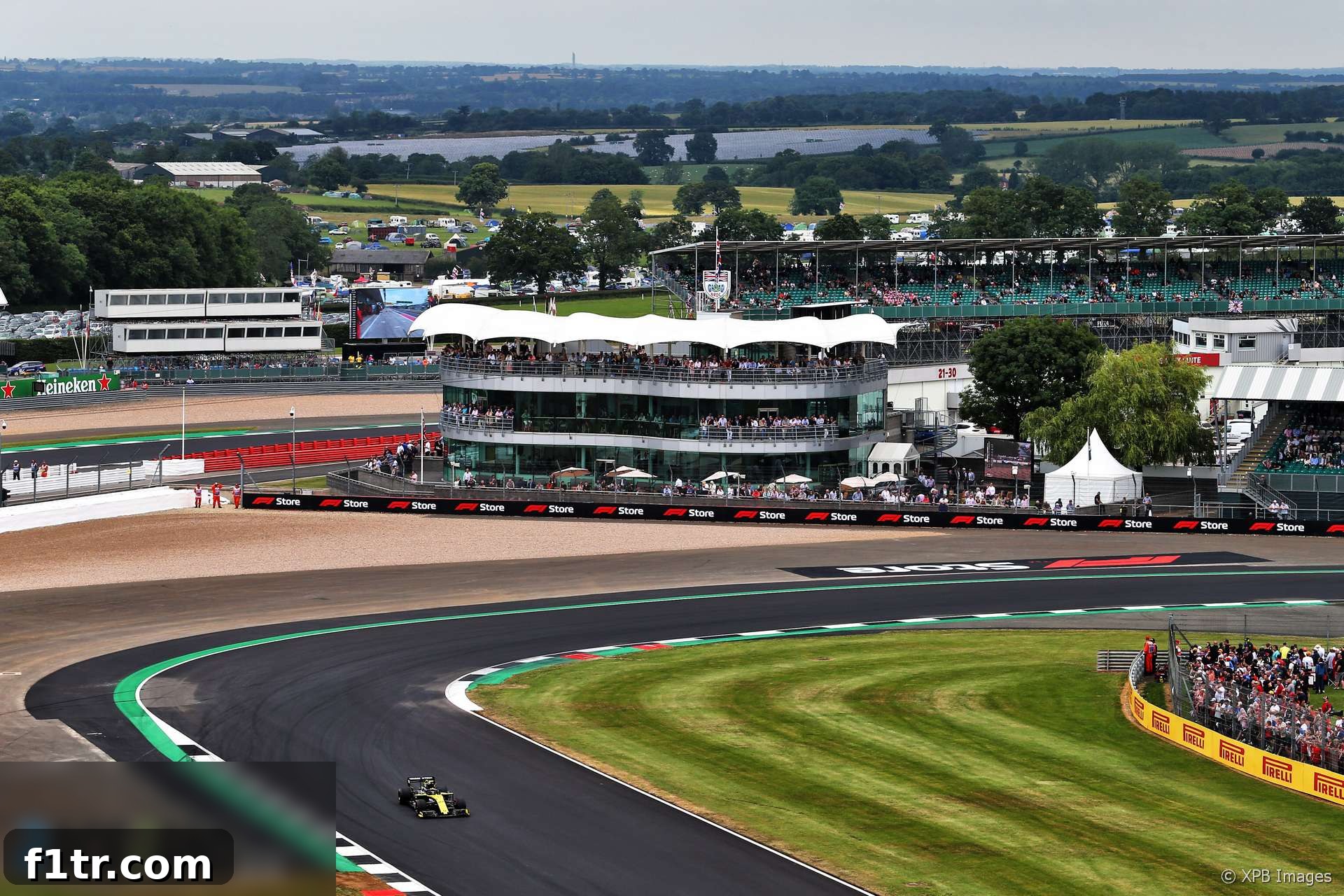
The 2020 Formula 1 season presented unprecedented challenges, pushing the sport’s resilience and adaptability to its limits. As the world grappled with the implications of a global pandemic, F1’s leadership, spearheaded by Liberty Media, embarked on the formidable task of constructing a viable racing calendar. Emerging from a period of shutdown and staff furloughing, the initial building blocks of a revised schedule were gradually falling into place. However, the path to a definitive European leg of the championship proved to be fraught with complex logistical hurdles and evolving governmental restrictions, particularly those imposed by the United Kingdom.
Advert | Become a Supporter & go ad-free
While numerous circuits across Europe signalled their readiness to host races, albeit at vastly different costs – with Liberty Media committed to covering expenses for the much-discussed ‘Closed Events’ blueprint – several crucial blanks remained in the proposed calendar. This uncertainty largely stemmed from the intricate situation surrounding the potential British Grand Prix at Silverstone. The pivotal announcement from the British government regarding mandatory 14-day quarantine periods for all cross-border arrivals, set to be enforced for the foreseeable future, introduced a significant complication. Despite hopes for exemptions, none were initially extended to sporting activities, impacting both returning residents and international visitors essential to the F1 circus.
Silverstone’s managing director, Stuart Pringle, expressed cautious optimism, indicating ongoing dialogues with the government. “We are still liaising with the government, but I’m encouraged that there is progress,” Pringle conveyed to Sky Sports. “It will take a few weeks for the way to become clear, but it definitely feels we are moving in the right direction.” Yet, Formula 1 operates on a timeline far more compressed than “a few weeks.” A firm decision on the British leg was, and remains, imperative within a tight deadline, given the immense and often novel logistics involved in staging a Grand Prix under these unique circumstances. Circuits across Europe were already re-scheduling their core activities, from track days to national events, making them understandably reluctant to block off dates only to find F1’s plans derailed by lingering governmental indecision. The sport’s ambitious return demanded swift, decisive action, a luxury that an evolving political landscape in the UK seemed unable to provide.
The evolving landscape across mainland Europe further intensified the pressure on the British contingent. A number of countries targeted by Formula 1 had begun to relax border formalities, with open travel expected by mid-June or early July at the latest. This widening disparity presented a tangible risk: by the time a definitive decision regarding British quarantine exemptions for F1 personnel was reached (if at all), Liberty Media might discover its options drastically reduced, potentially forcing the championship back to square one in its calendar planning.
The gravity of the situation prompted high-level interventions. One Monday evening, reports emerged that British Prime Minister Boris Johnson had reportedly instructed ministers to ensure that an F1 race in the UK could proceed, signalling a potential shift in government stance. This development, which some commentators suggested was strategically timed amidst a heated political controversy involving allegations against Johnson’s chief advisor, Dominic Cummings, immediately spurred Liberty Media to intensify its discussions with the Department for Digital, Culture, Media and Sport.
The stakes were not merely about whether Formula 1 could physically race in Britain this year, but extended to the fundamental ability of British-based team personnel to enter and depart other European countries to participate in events without facing mandatory quarantine periods. The alternative, confining personnel to a strictly controlled “bubble,” presented its own set of challenges and complexities. This predicament starkly highlighted a structural vulnerability within Formula 1: seven of its ten teams are predominantly based in the United Kingdom. This geographical concentration, a legacy of the sport’s history, meant that the UK’s border policies had a disproportionate impact on the entire championship’s operational viability. It raised questions that the FIA and Liberty Media would undoubtedly ponder for future strategic planning concerning the sport’s global footprint and resilience.
Advert | Become a RaceFans supporter andgo ad-free
Beyond the immediate travel restrictions, another significant logistical consideration loomed for a British Grand Prix. European circuits are largely situated within a relatively easy day’s travel from one another, enabling efficient team movement via road. Silverstone, however, lies approximately 300 kilometres north of the English Channel, a crucial maritime artery currently experiencing significant disruptions to ferry and tunnel crossings. These disruptions were expected to persist as long as strict quarantine conditions remained in place, adding another layer of complexity to the inclusion of a British event.
Liberty Media’s initial plan for the European leg envisioned clusters of ‘five weeks on, two weeks off’ to maximize the 11-week period from early July to mid-September, while simultaneously ensuring sufficient statutory rest periods for the demanding team crews. This ambitious schedule was subsequently refined to a more manageable ‘three on, one off’ format. This structure would typically involve a double-header event at a single circuit, followed by a standalone race at another venue, before a much-needed weekend break. This revised approach was designed to mitigate travel fatigue, reduce logistical burdens, and optimize the available window for racing.
This strategic adaptation would enable Liberty Media to stage eight, and potentially even nine, races in Europe by mid-September. Significantly, the historic Hockenheimring in Germany emerged as a strong candidate to host two races, serving as a direct replacement for Silverstone should the British government’s quarantine policy prove insurmountable or should negotiations with the British circuit fail. The provisional European calendar, which had already been circulated among the teams and was widely anticipated for an official announcement, painted a clear picture of the sport’s agile response:
- July 5th: Red Bull Ring, Austria (Season opener, double-header)
- July 12th: Red Bull Ring, Austria
- July 19th: Hungaroring, Hungary (Approximately 500km from Red Bull Ring, facilitating efficient overland travel)
- July 26th: No Race (Weekend off)
- August 2nd: Silverstone, UK (or Hockenheim, Germany, as alternative)
- August 9th: Silverstone, UK (or Hockenheim, Germany, as alternative)
- August 16th: Circuit de Barcelona-Catalunya, Spain (Significant travel via English Channel if Silverstone, otherwise a more direct route from Hockenheim)
- August 23rd: No Race (Weekend off)
- August 30th: Spa-Francorchamps, Belgium
- September 6th: Monza, Italy (Potentially a double-header if Singapore’s September 20th slot is cancelled, showcasing further flexibility)
This meticulously crafted European schedule underscored Liberty Media’s capability to achieve its core objective of eight European rounds, with or without a British leg. In fact, the complexities introduced by the English Channel crossing and the lengthy road trip necessary for personnel and equipment further complicated Silverstone’s inclusion. This raised a crucial and direct question: why wait for a decision from Downing Street that could potentially take weeks to materialize, especially without any guarantees that it would ultimately favor the iconic British venue in any form?
Some might deem this perspective harsh, but it’s important to remember that British fans, much like those attending any of the initial events across Europe, would not be permitted on-site due to public health restrictions. They, along with fans worldwide, would be compelled to follow the proceedings from television, rendering the physical location of the race less impactful in terms of immediate fan experience.
Advert | Become a RaceFans supporter andgo ad-free
Advert | Become a Supporter & go ad-free
Ultimately, the potential exclusion from the revised calendar would represent a significant blow to Silverstone. However, whispers within the paddock suggested that relations between Formula 1’s commercial rights holder and the circuit owners, the British Racing Drivers’ Club (BRDC), were not at their most amicable. This tension dated back to 2017 when the BRDC abruptly exercised a break clause in its contract, casting a shadow over the future of the British Grand Prix. Furthermore, it was alleged that Silverstone had initially quoted exorbitant rental fees for hosting a closed-door F1 event, reportedly demanding ten times the fee typically associated with a Formula E round, despite the latter involving a more compact track layout.
This strong stance from Liberty Media served a dual purpose. It demonstrated that even a venue as historically significant as Silverstone, which hosted the very first World Championship round 70 years prior and is situated in the sport’s industrial heartland, is not indispensable. This clear message was intended to reinforce Liberty’s position among all circuits, emphasizing the need for flexibility and fair commercial terms in an unprecedented era. The British government’s initial hesitation and subsequent dithering provided Liberty with a potent lever to exert this commercial influence.
Following the intense European phase, Formula 1’s ambitious plan was to pivot eastward. This next segment of the calendar would likely comprise a quartet of ‘two-on, one weekend off’ sets, strategically grouping races in regions such as Russia, Azerbaijan, Japan, and China. This geographically clustered approach aimed to minimize long-haul travel disruptions and maximize efficiency during the global leg of the championship.
Subsequently, the series was slated to head across the Atlantic for twinned North American rounds, carefully positioned to capture the crucial market there. The grand finale of the 2020 Formula 1 World Championship was anticipated to be a Middle East double-header, with races in Bahrain and Abu Dhabi bringing the season to a close shortly before Christmas. As a contingency measure, Vietnam was pencilled in as a potential host between the North American and Middle Eastern rounds, offering an additional layer of flexibility to an already complex schedule.
Despite the not inconsiderable odds, including persistent logistical challenges and the unpredictable nature of governmental regulations across different nations, the outlook for the 2020 Formula 1 season remained remarkably optimistic. The collective determination of F1 leadership, teams, and circuits aimed for a robust championship comprising sixteen races. This target, once seemingly impossible, now appeared increasingly likely, a testament to the sport’s unwavering commitment to deliver thrilling competition to its global fanbase, even in the most extraordinary of circumstances.