Haas F1 Team Poised for Major French Grand Prix Upgrade: A Strategic Gamble
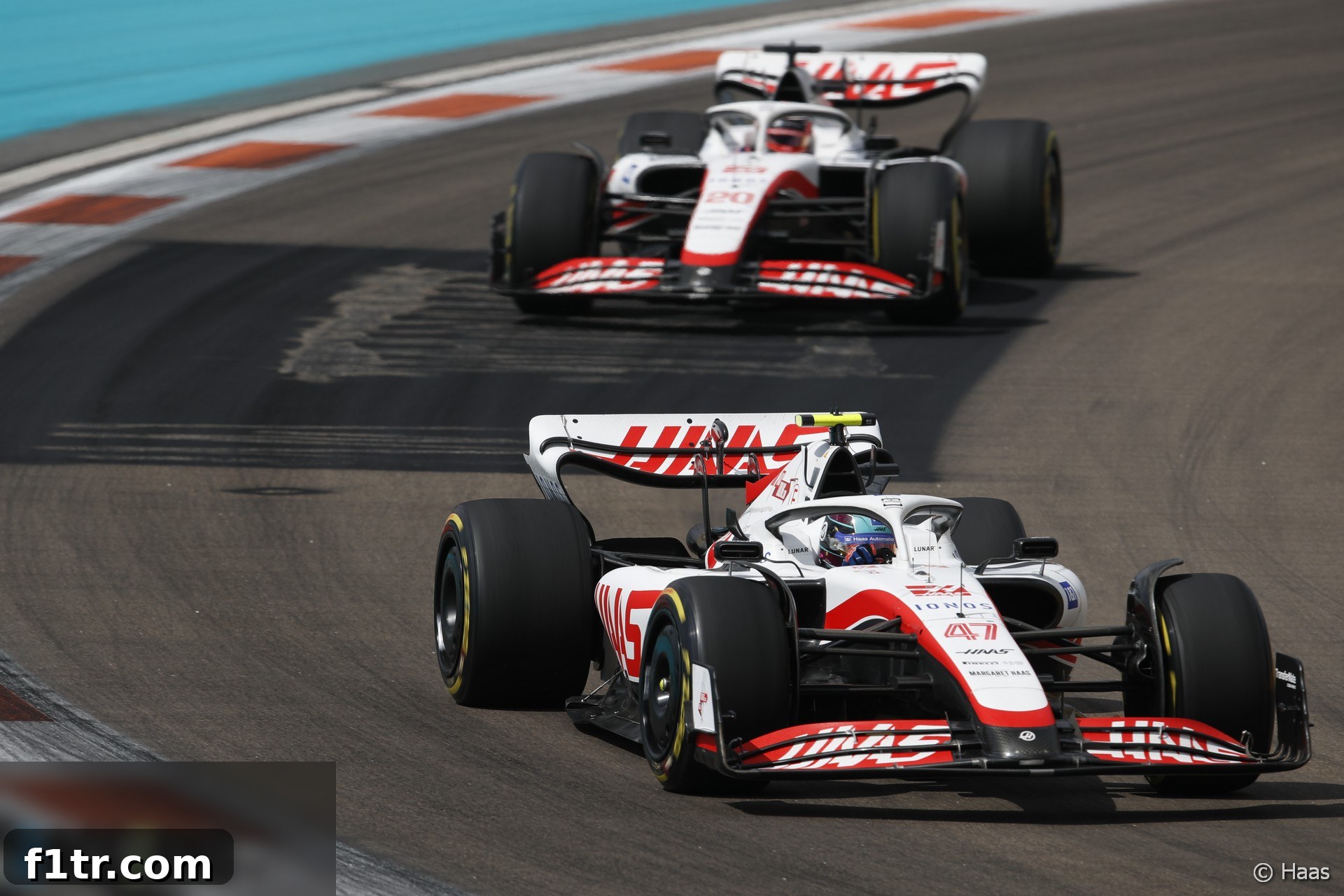
The Haas Formula 1 Team is gearing up to introduce a significant upgrade package for their VF-22 car at the highly anticipated French Grand Prix. This confirmation comes directly from team principal Guenther Steiner, signalling a pivotal moment in their 2022 campaign.
While many of their direct rivals are expected to roll out various updates and enhancements at the preceding Spanish Grand Prix, Haas has chosen a more measured and strategic approach. Their drivers, Kevin Magnussen and Mick Schumacher, will need to wait a further seven races from the Spanish GP before the team’s first major modification to their car makes its debut at Circuit Paul Ricard.
This decision to delay their upgrade until mid-season is a calculated risk, contrasting sharply with the incremental development philosophies often seen in Formula 1. However, Steiner expressed confidence in the scope and impact of the impending changes. “You will see when we bring the upgrade it’s everywhere,” Steiner stated, elaborating on the comprehensiveness of the package. “We will make a nice package. I wouldn’t say ‘everywhere’, that’s exaggerated, but quite a big one. It’s not just a turning vane or something like this, it’s quite a few changes.” This suggests a holistic overhaul, potentially targeting multiple areas of the car’s aerodynamics and mechanical setup, rather than minor tweaks to specific components.
Understanding the Strategic Delay: Why Wait for Paul Ricard?
The decision to hold back on upgrades while competitors introduce theirs is unusual in the fast-paced world of Formula 1 development. For Haas, this strategy is rooted in several factors. Firstly, as a smaller team with more constrained resources compared to the sport’s giants like Mercedes, Ferrari, and Red Bull, every development choice must be meticulously planned. Introducing smaller, frequent updates can be inefficient, diverting valuable engineering time and financial resources without guaranteeing a significant performance leap.
Instead, Haas appears to have opted for a “big bang” approach. By accumulating data from the initial races of the season, understanding the car’s baseline performance, and identifying its inherent strengths and weaknesses, their engineers can design a more effective and integrated upgrade package. This allows for a more comprehensive solution that addresses multiple areas of performance simultaneously, rather than tackling issues piecemeal. This concentrated effort aims to maximize the impact of their development budget and bring a truly transformative set of changes to the VF-22, rather than minor, barely perceptible modifications.
Furthermore, the 2022 season marked a radical shift in technical regulations, introducing ground-effect aerodynamics and simplified front and rear wings. This regulatory reset meant all teams started with a relatively blank slate. The initial races provided a crucial learning curve, allowing teams to better understand how their cars interact with the new rules, identify performance bottlenecks, and refine their development priorities. For Haas, waiting until the French Grand Prix could mean their engineers have had sufficient time to gather valuable data, understand common issues like ‘porpoising’, and design solutions that are truly impactful and well-integrated into the car’s overall philosophy.
Navigating Performance Gains and the ‘Porpoising’ Puzzle
Despite the promise of a substantial upgrade, Guenther Steiner remains cautiously optimistic regarding the precise performance gains they can expect. He highlighted the complex interplay between new components and the ongoing process of understanding and optimizing the car’s existing setup. “It’s not only the upgrades, it’s also you understand the car better,” he explained. “You make improvements.”
A significant factor complicating performance assessment in the early 2022 season has been the phenomenon of ‘porpoising’ – the violent, high-frequency vertical oscillation of the car at high speeds, a direct consequence of the new ground-effect aerodynamics. Steiner elaborated on its impact: “Especially this year it’s difficult to say with the bouncing because if you have bouncing you are really slow. Then if you sort that one out you go really fast. But that doesn’t mean that it’s an upgrade, it’s maybe only in your set-up that you can get rid of the bouncing. So I wouldn’t give it a time on that one.”
This insight is crucial. Resolving porpoising, even through meticulous setup adjustments or minor changes, can unlock significant lap time. What might appear as a performance boost from new parts could, in reality, be the car finally operating as intended without the disruptive effects of bouncing. This makes it challenging to isolate the exact contribution of new aerodynamic elements or mechanical components. Haas’s engineers will undoubtedly be working to ensure their upgrade package not only introduces new performance but also works harmoniously to mitigate any remaining porpoising issues, allowing the car to operate in its optimal performance window.
Advert | Become a Supporter & go ad-free
The Season So Far: Early Promise and Current Challenges
Haas began the 2022 Formula 1 season with remarkable vigour, particularly in the hands of returning driver Kevin Magnussen. The team surprised many by securing a strong third-place position in the Constructors’ Championship after the opening race in Bahrain, a testament to their readiness for the new regulations. Magnussen continued to impress with points finishes in the subsequent races.
However, as the season progressed and other teams brought their own development iterations, Haas saw their initial competitive edge diminish. They have since fallen to eighth place in the Constructors’ standings. Despite this dip, Guenther Steiner remains confident in the team’s ability to maintain a competitive level with their current package until the French Grand Prix upgrade arrives. “I think we shouldn’t have pain, otherwise we should have brought the upgrade earlier,” he asserted. “I said before it was a conscious decision to do this. So I think we can get enough out of what we have got.”
Steiner also acknowledged the uncertainty surrounding competitors’ development paths. “I don’t know what the other ones are bringing. There is a big announcement of big updates but I don’t know how good they are.” This highlights a key aspect of F1 development: teams operate in a vacuum of information regarding their rivals’ specific upgrade plans, making their own strategic choices even more critical.
Budget Realities: Haas vs. The Budget Cap
A recurring theme in the 2022 season has been the impact of Formula 1’s budget cap, introduced to level the playing field and promote financial sustainability. Top teams like Ferrari and Red Bull have openly discussed how the cap is restricting their ability to introduce upgrades as rapidly as they might wish, especially with rising global inflation and logistical costs.
Haas, however, operates under a different constraint. Steiner candidly pointed out that their limitation is “not the budget cap, it’s the budget.” This distinction is vital. While teams like Ferrari and Red Bull are bumping against the ceiling of the $140 million budget cap (for 2022), Haas is still operating below that level due to their overall financial resources. This means their development decisions are dictated more by the funds they have available than by a regulatory limit. This inherent financial difference underpins their strategic choices, including the timing and scale of their upgrade packages. It explains why a smaller team might choose to consolidate their development efforts into fewer, larger upgrades rather than a continuous stream of minor updates.
The budget cap was designed to prevent the sport from becoming a spending war, but its impact varies greatly depending on a team’s pre-existing financial might. For Haas, the challenge isn’t staying below the cap, but rather having sufficient funds to compete effectively within it. Their calculated delay for the French Grand Prix upgrade is a testament to their efforts to extract maximum value from every dollar spent, ensuring that when the new parts arrive, they deliver a tangible and lasting boost to performance.
Advert | Become a RaceFans supporter andgo ad-free
Looking Ahead: The French Grand Prix and Beyond
The French Grand Prix at Paul Ricard will undoubtedly be a crucial juncture for the Haas F1 Team. The introduction of this “big” upgrade package is intended to reignite their competitive spirit and help them climb back up the Constructors’ Championship standings. The team will be hoping for a performance uplift that allows Kevin Magnussen and Mick Schumacher to consistently challenge for points, building on the glimpses of potential shown earlier in the season.
Success with this upgrade could validate Haas’s strategic development philosophy for future seasons, demonstrating that a focused, comprehensive approach can yield better results than a fragmented, reactive one, especially for a team with more limited resources. The eyes of the F1 world, and particularly Haas fans, will be firmly fixed on the VF-22 when it rolls out with its new components, eager to see if Guenther Steiner’s strategic gamble pays off and propels the team back into the heart of the midfield battle. The journey from initial promise to mid-season resurgence hinges on the effectiveness of this carefully crafted package.
Related Articles: 2022 Spanish Grand Prix Insights
- Q&A: Kubica ‘shocked’ by ‘completely different’ Alfa Romeo in Spain
- How heat and traffic trouble left F1 fans fuming after the Spanish Grand Prix
- Mercedes not yet certain their porpoising problem has “disappeared”
- Sticking to budget cap “pretty much impossible” due to rising costs – McLaren
- Ricciardo hoping to find an explanation for Spanish GP pace deficit to Norris
Browse all 2022 Spanish Grand Prix articles