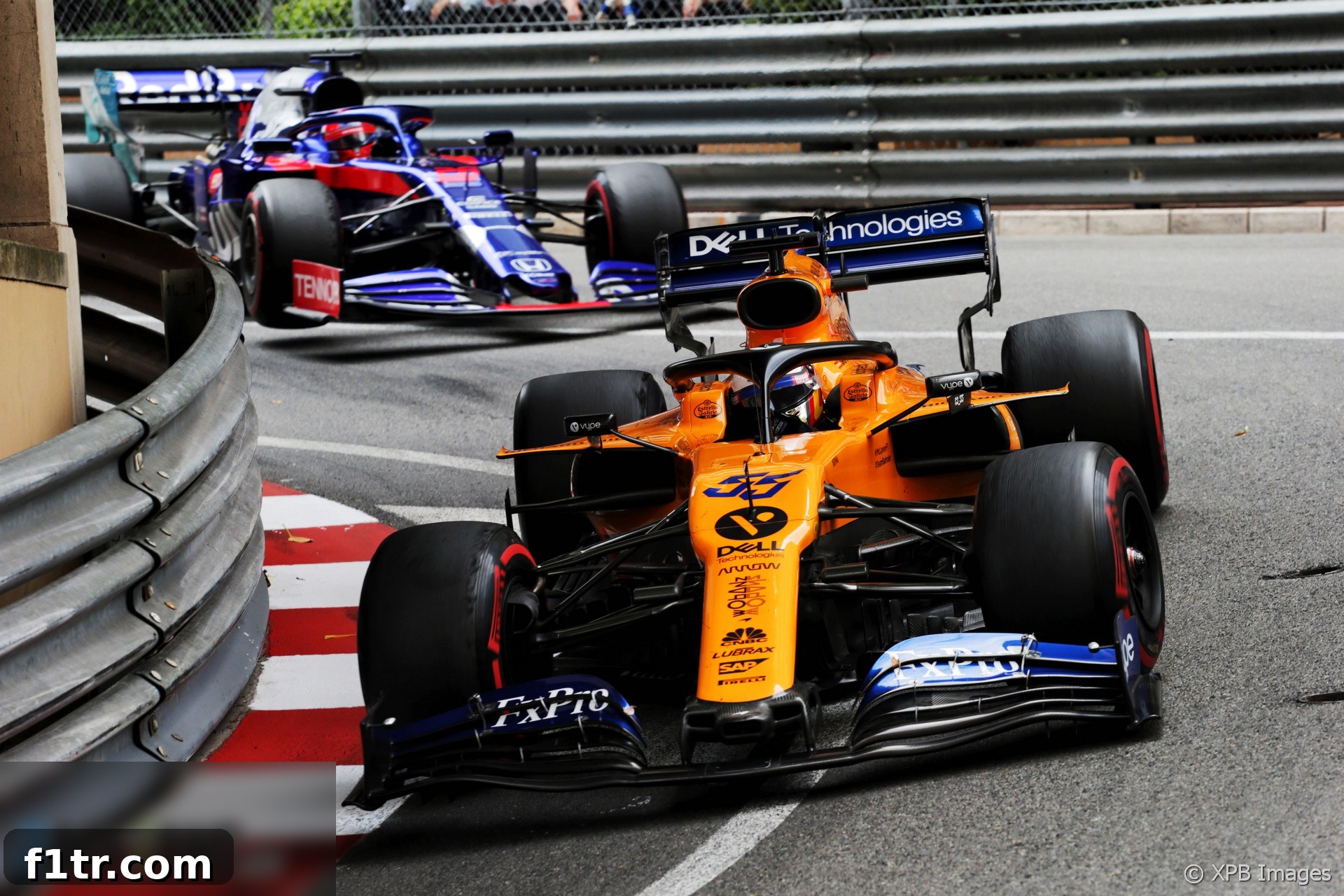
Daniil Kvyat Reflects on Monaco Grand Prix Strategy: The Fine Line Between Success and ‘One Car Length’
The streets of Monte Carlo are legendary for testing a Formula 1 driver’s skill and a team’s strategic acumen. In the chaotic and often unpredictable 2019 Monaco Grand Prix, Daniil Kvyat found himself in the heart of a nail-biting strategic duel, ultimately questioning whether a mere car length could have dramatically altered his race outcome. The Toro Rosso driver, known for his aggressive style and analytical approach, revealed he would meticulously examine his race strategy to determine if there was any viable path to finish ahead of McLaren’s Carlos Sainz Jnr., who proved to be a formidable adversary on the principality’s unforgiving circuit.
The initial moments of the race set the stage for this intense battle. Carlos Sainz Jnr., driving for McLaren, managed to get ahead of Kvyat right from the start, seizing a crucial track position advantage in a race where overtaking is notoriously difficult. This early maneuver by Sainz placed Kvyat under immediate pressure, forcing his Toro Rosso team to think creatively about their pit stop strategy to regain the lost ground. The decision made by Toro Rosso was bold: they opted to keep Kvyat out for an additional two laps after Sainz had already pitted. This extended stint on track was a calculated gamble, designed to give Kvyat a window to build enough pace on his existing tyres to leapfrog Sainz during his own pit stop.
The tension was palpable as Kvyat pushed his car to its limits on older tyres, trying to extract every ounce of performance. However, the delicate balance between tyre life and raw speed proved to be incredibly fine. Upon exiting the pits, Kvyat found himself agonisingly close to Sainz, but not quite ahead. “It was very close, I mean one car length,” a reflective Kvyat explained after the race. “Just one car length would have got us ahead. I will analyse later how it was. I think my first lap [after Sainz pitted] was mega, the second lap already the tyres were giving up. So maybe if we pitted just after one lap we could have stayed ahead, I’m not sure, we will analyse, I don’t know. I think it was a fantastic call anyway and we did our best.”
Kvyat’s introspection highlighted the razor-thin margins that define success and disappointment in Formula 1, particularly on a track like Monaco. His “mega” first lap post-Sainz’s stop demonstrated his ability to extract performance, but the rapid degradation of his tyres on the subsequent lap underscored the immense challenge of maintaining pace on a circuit known for its high-stress demands on rubber. The strategic conundrum for Toro Rosso was immense: balancing the desire to gain track position against the inevitable drop-off in performance as tyres aged. The difference between pitting one lap earlier or later often hinges on real-time data, driver feedback, and a touch of calculated risk, making such decisions some of the most critical during a race.
The battle intensified further when Sainz, now on fresh rubber, began to demonstrate blistering pace. Indeed, once his new tyres were up to optimal temperature, Sainz managed to set the fastest lap of the race, a clear indicator of his McLaren’s performance potential and the effectiveness of his pit strategy. This turn of events fueled Kvyat’s suspicion that an earlier stop might have been the key. “He tried to push super-hard, that’s why I’m asking myself maybe he needed one lap to warm up the tyres, then after that his second lap was too good already for me. I had a tyre with 35 laps on.” Kvyat’s observation perfectly encapsulated the strategic tightrope walk. Sainz’s ability to quickly bring his new tyres into their working window and unleash their full potential created a moving target that Kvyat, on significantly older tyres, simply couldn’t match. The 35 laps on Kvyat’s tyres at that critical juncture meant he was operating with a severe grip disadvantage, making the “one car length” gap feel like an insurmountable chasm.
Despite the frustration of narrowly missing out on a better position against Sainz, Kvyat was quick to commend his team for another crucial strategic decision during the race: their choice not to pit him earlier during a Safety Car period. This specific call, he asserted, was instrumental in shaping the rest of his race in a positive light. “It was a very good call because my tyres were in a good state and there was no point in changing them.” In Monaco, where Safety Car deployments are a common occurrence, the decision to pit or stay out is often a make-or-break moment. By trusting in the longevity and performance of Kvyat’s current tyres, Toro Rosso avoided losing valuable track position and preserved a strategic advantage that paid dividends later in the race. This demonstrated the team’s ability to make astute judgments under pressure, balancing immediate gains with the broader race strategy.
Monaco’s unique street circuit configuration, with its tight corners and minimal overtaking opportunities, elevates strategic thinking to an art form. Track position is paramount, and tyre management becomes an intricate dance between aggression and preservation. Pit stop timings, especially around Safety Car periods or virtual Safety Cars, often dictate the entire outcome for a driver. Kvyat’s race against Sainz was a microcosm of these challenges, showcasing how every millisecond and every meter on track can be the difference between gaining an advantage or falling behind. For drivers like Kvyat, who thrive on analyzing data and dissecting every aspect of their performance, these strategic battles are as intense as any wheel-to-wheel fight.
The 2019 season saw Daniil Kvyat making a strong return to Formula 1 with Toro Rosso, showcasing flashes of the talent that had previously earned him a Red Bull seat. His performance in Monaco, despite the strategic frustrations, underlined his resilience and his meticulous approach to racing. He consistently pushed his car to its limits, demonstrating both raw speed and a keen understanding of race dynamics. For Toro Rosso, these strategic discussions and analyses, even in defeat, were invaluable learning opportunities, feeding into their ongoing development and refinement of their race day operations. The competitive landscape of Formula 1 demands constant evolution, and every race, every strategic decision, contributes to that critical learning curve.
Ultimately, Kvyat’s reflections after the 2019 Monaco Grand Prix serve as a powerful reminder of the intricate interplay between driver skill, vehicle performance, and strategic execution in Formula 1. The fine line between success and what-if scenarios, often measured in mere car lengths or fractions of a second, defines the sport’s drama. While the result against Sainz might have left Kvyat pondering an alternative strategic path, his overall performance and his team’s courageous calls underscored the relentless pursuit of perfection that characterizes every team and driver in the pinnacle of motorsport.
Don’t miss anything new from RaceFans
Follow RaceFans on social media:
- Join RaceFans on Facebook
- Follow RaceFans on Twitter
- Get daily email updates from RaceFans
Become a RaceFans supporter and go ad-free
2019 F1 season
- Crying in the Melbourne car park at 2019 grand prix was my career low – Ocon
- McLaren Racing reports reduced £71 million loss in 2019
- Kvyat: Hockenheim podium last year was “my biggest achievement” so far
- How the FIA’s new encrypted fuel flow meter targets Ferrari’s suspected ‘aliasing’ trick
- “He smashed my office door”: 23 must-see moments from ‘Drive to Survive’ season two
Browse all 2019 F1 season articles