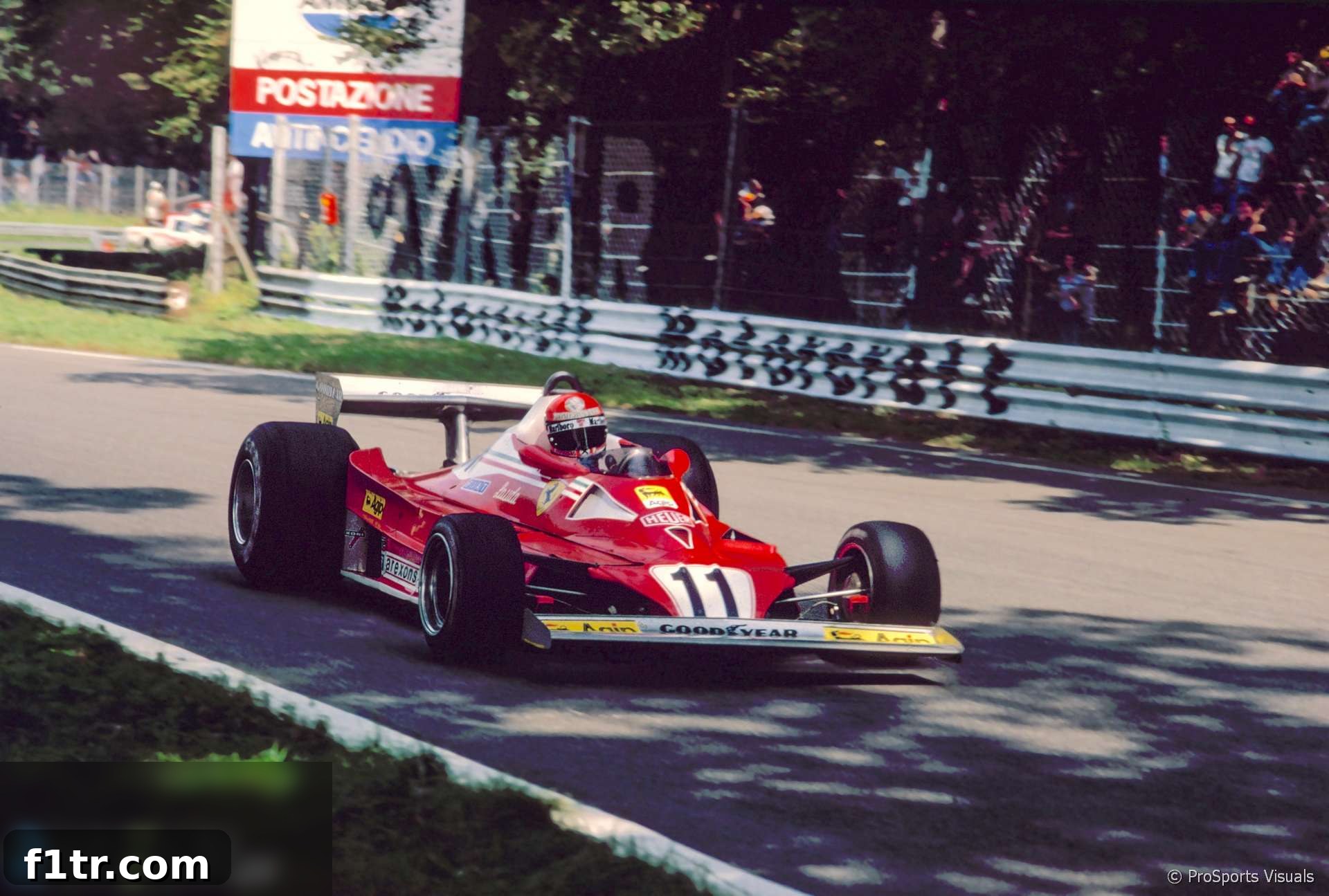
Niki Lauda’s Triumphant Return: Conquering the 1977 F1 World Championship and His Ferrari Farewell
The Phoenix Rises: Niki Lauda’s Extraordinary 1977 Season
In 1976, Niki Lauda faced a near-fatal accident at the treacherous Nürburgring Nordschleife, a brush with death that left an indelible mark but forged an even stronger resolve. Against all odds, he made a miraculous return to racing, narrowly missing out on the World Championship that year. The 1977 season was set to be his ultimate comeback, a testament to his indomitable spirit and strategic brilliance. However, beneath the surface of his quest for a second world title with Ferrari, a deep rift had formed between the legendary driver and the iconic Italian team. This brewing tension would ultimately lead to a dramatic split, with Lauda walking away from the Scuderia even before the season concluded, embarking on a new chapter with Bernie Ecclestone’s ambitious Brabham team.
This exclusive insight delves into the pivotal races of Lauda’s remarkable 1977 campaign, chronicling his journey to secure his second world championship, the inevitable severing of his ties with Ferrari, and the eagerly anticipated beginning of his career with Brabham.
203 German Grand Prix: A Resounding Comeback
Hockenheim, 31 July 1977, Formula 1
Ferrari 312T2/031 • #11
Qualifying: 3rd • Result: 1st (fastest lap)
Hockenheim, a circuit etched in motorsport history, provided the backdrop for a truly emotional and significant victory for Niki Lauda. Encouragingly, Lauda demonstrated his formidable pace by topping the timesheets in pre-race testing. During the second practice session, he experimented with a distinctive two-tier rear wing, featuring streamlining pods designed to minimize air turbulence behind the rear wheels. Despite persistent issues with the Ferrari’s handling, Lauda’s technical acumen shone through. Following his insistence on an engine change, he secured a commendable third position on the grid during final qualifying, also registering the fastest speed through the speed trap – a clear indicator of the car’s potential on the long straights.
The German crowd, acutely aware of the first anniversary of his horrific accident, greeted Lauda with an overwhelming wave of support. Cheering and banner-waving filled the packed grandstands as he took his place, a poignant moment of recognition for his bravery. The start itself, however, was chaotic. Signalled by a flag due to a damaged lighting gantry, it led to a chain reaction of confusion mid-grid. An inattentive Patrick Depailler (Tyrrell) hesitated, causing a multi-car pile-up that eliminated Clay Regazzoni’s Ensign and Alan Jones’s Shadow. Lauda, expertly navigating the melee, settled into third place behind John Watson’s Brabham. His path to the front became clearer when Watson’s Alfa Romeo engine expired after just seven laps, leaving only Jody Scheckter’s Wolf ahead.
Lauda then initiated a relentless pursuit of Scheckter. On lap 13, his pressure paid off, forcing the South African into a minor error while exiting the Östkurve. Seizing the opportunity, Lauda executed a superb outbraking maneuver at the second chicane, surging past the Wolf to take the lead. He swiftly established a small but crucial gap, working tirelessly for several laps to maintain his advantage within a closely contested four-car group. Once his position was consolidated, Lauda drove with smooth, unwavering confidence, appearing in complete command as he steadily extended his lead to a comfortable six seconds, which he held until the chequered flag. This dominant performance, exactly one year after the accident that nearly claimed his life, earned him a thunderous ovation from the adoring crowd.
This victory was more than just another race win; it pushed Lauda past Alberto Ascari’s tally of 13 victories (achieved between 1951–53), making him the most successful Ferrari driver in history by number of wins. Crucially, it also solidified his position at the apex of the World Championship standings, extending his lead to a commanding 10 points over his closest challenger, now Jody Scheckter.
204 Austrian Grand Prix: Home Soil Heroics
Österreichring, 14 August 1977, Formula 1
Ferrari 312T2/031 • #11
Qualifying: 1st • Result: 2nd
The week following the German Grand Prix saw a rigorous four-day test session at the Österreichring, where Niki Lauda once again demonstrated his superior pace. He proved fastest over the first three days, particularly when Goodyear mandated hard tyre compounds for all competitors. Confident in his findings, Lauda departed before the final day, having extracted all necessary data. The circuit itself had undergone significant modifications since the previous year, notably the introduction of a chicane before the notoriously fast Hella-Licht curve after the pits. This alteration made the track appreciably slower, though many drivers considered it a welcome improvement for safety and race dynamics.
A week later, Lauda arrived for his home Grand Prix, applying the invaluable lessons learned from the test session in front of a massive, partisan crowd. His driving style was a masterclass in economy and apparent effortlessness, yet his practice times steadily tumbled, projecting an air of complete command. Despite a brief setback that relegated him to the spare car (chassis 030) when a throttle-linkage bearing seized, he remained quickest. Once his race car was repaired, he set his ultimate best time, securing a serene pole position by a comfortable margin. Afterwards, he famously stood on the pit wall, calmly observing his rivals as they struggled to get anywhere near his benchmark lap.
Race morning brought prolonged, heavy rain, leaving the track damp and treacherous for the start. Like most of his competitors, Lauda opted for slick tyres, but he was far from content with his car’s handling, which was still set up for dry conditions. Although he initially led away from pole, third-placed Mario Andretti (Lotus) executed a daring move into the Boschkurve, not only passing second-placed James Hunt (McLaren) but also snatching the lead from Lauda. To the dismay of the home crowd, Hunt also managed to get past before the end of the first lap. Within another lap, Jody Scheckter (Wolf) and Gunnar Nilsson (Lotus) further demoted the Ferrari. With the 312T2 exhibiting vicious oversteer, Lauda’s slump continued, and by lap 9, he found himself languishing in 10th position.
However, as the track rapidly dried, Lauda’s fortunes began to turn. Driving flat out with renewed vigour, he surged back into contention. Within four more laps, he had clawed his way back up to fifth place, then skillfully picked off Hans Stuck (March) and Scheckter to claim third by lap 38. With just 11 laps remaining, he was promoted to second when James Hunt, who had been leading confidently, retired with a blown engine. This left Alan Jones to inherit the lead and score Shadow’s inaugural Formula 1 victory, finishing a remarkable 20 seconds clear of Lauda, who secured a hard-fought second place on home soil.
205 Dutch Grand Prix: Strategic Masterclass and a Secret Pact
Zandvoort, 28 August 1977, Formula 1
Ferrari 312T2/031 • #11
Qualifying: 4th • Result: 1st (fastest lap)
Zandvoort, with its challenging seaside circuit and notorious corners like Tarzan and the hairpin before Hunzerug, proved to be a difficult prospect for Lauda and his Ferrari 312T2. Despite Lauda’s endless adjustments and meticulous setup changes during practice, the car’s persistent lack of grip remained a significant issue. Wheelspin out of the hairpin was so severe that at times the car seemed to be on ice, making it incredibly challenging to put power down effectively. He even tried the spare chassis (030) for a few laps, only to find it offered no discernible improvement. Resigned to the car’s inherent limitations, Lauda concluded that his only option was to attack the circuit with sheer determination and hope for the best, ultimately qualifying a solid fourth.
From the start, Lauda maintained his fourth-place position. On lap 5, the race leaders saw drama unfold when Mario Andretti (Lotus) attempted an audacious overtake on James Hunt (McLaren) around the outside of the sweeping Tarzan corner. The two collided, resulting in Hunt’s elimination. Andretti, though recovering, lost ground. When he caught up with Lauda’s Ferrari on lap 11, the astute Austrian wisely afforded the ground-effect Lotus just enough room at Tarzan for Andretti to pull off a similar move, this time without incident. Lauda’s foresight proved correct when, two laps later, Andretti’s Cosworth engine failed. This promoted Lauda to second, setting the stage for a hunt for Jacques Laffite’s leading Ligier.
After a brief but entertaining scrap, Lauda expertly slipstreamed past Laffite with relative ease at the end of the main straight on lap 20, just after quarter distance. The Frenchman, driving the potent Matra-powered Ligier, was unable to respond. Lauda swiftly opened up a five-second advantage, then controlled the remainder of the race with masterful precision. As he reeled off the laps, he encountered a frustrating delay while lapping Emerson Fittipaldi, allowing Laffite to close the gap once more. However, Lauda’s Ferrari, with its strong engine, still had the pace to pull away, and he paced himself brilliantly to take a copybook victory by two seconds.
This critical win made a second World Championship title appear highly probable. Lauda’s 63 points put him far ahead of Scheckter (42), Reutemann (35), and Andretti (32). Yet, Lauda’s underlying dissatisfaction with Ferrari had intensified significantly. The very next day, he travelled to Maranello for a crucial meeting with Enzo Ferrari, his son Piero Lardi, Luca di Montezemolo, and financial manager Ermanno della Casa. While they parted on amicable terms, Lauda made it unequivocally clear that nothing would persuade him to remain with the team. Notably, he made no technical or financial demands during the meeting, a clear indication that his decision was final and not negotiable. In a revelation that would stun the F1 world, it was later understood that he had, in fact, secretly signed for another team that very weekend – Bernie Ecclestone’s Brabham outfit.
Lauda’s decision to leave Ferrari had been brewing for several weeks prior. He had engaged in extensive discussions with both Team Lotus and Walter Wolf Racing. Wolf Racing, in particular, held a certain allure due to Walter Wolf’s Austrian heritage, and the two men had developed a strong friendship. Lauda had also held preliminary talks with Formula 1 newcomers Renault, who were certainly capable of meeting his salary expectations and offered the enticing prospect of building a team around him, the challenge of developing their innovative turbocharged car, and exclusive use of Michelin tyres. However, after careful consideration of all options, Niki Lauda ultimately opted for Brabham, a move that would reshape his career and the Formula 1 landscape.
206 Italian Grand Prix: Defiance at Monza
Monza, 11 September 1977, Formula 1
Ferrari 312T2/031 • #11
Qualifying: 5th • Result: 2nd
Ten days before the Italian Grand Prix, with impeccable timing given his record number of wins for the Scuderia and his comfortable lead in the World Championship, Niki Lauda provided further irrefutable proof of his immense bravery. He publicly announced his departure from Ferrari – a move lesser men would undoubtedly have kept quiet until after the emotionally charged Monza race, Ferrari’s home Grand Prix. Consequently, during the circuit’s traditional pre-race test session, he was initially met with a chorus of jeers and taunts from sections of the passionate Tifosi. However, as official practice commenced, such displays of partisan displeasure quickly dissipated, replaced by a grudging respect for his talent and audacity.
Answering the crowd’s initial negativity in the most emphatic manner possible, Lauda was fastest on Friday. Yet, the weekend was not without its moments of drama. While trying out a set of experimental Goodyear tyres during the following day’s untimed practice, he spun into the guardrail at Parabolica while attempting to overtake Gunnar Nilsson’s Lotus on the outside. Despite this setback, the Ferrari mechanics swiftly grafted the rear suspension of the spare car (030) onto his regular chassis (031) for the final qualifying session. He managed to qualify fifth, though he was left disappointed to be adrift of his teammate Carlos Reutemann, who had secured a front-row start. Lauda’s session ended prematurely when his car ran out of fuel, adding to his frustration.
Starting sixth, Lauda executed a precise first lap. On lap 2, he expertly passed Clay Regazzoni’s fast-starting Ensign to claim fifth place. His ascent continued when, 10 laps later, pole-sitter James Hunt spun his McLaren, losing multiple positions and promoting Lauda to fourth. The Austrian’s progress was further aided on lap 24 when Jody Scheckter’s Wolf suffered an engine blow-up, allowing Lauda to move up to third, now directly behind his teammate Reutemann. Eleven laps later, the sister Ferrari lost some ground when part of its exhaust broke, and Lauda skillfully slipped past his teammate to secure second place.
Shortly after, as the two Ferraris were closing in to lap Bruno Giacomelli’s McLaren, the Italian driver’s engine spectacularly blew up, depositing a significant oil slick directly in their path. Lauda’s famed fast reflexes allowed him to steer instinctively around the hazardous patch. Reutemann, however, unsighted by the oil, spun off the track and retired from the race, leaving Lauda alone in second. For the remainder of the race, Lauda’s engine, now down on power, prevented him from making any impression on Mario Andretti’s lead. He duly finished 17 seconds adrift of the victorious Lotus, securing a crucial second place finish.
207 United States Grand Prix (East): Champion Once More
Watkins Glen, 2 October 1977, Formula 1
Ferrari 312T2/031 • #11
Qualifying: 7th • Result: 4th
By the time the Formula 1 circus arrived at Watkins Glen, Niki Lauda’s groundbreaking move to Brabham had been officially confirmed, sending shockwaves through the paddock. As was often the case with departing Ferrari drivers, Lauda found himself out of favour, and the once-sympathetic relationship between driver and team had all but vanished. He was no longer granted access to Ferrari’s private test track at Fiorano, rendering impossible any development work he had hoped to complete before the crucial two North American races. At Watkins Glen, Lauda simply ran out of time before he could fully explore all the combinations of tyres and aerodynamic settings he had planned. Out of the picture for much of practice, his final session was cut short by an engine failure, caused by a cracked cylinder liner, forcing him to settle for a disappointing seventh on the grid.
The race day brought cold, wet weather, adding another layer of challenge. Lauda got away in sixth, but was elbowed wide on the long turn in the Anvil section of the circuit, allowing several cars to get by. He expertly forced his way back into contention, engaging in a brief tussle with teammate Carlos Reutemann. This battle was ultimately decided in Lauda’s favour when the Argentine driver spun on lap 11, allowing Lauda to move through into a comfortable fourth place. Recognizing the importance of points and unwilling to take any unnecessary chances, Lauda drove a supremely tactical race. He meticulously preserved his wet tyres as the track gradually dried, skillfully managing his pace to collect the crucial three points he needed. These points were precisely enough to mathematically secure his second Formula 1 World Championship title – a remarkable achievement against a backdrop of internal strife and a car that was often outpaced by its rivals.
The Fallout and A New Horizon: Lauda Leaves Ferrari
With his second World Championship secured, Lauda made another bold, controversial decision: he opted out of the Canadian Grand Prix, scheduled for the following weekend. Ferrari, attempting to control the narrative, announced on the morning of Friday practice that Lauda was unable to race due to “medical reasons.” In reality, Lauda, with his characteristic candour, admitted he was simply not prepared to drive given the increasingly toxic political climate within the Italian team. His decision stemmed from a confluence of grievances that had escalated throughout the season.
Three specific issues particularly irked him. Firstly, he was dismayed by the sacking of his faithful mechanic, Ermanno Cuoghi, a move he viewed as arbitrary and disrespectful. Secondly, he was annoyed by the team’s decision to run a third car for Gilles Villeneuve at the French-Canadian’s home race. Lauda firmly believed this move would stretch the team’s resources too thin, potentially compromising the performance and reliability of his own car. Finally, he had grown utterly fed up with the histrionics of Mauro Forghieri, Ferrari’s technical director, at races, considering them a detrimental distraction from the essential focus on the job at hand. The constant drama and internal politics had become unbearable for the pragmatic Austrian.
Mindful that fans were being denied the presence of the newly crowned World Champion, Bernie Ecclestone – Lauda’s new employer at Brabham and Formula 1’s emerging commercial supremo – attempted to persuade Lauda to change his mind and race in Canada. However, Lauda remained resolute. He carried out his contractual promotional duties before the event, collected his fee, and promptly headed off to purchase a Learjet, a symbolic gesture of his newly acquired freedom and independence.
Lauda’s entry for the season-ending Japanese Grand Prix on October 23rd was subsequently scratched, with Gilles Villeneuve taking over his car. The Ferrari 312T2s handled abominably at Fuji that year, notoriously lacking both grip and traction. Villeneuve later commented that his car was ‘unbelievably bad.’ In the race, the young hotshoe rammed the back of Ronnie Peterson’s Tyrrell at the end of the main straight, reportedly due to brake failure. Villeneuve’s car cart-wheeled off the track in a horrific incident that tragically killed a marshal and a photographer. Lauda’s decision to skip the race, driven by his disillusionment with Ferrari, inadvertently spared him from potentially being involved in such a devastating incident.
Embracing the Future: Testing with Brabham
November and December 1977
With the new Formula 1 season once again scheduled to kick off early in January in Argentina, the months of November and December 1977 were packed with intensive testing commitments for Brabham across a variety of circuits. This period marked the true beginning of Niki Lauda’s exciting new chapter.
Lauda’s inaugural run in a Brabham – a 1977-specification BT45B – took place at a private four-day test session at Vallelunga in mid-November. He immediately impressed, logging a huge number of laps and setting the best time ever recorded at the circuit, over a second quicker than he had achieved in a Ferrari. His initial assessment of the chassis was unequivocally positive, describing it as ‘fantastic.’ This early validation of Brabham’s engineering was a promising start.
However, what had truly sparked Lauda’s interest and, along with a hefty pay cheque, sealed his move to Brabham was the promise of developing Gordon Murray’s technically advanced new BT46. The BT46’s main novelty was its revolutionary ‘surface cooling’ system, which utilized flat heat exchangers integrated into the bodywork flanks instead of the conventional water and oil radiators. This innovative approach aimed to significantly improve aerodynamics. Yet, during earlier testing by John Watson at Donington and Silverstone in the cool weather of early November, the car encountered a critical issue: its water system boiled after only a few laps, although the oil cooling system worked satisfactorily. A comprehensive rethink of the design was urgently needed, much to the Austrian’s initial chagrin, as it meant delaying the debut of the car he was so keen to develop.
In the short term, the team was left with little choice but to persevere with the existing BT45B, which was subsequently uprated to ‘C’ specification. An early and extensive opportunity to put in significant laps with the revised car came between December 6th and 8th in Brazil. This was a private Goodyear tyre test, organised by the Brabham team under the auspices of an official FOCA evaluation of the new Jacarepeguá circuit outside Rio de Janeiro. With building work temporarily suspended for the occasion, Lauda set his best time on the second day after completing 64 laps with a new nose and rear wing fitted. However, the new nose then dramatically fell off on the ascending section after the pits. On the third day, the engine blew up after only two laps, costing him three precious hours while it was changed. In the afternoon, with soft tyres fitted, he managed to set his best time of the entire test but was then forced to stop prematurely as the promised new Goodyear tyres had not arrived in Brazil. Despite these teething problems, Gordon Murray expressed satisfaction with the progress that had been made, and Lauda was content to have learned the new track, although he considered it unacceptably bumpy. He then departed immediately for Europe to continue the relentless testing programme.
Having grown accustomed to Ferrari having its own exclusive test track at Fiorano, Lauda was particularly pleased that Brabham’s deal to utilize the powerful Alfa Romeo flat-12 engine also meant he continued to have access to a dedicated facility: the company’s private test track at Balocco, nestled between Turin and Milan. In addition to extensive testing there, he put in many crucial miles at other prominent European circuits, including Paul Ricard and Vallelunga.
During this intensive period, Gordon Murray continued to refine the BT45C, developing a revised slimline nose. This new design still housed two water radiators, one on either side, but was significantly shallower in depth, and the air intake now took the form of a thin slot running across the full width of the nose. In this guise, the car was seen at Paul Ricard on December 13th, where Lauda began the day wearing his new teammate John Watson’s helmet, having inadvertently left his own at his hotel. Although conditions were cold and it was difficult to generate heat in the tyres, Lauda pushed hard during the afternoon, trying some special softer Goodyear compounds. His efforts paid off, as he managed to get within a mere 0.15 seconds of the official lap record, showcasing the car’s potential.
Armed with comprehensive testing data and a clear direction for development, Niki Lauda and the Brabham team went into the 1978 season in a confident and optimistic mood, ready to challenge for top honours.
The Unforgettable 1977 Season: A Summary of a Champion
The 1977 season, while not always a series of classic confrontations in terms of outright pace, was a profound testament to Niki Lauda’s exceptional talent, strategic insight, and unparalleled resilience. It was ultimately the steadfast reliability of the Ferrari 312T2, rather than its raw performance, that underpinned Lauda’s second World Championship title. This allowed him to meticulously focus on amassing more points than his rivals, in the certain knowledge that his car, while dependable, could not always match their sheer speed.
The final standings reflected Lauda’s dominant consistency: Lauda (72 points), Jody Scheckter (55), Mario Andretti (47), Carlos Reutemann (42), and James Hunt (40). Remarkably, Niki did well to complete the third-greatest distance in the lead at 558 miles, only behind Mario Andretti’s 729 and James Hunt’s 711, despite having three fewer starts due to his early departure from Ferrari. This highlights his ability to capitalize on every opportunity.
It is easy to overlook just how poor the 312T2 was at times during the season. At three Grands Prix, Niki qualified outside the top 10, an almost unheard-of occurrence for a reigning or soon-to-be World Champion. More often than not, the car was simply uncompetitive against faster machinery. The undeniable fact that his main rivals suffered their own share of bad luck and persistent mechanical reliability issues certainly aided his cause. One could argue that Lauda salvaged the championship in his final year with Ferrari rather than winning it through overwhelming dominance. However, the record books tell the definitive story: his is the name etched into history as the 1977 World Champion. He won the title under the rules as they stood, and that was more than good enough. Ferrari also clinched its third successive constructors’ cup by a considerable margin of 95 points to Lotus’s 62, a testament to the overall package Lauda helmed.
Save £20 when you buy ‘Niki Lauda: His Competition History’
“Niki Lauda: His Competition History” offers an unparalleled deep dive into every single race the three-time world champion started, providing a complete and definitive record of his illustrious F1 career and beyond. Spanning 376 pages and richly illustrated with over 500 images, it is the ultimate chronicle of his racing journey.
RaceFans readers can enjoy an exclusive saving of £20 off the retail price when ordering “Niki Lauda: His Competition History”. Simply visit www.evropublishing.com and use the special reference code Niki2019 at checkout to apply your discount.
More F1 History
Explore further captivating stories from the world of Formula 1:
- When did F1 last have a mid-season break longer than five weeks? 1990
- Did Norris actually win Formula 1’s closest championship fight of all time?
- Hamilton is Ferrari’s first new driver in 44 years to complete season without a podium
- Ferrari are on course to lose an F1 record they’ve held since 2004
- Red Bull in 2010 or Ferrari in 1979? Past title fights illustrate McLaren’s current dilemma
Browse all history articles