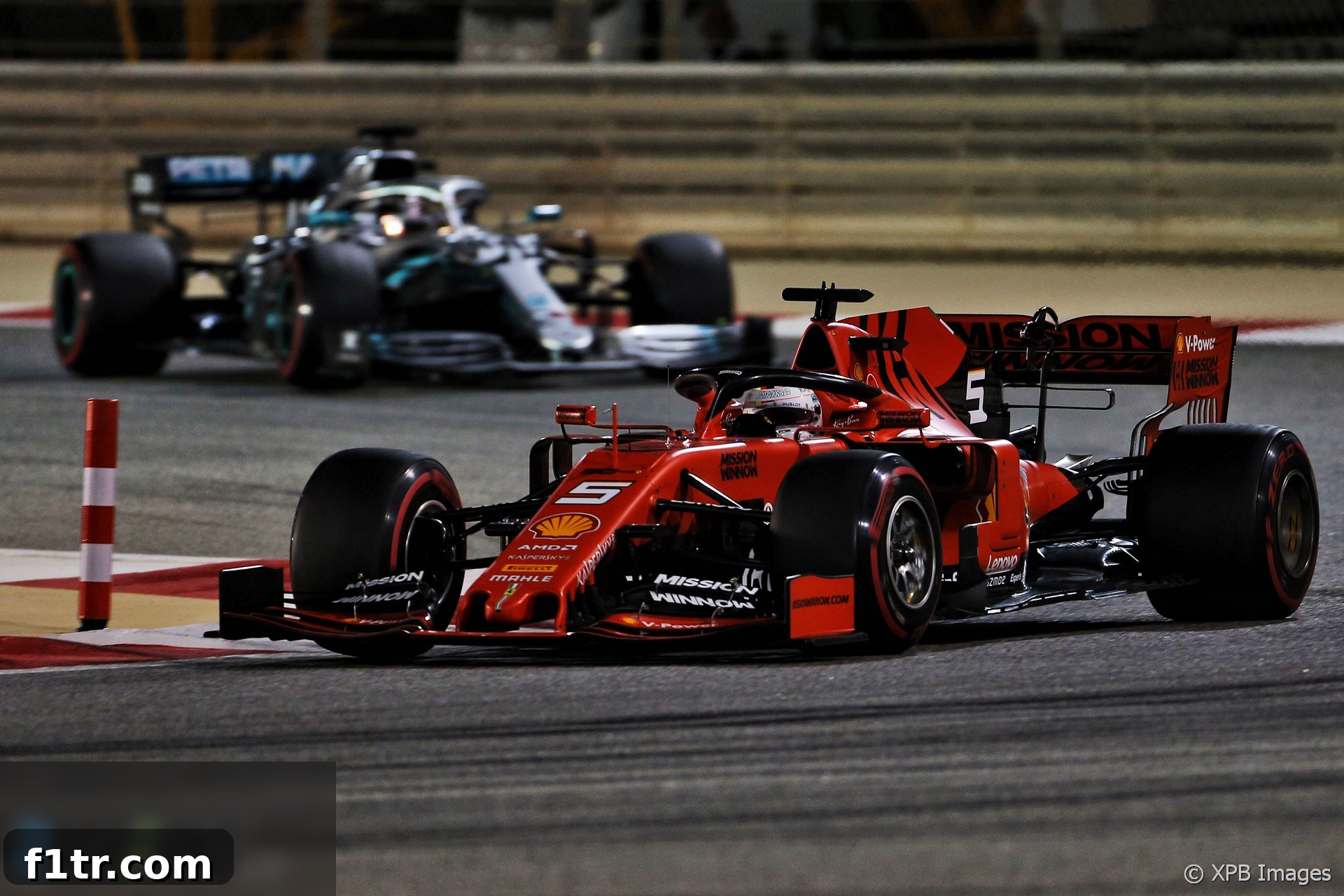
In the fiercely competitive landscape of the 2019 Formula 1 season, every advantage, no matter how subtle, can prove decisive. Mercedes driver Lewis Hamilton, a five-time world champion at that point, offered a detailed analysis of the early season dynamics, highlighting Ferrari’s undeniable prowess in straight-line speed. This particular strength, he believed, would make the Scuderia formidable contenders at the upcoming Azerbaijan Grand Prix, a race renowned for its long straights and high-speed sections.
Hamilton’s Assessment: Ferrari’s Straight-Line Power and Cornering Trade-offs
Following his dominant victory at the Chinese Grand Prix, the third race of the 2019 season, Hamilton reflected on the performance disparities observed across the leading teams. His analysis pointed directly to Ferrari’s distinct aerodynamic philosophy. “They were quick on the straights,” Hamilton noted, elaborating on the clear performance gap. “They were gaining four-tenths I think it was on the straights overall but they’re losing in the corners.” This observation was crucial, as it revealed the fundamental trade-off Ferrari had made in their car design – optimizing for minimal drag to achieve blistering top speeds, often at the expense of maximum downforce and grip through the curves.
This strategic choice by Ferrari set the stage for a fascinating technical battle against Mercedes, who seemingly prioritized a more balanced package, excelling in cornering while maintaining competitive straight-line performance. Hamilton’s insight underlined the constant push and pull in Formula 1 car development, where engineers meticulously balance various performance metrics. A gain in one area almost inevitably necessitates a compromise in another, and the 2019 season was a prime example of two top teams approaching this challenge with differing philosophies.
The Baku Challenge: A Perfect Stage for Ferrari’s Speed
The implications of Ferrari’s straight-line speed advantage were immediately apparent when looking at the 2019 F1 calendar. The next stop after China was the thrilling Baku City Circuit, home to the Azerbaijan Grand Prix. This street circuit is unique, combining a tight, technical medieval old town section with an incredibly long, flat-out main straight stretching over two kilometers. It is precisely this characteristic that Hamilton believed would play into Ferrari’s hands. “So I think it’ll be interesting to see how long they’re going to keep that strategy. Some places it will be great, like probably the next race is going to be pretty good for them in that respect,” he commented, clearly referencing Baku.
The Baku City Circuit demands a specific car setup. Teams typically run lower downforce configurations to maximize speed down the long straight, crucial for overtaking opportunities. However, this also means compromising grip through the circuit’s numerous ninety-degree corners and its winding castle section. Ferrari’s 2019 challenger, with its inherent straight-line speed bias, was theoretically perfectly suited to extract maximum performance from these high-speed sections, potentially allowing them to out-drag competitors and defend their positions effectively. This made the Azerbaijan Grand Prix a highly anticipated event, viewed as a critical test of Ferrari’s strategy and Mercedes’ ability to counter a pure speed threat.
Beyond Baku: The Shifting Sands of the F1 Calendar
However, Hamilton’s assessment wasn’t just about Baku. He also looked ahead to subsequent races, predicting that Ferrari’s specialized setup might not offer the same competitive edge elsewhere. “But then in others maybe not so much,” he added, hinting at the diversity of tracks on the F1 calendar and the need for a more versatile car.
After the high-octane spectacle of Baku, the championship trail led to the Circuit de Catalunya in Spain. This track stands in stark contrast to Baku, being a traditional racing circuit with a mix of medium and high-speed corners, and a much shorter main straight. Here, aerodynamic efficiency, downforce generation, and tire management through fast sweeps are paramount. A car optimized for straight-line speed with a lower downforce setting would likely struggle to generate the necessary grip and stability through Catalunya’s demanding bends, making it a much tougher proposition for Ferrari’s 2019 car if they maintained their initial philosophy.
Following Spain, the Formula 1 circus traditionally descends upon the glamorous, tight, and famously slow Monaco street circuit. Monaco is the ultimate test of maximum downforce and mechanical grip. Its narrow, winding streets, slow hairpins, and elevation changes leave no room for straight-line speed advantages. Here, pure aerodynamic downforce and exceptional chassis balance are the keys to performance. For a car that traded cornering prowess for straight-line velocity, Monaco would present an enormous challenge, potentially exposing the limitations of such a focused design philosophy. Hamilton’s foresight underscored the strategic dilemma for Ferrari: how to remain competitive across such a varied calendar without a truly versatile car.
The Tightness of Competition and Hamilton’s Perspective
Despite Mercedes having swept the top two places in all three opening races of the 2019 season – a phenomenal start rarely seen in Formula 1 – Hamilton maintained that the competition was far from settled. He emphasized the unpredictable nature of the early season and how difficult it was to truly gauge the relative strengths of the leading cars. “We’ve got another close battle on our hands,” he declared, refusing to become complacent with Mercedes’ dominant start.
He acknowledged the presence of other strong contenders, even if their form wasn’t always immediately evident. “Red Bull, I don’t know where they were [in China] but I know Ferrari’s been right there,” he stated, highlighting Ferrari as the primary threat, consistent in their challenge even if they hadn’t yet converted it into wins. The unpredictable nature of early-season form was a recurring theme in his comments. “We didn’t expect [them] to have the deficit in Australia and we didn’t expect to have the deficit in [Bahrain] and we didn’t expect this weekend to have the bit of the margin we had [in China]. It’s still up in the air.” This insight revealed that even Mercedes, despite their successes, were continuously recalibrating their expectations based on evolving track conditions and rival performances, demonstrating the dynamic and complex nature of F1 racing.
Mercedes’ Collective Performance: The Pillar of Early Success
Amidst the fluctuating performance of their rivals, Hamilton attributed Mercedes’ early season dominance not to an overwhelming car advantage in every area, but to the collective strength and flawless execution of his team. “I think ultimately as a team we’ve performed collectively together, we’ve really delivered on the weekends so we’ve just got to continue to do so,” he asserted. This statement underscores a critical aspect of Formula 1 success: it’s not just about raw car speed, but about the seamless integration of driver talent, strategic calls, pit stop efficiency, and overall operational excellence.
The 2019 season saw Mercedes consistently extract maximum performance from their package, minimize errors, and make astute strategic decisions. This holistic approach allowed them to capitalize on opportunities and convert strong qualifying performances into race wins, even when facing significant threats like Ferrari’s straight-line pace. Hamilton’s words served as a reminder that in Formula 1, the championship is often won by the most consistent and well-oiled machine, both on and off the track.
The Evolving 2019 F1 Season: A Strategic Chess Match
The early races of the 2019 Formula 1 season presented a captivating narrative. Mercedes, with Lewis Hamilton and Valtteri Bottas, had established an impressive lead, yet the underlying performance characteristics of the top cars suggested a deeper strategic chess match was underway. Ferrari’s commitment to high straight-line speed, while a potent weapon on specific circuits like Baku, posed questions about their adaptability on more technically demanding tracks. This dynamic fueled speculation and excitement among fans and pundits alike, as each race became a test of engineering philosophy and strategic foresight.
The championship battle was far from decided, and Hamilton’s comments perfectly encapsulated the cautious optimism within Mercedes and the respect for their rivals. The pursuit of perfection, the continuous development cycle, and the pressure to adapt to varied circuit demands would define the rest of the season. The insights from Hamilton after the Chinese Grand Prix provided a vital glimpse into the mindset of a championship contender navigating a season where every tenth of a second and every strategic decision held immense weight.
Further Insights from the 2019 F1 Season
- Crying in the Melbourne car park at 2019 grand prix was my career low – Ocon
- McLaren Racing reports reduced £71 million loss in 2019
- Kvyat: Hockenheim podium last year was “my biggest achievement” so far
- How the FIA’s new encrypted fuel flow meter targets Ferrari’s suspected ‘aliasing’ trick
- “He smashed my office door”: 23 must-see moments from ‘Drive to Survive’ season two
Browse all 2019 F1 season articles