Red Bull’s Christian Horner: Rivals Resent Our Energy Drink Identity Amidst Unprecedented Success
Red Bull Racing’s Team Principal, Christian Horner, has articulated a compelling belief: the resentment their team often faces from competitors stems not just from their phenomenal on-track success, but fundamentally from their identity as an energy drink brand challenging established car manufacturers and historic motorsport marques. This perspective offers a unique lens through which to view the intense rivalries and political undercurrents that define Formula 1, particularly in an era where Red Bull has ascended to the pinnacle of the sport.
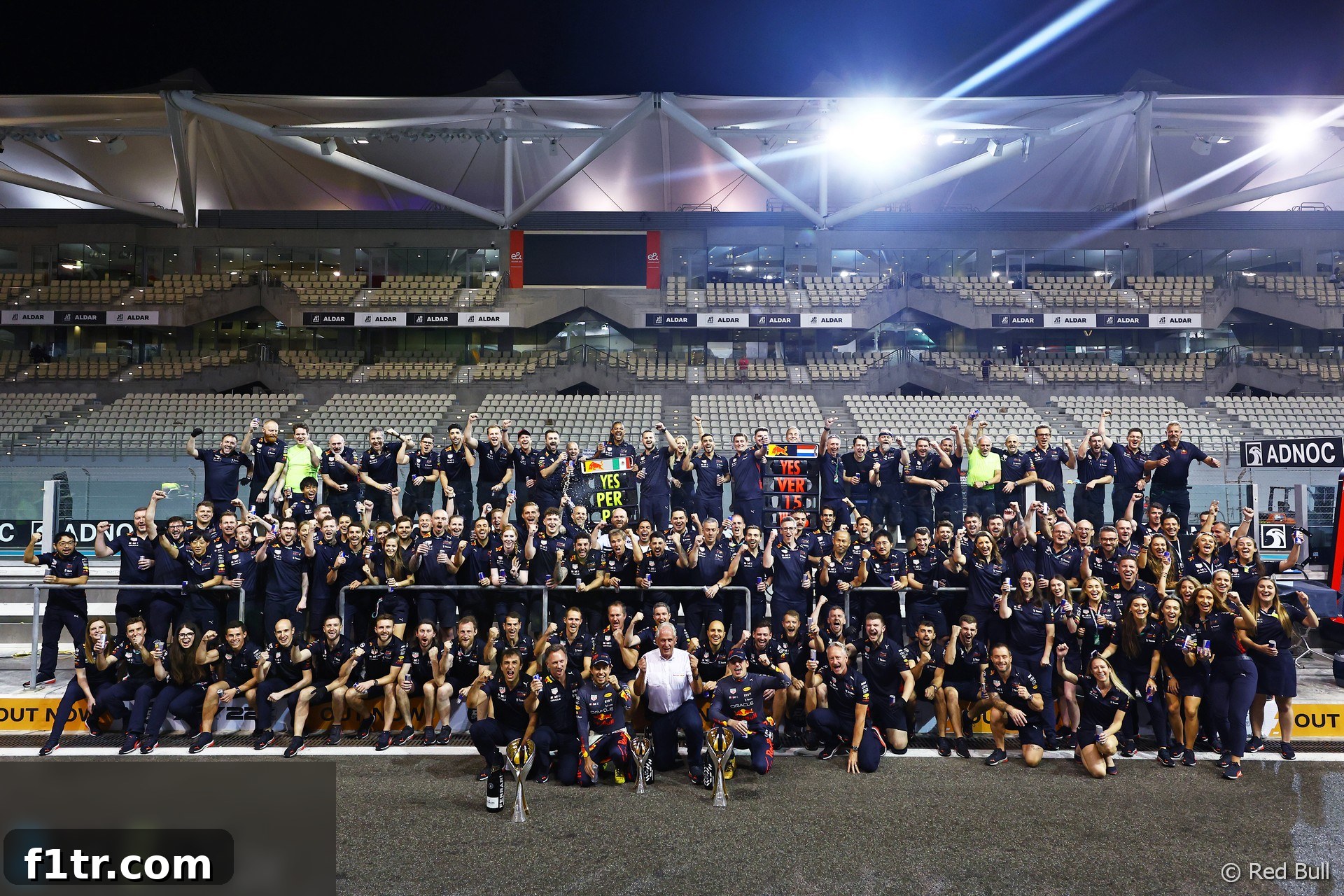
The 2022 Formula 1 season stands as a testament to Red Bull’s dominance. The team majestically clinched its fifth Constructors’ Championship, a monumental achievement that underscored their engineering prowess and strategic brilliance. Concurrently, their star driver, Max Verstappen, delivered a masterful performance, securing his second consecutive Drivers’ World Championship. Such a double triumph would typically command universal admiration, yet Horner suggests that for Red Bull, it also intensifies the scrutiny and, at times, animosity from their rivals, who perhaps struggle to reconcile the success of a non-traditional entity.
The Distinctive Identity: An Energy Drink vs. Automotive Giants
Horner’s assertion that Red Bull’s brand identity is a source of contention highlights a fundamental aspect of Formula 1’s landscape. The paddock has historically been dominated by major automotive manufacturers – Mercedes-Benz, Ferrari, Alpine (Renault), and McLaren (albeit with Mercedes power) – entities with deep roots in engineering, design, and a long lineage of motorsport involvement. Red Bull, on the other hand, entered F1 as a marketing extension of an energy drink company, a bold and unconventional move that initially drew skepticism.
This distinction, according to Horner, fuels a unique brand of rivalry. “I think that we’re a subsidiary of an energy drink racing against OEMs and historic brands and of course that does not sit comfortably with some of our competitors,” he remarked. This statement points to an underlying tension: the perception that Red Bull, an ‘outsider’ to the traditional automotive world, has managed to outperform those with decades, if not a century, of heritage in vehicle manufacturing. Their success challenges the conventional order, potentially leading to a sense of discomfort or even injustice among those who view F1 as the ultimate proving ground for automotive engineering titans.
The Inevitable Scrutiny: The Price of Unwavering Success
Beyond the brand identity, Horner firmly believes that success itself, particularly consistent success, is a magnet for controversy and heightened scrutiny in the high-stakes environment of Formula 1. “The higher you rise, the sharper the knives,” he sagely observed. This sentiment perfectly encapsulates the competitive nature of F1, where every advantage, every regulation interpretation, and every financial decision is dissected with intense scrutiny by rival teams, the media, and the governing body.
The 2022 season provided a stark example of this with the budget cap controversy. The FIA confirmed that Red Bull had exceeded the cost cap during the 2021 season, triggering a significant debate within the paddock and beyond. While Red Bull eventually received a penalty, the incident shone a harsh spotlight on the team. Horner interprets such events as an inevitable consequence of their ascendancy. “Off-track we’ve had, firmly, a target on our back this year,” he added, suggesting that their achievements make them a prime target for any potential misstep, regardless of its magnitude. This constant pressure necessitates a resilient mindset, allowing the team to remain focused on their core mission amidst the political turbulence.
Red Bull’s Unyielding Racing Philosophy: Pushing Boundaries
Despite the external pressures and controversies, Red Bull’s philosophy remains steadfast: a relentless focus on racing and a commitment to pushing the boundaries of performance. “We’re a race team, we’re not a political organisation, we just focus on going racing,” Horner emphasized. This statement underlines the team’s engineering-driven and performance-oriented approach, rather than engaging extensively in the political machinations that often characterize the sport.
Horner elaborated on this philosophy: “We’re hard racers, we push the boundaries, which is what race teams do if they want to succeed. And that’s always been our approach.” This ethos has been integral to Red Bull’s DNA since its inception. It manifests in their aggressive car designs, innovative aerodynamic solutions, and bold strategic decisions during races. While this approach might occasionally put them at odds with competitors or even regulators, it has undeniably delivered championship-winning results. It’s a testament to a culture that values raw speed, technical ingenuity, and a never-say-die attitude over conformity or cautiousness. This spirit of competitive zeal has, at times, made the season challenging, but as Horner acknowledged, “that’s unfortunately Formula 1.”
Mastering the New Era: The 2022 Season’s Triumphant Narrative
The 2022 season was particularly challenging due to a drastic overhaul of technical regulations, designed to promote closer racing. For Red Bull, the transition was even more arduous, as they were the last team to fully shift their focus to the new rules, having been locked in an intense championship battle until the final race of the 2021 season. “As a team we got these regulations right which, considering we were the last team to transition onto them after what happened last year, I think our team has done an amazing job in coming out with such a competitive car,” Horner proudly stated.
The season didn’t begin without its hurdles. Red Bull faced a “double DNF” in the opening race in Bahrain, an early setback that saw Ferrari claim a dominant one-two finish. However, this early adversity only strengthened Red Bull’s resolve. “We never lost sight of what our target was,” Horner affirmed, highlighting the team’s unwavering focus and resilience. They quickly regrouped, demonstrating their formidable development capabilities and strategic agility. By the time the circus arrived in Imola, Red Bull delivered a decisive statement, winning both the sprint race and the Grand Prix with their first one-two finish of the year. This pivotal moment allowed them to “put the pressure back onto Ferrari and it didn’t give them a breathing space.”
Relentless Development and Max Verstappen’s Brilliance
The key to Red Bull’s mid-season turnaround and eventual dominance lay in their efficient and continuous car development. The team meticulously worked on improving the RB18, managing to “lose a little bit of weight” from the car – a crucial factor in Formula 1 where every kilogram impacts performance. These iterative improvements, combined with consistent aerodynamic gains and strategic upgrades, allowed them to pull away from their rivals, turning early deficits into insurmountable leads.
Central to this success was the sublime form of Max Verstappen. “Max has just been in sensational form this year,” Horner lauded. Verstappen’s season was a masterclass in consistency, aggression, and tactical brilliance. He navigated the early, tightly contested races against Ferrari with exceptional skill, turning potentially tricky situations into points-scoring finishes. Reflecting on those initial battles, Horner recalled, “You think back to some of the races that were so tight in the early races with Ferrari. You think of Miami, you think of the races in Saudi, even in Bahrain. It’s been an incredible, incredible season for us.” Verstappen’s ability to extract every ounce of performance from the car, coupled with his unwavering mental fortitude, was instrumental in converting Red Bull’s engineering superiority into championship glory.
Conclusion: Red Bull’s Enduring Legacy
Red Bull Racing has cemented its place as one of Formula 1’s most formidable teams, not just through sheer speed and strategic acumen, but also by carving out a distinctive identity in a sport steeped in tradition. Christian Horner’s insights underscore that while their success is undeniable, it also comes with the unique challenge of being an “energy drink” brand challenging “OEMs and historic brands.” This position, while perhaps fostering resentment in some corners, also fuels their determination and reinforces their “hard racers” philosophy.
The 2022 season serves as a powerful testament to Red Bull’s ability to overcome adversity, innovate under pressure, and achieve unparalleled success through a combination of engineering brilliance, strategic foresight, and the exceptional talent of drivers like Max Verstappen. As they continue to push boundaries and challenge the status quo, Red Bull Racing remains a vibrant, sometimes controversial, but undeniably vital force at the heart of Formula 1.
2022 F1 season
- Mercedes told me “you’re wrong” about 2022 car’s problems – Hamilton
- FIA confirms all 10 F1 teams complied with 2022 cost cap
- Steiner “not ashamed” of panning “slow” Schumacher in Drive to Survive
- Albon believes year out of F1 improved him as a driver
- Hamilton sees diversity gains in F1 years on from his ‘traumatising’ experience of racism
Browse all 2022 F1 season articles