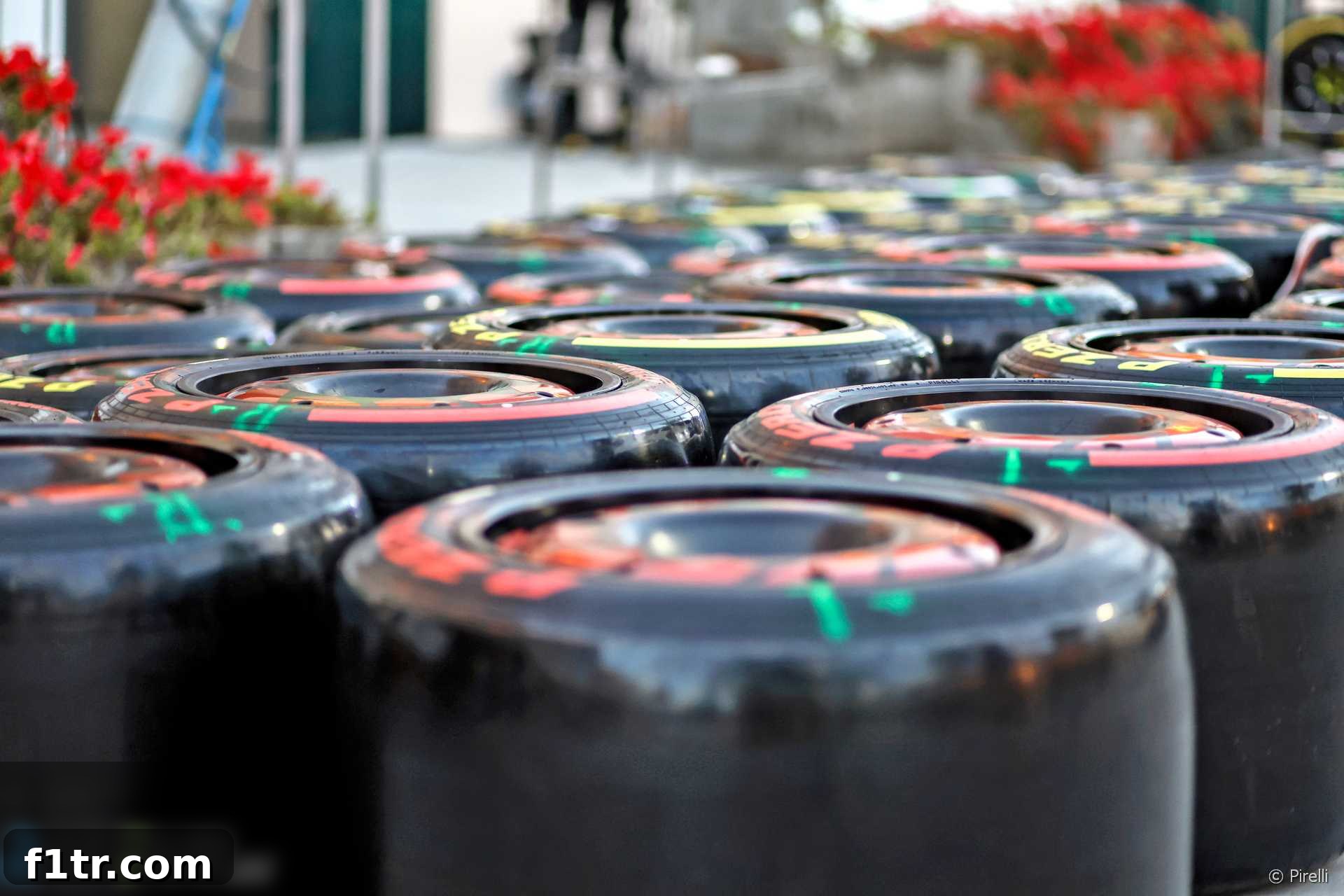
The global motorsport community is abuzz with the latest announcement from the Fédération Internationale de l’Automobile (FIA), which has officially opened a tender for the exclusive tyre supply contract for Formula 1 and its two premier feeder series, Formula 2 and Formula 3. This crucial tender process will determine the sole tyre manufacturer for these prestigious championships for a three-year cycle, commencing from the 2025 season and running through to the end of 2027.
This invitation to tender marks the initial yet vital phase in the FIA’s meticulous selection process to nominate a single, dedicated tyre supplier across its top-tier international single-seater categories. The chosen supplier will be responsible for developing, manufacturing, and delivering high-performance 18-inch tyres that meet the rigorous demands of Formula 1, Formula 2, and Formula 3, succeeding the current contractual agreement with Italian tyre giant Pirelli, which concludes at the close of 2024.
Advert | Become a Supporter & go ad-free
The role of an exclusive Formula 1 tyre supplier is one of the most demanding and high-profile positions in global motorsport. It requires not only unparalleled technical expertise and immense research and development capabilities but also a robust logistical network capable of supporting over 20 Grand Prix events across diverse climates and track characteristics annually, alongside the extensive calendars of Formula 2 and Formula 3. The incoming supplier will inherit a mandate to continue pushing the boundaries of tyre technology while enhancing the spectacle of racing.
Pirelli has held the exclusive F1 tyre supplier mantle since 2011, taking over from Japanese manufacturer Bridgestone. Their tenure has been defined by a specific directive from the FIA: to engineer tyres with a distinct “performance cliff” towards the end of their operational lifespan. This characteristic was introduced with the explicit aim of encouraging more varied pit stop strategies and creating more thrilling, unpredictable races. The FIA’s latest invitation to tender unequivocally reiterates this requirement, demanding that the tyres supplied for the 2025, 2026, and 2027 seasons continue to exhibit this performance ‘cliff’ effect, ensuring strategic depth remains a core element of Formula 1 competition.
The current incumbent, Pirelli, has already signaled its strong desire to extend its partnership with Formula 1. During the Bahrain Grand Prix weekend, Simone Berra, Pirelli’s chief Formula 1 engineer, confirmed the company’s intention to re-apply for the upcoming period, stating unequivocally, “we will be there and we propose ourselves.” This indicates Pirelli’s confidence in its capabilities and its commitment to continued innovation within the sport. Their extensive experience and deep understanding of Formula 1’s unique demands position them as a formidable contender in the bidding process.
Despite their long-standing presence and numerous technological advancements, Pirelli’s Formula 1 tyres have not been immune to scrutiny and occasional criticism during their current contractual period, which commenced in 2020. A notable incident occurred in 2021, prior to the adoption of 18-inch wheels, when then-championship contender Max Verstappen experienced a dramatic tyre blowout while leading the Azerbaijan Grand Prix at speeds exceeding 300km/h. Verstappen publicly expressed his dissatisfaction, highlighting concerns about tyre safety and reliability. Such high-profile failures understandably ignite debates about the pressure placed on tyre manufacturers to deliver performance and durability in equal measure.
However, the landscape of Formula 1 tyre performance has seen significant improvements since the introduction of the larger 18-inch wheels and the new ground-effect technical regulations in 2022. This fundamental shift in tyre size and car aerodynamics required a complete redesign of the F1 tyre, leading to robust and more resilient compounds. Crucially, since this overhaul, the sport has witnessed a remarkable reduction in high-profile tyre failures during Grand Prix weekends, instilling greater confidence among teams and drivers regarding the structural integrity and performance consistency of the current generation of F1 tyres.
The FIA’s tender process is not without precedent. In 2018, South Korean tyre manufacturer Hankook notably responded to a previous call for an exclusive supplier. Although Hankook presented a compelling offer, the FIA ultimately opted to retain Pirelli, extending their contract until the end of the 2023 season. This contract was subsequently prolonged by an additional year, primarily due to the widespread disruption caused by the Covid-19 pandemic in 2020. The pandemic led to a significant delay in the implementation of the 18-inch wheel format, necessitating the extension to ensure stability and a smooth transition for the sport.
Beyond the fundamental performance requirements, the latest FIA tender for its exclusive F1 tyre supplier also casts a spotlight on a significant future change: the intended ban on tyre blankets. The tender explicitly confirms the FIA’s ongoing commitment to using tyres without preheating blankets. This controversial regulation is tentatively scheduled to come into force next year, contingent upon securing sufficient votes from representatives of the FIA, Formula 1 management, and the ten competing teams. The move is driven by sustainability objectives, aiming to reduce energy consumption and operational costs. However, several prominent Formula 1 drivers have voiced strong concerns regarding the safety implications and potential impact on initial tyre grip, highlighting the challenges of managing cold tyres during crucial out-laps and restarts. This shift represents a major technical hurdle for any prospective tyre supplier, demanding compounds that can quickly reach optimal operating temperature and provide consistent grip from cold, without compromising safety or performance. Developing such a versatile tyre is a complex engineering feat that will undoubtedly be a key evaluation criterion for the FIA.
The extensive specifications outlined in the tender document reflect the multifaceted challenges faced by tyre manufacturers in Formula 1. Beyond the raw speed and durability, prospective suppliers must demonstrate a commitment to sustainability, innovation in materials science, and adaptability to evolving technical regulations. The successful bidder will need to showcase not only their ability to produce tyres that perform consistently across a vast range of circuits and weather conditions but also their capacity to align with Formula 1’s broader environmental and technological objectives. This includes exploring more sustainable raw materials and manufacturing processes.
The decision on the exclusive tyre supplier will have far-reaching implications for Formula 1 and its feeder series. For the chosen manufacturer, it represents an unparalleled marketing platform, offering global visibility and prestige. For the teams, it means adapting their car designs and strategies to the characteristics of the new tyres. For the fans, it promises continued excitement, with tyre management remaining a critical element of race strategy. The selection process is designed to identify a partner who can provide cutting-edge technology, contribute to competitive racing, and uphold the highest standards of safety and reliability across all three championships. As the industry awaits the outcome of this pivotal tender, all eyes will be on which tyre company will steer Formula 1 into its next era of high-performance racing.
Advert | Become a RaceFans supporter andgo ad-free
2023 F1 season
- FIA president cleared of alleged interference in two 2023 races
- First week viewing figures for new Drive to Survive season fall again
- Max who? Drive to Survive season six prefers its favourite faces
- RaceFans’ complete 2023 season review
- The F1 drivers who pulled off the 10 biggest charges through the field in 2023
Browse all 2023 F1 season articles