Advert | Become a Supporter & go ad-free
George Russell’s Eifel Grand Prix Heartbreak: A Close Call for Williams’ Elusive First Points
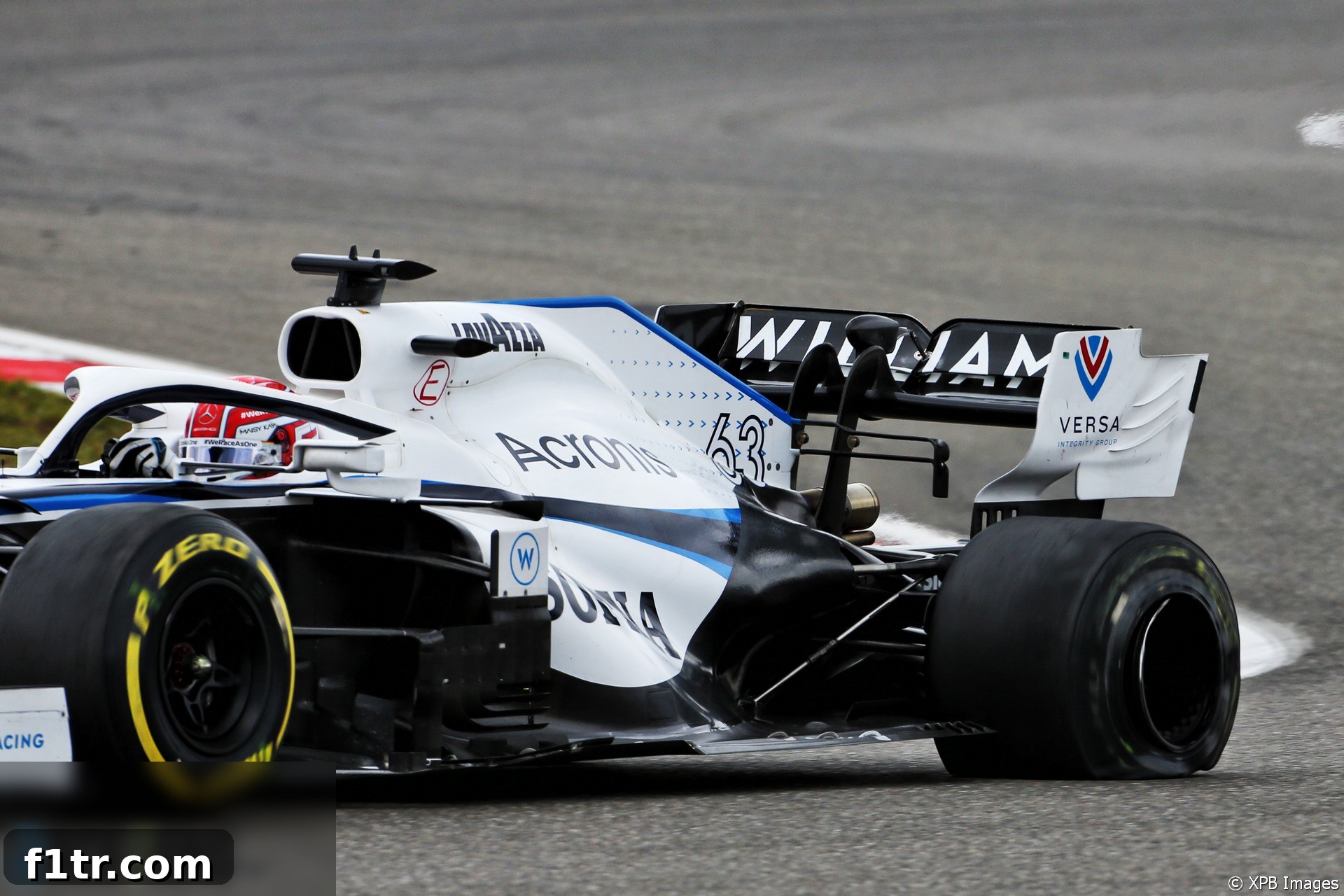
The 2020 Formula 1 season presented an arduous challenge for the Williams Racing team, and perhaps no driver encapsulated this struggle more poignantly than George Russell. A talent widely regarded as a future world champion, Russell consistently extracted every ounce of performance from his uncompetitive machinery, often pushing it into positions it seemingly had no right to be in. One such occasion, etched into the memory of fans and the driver alike, was the Eifel Grand Prix at the Nürburgring, where Russell believed he was poised to score the first points of his promising Formula 1 career – a dream cruelly dashed by an unfortunate racing incident involving Kimi Raikkonen.
The Eifel Grand Prix Collision: A Moment of Frustration on the Nürburgring
The race at the Nürburgring was characterized by its cold conditions and a track that offered plenty of challenges, creating an environment where opportunities could arise for any team. For George Russell, driving the Williams FW43, the Eifel Grand Prix was shaping up to be one of those rare chances. He was battling fiercely in the midfield, a testament to his skill and the team’s relentless effort, when fate intervened. The incident unfolded as Russell found himself in a close-quarters fight with Alfa Romeo’s Kimi Raikkonen and Ferrari’s Sebastian Vettel.
Recalling the moment with palpable frustration, Russell explained the sequence of events that led to his premature retirement from the race. “It was obviously frustrating,” he stated, reflecting on the collision. “I actually overtook Sebastian in the chicane before, but he then got the run on me on the exit, which I don’t think was shown on the TV.” This move allowed Vettel to gain DRS (Drag Reduction System) on Russell, putting the Williams driver on the defensive with Raikkonen hot on his heels. “That allowed him to have the DRS and obviously Kimi was behind. I was on the outside, I left plenty of space,” Russell clarified, emphasizing his efforts to race cleanly and fairly. However, the tight jostling for position proved too much for Raikkonen. “I think Kimi just locked up behind Sebastian and then lost the rear,” Russell concluded, attributing the contact to an error from the veteran Finn that was arguably a consequence of the intense battle.
The collision was a bitter pill to swallow. Raikkonen, celebrating his 323rd Grand Prix start, unfortunately made contact with Russell’s car, forcing both drivers into the pits for repairs. While Raikkonen managed to continue, albeit with a penalty for the incident, Russell’s race was over. The damage sustained by his Williams was too significant to continue, marking a devastating end to what had been a highly promising outing. For Russell, it wasn’t just another race retirement; it was a lost opportunity to make history for himself and for Williams in a season starved of success.
The Weight of a Point: Russell’s Quest for Maiden F1 Success
The Eifel Grand Prix incident highlights the immense pressure and the critical importance of every single point for teams like Williams. At that juncture of the 2020 season, every driver on the grid, with the sole exception of the Williams pair, had managed to score points. This statistic underscored the magnitude of the challenge facing the Grove-based outfit and the individual burden carried by George Russell, whose talent often shone through despite his machinery.
Russell openly expressed his belief that points were within reach. “The car was feeling good and the way the race went I think we could have scored points,” he lamented. The Nürburgring race had seen several retirements among the midfield runners, creating a scenario often referred to as a “race of attrition” – precisely the kind of event where a well-driven car from a backmarker team can snatch an unexpected result. For Russell, this wasn’t mere wishful thinking; it was a realistic assessment based on the car’s performance on the day and the unfolding circumstances of the race. “It’s all going against us at the moment unfortunately,” he added, conveying a sense of helplessness against a tide of misfortune.
The pursuit of that elusive first point weighed heavily on Russell, but he maintained a pragmatic perspective. “I’m realistic and as nice as it would be to score a point or two or three, ultimately the car is not quick enough,” he acknowledged. This candid admission speaks volumes about the challenges faced by Williams. While a point scored through opportunistic circumstances would be celebrated, Russell emphasized the team’s larger goal: “We need to continue to work really hard to bring more performance to the car because we don’t want to be lucking into these events, we want to be there on merit. And ultimately that’s where we are at the moment.” His desire for merit-based success over sheer luck underscores his competitive spirit and his understanding of the fundamental improvements required for Williams to climb the grid.
Williams’s Uphill Battle: Luck vs. Merit in the Midfield Scramble
The 2020 season was a period of significant transition and enduring struggle for Williams Racing. The team, steeped in a rich history of Formula 1 success, found itself firmly entrenched at the back of the grid, battling financial difficulties and a fundamental lack of performance. George Russell’s observations about the fine line between luck and genuine merit-based performance offered a valuable insight into the dynamics of the midfield and backmarker battle.
Russell drew comparisons with other teams often competing in the same performance bracket. “The likes of Haas and Alfa, things have just gone their way really in these races. They are no quicker than us and I don’t personally believe they’ve done anything better than us, things have just gone their way when there’s been these very specific opportunities and it hasn’t for us,” he explained. This sentiment encapsulates the frustration of being competitive enough to be in the mix, yet consistently missing out on the crucial breaks that transform a strong drive into a point-scoring finish. In Formula 1, especially in the tight midfield, a safety car at the right moment, a competitor’s retirement, or an unexpected weather change can entirely shift the outcome for teams that are otherwise evenly matched.
The difference between a “good race” and a “point-scoring race” often boiled down to external factors. Russell elaborated: “There’s been a number of times when we’ve had really good races and finished quite high up the order relatively but there haven’t been five midfield cars break down which is the difference between scoring points or not.” This highlights the brutal reality for teams at the lower end of the Constructors’ Championship; they often need a significant stroke of fortune, or a widespread attrition rate among competitors, to even contend for a top-ten finish. While Russell consistently placed the Williams in positions beyond its raw pace, the sheer number of faster cars meant that a clean race and competent driving were rarely enough to break into the points without external aid.
The Eifel Grand Prix was a microcosm of this season-long struggle. It presented an ideal scenario: a challenging track, variable conditions, and incidents upstream that could have shuffled the pack. Russell capitalized on these elements, showcasing his exceptional talent and racecraft to put the Williams in a competitive position. To then have that opportunity snatched away by a racing incident, especially one that he felt was not entirely of his making, was undoubtedly agonizing. It wasn’t just about the personal points; it was about the psychological boost for the entire team, the financial implications of championship standings, and the public perception of progress.
Beyond the Nürburgring: Russell’s Enduring Potential and Williams’ Future
Even though the Eifel Grand Prix ended in disappointment, the incident served to further underscore George Russell’s immense talent and his relentless pursuit of performance. His ability to consistently challenge faster cars and place the Williams in contention for points, even against overwhelming odds, earned him the moniker “Mr. Saturday” for his qualifying prowess and cemented his reputation as one of Formula 1’s brightest young stars. Each near-miss, while painful, added another layer to the narrative of a driver destined for greater things.
The heartbreak at the Nürburgring was a harsh reminder of the fine margins in elite motorsport and the sometimes-cruel hand of fate. For Williams, the season continued to be a journey of resilience, with the team eventually achieving a change of ownership that promised a more stable and ambitious future. While the 2020 season concluded without any championship points for Williams, the performances of George Russell, particularly in races like the Eifel Grand Prix, provided glimmers of hope and a clear indication of the talent they possessed within their ranks. The pursuit of that first point for Russell would continue, but the Eifel Grand Prix remains a poignant chapter, a stark illustration of how close he came to breaking his duck and how frustratingly it slipped away.
Advert | Become a RaceFans supporter andgo ad-free
Further Insights from the 2020 Eifel Grand Prix
- Renault “not scared of anywhere” in remaining races
- Bottas “needs a miracle” to overturn Hamilton’s 69-point lead
- 2020 Eifel Grand Prix Star Performers
- Leclerc sees ‘quite a few positives’ in Ferrari’s Nurburgring weekend
- Mercedes relied on DAS “more than ever” at cold Nurburgring
Browse all 2020 Eifel Grand Prix articles