The Unprecedented Abu Dhabi Grand Prix Restart: Midfield Drivers Speak Out Against Race Control’s Controversial Decisions
The 2021 Formula 1 Abu Dhabi Grand Prix concluded in a dramatic and contentious fashion, solidifying its place in the sport’s history books not only for the championship decider but also for the highly debated decisions made by race control during the final laps. While much of the global spotlight focused on the epic battle between Lewis Hamilton and Max Verstappen, a significant cohort of midfield drivers voiced strong criticism regarding the handling of the late-race Safety Car restart. Their races, strategies, and final positions were profoundly impacted by what they perceived as inconsistent and bewildering instructions, leading to widespread confusion and a palpable sense of injustice throughout the paddock.
The Heart of the Controversy: A Safety Car Procedure Under Scrutiny
As the Abu Dhabi Grand Prix reached its thrilling conclusion, a Safety Car deployment in the final stages, following Nicholas Latifi’s crash, set the stage for a dramatic finish. With precious few laps remaining, the looming question was whether the race would end under Safety Car conditions or if a restart would allow for one final lap of racing. Race control’s initial communication was critical: drivers who were a lap down would not be permitted to un-lap themselves. This decision, seemingly aimed at ensuring a clean restart without impeding the leaders, established an expectation among all competitors.
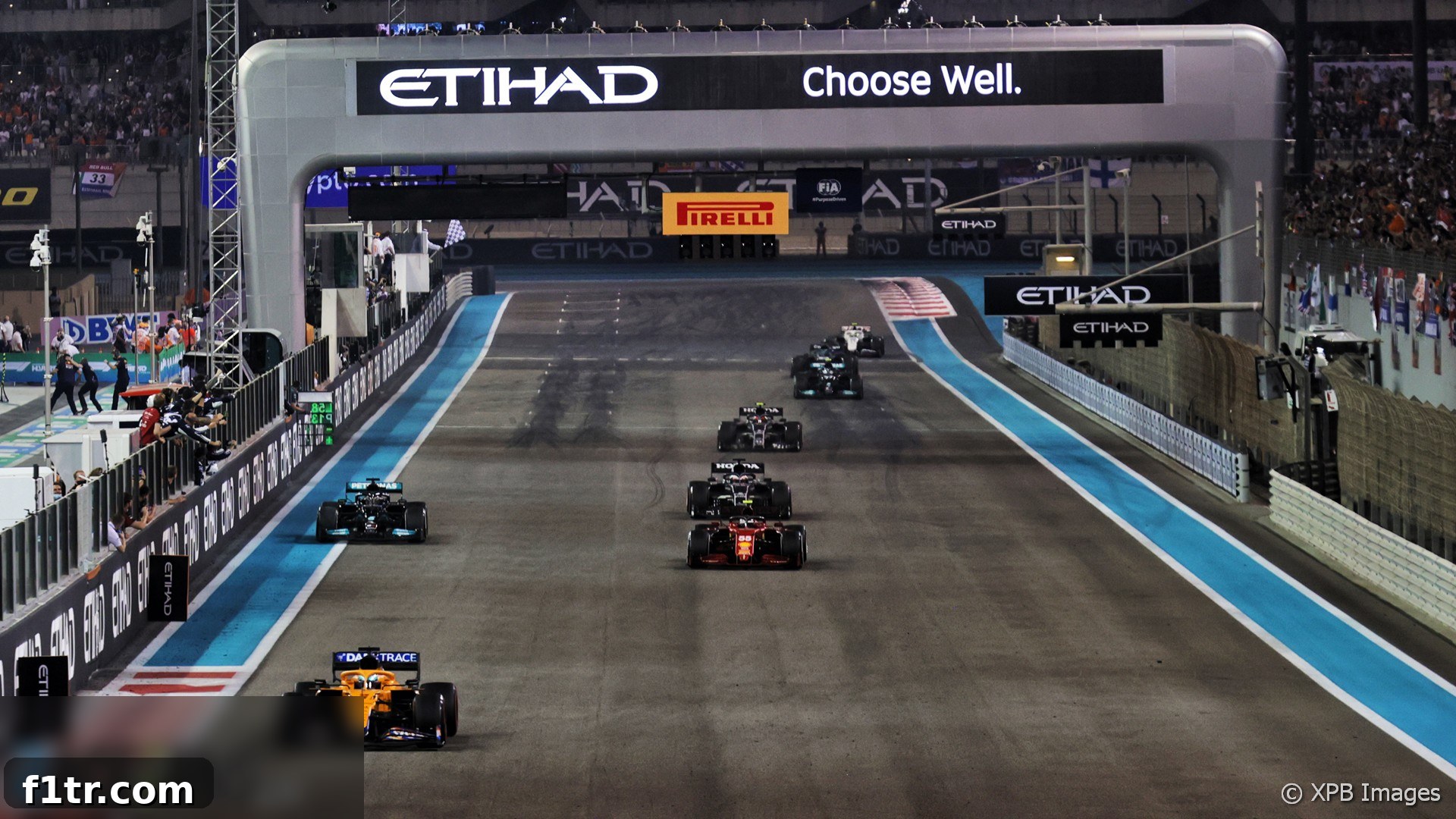
However, this initial directive was dramatically reversed on the penultimate lap. In a move that sent shockwaves through the grid and baffled teams and drivers alike, five of the eight drivers who were a lap down were suddenly given permission to rejoin the lead lap. Crucially, these were the cars strategically positioned between the race leader, Lewis Hamilton, and the second-placed challenger, Max Verstappen. This selective application of the rules created an immediate and significant advantage for Verstappen, who was now directly behind Hamilton on fresher tyres, without any lapped traffic to navigate. Conversely, those lapped drivers not permitted to pass the Safety Car found themselves in an unenviable position, unable to improve their track position or compete fairly.
This unprecedented decision had direct ramifications for several midfield contenders. Drivers like Daniel Ricciardo and Lance Stroll, who ultimately finished 12th and 13th respectively, were among those who were denied the opportunity to un-lap themselves. Their races, already shaped by strategic calls and on-track battles, were irrevocably altered by race control’s fluctuating instructions, leaving them feeling sidelined and bewildered by the procedural chaos that unfolded in the sport’s most critical moments.
Voices from the Midfield: Confusion and Frustration Reign
The immediate aftermath of the restart saw a wave of frustration and disbelief from drivers whose races had been compromised by the ambiguous and changing rules. Their radio communications and post-race interviews painted a vivid picture of the confusion that permeated the midfield.
Daniel Ricciardo’s Disbelief and the “Fucked Up” Finish
For Daniel Ricciardo, the unfolding events were a source of profound bewilderment. His initial understanding, based on race control’s first message, was that lapped cars would remain in place. He articulated his rationale, stating, “I was confused because I got that message that they won’t overtake. So in my head I thought ‘that seems okay and I guess fair because Lewis had such a lead and Max has newer tyres – and this way he has to cut through a few cars if they’re going to restart the race’.” This perspective highlights a common understanding among drivers that maintaining lapped cars would have introduced a natural obstacle for Verstappen, balancing the advantage of his new tyres.
However, Ricciardo soon witnessed other cars around him un-lapping themselves, leading to an urgent query to his race engineer, Tom Stallard: “What do I do? Do I pass?” The reply confirmed his exclusion from this privilege, forcing him to hold position. The McLaren driver’s frustration was palpable after the race. Stallard acknowledged the situation was “a bit unusual” and explained how Ricciardo’s earlier pit stop, made to benefit from fresh tyres for a potential sprint to the finish, had been undermined. Ricciardo’s raw assessment of the situation – “I have no idea what they did with letting cars through,” and later, “I’m glad I am not a part of that, whatever just happened. Seemed pretty f***ed up” – underscored his deep sense of confusion and his belief that the process was fundamentally flawed. He concluded by saying, “I’m honestly just speechless. I don’t know what to make of all that, I really don’t. I need to see how it all came about,” indicating a widespread lack of clarity even among the participants.
Lance Stroll’s Irate Questions and Denied Opportunity
Lance Stroll, positioned just behind Ricciardo, shared a similar sentiment of indignation. As other vehicles began to pass the Safety Car, he proactively alerted his Aston Martin team, observing the unfolding scenario firsthand. When informed by his race engineer, Ben Michell, that he was not permitted to join them, Stroll’s frustration boiled over. “I don’t understand why,” he questioned, asserting his right to un-lap himself. As Michell promised an explanation after the race, Stroll’s anger intensified, leading to an expletive-laden outburst: “What the f***?” His reaction was a clear indication of a driver who felt unfairly penalized and denied a fundamental opportunity to improve his position in the final moments of a Grand Prix. The perceived inconsistency directly impacted his ability to race, leaving him marooned in a disadvantaged position.
Carlos Sainz Jnr. Caught in the Middle
Even drivers who benefited from the specific decision were not immune to the confusion. Carlos Sainz Jnr., holding onto a crucial third place for Ferrari, found himself directly behind Ricciardo and Stroll. As he queued for the restart, he fully expected them to un-lap, in line with typical Safety Car procedures. His radio communication with race engineer Riccardo Adami reflected this bewilderment: “What are these two guys doing? They are not un-lapping themselves, they need to go.” Sainz’s query highlighted the unexpected nature of the situation, as he was forced to navigate the final lap with two static lapped cars directly ahead of him, potentially affecting his sprint for the podium.
Fernando Alonso’s “Confusing” Signals
Double world champion Fernando Alonso, who finished eighth, also experienced the disarray firsthand. He articulated the standard expectation, stating, “When the Safety Car was out, I thought that we were able to overtake quickly, because normally [this] is what happens. You see the green light of the Safety Car immediately, and then you are un-lapping yourself until they remove the car.” However, this standard procedure was not followed. He recounted a sequence of conflicting messages: “But we didn’t have that lap, that green signal, and then two laps after the engineer told me, ‘You will not be able to un-lap yourself, the positions will stay like this.’ One corner later, the green light came on, I said, ‘But we have the green light’. And he said ‘Yeah, you can do it now, follow Norris. And I followed Norris’. A little bit confusing, probably.” Alonso’s measured but pointed commentary underscored the chaotic and unprofessional communication from race control, leaving drivers uncertain about the rules even as they were being implemented.
Sebastian Vettel: Time Lost and a “Shame” for the Race
Sebastian Vettel, a four-time world champion, also weighed in on the delayed decision to allow lapped cars to pass the Safety Car. He argued that the process should have been initiated much sooner, as is customary in such situations. “They should’ve let us pass right away, like other times,” Vettel stated, emphasizing the procedural anomaly. The delay, he explained, left insufficient time for those who were waved by to catch up to the back of the pack, effectively negating any benefit of un-lapping. “Obviously you have the guys fighting in the front, so you just got to clear the path. I don’t know what took so long,” he pondered. The consequence for drivers like himself was that the field remained too spread out for any meaningful racing to occur at the restart. “For us it was a shame because we didn’t have a race then because everything was just spread out,” Vettel concluded, highlighting how the procedural delays undermined the competitive integrity of the final lap for the midfield.
Unpacking the Ramifications: Integrity and Perception
The uproar from the midfield drivers after the Abu Dhabi Grand Prix was more than just post-race frustration; it highlighted profound concerns about the application of Formula 1’s regulations and the consistency of race control’s decision-making. The selective allowance for only specific lapped cars to un-lap themselves, effectively clearing the path between the two championship protagonists while leaving others stranded, raised serious questions about the fairness and impartiality of the race direction.
This incident sparked widespread debate within the sport and among fans, contributing to a perception that the rules were bent in the interest of creating a dramatic spectacle, potentially at the expense of sporting integrity. For drivers operating in the midfield, whose careers depend on every position gained, the impact was tangible. Their strategic calls, their on-track efforts, and their final standings were all subject to an ad-hoc interpretation of the rules, leaving them feeling that their efforts were undermined by decisions beyond their control. The lack of clear, consistent communication from race control only exacerbated the situation, eroding trust and creating an environment of uncertainty at a pivotal moment. The FIA’s subsequent review of the events and the restructuring of race control personnel were a direct acknowledgment of the systemic issues exposed by this controversial finish, indicating the profound impact these decisions had on the sport’s credibility.
Beyond the Final Lap: A Lingering Debate
The events of the 2021 Abu Dhabi Grand Prix restart continue to be a significant talking point in Formula 1, serving as a powerful reminder of the delicate balance between sporting spectacle and strict adherence to regulations. The detailed accounts from midfield drivers like Daniel Ricciardo, Lance Stroll, Carlos Sainz Jnr., Fernando Alonso, and Sebastian Vettel offer an invaluable perspective, illustrating how race control’s actions rippled far beyond the championship battle, affecting every competitor on the track.
Their collective confusion, frustration, and sense of injustice underscored the critical need for transparent, consistent, and predictable application of rules in Formula 1. The saga of the lapped cars in Abu Dhabi stands as a testament to the fact that even in a sport dominated by high-stakes championship fights, the integrity of every driver’s race, regardless of their position on the grid, must be upheld with unwavering fairness. The lessons learned from this contentious race have since prompted important discussions and changes within the sport, aiming to prevent such procedural ambiguities from overshadowing the purity of competition in the future.
2021 Abu Dhabi Grand Prix Related Articles
- Masi ‘basically gifted the championship’ to Verstappen says 2021 FIA steward Sullivan
- Norris called out F1 over its farcical 2021 finale. Will it get it right this time?
- Why Mercedes put ‘a reminder of joy and pain’ on display in their factory lobby
- Hamilton would be an eight-time champion if Whiting was still alive – Steiner
- Verdict on error in GT race suggests Mercedes would have lost 2021 Abu Dhabi GP appeal
Browse all 2021 Abu Dhabi Grand Prix articles