Valtteri Bottas, the seasoned Mercedes driver, has voiced his apprehension regarding the potential for challenging overtaking maneuvers at the upcoming Formula 1 French Grand Prix at Paul Ricard. Drawing on his previous experience at the circuit during his 2010 Formula Three Euroseries campaign, Bottas believes that the strategic placement of a chicane on the iconic Mistral straight significantly diminishes the prospects for exciting on-track battles, making track position paramount for success.
Valtteri Bottas Highlights Overtaking Challenges at Paul Ricard for French Grand Prix
As the Formula 1 circus descends upon the picturesque Paul Ricard circuit, anticipation builds for what promises to be a demanding weekend of racing. However, one of the sport’s most experienced drivers, Valtteri Bottas, has cast a cautious shadow over the event, predicting that overtaking could prove to be a particularly arduous task. His observations underscore a recurring theme in modern Formula 1: the delicate balance between circuit design, safety, and the spectacle of competitive racing.
The Enigmatic Paul Ricard Circuit: A Closer Look
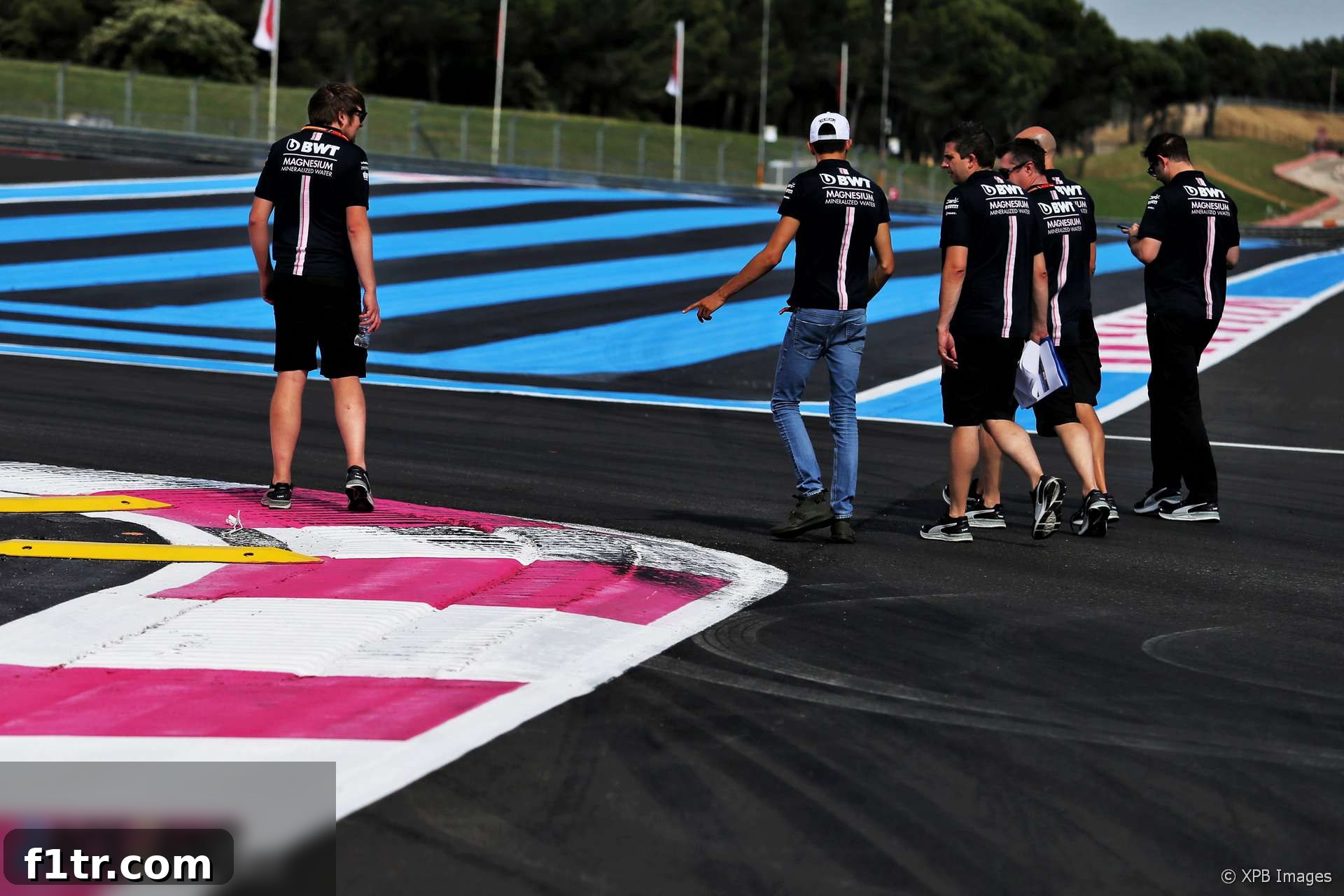
The Paul Ricard circuit, nestled in Le Castellet, France, is renowned for its distinctive blue and red run-off areas and its multifaceted layout, offering numerous configurations. While visually striking and technically demanding, some aspects of its design, particularly the modifications made to its longest straight, have become points of contention among drivers when it comes to raceability. Bottas’s comments echo a sentiment often heard in the paddock: that certain alterations, while perhaps enhancing safety or allowing for multi-discipline use, can inadvertently stifle the very essence of grand prix racing – overtakes.
The Mistral Straight and Its Controversial Chicane
Historically, the Mistral Straight was a formidable 1.8-kilometer (1.1-mile) blast, one of the longest in Formula 1. Its sheer length was a breeding ground for slipstreaming opportunities, allowing drivers to gain significant speed advantages before daring braking maneuvers into the subsequent corners. However, in its current configuration for Formula 1, a chicane dissects the Mistral Straight roughly halfway along its length. This chicane, often referred to as the “North Chicane,” was primarily introduced to break up the flat-out section, enhancing safety by reducing top speeds and creating a more manageable braking zone, particularly for motorcycle racing, which also utilizes the circuit. It also provides an additional braking point and a potential, albeit often short-lived, overtaking spot.
Valtteri Bottas articulated his view clearly: “We think it’s going to be quite difficult to overtake here. Honestly, I think that if we didn’t have the chicane in the middle of the back straight there would have been some opportunities there, with the long towing.” His remarks highlight the fundamental impact of this chicane. By interrupting the straight, it prevents cars from building up the prolonged speed differential necessary for effective slipstreaming and DRS activation over a substantial distance. This shortens the acceleration zones and often leads to a situation where cars are too closely matched in speed through the chicane, negating any real advantage one might gain before the next corner sequence.
The Impact on Overtaking Dynamics
The challenge of overtaking in modern Formula 1 is a well-documented subject. The aerodynamic sensitivity of contemporary F1 cars means that following another car closely, especially through high-speed corners, results in a significant loss of downforce due to “dirty air.” This makes it incredibly difficult for a pursuing driver to maintain the pace required to launch an attack. Long straights, combined with powerful DRS (Drag Reduction System) zones, are typically the primary mechanisms through which F1 cars can overcome this aerodynamic handicap and facilitate overtakes.
When a track features a long straight that is then interrupted, as is the case with Paul Ricard’s Mistral chicane, the window for an overtake shrinks considerably. Drivers have less time to capitalize on the slipstream, and the energy recovery systems (ERS) must be managed even more precisely to ensure sufficient boost is available at the critical moment. Bottas’s sentiment reflects a broader frustration among drivers and fans alike who yearn for more genuine wheel-to-wheel racing, which is often curtailed by circuit designs that prioritize other factors over pure racing spectacle.
Qualifying: The Ultimate Decider
Given the anticipated difficulties in overtaking, Bottas stressed the immense importance of Saturday’s qualifying session. “But [as] the track is now I think it’s going to be quite difficult so qualifying will be very important,” he stated. In an era where grid position frequently translates directly into race results, this assertion comes as no surprise. When genuine passing opportunities are scarce, starting higher up the grid becomes a critical advantage, mitigating the need for risky maneuvers during the race.
The “dirty air” phenomenon means that even if a car is faster, it may struggle to get close enough to overtake a slightly slower car ahead, especially if both cars are running similar setups. This places an even greater premium on single-lap pace in qualifying, where drivers can push their cars to the absolute limit without the hindrance of following another competitor. For teams, this means dedicating more resources to optimizing the car for qualifying performance, potentially even at the expense of marginal race pace, knowing that track position is key.
Adapting to New Surfaces and Unknowns
Adding another layer of complexity to the weekend, Bottas highlighted the unknown factors presented by recent track changes. “Qualifying will ‘be close again’,” Bottas predicted, “but there are quite a lot of unknowns. The track has got a new surface, at least in some areas, so we need to react quickly with the car set-up on Friday and on Saturday to be on top of it.”
New asphalt surfaces can drastically alter a circuit’s characteristics. They often provide increased grip initially but can also be more abrasive, leading to higher tire degradation. Furthermore, the fresh bitumen can change how the tires interact with the track, impacting everything from braking points to cornering speeds. Teams must quickly gather data during the practice sessions on Friday to understand these new dynamics. This involves meticulous analysis of tire wear, grip levels, and how the car’s aerodynamic and mechanical setup responds to the updated surface. Engineers and drivers work in tandem, making rapid adjustments to spring rates, anti-roll bars, wing angles, and differential settings, all in pursuit of the optimal balance. A quick and effective reaction to these “unknowns” can be the difference between a strong performance and a challenging weekend, particularly when every tenth of a second in qualifying is crucial.
The Debate Over Track Limits: Asphalt vs. Aggression
Paul Ricard is infamous for its expansive, all-asphalt run-off areas, which have sparked considerable debate among drivers and fans. While these vast tarmac zones are undeniably safer, offering ample space for drivers to recover from errors without ending up in gravel traps or impacting barriers, they also invite controversy regarding track limits and driver accountability. Drivers like Carlos Sainz Jnr have previously voiced their concerns, suggesting that the lack of natural deterrents might encourage drivers to exploit the limits of the track excessively.
Driver Perspectives on Safety and Punishment
Bottas offered a nuanced perspective on the matter, acknowledging the safety benefits while also hinting at a driver’s inherent desire for consequences for mistakes. “For sure it’s been proven this is better for safety. But I think we drivers are a little bit crazy in the way that we like to be punished when we make a mistake,” he reflected. This statement encapsulates a core philosophical debate in motorsport: how to balance absolute safety with the challenge and penalty of exceeding limits. Traditional circuits with gravel traps or grass run-offs immediately punish errors, often leading to lost time, car damage, or even retirement. Asphalt run-offs, while safer, often result only in a time penalty if a driver is judged to have gained an advantage by exceeding track limits, which can be a more subjective and inconsistent form of enforcement.
Paul Ricard’s Unique Deterrents
Despite the extensive asphalt run-offs, Paul Ricard does employ certain measures to deter drivers from routinely exceeding track limits. These include strategically placed high kerbs and, in some areas, “sausage” kerbs or rumble strips that are designed to unsettle the car or even cause damage if hit incorrectly. Bottas noted, “I think you cannot be very aggressive here with the kerbs, because you can damage the car and that will be the limit for us. There is always a limit, sometimes it’s a kerb, sometimes it’s Tarmac, sometimes it’s gravel. We need to drive within the limits and that’s it.” This highlights that even on a seemingly forgiving circuit, specific elements are designed to enforce boundaries, challenging drivers to find the absolute limit without risking costly damage or penalties.
Bottas’s Perspective: A Racer’s Adaptability
Ultimately, Bottas’s comments underscore the adaptability and resilient mindset required of Formula 1 drivers. Despite his analytical assessment of the circuit’s challenges and the debate surrounding its design, his overriding passion for racing remains clear. “It’s how this track is, I still want to race here, no matter if there are walls or Tarmac run-off areas, I still love it,” he affirmed. This statement resonates deeply with the spirit of motorsport; regardless of the track’s peculiarities or the prevailing design philosophies, drivers are ultimately there to compete, push the boundaries, and conquer whatever challenges lie before them.
The French Grand Prix: A Test of Strategy and Skill
The 2024 French Grand Prix at Paul Ricard, therefore, promises to be a fascinating weekend. With Bottas’s predictions highlighting potential difficulties in overtaking and the added variable of new track surfaces, strategy will undoubtedly play a pivotal role. The teams that can most effectively adapt to the changing track conditions, extract maximum performance in qualifying, and implement flawless race strategies will be the ones challenging for victory. As always, the blend of driver skill, engineering prowess, and a dash of unpredictability will define the outcome, making for an engaging spectacle for Formula 1 enthusiasts around the globe.