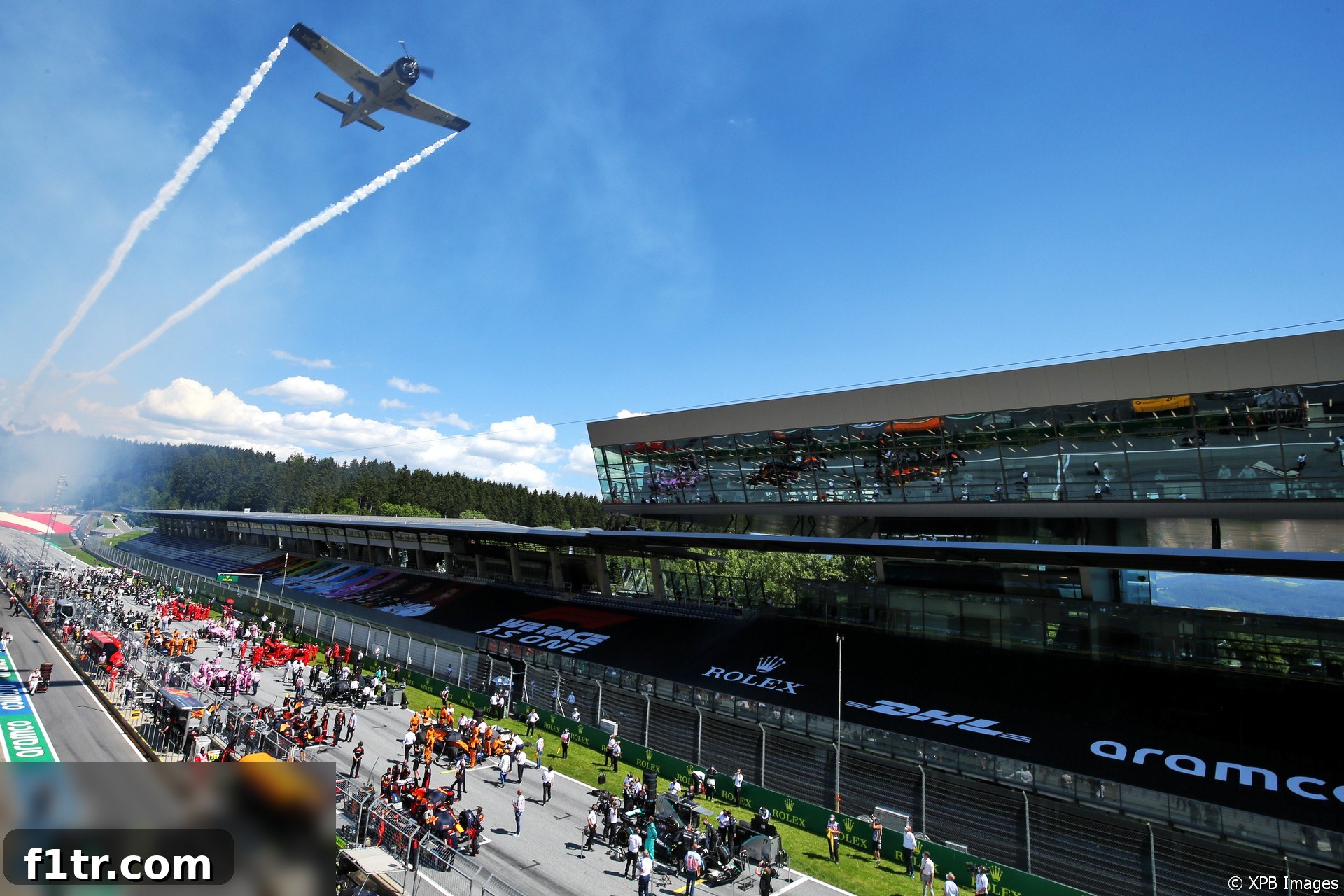
The unprecedented challenges of the global COVID-19 pandemic reshaped the landscape of Formula 1 in 2020, forcing an immediate overhaul of its ambitious original calendar. As the motorsport world grappled with uncertainty, FIA President Jean Todt offered a glimmer of hope and clarity regarding the sport’s immediate future. Speaking from the Red Bull Ring, a venue that remarkably hosted the season’s inaugural race following a prolonged delay, Todt indicated that fans and teams could soon expect comprehensive details on an expanded 2020 F1 calendar, one poised to feature “significantly more” than the initial eight confirmed races. This commitment underscored the resolve of Formula 1’s leadership to deliver a compelling championship season despite the formidable obstacles.
Advert | Become a Supporter & go ad-free
Todt’s remarks highlighted the relentless efforts being undertaken behind the scenes. He specifically praised F1 chairman and CEO Chase Carey, who was described as “working day and night to present a proper calendar.” This dedication was critical given the scale of the task: to reconstruct a global sporting schedule amidst travel restrictions, health protocols, and dynamic pandemic conditions across multiple continents. The initial plan for 2020 had envisioned a record-breaking 22 rounds, a stark contrast to the drastically condensed schedule necessitated by the global health crisis. The successful launch of the season at the Red Bull Ring, despite being the first of only eight initially confirmed events, was a testament to the meticulous planning and stringent safety measures implemented to allow racing to resume.
The urgency for further details was palpable throughout the Formula 1 community. Todt acknowledged this widespread need, stating, “More detail will be given soon because everybody needs to have more accurate detail about what will be the calendar.” This anticipation was not merely for the fans eager to follow their sport, but also for the teams, logistics personnel, and track organizers whose operations depend heavily on precise schedules. The fluidity of the global health situation meant that traditional planning methods were obsolete. Instead, F1’s leadership had to adopt highly adaptable and innovative approaches to secure viable venues and dates for the remainder of the 2020 F1 season.
The FIA President delved into the complexities driving these decisions, pointing out that “In certain countries the situation is obviously very complex.” This complexity required a significant degree of “creativity” from the sport’s strategists. They were tasked with exploring “possible options which were not planned and to optimise them in order to be able to present the calendar.” This meant looking beyond traditional F1 strongholds and considering alternative circuits or even multiple races at the same venue – a concept that ultimately became a hallmark of the revised 2020 season. The emphasis was on flexibility and pragmatism, ensuring that every potential opportunity to host a Grand Prix was thoroughly evaluated while prioritizing the health and safety of all involved.
Todt’s insights were grounded in a continuous, rigorous assessment of the global health crisis. He revealed that he received daily briefings on the worldwide statistics of COVID-19 fatalities, paying particular attention to those countries that were originally slated to host Formula 1 races. This meticulous monitoring underscored the gravity of the situation and the data-driven approach underpinning every decision made about the calendar. The variations in pandemic severity and recovery rates across different nations posed a significant logistical and ethical challenge for a sport that prides itself on its global reach, making the task of compiling a functional Formula 1 schedule immensely difficult.
Advert | Become a RaceFans supporter andgo ad-free
He provided specific examples to illustrate this disparity. “Some countries started with high figures which dropped,” he noted, while others “came up like Brazil for example.” Brazil, a traditional fixture on the Formula 1 calendar, presented a difficult case due to its escalating infection rates. In contrast, Vietnam, a new and highly anticipated addition to the 2020 schedule, reported a remarkably low number of cases and not a single fatality at the time of his comments. Austria, the host of the season’s restart, was highlighted as a comparatively “safe country,” starkly different from nations such as the United States, Italy, Spain, France, and the United Kingdom, which had experienced severe outbreaks. Todt openly admitted to the inherent difficulty in obtaining entirely reliable global data, stating, “Saying that, we are not sure about the accuracy of those figures.” This acknowledgement added a layer of realism to the challenges of planning and emphasized the reliance on the best available, though imperfect, information, all of which critically informed the feasibility of the 2020 F1 calendar.
Looking ahead, Todt affirmed a commitment to significantly expand the race schedule beyond the initial eight events. He projected a final calendar that would feature “less than 22 races, but would be significantly more than the eight races which have been planned so far.” This statement provided a much-needed assurance to teams and fans alike, suggesting that the championship would indeed be substantial, even if it couldn’t reach its originally intended length. The push for more races was driven by a combination of factors, including the desire for a legitimate and competitive world championship, contractual obligations with broadcasters and sponsors, and the financial well-being of the sport and its participating teams. Each additional race represented a vital injection of revenue and a step towards mitigating the economic impact of the pandemic, crucial for the sustainability of the Formula 1 ecosystem.
A critical aspect of this expansion strategy involved exploring unconventional venues. As previously speculated and later realized, some of the additional races could take place at circuits not originally earmarked for the 2020 championship. Todt specifically mentioned Mugello and Imola as prime examples of such possibilities. This innovative approach transformed a potential crisis into an exciting opportunity for the sport. Todt expressed his personal enthusiasm for this prospect, stating, “Honestly I would love to. In each difficulty there is opportunity.” This philosophy perfectly encapsulated the spirit of adaptation and resourcefulness that defined Formula 1’s response to the extraordinary circumstances, highlighting how challenging times could open doors to unique and memorable events.
The criteria for selecting these alternative venues were stringent, primarily revolving around the FIA’s Grade One certification. This certification is a fundamental requirement for any circuit aspiring to host a Formula 1 Grand Prix, ensuring that the track meets the highest international safety and operational standards. Both Mugello and Imola proudly hold this certification, making them ideal candidates for unexpected inclusions. Mugello, owned by Ferrari, is renowned for its challenging layout and stunning Tuscan backdrop, having historically hosted motorcycle Grand Prix races but never a Formula 1 World Championship event. Imola, on the other hand, boasts a rich F1 heritage, having hosted the San Marino Grand Prix for many years and being the site of numerous iconic moments in the sport’s history, thus offering both novelty and nostalgia to the revamped 2020 F1 calendar.
Todt’s endorsement of these tracks, and others like them, underscored the FIA’s flexibility and willingness to support creative solutions. “So I think to give opportunity to a circuit like Mugello, which is a grade one circuit, to Imola, which is a grade one circuit, is great,” he concluded. Such opportunities not only provided much-needed racing slots but also introduced an element of novelty and excitement for fans. The prospect of Formula 1 cars tackling these legendary or fresh layouts promised unique challenges for the drivers and thrilling spectacles for viewers, offering a silver lining amidst the global upheaval. The reimagined 2020 calendar, therefore, became a testament to the sport’s adaptability and its unwavering commitment to delivering exhilarating motorsport, even in the most trying times. The upcoming announcements would undoubtedly confirm the fruits of these intensive efforts, painting a clearer picture of an extraordinary and memorable Formula 1 season.
Advert | Become a RaceFans supporter andgo ad-free
2020 F1 Season: Related Content and Updates
- Grosjean to make F1 test return tomorrow for first time since Bahrain horror crash
- Pictures: Wrecked chassis from Grosjean’s Bahrain fireball crash to go on display
- Bottas vs Rosberg: Hamilton’s Mercedes team mates compared after 78 races each
- F1 revenues fell by $877 million in Covid-struck 2020 season
- Hamilton and Mercedes finally announce new deal for 2021 season
Browse all 2020 F1 season articles