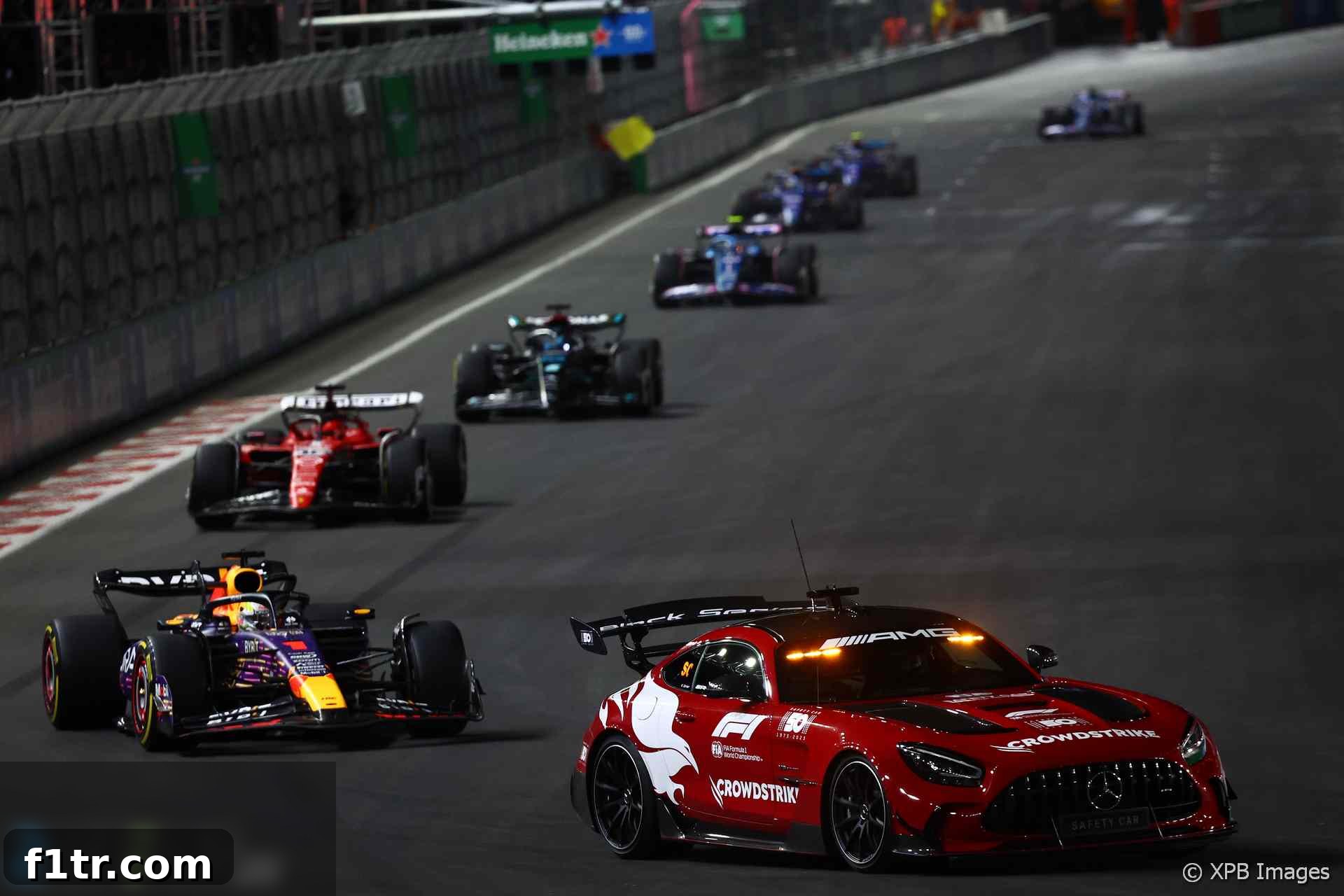
The highly anticipated inaugural Las Vegas Grand Prix brought a unique blend of high-octane racing and dazzling spectacle to the iconic Strip. However, beneath the glitz and glamour, a critical safety concern emerged during the race’s very first Safety Car period, leaving Formula 1 drivers deeply worried about the perilous state of their tyres. This incident highlighted the inherent challenges of racing F1 machinery in extreme conditions, particularly on a brand-new street circuit under the chilling desert night sky.
Advert | Become a Supporter & go ad-free
The initial deployment of the Safety Car came early in the race, on just lap two, following a dramatic crash involving McLaren’s Lando Norris. The British driver lost control of his car at the fast Turn 11, a critical section of the circuit where his car was observed to bottom out, momentarily losing aerodynamic grip and sending him into the barriers. The incident necessitated a swift Safety Car intervention, but the pace at which the Safety Car proceeded past the scene of Norris’s significant impact quickly became a major point of contention among the drivers. It was notably slow, aimed at ensuring marshals could safely attend to the stricken McLaren and clear debris without putting the following pack at undue risk.
The Perilous Plunge in Tyre Temperatures at Las Vegas
The combination of the Safety Car’s deliberate slow pace, the already low ambient and track temperatures characteristic of a Las Vegas night race, and the nascent grip levels on a freshly laid street circuit created a perfect storm for tyre performance. Modern Formula 1 tyres, supplied by Pirelli, are designed to operate within a very specific and narrow temperature window to provide optimal grip and performance. When temperatures fall outside this window, especially plummeting to critically low levels, the rubber compound hardens, drastically reducing adhesion to the track surface. This phenomenon was precisely what transpired on the Las Vegas Strip, with several drivers reporting alarmingly low tyre temperatures – levels they hadn’t encountered at any other point during the demanding race weekend at the new Las Vegas Strip Circuit.
The concern wasn’t merely about performance; it was profoundly about safety. Driving an F1 car, even at reduced speeds, with tyres that offer minimal grip is akin to traversing an ice rink at high velocity. The lack of tactile feedback and the unpredictable nature of the car’s handling become extreme hazards, especially when anticipating a race restart where drivers must immediately push to the limits of adhesion. This critical issue amplified the existing challenges of a new street circuit, where drivers were already grappling with unfamiliar asphalt and tight barriers.
F1 Drivers Voice Urgent Safety Concerns Over Cold Tyres
The seriousness of the situation was quickly articulated by multiple drivers across the grid, who took to their team radios to express their discomfort and apprehension. Mercedes driver George Russell was among the first to highlight the gravity of the cold tyre issue, describing the conditions as “really dangerous under the Safety Car.” He elaborated on the startling reality of the situation: “The tyres were rock-solid and they were colder than you’d experience in the rain, really. So that was to be expected here, in these conditions.” Russell’s comparison to wet weather driving underscored the extreme lack of grip, as wet tyres are designed for very different conditions and typically operate at lower temperatures, yet still provide more predictable traction than dry tyres that have fallen below their optimal operational window. This effectively meant drivers were running on ‘slick’ tyres performing worse than wet tyres, in dry conditions.
Ferrari’s Carlos Sainz Jnr echoed these sentiments, directly appealing to his team for the Safety Car to accelerate. His experience at the eventual restart painted a vivid picture of the peril: “At turn one on the Safety Car restart was like driving on ice.” Sainz, renowned for his analytical approach, recognized the systemic problem, stating, “We need to find a solution, I think, to make the Safety Car a bit quicker in these certain scenarios.” He emphasized the terrifying sensation of piloting a high-downforce machine with compromised braking ability: “I cannot explain how it feels to go 340 [kph] and know that when you’re going to hit the brake, that thing is not going to stop. It was very tricky.” This description perfectly encapsulated the precarious balance between the cars’ immense speed capabilities and their sudden vulnerability due to inadequate tyre temperatures, making high-speed braking zones particularly treacherous.
Advert | Become a RaceFans supporter andgo ad-free
Alpine driver Pierre Gasly further amplified the collective anxiety, warning his team that “it’s going to be a chaos if they don’t increase the pace.” While fortunately, the restart passed without any major incidents, Gasly remained adamant that the tyre temperatures were dangerously low. He suggested that Formula 1 management and event organizers should reconsider the timing of the race for future editions, proposing that holding it closer to daylight hours could lead to warmer track temperatures. “It was quite sketchy with this temperature,” Gasly observed. “So if we can see a bit of sunlight in the next few years, that will not be a bad thing. The restarts and the Safety Car were a bit tricky. But you need a first time and I’m sure we learn from what we’ve seen this year.” His comments underscore the learning curve inherent in bringing F1 to new, challenging venues and the importance of adapting to environmental factors, especially when they directly impact driver safety and the integrity of the racing spectacle.
Radio Waves: Urgent Appeals from the Frontrunners
The concerns weren’t limited to the midfield; even the race leaders, including reigning champion Max Verstappen and Ferrari’s Charles Leclerc, were vociferous in their pleas for the Safety Car to pick up the pace. Their radio exchanges with their respective engineering teams highlighted the universal nature of the problem, indicating that no driver was immune to the unsettling effects of cold tyres. The communication channels were ablaze with increasingly urgent messages, as the leaders felt the direct impact of the slow pace on their championship bids and personal safety.
At one point, the intensity of the situation led to a momentary confusion for Leclerc, who inquired if he had witnessed a crash under the Safety Car period on a trackside video screen, only to be reassured by his team that he was merely watching a replay of the earlier Norris incident. This brief moment of disorientation served as a stark reminder of the drivers’ heightened state of alertness and the potential for real danger, blurring the lines between what was happening live and what was history in a highly stressful environment.
| Lap: 4/50 VER: 3’05.831, LEC: 3’06.061 | |||||||||||||||||||||||||||||||||||||||||||||||||||
| Verstappen | The Safety Car’s driving really slow on the straight here. I know everyone needs to get past the car but then he has to speed up a bit. | Leclerc | They need to make it fast, the Safety Car. | ||||||||||||||||||||||||||||||||||||||||||||||||
| Lambiase | We’ve heard exactly the same feedback from Charles behind you as well, Max. Hopefully that’ll get relayed. | Marcos Padros | Copy, we’ll pass this message. So Norris is there, he crashed into the wall. So it will be slow there and then slightly quicker. | ||||||||||||||||||||||||||||||||||||||||||||||||
| Leclerc | ‘Come on, the Safety Car needs to go flat-out in the straights. It’s going to be dangerous to restart like this. | ||||||||||||||||||||||||||||||||||||||||||||||||||
| Marcos Padros | I believe it’s because the queue of the pack is a still at turn 12. | ||||||||||||||||||||||||||||||||||||||||||||||||||
| Leclerc | Yeah but we don’t care about this. It’s much more dangerous what they are doing now. They will catch up, the other guys. Tell them to go faster because it’s actually dangerous. | ||||||||||||||||||||||||||||||||||||||||||||||||||
| Marcos Padros | Yeah, we are passing the message. | ||||||||||||||||||||||||||||||||||||||||||||||||||
| Lap: 5/50 VER: 2’47.558, LEC: 2’47.522 | |||||||||||||||||||||||||||||||||||||||||||||||||||
| Lambiase | Keep working the tyres, Max. | Leclerc | Did they crash under Safety Car? No, no it was a replay? | ||||||||||||||||||||||||||||||||||||||||||||||||
| Lambiase | Yeah so now Max tyres are well under blanket temperature. You probably haven’t driven with tyre temps this low so far this weekend, so you really need to take care. | Marcos Padros | No, no, we don’t think so. It was just a replay, yes. | ||||||||||||||||||||||||||||||||||||||||||||||||
Lessons Learned and Future Considerations for F1’s Safety Car Protocol
The Las Vegas Grand Prix, while ultimately delivering an enthralling race, offered valuable lessons regarding the intricate interplay between safety protocols, environmental conditions, and the nuanced demands of Formula 1 machinery. The incident clearly demonstrated that while the Safety Car is a crucial safety mechanism, its operational pace must be carefully balanced, especially in extreme cold, to prevent unintended hazards for the very drivers it aims to protect. The slow pace, necessary for marshalling, conflicted with the urgent need for F1 tyres to maintain their operating temperatures, creating a paradoxical safety challenge.
Going forward, Formula 1, the FIA, and Pirelli will undoubtedly review the events of this Safety Car period. Potential solutions could include adjustments to Safety Car procedures in low-temperature conditions, such as allowing it to maintain a higher minimum speed once the track is cleared, or even considering alternative ways to warm tyres more effectively during such periods, perhaps through specific pre-programmed warm-up laps for the Safety Car itself. Gasly’s suggestion about race timing might also be explored, though the appeal of a night race on the Las Vegas Strip is undeniable for its global spectacle and unique visual identity.
The Las Vegas Grand Prix was a debut that had its fair share of teething problems, from track surface issues to this critical Safety Car dilemma. However, the sport has a history of adapting and evolving. The drivers’ unified concerns, relayed vividly over team radio and in post-race interviews, serve as a potent reminder that even in the pursuit of spectacle, driver safety and the integrity of the racing experience must remain paramount. This incident, while challenging, ultimately contributed to the rich tapestry of learning and development that defines Formula 1, ensuring a safer and even more thrilling future for the sport on and off the iconic Las Vegas Strip.
Advert | Become a RaceFans supporter andgo ad-free
Bringing the F1 news from the source
RaceFans strives to bring its readers news directly from the key players in Formula 1. We are able to do this thanks in part to the generous backing of our RaceFans Supporters.
By contributing £1 per month or £12 per year (or the equivalent in other currencies) you can help cover the costs involved in producing original journalism: Travelling, writing, creating, hosting, contacting and developing.
We have been proudly supported by our readers for over 10 years. If you enjoy our independent coverage, please consider becoming a RaceFans Supporter today. As a bonus, all our Supporters can also browse the site ad-free. Sign up or find out more via the links below:
- Become a RaceFans Supporter
- RaceFans Supporter FAQ
2023 Las Vegas Grand Prix Related Articles
- Tost blames track inspection oversight for Sainz’s damage in Las Vegas
- Hard to repeat “rare” combination of factors behind Vegas shunt – Norris
- Las Vegas Grand Prix “got a lot more hate than it deserved” – Sargeant
- Williams’ “incredible” Vegas qualifying made us “poor” in race – Vowles
- Piastri is first rookie to take two fastest laps in a season since Hamilton
Browse all 2023 Las Vegas Grand Prix articles