McLaren’s Ambitious Pursuit: Replicating Red Bull-Renault Success
In the fiercely competitive world of Formula 1, where every millisecond counts and engineering prowess reigns supreme, McLaren has articulated a clear and ambitious objective: to mirror the “extremely fruitful” partnership that once propelled Red Bull Racing to an era of unparalleled dominance alongside Renault. This aspiration underscores McLaren’s strategic intent to climb back to the sport’s pinnacle, leveraging the lessons learned from one of F1’s most successful collaborations of the modern era.
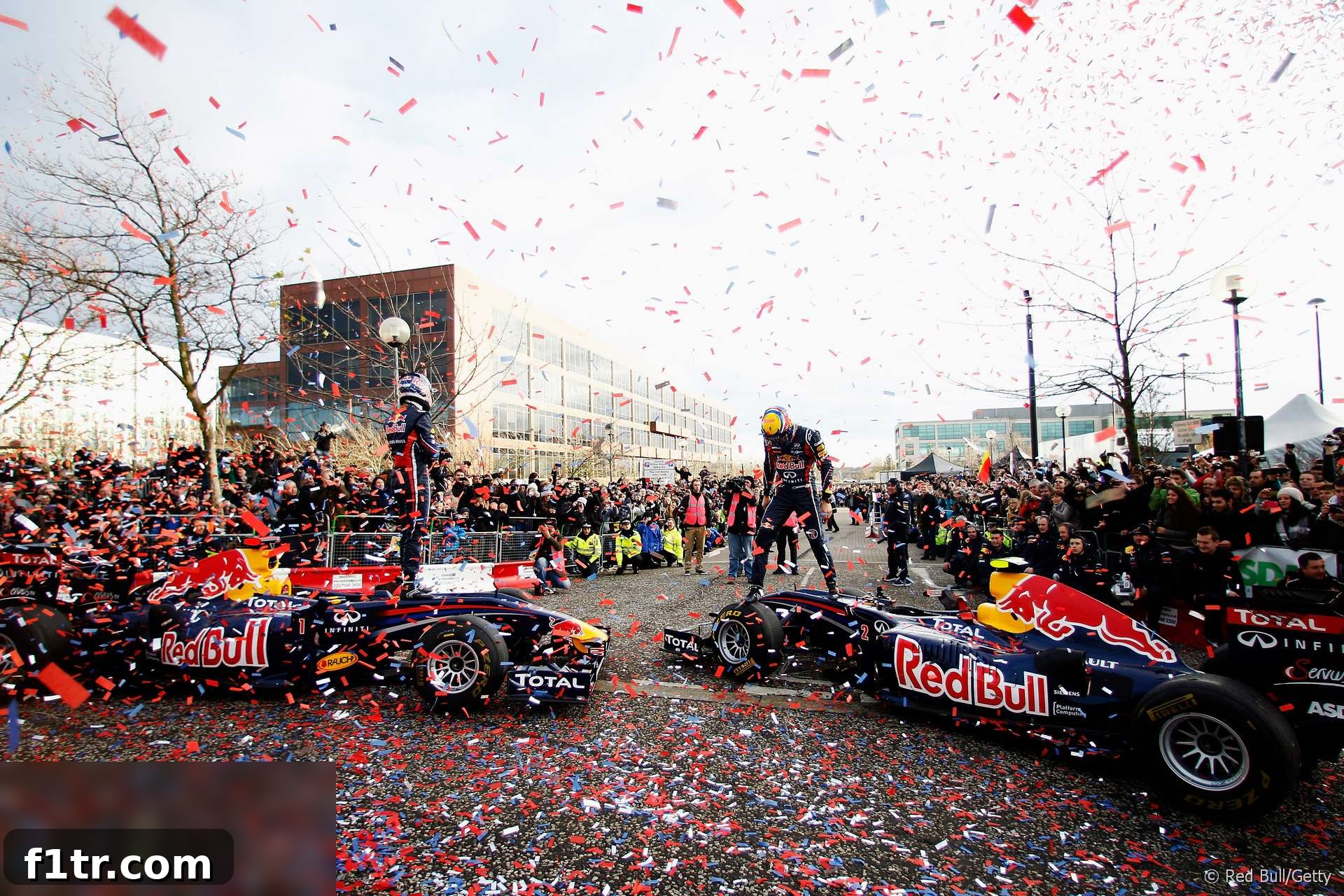
The benchmark set by Red Bull and Renault remains etched in the annals of Formula 1 history. Between 2010 and 2013, this formidable alliance clinched four consecutive Constructors’ Championships, a testament to their integrated technical efforts and strategic alignment. During this illustrious period, Sebastian Vettel, the prodigious German driver, secured four consecutive Drivers’ Championship titles, cementing their legacy as a truly unstoppable force. This period of sustained excellence serves as the ultimate proof of concept for the kind of synergy McLaren now seeks to cultivate with its engine supplier.
Providing unique insight into this aspiration is Peter Prodromou, McLaren’s chief technical officer for aerodynamics. Prodromou’s perspective is particularly valuable given his intimate involvement in Red Bull’s golden era, having moved to McLaren in 2014. He firmly believes that despite the inherent differences in their current arrangement, there is no fundamental obstacle preventing McLaren from forging a similarly successful relationship with Renault, even in the capacity of an engine customer.
The Golden Era: Red Bull and Renault’s Dominant Partnership
Prodromou fondly recalls his tenure at Red Bull, dispelling any notion that the relationship with Renault was anything less than exemplary. “The experience when I was at Red Bull, contrary perhaps to what’s out there in the media that’s quite negative now, it was very positive and extremely fruitful as a relationship,” Prodromou shared, highlighting a narrative often overshadowed by later, less harmonious interactions between Red Bull and Renault. His reflections paint a picture of deep collaboration, mutual respect, and shared ambition that transcended the typical supplier-customer dynamic.
He further elaborated on the integrated nature of their work: “A lot of the success we had you can attribute not just to the work that we were doing in Milton Keynes but the work that was going on in [the Renault factory at] Viry.” This statement is crucial, as it emphasizes that Red Bull’s triumphs were not solely a product of its own chassis genius but were significantly bolstered by the dedicated and proactive engineering support from Renault Sport’s engine facility. It was a partnership where ideas flowed freely, and technical challenges were tackled jointly, fostering a symbiotic relationship that drove innovation.
One of the most striking examples of this profound collaboration cited by Prodromou involves the pioneering development of exhaust-blown diffusers. “For instance the whole exhaust-blown diffusers, it was something that we worked very closely with Viry on and we couldn’t have done it without them,” he explained. This revolutionary aerodynamic concept, which used hot exhaust gases to increase downforce, was a game-changer in its time and required an unprecedented level of integration between chassis design and engine mapping. Such a complex and innovative project underscored the depth of their technical cooperation and mutual trust. “That type of project was really fruitful, great relationship, got a lot of trust for them, and I just hope that we can replicate that type of relationship in the future with them,” Prodromou expressed, articulating McLaren’s fervent desire to rekindle such a potent alliance.
Navigating the Customer-Supplier Dynamic
However, McLaren’s current reality presents a distinct challenge compared to Red Bull’s situation five years prior. A key differentiator lies in the status of the relationship: McLaren is currently a customer of Renault, whereas Red Bull, particularly during its championship-winning years, operated with a partnership that, while not a full works team, often afforded them privileges and levels of collaboration akin to one. This distinction is not merely semantic; it carries significant implications for resource allocation, technical input, and overall strategic influence.
The Fundamental Difference: Customer Versus Works Team
“It is different,” Prodromou candidly acknowledged, “it’s different in the sense that it’s new and we’re a customer.” The customer status traditionally means a team receives an engine package and technical support, but typically has less direct influence over the engine’s development roadmap, design specifications, or long-term strategic direction compared to a factory-backed or “works” team. Works teams, like Renault’s own entry, often benefit from bespoke solutions, prioritized updates, and a deeper integration between chassis and power unit design, as their success directly reflects on the engine manufacturer’s brand.
For a customer team, the challenge lies in maximizing the value derived from the engine supplier without being able to dictate terms or divert resources from the primary works effort. This requires a nuanced approach, focusing on effective communication, demonstrating value, and building trust to earn a level of collaboration that transcends the basic contractual obligations. It’s about becoming an invaluable partner rather than just another client.
Forging Influence: McLaren’s Path to Deeper Synergy
Despite these inherent differences, Prodromou remains optimistic about McLaren’s potential to bridge this gap. “But I think with time there’s no reason why we can’t work closely with them and try and forge a strong relationship where we have influence over some of the work they do and we get the extra benefits that comes with manufacturer status,” he asserted. This vision suggests a long-term strategy for McLaren, not just to buy engines, but to actively participate in their refinement and evolution.
Achieving this level of influence as a customer team demands a proactive and collaborative approach. McLaren must demonstrate its capacity to provide valuable feedback, contribute to problem-solving, and align its technical objectives with Renault’s broader engine development goals. This could involve dedicated liaison engineers, joint technical forums, and a transparent exchange of data, all aimed at fostering a shared sense of purpose. By consistently proving themselves as a high-performing and insightful partner, McLaren can progressively earn a stronger voice in the engine development process, potentially unlocking benefits typically reserved for works teams, such as customized engine integration solutions or early access to performance upgrades.
McLaren’s Broader Journey: Learning from Past Engine Partnerships
McLaren’s desire for a robust engine partnership with Renault is also informed by its recent tumultuous history with engine suppliers. The team’s journey through various power unit eras provides a crucial context for its current aspirations and its determination to build a stable and high-performing foundation.
The Honda Chapter: A Catalyst for Change
Prior to their collaboration with Renault, McLaren endured a challenging and ultimately unsuccessful three-year reunion with Honda. Intended to recreate their legendary partnership of the late 1980s and early 1990s, the Honda era (2015-2017) proved to be an arduous period marked by chronic reliability issues and a significant power deficit. This experience was profoundly frustrating for a team accustomed to championship contention and underscored the critical importance of a competitive and reliable power unit. The struggles with Honda served as a harsh reminder that even a team with McLaren’s rich heritage cannot succeed without a strong engine partner, and that technical synergy is paramount.
The lessons from the Honda chapter undoubtedly fueled McLaren’s resolve to seek a partnership with Renault that goes beyond a mere transactional relationship. They understand that success in modern Formula 1 requires not just a powerful engine, but a deep, collaborative bond with the engine manufacturer to ensure seamless integration, rapid problem-solving, and continuous development.
Building a Future with Renault: Strategic Imperatives
The switch to Renault engines represented a strategic reset for McLaren, a step towards stability and a known performance benchmark. While the initial years of the Renault partnership also presented their own integration challenges, the underlying goal remained to forge the kind of relationship that could maximize the power unit’s potential within the McLaren chassis. This involves optimizing packaging, cooling, and electronic systems to extract every ounce of performance.
McLaren’s leadership has consistently emphasized the importance of fostering a culture of openness and cooperation with Renault. This includes sharing detailed chassis data, providing candid feedback on engine performance and driveability, and actively participating in technical discussions to help guide future development. Their aim is not simply to be a recipient of engines, but an active contributor to the Renault power unit’s overall success across the grid.
The Blueprint for Success: Beyond the Engine Supply
To truly replicate the Red Bull-Renault success, McLaren understands that the partnership must extend far beyond the basic supply of an engine. It necessitates a holistic approach to collaboration, trust-building, and shared innovation.
Deep Engineering Collaboration: The Exhaust-Blown Diffuser Legacy
The example of the exhaust-blown diffuser stands as a powerful illustration of what deep engineering collaboration can achieve. This innovative solution required intimate knowledge of both the engine’s exhaust characteristics and the chassis’s aerodynamic properties. It involved joint simulation work, shared testing protocols, and a willingness from both sides to push boundaries. For McLaren and Renault to reach this level, they would need to identify areas where similar cross-disciplinary projects can yield significant performance gains. This could involve optimizing energy recovery systems for McLaren’s specific aerodynamic package, fine-tuning power unit mappings for circuit-specific demands, or jointly exploring novel integration concepts.
Such projects build invaluable trust and understanding between engineering teams. They move the relationship from a vendor-client dynamic to a genuine technical partnership, where both parties feel invested in the collective outcome. This is the “extra benefit” Prodromou refers to, transcending a standard customer agreement.
Cultivating Trust and Shared Objectives
Ultimately, the success of any such partnership hinges on trust and a clear alignment of objectives. For McLaren to gain influence and “manufacturer status” benefits, they must prove to Renault that their success directly enhances Renault’s reputation and contributes to the overall strength of the Renault power unit. This means consistent performance, effective communication, and a shared long-term vision.
Renault, in turn, stands to benefit from a strong McLaren partnership. A competitive customer team not only validates the performance of their power unit but also provides additional data points and development feedback. It showcases the engine’s versatility and reliability across different chassis philosophies, enhancing Renault’s standing as an engine supplier in Formula 1. This mutual benefit forms the bedrock of a truly fruitful alliance.
The Road Ahead: McLaren’s Vision for a Championship Contender
McLaren’s aspiration to emulate the Red Bull-Renault success is not merely a nostalgic longing; it is a strategic imperative for a team determined to reclaim its place among Formula 1’s elite. By focusing on fostering a deep, collaborative, and trust-based relationship with Renault, McLaren aims to unlock the full potential of its power unit and chassis package.
The Impact on F1’s Competitive Landscape
Should McLaren successfully forge this deeper synergy with Renault, the implications for the wider Formula 1 grid would be significant. A resurgent McLaren, consistently challenging for podiums and victories, would intensify the competition at the front. It would validate Renault’s capabilities as an engine manufacturer and demonstrate that a customer team, through strategic partnership, can indeed achieve championship-level performance. This renewed competitive threat would undoubtedly push rival teams to innovate further, ultimately enriching the spectacle of Formula 1 for fans worldwide. McLaren’s journey with Renault is therefore not just about their own ambitions, but potentially about reshaping the competitive dynamics of the sport itself.
Go ad-free for just £1 per month>> Find out more and sign up
2018 F1 season
- F1 feared “death knell” for Drive to Survive after Ferrari and Mercedes snub
- McLaren staff told us we were “totally crazy” to take Honda engines in 2018 – Tost
- ‘It doesn’t matter if we start last’: How Red Bull’s junior team aided Honda’s leap forward
- Honda’s jet division helped F1 engineers solve power unit problem
- McLaren Racing losses rise after Honda split
Browse all 2018 F1 season articles