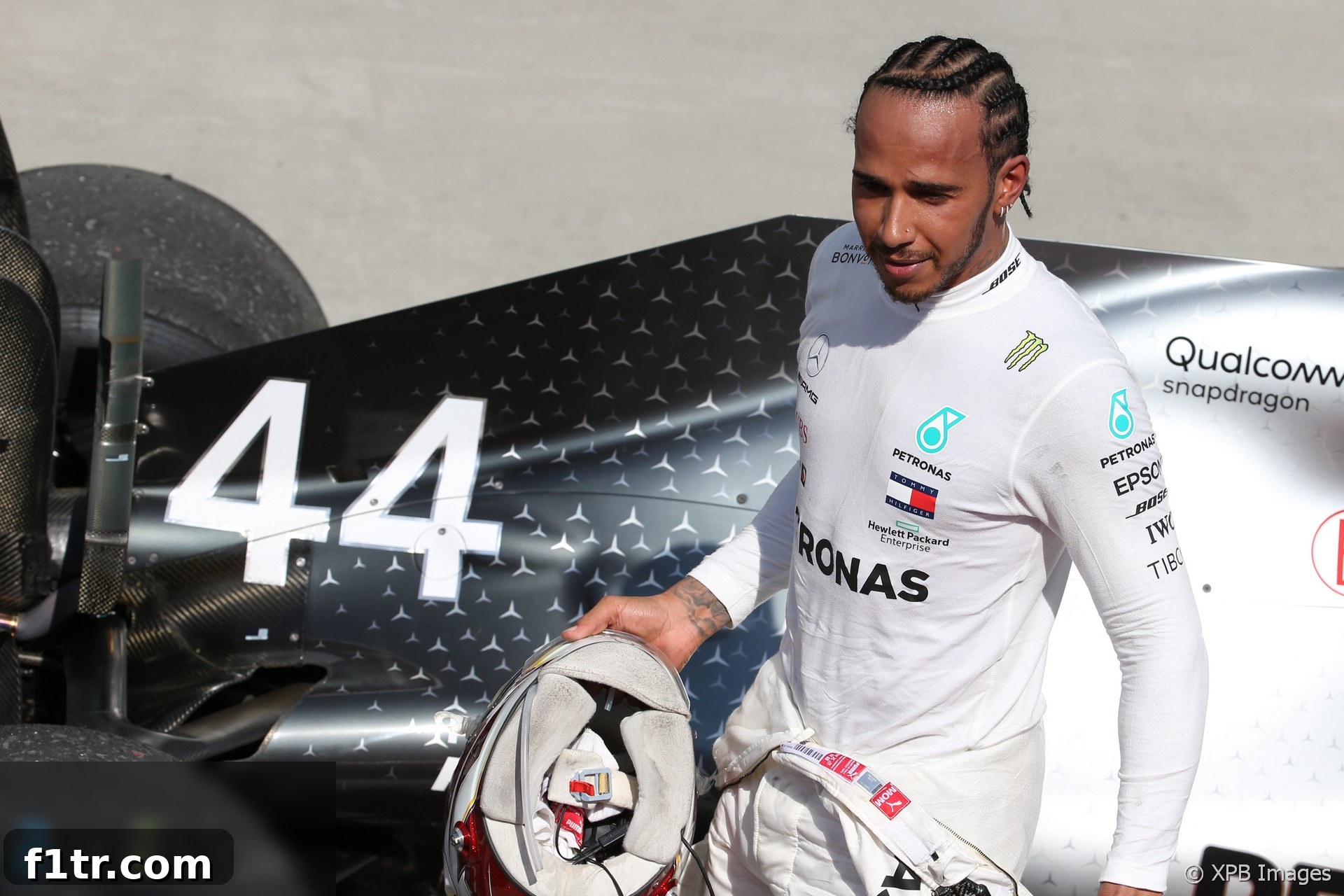
The exhilarating world of Formula 1 is a relentless crucible where speed, strategy, and cutting-edge engineering collide. Every Grand Prix presents a unique set of challenges, pushing teams and drivers to their absolute limits. However, sometimes the most intense battles are fought not on the track, but behind the scenes, against the clock and unforeseen technical glitches. Such was the dramatic scenario that unfolded for Lewis Hamilton and the Mercedes-AMG Petronas F1 Team at the Canadian Grand Prix, when a critical hydraulic leak threatened to derail his entire weekend before the race even began.
Unveiling the Drama: How Mercedes Battled a Race-Threatening Hydraulic Leak on Lewis Hamilton’s Car at the Canadian Grand Prix
Before the lights went out for the Canadian Grand Prix, a potential catastrophe loomed over the championship leader, Lewis Hamilton. Mercedes engineers discovered a significant hydraulic leak on his car, an issue that could have devastatingly prevented him from even starting the highly anticipated race. The revelation sent shockwaves through the garage, triggering a frantic, high-stakes repair mission under immense pressure and strict regulatory scrutiny.
The High Stakes of Montreal: A Championship Battle Awaits
The Canadian Grand Prix, held at the challenging Circuit Gilles Villeneuve in Montreal, is a revered fixture on the Formula 1 calendar. Known for its unforgiving “Wall of Champions” and demanding chicanes, it requires a perfect blend of power, precision, and driver skill. For Lewis Hamilton, consistently a front-runner and a multiple world champion, every race is a crucial step in his championship campaign. A non-start, or even a compromised performance, due to a mechanical failure in such a pivotal race, could have significant implications for his title aspirations, making the stakes incredibly high for the Mercedes team.
A Silent Threat: Diagnosing the Hydraulic Leak
The first ominous signs of trouble emerged for Hamilton’s W10 car after the qualifying session. Andrew Shovlin, Mercedes’ esteemed Trackside Engineering Director, detailed the initial discovery: “We dropped the floor, we noticed there was some oil on the floor so somewhere there was a leak. We could also see on the data we were losing some hydraulic pressure.” This observation, though subtle, signaled a critical underlying problem. In a Formula 1 car, hydraulics power numerous essential systems, including the gear shift, power steering, brake-by-wire, and even the drag reduction system (DRS). A loss of hydraulic pressure isn’t just a minor inconvenience; it’s a fundamental threat to the car’s operability and, crucially, the driver’s safety.
Parc Ferme Protocol: The Unyielding F1 Regulations
What complicated the situation immensely was the stringent Formula 1 regulation known as Parc Ferme. After qualifying, cars enter Parc Ferme conditions, meaning they are impounded and very limited work can be carried out. Teams are generally not permitted to make significant changes to the car’s setup or components. This rule exists to ensure fair play and prevent teams from completely overhauling their cars between qualifying and the race. As Shovlin explained, “Now, the issue is that the cars are then in Parc Ferme overnight, we are not allowed to touch them or to investigate it further.” This critical regulation meant that while Mercedes knew there was a problem, they were legally barred from conducting a detailed investigation or initiating repairs until Sunday morning, just hours before the race start. This enforced delay amplified the pressure and compressed an already tight timeline into an almost impossible window.
The Critical Sunday Morning Scramble
With the Parc Ferme restrictions lifted on Sunday morning, the Mercedes mechanics and engineers launched into a furious diagnostic and repair mission. Every second counted. The immediate objective was to pinpoint the exact source of the leak, a task that can be incredibly challenging in the densely packed and complex machinery of an F1 car. “So, that investigation moved to Sunday morning, when we are allowed to access the cars again, the mechanics can work on them,” Shovlin elaborated. This initial phase involved meticulous inspection, often requiring the removal of various bodywork panels and components, all while keeping a watchful eye on the clock and the looming race start.
Pinpointing the Problem: The Throttle Actuator
Through their diligent efforts, the Mercedes team successfully traced the hydraulic leak to a specific, critical component: the throttle actuator. The throttle actuator is integral to the engine’s performance, controlling the throttle input based on driver commands and sophisticated engine management systems. A fault in this component can lead to erratic engine behavior, loss of power, or even complete failure, making it impossible to race competitively, let alone safely. Once the leak was identified, the team had to seek formal permission from the FIA (Fédération Internationale de l’Automobile), the sport’s governing body, to replace the faulty part and its associated hydraulics. Given the safety implications and the critical nature of the component, and following a thorough explanation from Mercedes, the FIA granted the necessary approval, allowing the emergency repair to proceed.
Under the Gun: The Race Against Time for Repairs
With FIA approval in hand, the real race against time began. Replacing a component like the throttle actuator often requires extensive work, including, in this instance, the removal of the entire power unit. Modern Formula 1 power units are incredibly intricate and tightly integrated systems, comprising the internal combustion engine, turbocharger, MGU-H, MGU-K, energy store, and control electronics. Extracting and reinstalling such a complex assembly is a major operation, typically requiring hours of precise work by a specialized team of mechanics and engineers. As Shovlin observed, “We had to take the Power Unit out. We traced the leak to the throttle actuator, and then we made a request to the FIA to change the throttle actuator and some of the associated hydraulics.” He underscored the gravity of the task, stating, “So, that work was quite a big job though, there’s a lot to do within that. And it was pretty tight to get Lewis’s car back together for the start of the race.” This was not merely a simple swap; it involved disconnecting numerous electrical, fluid, and mechanical links, carefully lifting out the power unit, performing the component replacement, and then painstakingly reassembling everything with absolute precision, ensuring every connection was secure and every bolt torqued correctly. Any oversight could lead to further complications.
FIA Oversight: Seeking Approval for Vital Changes
The process of requesting permission from the FIA for component changes under Parc Ferme is a testament to the sport’s commitment to fairness and technical integrity. Teams cannot unilaterally decide to replace parts deemed critical or performance-affecting. They must present their case to the technical delegates, explaining the nature of the fault, why the replacement is necessary, and demonstrating that the replacement part is identical in specification to the original. This rigorous protocol ensures that no team gains an unfair advantage through unscheduled upgrades or by circumventing regulations under the guise of repairs. Mercedes’ successful application for the throttle actuator change highlighted both the undeniable severity of the leak and their transparent approach to the governing body.
The Perilous Path: Risks Beyond the Leak
While identifying and repairing the leak was the primary objective, the team faced an array of additional, perilous risks. The very act of removing and reinstalling the power unit under such intense time pressure carried its own set of dangers. There was the constant threat of damaging other delicate components during the rush, or failing to properly reconnect a vital system. Furthermore, once the car was reassembled, the ultimate moment of truth would come with the engine “fire-up” test. This crucial procedure determines if all systems are functioning correctly after the repair. “The issue when you have an unknown fault or a leak is you don’t know how long it is going to take you to find it, to identify it,” Shovlin stated. He added, “Where we were at risk was if we then fired up and we found another problem, if the engine had to come out again, that’s when we would’ve got short on time and perhaps not even been able to start the race.” For a championship contender like Hamilton, a non-start would have been a catastrophic blow, costing valuable points and momentum.
The Unseen Heroes: Mercedes Mechanics in Action
In the high-octane world of Formula 1, the spotlight often falls on the drivers and the strategists. However, this incident served as a powerful reminder of the indispensable role played by the mechanics and engineers. These “unseen heroes” operate with unparalleled skill, precision, and dedication. They are capable of performing complex surgical operations on multi-million dollar machinery under extreme pressure, often with mere minutes to spare. Their ability to diagnose, disassemble, repair, and reassemble critical components perfectly, all while maintaining absolute composure, is a testament to their exceptional training and experience. The successful resolution of Hamilton’s hydraulic leak was a direct result of their tireless efforts and collaborative spirit. As Shovlin rightfully acknowledged, “But, it was a great job by all the mechanics involved and quite happily the car was back together in time and finished the race successfully.”
From Crisis to Victory: Hamilton’s Canadian Grand Prix Triumph
Against all odds, the Mercedes team completed the extensive repairs just in time. Lewis Hamilton’s car fired up successfully, and he was able to take his rightful place on the grid. What followed was a memorable Canadian Grand Prix, in which Hamilton delivered a masterful performance. Despite the pre-race drama, he drove an impeccable race, ultimately crossing the finish line in first place. His victory was not without controversy, as a penalty awarded to Sebastian Vettel meant Hamilton inherited the win, but the fact that he was even on the track, let alone competing for victory, was a testament to the Herculean efforts of his team. This triumph, snatched from the jaws of a potential DNF (Did Not Finish), highlighted the resilience and technical prowess embedded deep within the Mercedes-AMG Petronas F1 Team, showcasing their ability to overcome formidable technical hurdles even when the stakes are at their highest. You can read more about the dramatic repair and the context of the race here: Mercedes Racing to Fix Hydraulic Leak on Hamilton’s Car Before Canadian GP.
Lessons Learned: The Relentless Pursuit of Perfection in Formula 1
The dramatic episode at the Canadian Grand Prix stands as a powerful illustration of the relentless pursuit of perfection that defines Formula 1. It underscores the immense technical challenges inherent in the sport, where even the smallest component failure can have championship-altering consequences. Mercedes’ ability to identify, diagnose, and rectify a critical hydraulic leak on Lewis Hamilton’s car under severe time constraints, while adhering to stringent Parc Ferme regulations, speaks volumes about their engineering depth, operational efficiency, and the unwavering dedication of their entire team. Such incidents, though stressful, ultimately forge stronger teams and push the boundaries of what is technically achievable, serving as a compelling reminder that success in Formula 1 is a multifaceted endeavor, built upon the visible spectacle of racing and the unseen triumphs of meticulous preparation and crisis management.