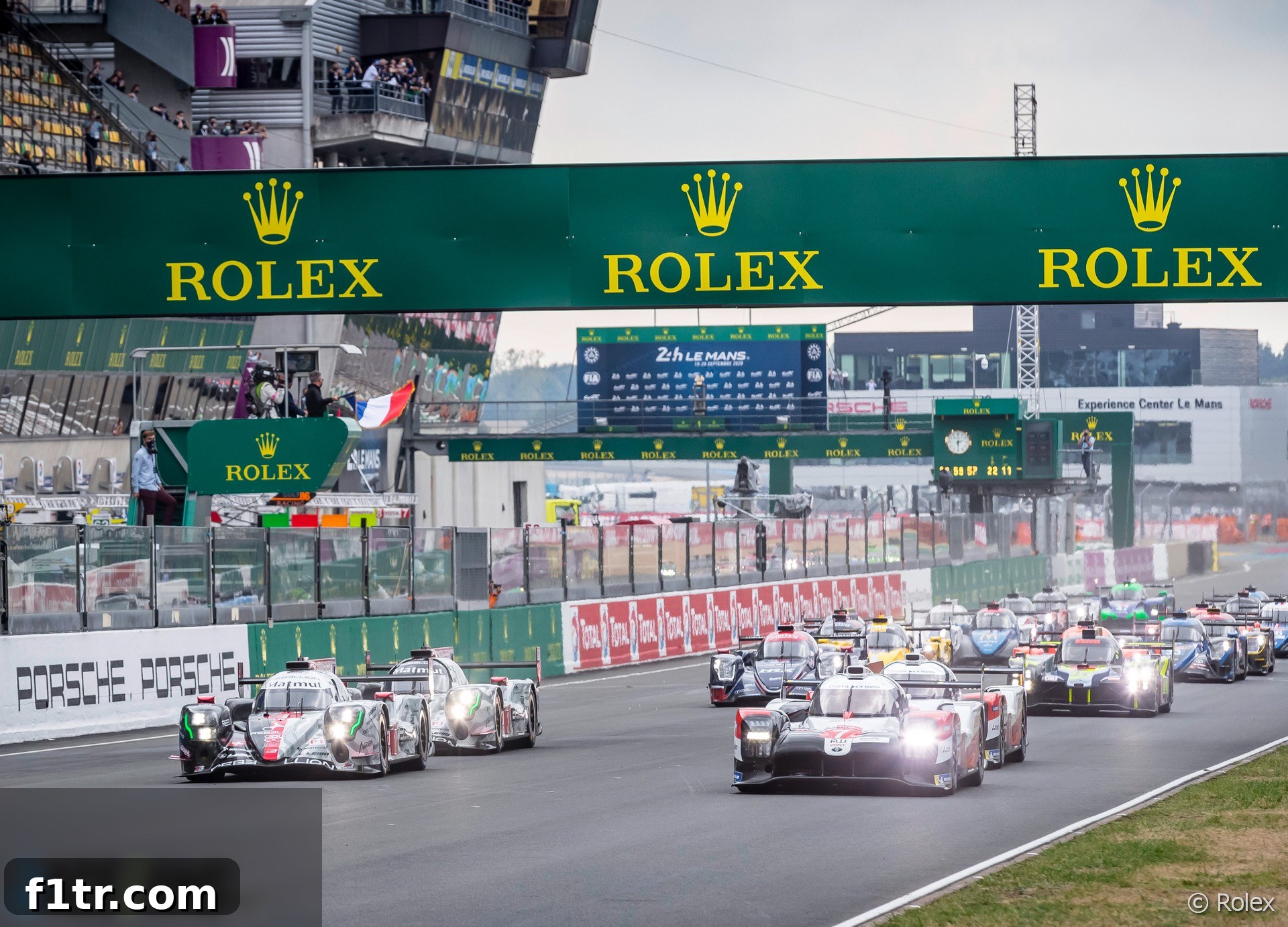
FIA Committed to Averting 2021 F1 and Le Mans 24 Hours Calendar Collision
FIA President Jean Todt has affirmed the global motorsport governing body’s dedication to preventing any potential calendar clashes between the highly anticipated 2021 Formula 1 season and the iconic Le Mans 24 Hours endurance race. This proactive stance underscores the FIA’s commitment to optimizing the global motorsport schedule for teams, drivers, and fans alike.
The issue of calendar congestion gained significant attention in 2020 when the original Le Mans 24 Hours, scheduled for June 13th-14th, directly conflicted with the Canadian Grand Prix. The unprecedented challenges posed by the global pandemic necessitated a comprehensive rescheduling, leading to the postponed Le Mans race taking place between F1’s Tuscan and Russian Grands Prix. This experience highlighted the crucial need for flexible and cooperative calendar management in an increasingly packed motorsport landscape.
Todt emphasized that avoiding such conflicts in 2021 hinges on a spirit of “goodwill” and close collaboration between the various series. “Yesterday the FIA announced the WEC calendar with six races, and you know how difficult it can be at the moment to establish a calendar,” he stated, acknowledging the immense logistical complexities involved. He further commended the collective efforts that allowed racing to proceed across all categories in 2020, despite the global health crisis, showcasing the resilience of the motorsport community.
The Intricate Dance of Calendar Management
The task of constructing a global motorsport calendar is a monumental undertaking, requiring meticulous planning and constant negotiation. The FIA, as the overarching governing body, plays a pivotal role in coordinating the schedules of its numerous championships. This involves balancing the interests of race promoters, broadcasters, commercial rights holders, and, most importantly, the teams and drivers who compete across multiple disciplines. For many elite drivers, the opportunity to participate in both Formula 1 and the Le Mans 24 Hours represents the pinnacle of their careers. A calendar clash forces an impossible choice, potentially depriving either event of top-tier talent and diminishing the spectacle for fans.
“Clearly, we will do as much as we can to avoid a clash between WEC and Formula 1. So that’s something we will do our best,” Todt reiterated, underscoring the FIA’s proactive approach. He acknowledged, however, that geographic considerations and time zones add another layer of complexity. “But of course it can also depend where will be Formula 1 located because the time zone has some importance. So we will do the best effort but that’s the maximum I can tell you.” The global nature of both Formula 1 and the World Endurance Championship (WEC) means that events span multiple continents, making perfect synchronization a formidable challenge.
Why Avoiding Clashes Matters for Motorsport’s Elite
The Le Mans 24 Hours stands as one of the Triple Crown of Motorsport, alongside the Monaco Grand Prix and the Indianapolis 500. Its grueling nature and rich history attract drivers from various racing disciplines, including Formula 1. Iconic figures like Fernando Alonso, Nico Hülkenberg, and Brendon Hartley have successfully combined F1 careers with Le Mans victories, showcasing the diverse talents required for endurance racing. When calendars conflict, these drivers are often forced to prioritize, potentially impacting their contractual obligations and personal ambitions. Beyond individual drivers, clashes also affect team personnel, media, and spectators who wish to engage with both prestigious championships. The goal is to maximize participation and viewership, ensuring that both series can showcase the best of motorsport without dilution.
The 2021 World Endurance Championship Calendar: A Closer Look
The FIA World Endurance Championship (WEC) calendar for 2021 presents a condensed yet compelling season, designed to deliver high-stakes endurance racing across some of the world’s most renowned circuits. This six-race schedule, crafted with careful consideration, aims to provide an optimal platform for the highly anticipated Hypercar era, which begins in 2021. The strategic placement of these events is critical, particularly the jewel in the crown – the Le Mans 24 Hours.
| Race | Event | Country |
|---|---|---|
| 1 | 1000 Miles of Sebring | USA |
| 2 | Six Hours of Spa-Francorchamps | Belgium |
| 3 | 24 Hours of Le Mans | France |
| 4 | Six Hours of Monza | Italy |
| 5 | Six Hours of Fuji | Japan |
| 6 | Six Hours of Bahrain | Bahrain |
An Overview of the 2021 WEC Season:
- 1000 Miles of Sebring (USA): Kicking off the season, the 1000 Miles of Sebring is a challenging event held on the bumpy, historic Sebring International Raceway. Known for its unique concrete and asphalt surfaces, it demands exceptional mechanical sympathy and driver skill. The event’s place on the calendar often sets the tone for the championship, attracting a strong American fanbase and offering a thrilling start to the endurance season.
- Six Hours of Spa-Francorchamps (Belgium): Moving to Europe, the legendary Circuit de Spa-Francorchamps provides a dramatic backdrop for the second round. With its iconic Eau Rouge-Raidillon complex and long straights, Spa is a favorite among drivers and a true test of aerodynamic efficiency and car balance. The unpredictable Ardennes weather often adds an extra layer of challenge to this classic endurance venue.
- 24 Hours of Le Mans (France): The undisputed highlight of the WEC calendar, the 24 Hours of Le Mans is more than just a race; it’s a spectacle of human and mechanical endurance. Held at the Circuit de la Sarthe, a blend of permanent track and public roads, it pushes competitors to their absolute limits for a full day and night. Its prestige and global recognition make its date a critical point for the entire motorsport world, hence the FIA’s concerted efforts to prevent an F1 clash.
- Six Hours of Monza (Italy): The “Temple of Speed,” Autodromo Nazionale Monza, returns to the WEC calendar, bringing its unique blend of high-speed straights and demanding chicanes. This historic Italian circuit promises a thrilling race, where slipstreaming and engine power will be key to success. Its European location also makes it accessible for many teams and fans.
- Six Hours of Fuji (Japan): The championship then heads to Asia for the Six Hours of Fuji, held at the Fuji Speedway. Nestled at the base of Mount Fuji, this circuit offers a long main straight and a mix of technical corners. It’s a crucial event for manufacturers with strong ties to the Asian market and provides a different challenge in terms of track characteristics and climate.
- Six Hours of Bahrain (Bahrain): The season culminates with the Six Hours of Bahrain. Often held under the floodlights of the Bahrain International Circuit, this race provides a dramatic conclusion to the WEC season. The desert conditions can be demanding, and the night racing adds an exciting visual element as champions are crowned and titles are decided under the stars.
This carefully constructed WEC calendar underscores the FIA’s dedication to providing a robust and exciting endurance racing championship. The integration of the new Hypercar class promises a fresh era of competition, making the careful scheduling all the more vital to its success.
The Path Forward: Collaboration and Strategic Planning
The commitment from Jean Todt and the FIA highlights the necessity for ongoing dialogue and strategic planning across the various stakeholders in motorsport. With Formula 1 expanding its own calendar and new venues frequently being added, the pressure on available dates only increases. The ability of major series to coexist without direct conflicts is paramount for the overall health and growth of motorsport. This not only involves the flagship events like Le Mans but also aims to ensure that support series, feeder championships, and other significant races can find their optimal slots, allowing drivers to progress and fans to enjoy a diverse range of motorsport action.
Ultimately, the “goodwill” Todt speaks of is a testament to the collaborative spirit that underpins the international racing community. By working together, the FIA, F1, WEC, and other promotional bodies can craft a harmonious schedule that celebrates the best of global motorsport, allowing iconic events like the Le Mans 24 Hours and the Formula 1 World Championship to shine brightly, without dimming each other’s light.
More on the 2021 F1 Season:
- Masi ‘basically gifted the championship’ to Verstappen says 2021 FIA steward Sullivan
- Las Vegas race backers looking to extend F1 deal beyond 2025
- Why Mercedes put ‘a reminder of joy and pain’ on display in their factory lobby
- Verdict on error in GT race suggests Mercedes would have lost 2021 Abu Dhabi GP appeal
- Title ‘stolen’ from Mercedes made us ‘underdogs people cheer for’ – Wolff
Browse all 2021 F1 season articles