Red Bull Racing faced a unique challenge entering the 2022 Formula 1 season, fresh off a thrilling and ultimately victorious 2021 championship campaign. Team Principal Christian Horner openly acknowledged that the intense focus required to secure the drivers’ title might have inadvertently allowed rival teams to gain a head start on the radically new technical regulations introduced for 2022. This admission underscored the delicate balance F1 teams constantly navigate between immediate performance and future development, a strategic tightrope walk that defined the off-season ahead of a revolutionary era in motorsport.
The 2021 season saw Red Bull locked in a titanic battle with Mercedes, a championship fight that captivated audiences worldwide and was only decided on the very last lap of the final race. While the contenders poured resources into developing their existing cars to extract every last ounce of performance, many other teams, out of the championship picture, had the luxury of shifting their full attention to their 2022 projects much earlier. This strategic divergence created a significant ‘unknown’ for Red Bull as they unveiled their new challenger, the RB18, and prepared for what promised to be one of the most unpredictable seasons in recent memory.
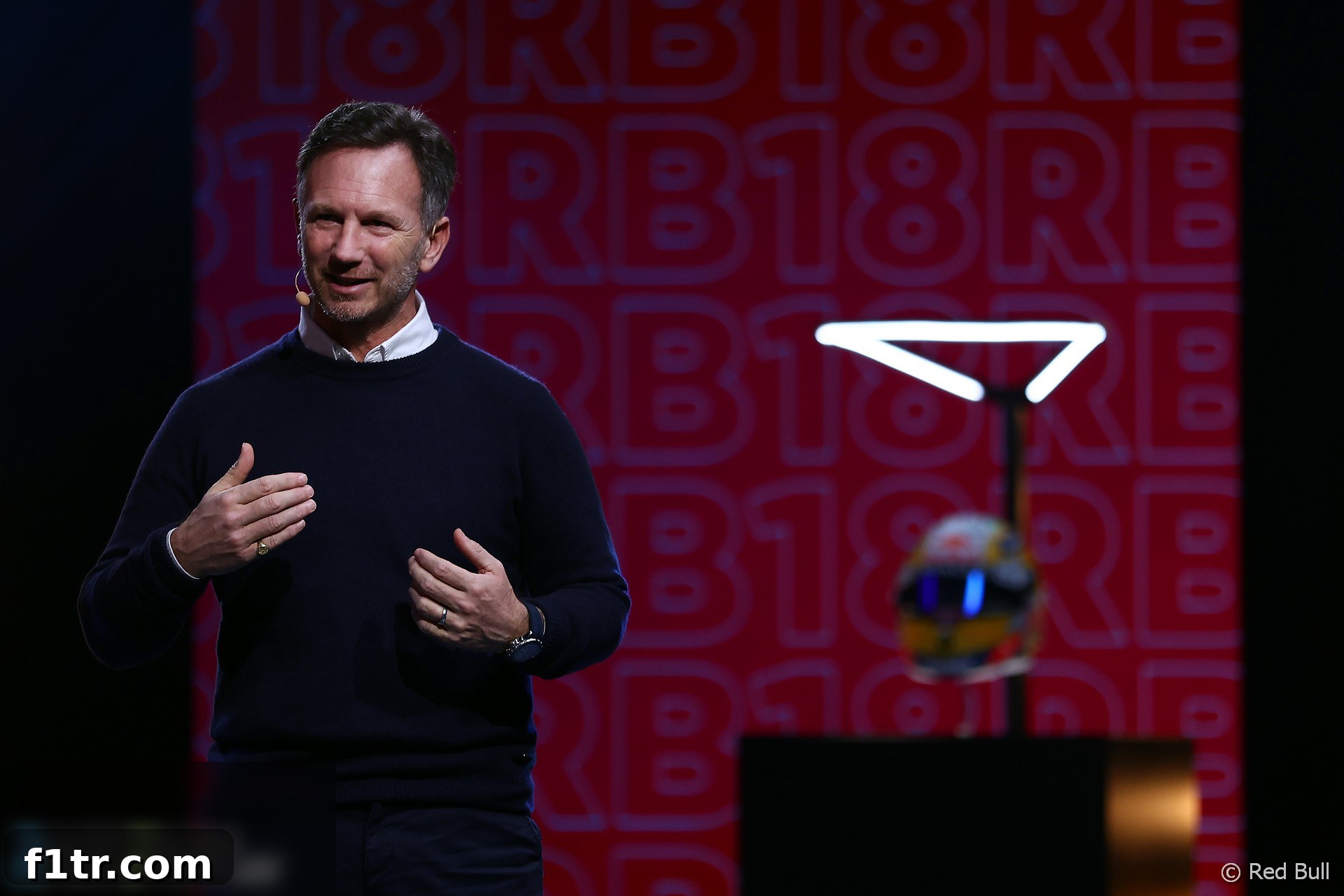
Speaking at the much-anticipated launch of the RB18, Christian Horner articulated the team’s ambitions while highlighting the inherent uncertainties of the new regulatory landscape. “We’re aiming very much to build on what we achieved last year, so the target is to try and obviously retain the title,” Horner stated, setting a clear goal for the Milton Keynes-based squad. However, he quickly tempered this ambition with a pragmatic view of the challenges ahead. “The big unknown is, have we missed something with these regulations? Has another team stolen a march because of the focus and effort that went into 2021?” This candid assessment reflected the widespread apprehension among top teams regarding the potential for a competitor to unearth a hidden advantage under the dramatically altered rules.
Despite these concerns, optimism permeated the Red Bull camp. Horner expressed confidence in the team’s latest creation: “We believe we’ve got a good car, RB18, as you know, coming to life and seeing it today is fantastic. It’s the culmination of a huge effort from the team and we’re looking forward to seeing it out on the track in anger.” The RB18 represents countless hours of design, engineering, and manufacturing, a testament to the dedication of hundreds of individuals working tirelessly behind the scenes. This new machine was not merely an evolution but a complete revolution, born from a blank slate to conform to Formula 1’s most significant technical overhaul in decades.
The 2022 regulations brought a fundamental shift in car design, primarily centered around the reintroduction of ground effect aerodynamics. This meant a complete departure from previous design philosophies, demanding an entirely fresh approach to every component. Horner clarified that the car presented at the launch event was primarily a show car, a representative model. He readily admitted that the actual car that would hit the track for the first race of the year in Bahrain would look “very different” from the initial public display. This practice is common in Formula 1, where teams often hold back their true innovations until the very last moment to prevent rivals from gaining insights.
The essence of the new regulations aimed to promote closer racing and make overtaking easier, thereby enhancing the spectacle for fans. “Every single component is brand new this year,” Horner emphasized, underscoring the scale of the change. “And with it being a ground effect car, with it being designed to make overtaking hopefully easier, the cars easier to follow each other, that’s changed the whole philosophy of how we design these cars.” This philosophical shift necessitated a radical rethink of airflow management, suspension geometry, and even driver ergonomics, as the low-slung ground effect tunnels and simplified wing elements fundamentally altered how the cars generate downforce and interact with the track surface.
The reintroduction of ground effect, while aimed at improving racing, also presented a steep learning curve for every team on the grid. Teams had to relearn how to harness air pressure differences beneath the car to suck it onto the tarmac, a concept largely sidelined since the early 1980s. This involved meticulous computational fluid dynamics (CFD) simulations and extensive wind tunnel testing, often pushing the boundaries of existing knowledge. The challenge wasn’t just in designing a fast car, but in understanding how these new cars would behave dynamically, how their performance would evolve through a race stint, and how sensitive they would be to ride height and track conditions. The initial car launch was merely the opening salvo in what would be an extended war of development, as teams sought to unlock the full potential of these revolutionary machines.
Horner succinctly captured the essence of the impending season: “So it’s a steep learning curve, it’s steep for everyone, and it’s a race of development between first race and the last race.” This statement highlighted the dynamic nature of Formula 1, particularly under new regulations. Early-season performance would be crucial for establishing momentum, but sustained development and rapid adaptation throughout the calendar year would ultimately determine who emerged victorious. The team that could most effectively understand, optimize, and continuously upgrade their ground effect car would likely hold the key to championship glory. This implied that the initial pecking order established in pre-season testing might be dramatically altered as the season progressed, creating an exhilarating and unpredictable narrative.
Red Bull’s aspiration to retain the title, therefore, was not just about building a fast car from the outset, but about fostering a culture of relentless innovation and problem-solving. The ‘big unknown’ of how rivals had utilized their extended development window loomed large, adding an extra layer of intrigue to the pre-season build-up. For a team that had just reached the pinnacle of motorsport, the 2022 season represented both a triumphant continuation and an entirely fresh start, demanding adaptability, ingenuity, and unwavering determination to conquer the challenges of a brand-new Formula 1 era. The stage was set for an epic battle, not just against competitors, but against the very unknowns of a revolutionary rulebook.
2022 F1 season
- Mercedes told me “you’re wrong” about 2022 car’s problems – Hamilton
- FIA confirms all 10 F1 teams complied with 2022 cost cap
- Steiner “not ashamed” of panning “slow” Schumacher in Drive to Survive
- Albon believes year out of F1 improved him as a driver
- Hamilton sees diversity gains in F1 years on from his ‘traumatising’ experience of racism
Browse all 2022 F1 season articles