The world of Formula 1 is a crucible of speed, strategy, and precision, where every millisecond and every rule is scrutinized. Recent events have highlighted the critical importance of clear and consistent sporting regulations, prompting the FIA to issue new directives aimed at clarifying key areas that have led to confusion and controversy in the early rounds of the 2023 season. These clarifications, particularly regarding “working on the car” during pit stop penalties and the dimensions of grid boxes, underscore the sport’s ongoing commitment to fairness and the integrity of competition.
Advert | Become a Supporter & go ad-free
The first two races of the Formula 1 calendar brought to light ambiguities within the sporting regulations, particularly concerning the serving of time penalties during pit stops. Drivers Fernando Alonso and Esteban Ocon found themselves at the center of these discussions, receiving penalties for what stewards deemed “working on the car” while serving mandatory five-second time penalties.
Clarifying “Working on the Car” During Pit Stop Penalties
At the heart of the recent controversies lies Article 54.4(c) of the F1 sporting regulations. This rule explicitly states that when a car is serving a time penalty, it “may not be worked on until the car has been stationary for the duration of the penalty.” This regulation is designed to prevent teams from gaining any unfair advantage, even momentary, while their car is mandated to stop. The definition of “working on the car,” however, proved to be a grey area, leading to inconsistent application and considerable frustration within the paddock.
The Esteban Ocon Incident in Bahrain
The first high-profile incident occurred at the Bahrain Grand Prix, the season opener. Alpine driver Esteban Ocon was handed a ten-second time penalty after an Alpine team member was observed making contact with his car while it was stationary and serving a five-second penalty. The contact, deemed by the stewards as “working on the car,” immediately triggered an additional penalty, illustrating the stringent interpretation of the rule even for what might appear to be an incidental touch. This incident set a precedent, albeit one that would soon be challenged.
The Fernando Alonso Controversy in Jeddah
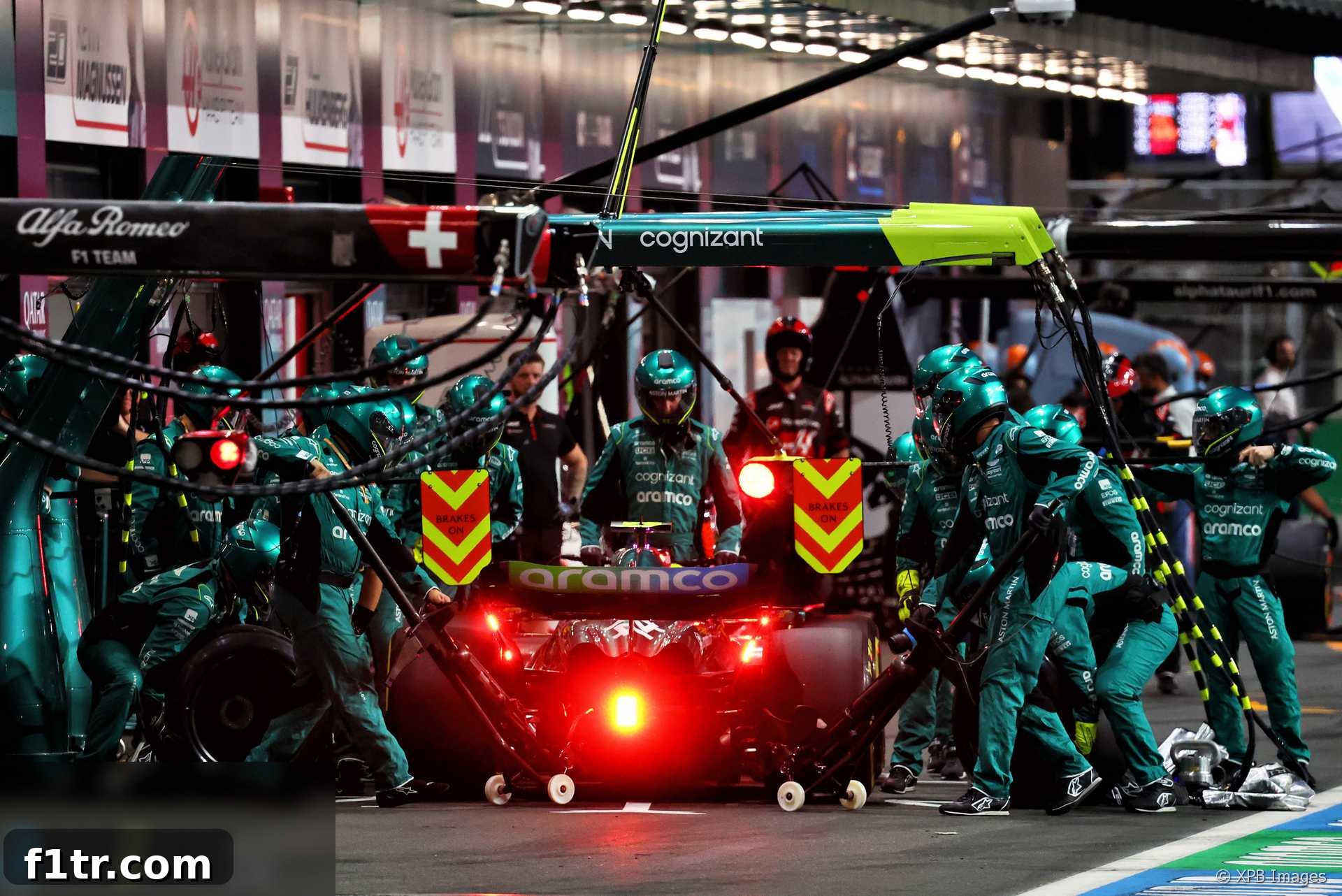
The confusion escalated dramatically at the Saudi Arabian Grand Prix with Fernando Alonso. After a spectacular drive that saw him secure a hard-fought third place, Alonso was initially penalized ten seconds post-race. The rationale behind this penalty was that the rear jack had touched his Aston Martin car while he was serving a five-second penalty during his pit stop. This penalty, if upheld, would have stripped him of his podium finish, dropping him out of the top three and altering the race results significantly. The decision sparked widespread debate among fans, media, and teams alike, questioning the fairness and consistency of the application of the rules.
Aston Martin’s Right of Review and the Reversal
Aston Martin, feeling that their driver had been unfairly treated, promptly exercised their “Right of Review.” This formal process allows teams to present new, significant, and relevant evidence that was not available to the stewards at the time of their original decision. Aston Martin meticulously compiled and presented seven separate instances from previous races where cars had been touched by the rear jack while serving penalties, yet no additional penalties were issued. This compelling evidence highlighted a clear pattern of conflicting precedents, demonstrating an inconsistent application of the very rule that had cost Alonso his podium. Upon reviewing this new evidence, the stewards conceded that there was indeed a “lack of clarity in the wording” of the regulation and acknowledged the “conflicting precedents” that had been established. Consequently, Alonso’s ten-second penalty was cancelled, and his well-deserved third-place finish was reinstated, a testament to the importance of thorough review processes and consistent rule enforcement.
The FIA’s New Sporting Directive: A Clear Definition of “Work”
In response to these incidents and the ensuing confusion, the FIA swiftly moved to issue a new sporting directive. This directive aims to eliminate any lingering ambiguity surrounding Article 54.4(c). From this point forward, the FIA has explicitly stated that any “physical touching” of cars or drivers “by hand, tools or equipment (including the front and rear jacks)” during the period a penalty is being served will now be definitively considered as “work” on the car and thus a breach of the regulations. This clarification leaves no room for misinterpretation, ensuring that all teams and drivers are fully aware of the stringent requirements during penalty service. The directive emphasizes the importance of maintaining absolute distance from the car during the penalty period, reinforcing the principle that no advantage, however minor, should be gained.
Addressing Grid Position Penalties: Widened Grid Boxes
Beyond pit stop penalties, the FIA also tackled another area of contention that impacted both Ocon and Alonso early in the season: inaccurate starting positions on the grid. Both drivers had received penalties for failing to position their cars correctly within their designated grid slots, a rule that has been reiterated and emphasized for the 2023 season.
The Challenge of Grid Visibility for Modern F1 Cars
Several drivers have voiced complaints about the inherent difficulties in accurately positioning their cars on the grid. The current generation of F1 cars, with their larger dimensions and, critically, the shift to 18-inch wheels introduced in 2022, significantly reduces the driver’s visibility of the grid markings. The larger wheels obscure the white lines that delineate the grid box, making it challenging for drivers to precisely align their cars, especially under the high-pressure environment of a race start. This visibility issue contributed directly to the penalties issued to Ocon and Alonso, highlighting a practical problem that needed an immediate solution.
The Solution: Wider Grid Slots and a Centre Line
To address these concerns and prevent future penalties arising from this visibility challenge, the FIA has confirmed a significant change to the grid box layout. Grid boxes will now be widened by an additional 20 centimeters. Furthermore, a clear centre line will be added within each grid slot. These modifications are designed to provide drivers with much greater assistance in accurately finding and positioning their cars within their designated starting positions. The widened slots offer a larger margin for error, while the centre line provides a clearer visual reference point for alignment. This pragmatic approach acknowledges the design limitations of the modern F1 cars and prioritizes the driver’s ability to comply with regulations without undue difficulty.
Trial at the Australian Grand Prix and Future Feedback
The new, widened grid slots will be trialed during the upcoming Australian Grand Prix. This trial period is crucial, allowing the FIA to gather firsthand feedback from drivers regarding the effectiveness and practical benefits of these changes. Driver input is invaluable in refining sporting regulations, ensuring that modifications genuinely improve the racing experience and reduce unnecessary penalties. Based on the feedback collected, the FIA will then determine the long-term implementation of these revised grid slot designs.
Broader Review of Sporting Regulations
These specific directives on pit stop work and grid positions are part of a larger, ongoing effort by the FIA to meticulously review and refine the Formula 1 sporting regulations. The FIA has acknowledged that “several other elements” of the sporting regulations are currently under scrutiny. The overarching goal of this comprehensive review is to provide further clarifications or redefine existing rules where ambiguity exists, thereby avoiding future confusion, inconsistencies, and controversies. The dynamic nature of Formula 1, with continuous technological advancements and evolving racing strategies, necessitates a proactive approach to regulation management. Clear, unambiguous rules are fundamental to maintaining the integrity of the sport, ensuring fair competition, and providing a level playing field for all participants.
The Importance of Clarity and Consistency
The recent events underscore the delicate balance required in Formula 1 regulation. While rules are essential for maintaining order and fairness, their interpretation and application must be consistent and understandable to all. The FIA’s swift action in clarifying these rules, particularly following the Alonso incident, demonstrates a commitment to learning from past controversies and adapting the regulatory framework to better serve the sport. By removing ambiguity and providing clear guidelines, the FIA aims to reduce the likelihood of avoidable penalties, allowing the focus to remain firmly on the pure competition and incredible driving talent that defines Formula 1. These directives represent a positive step towards ensuring that the thrilling spectacle of Formula 1 is enjoyed with the utmost clarity and confidence in its sporting outcomes.
Advert | Become a RaceFans supporter andgo ad-free
2023 Australian Grand Prix
- Australian GP to forbid fans from entering track at end of this year’s race
- I only missed one chance to score points this year – Albon
- Formula 1’s stewards should listen to drivers less, not more
- Mercedes unsure whether gains seen in Melbourne were ‘track-specific’
- Why Ferrari saw a ‘real step forward in pure performance’ in point-less Australian GP
Browse all 2023 Australian Grand Prix articles