Toyota’s Outcry: Akio Toyoda Slams WEC Balance of Performance Changes at Le Mans
The prestigious Le Mans 24 Hours, a race synonymous with endurance, innovation, and unwavering competition, was marred by controversy even before the green flag dropped. Akio Toyoda, the impassioned chairman of Toyota, voiced profound dissatisfaction with the World Endurance Championship’s (WEC) eleventh-hour Balance of Performance (BoP) adjustments. These crucial changes, implemented just ten days before the iconic race, significantly impacted Toyota’s competitive edge, leading to a strong rebuke from a figure known for his deep commitment to the sport.
The Controversial Balance of Performance Shift
Balance of Performance (BoP) is a regulatory tool designed to level the playing field in multi-manufacturer racing series like the WEC. Its aim is to ensure that different car concepts and manufacturers can compete fairly, fostering close and exciting racing rather than technological dominance. However, its application is frequently a source of contention, and the adjustments made for the 2023 Le Mans 24 Hours proved particularly divisive.
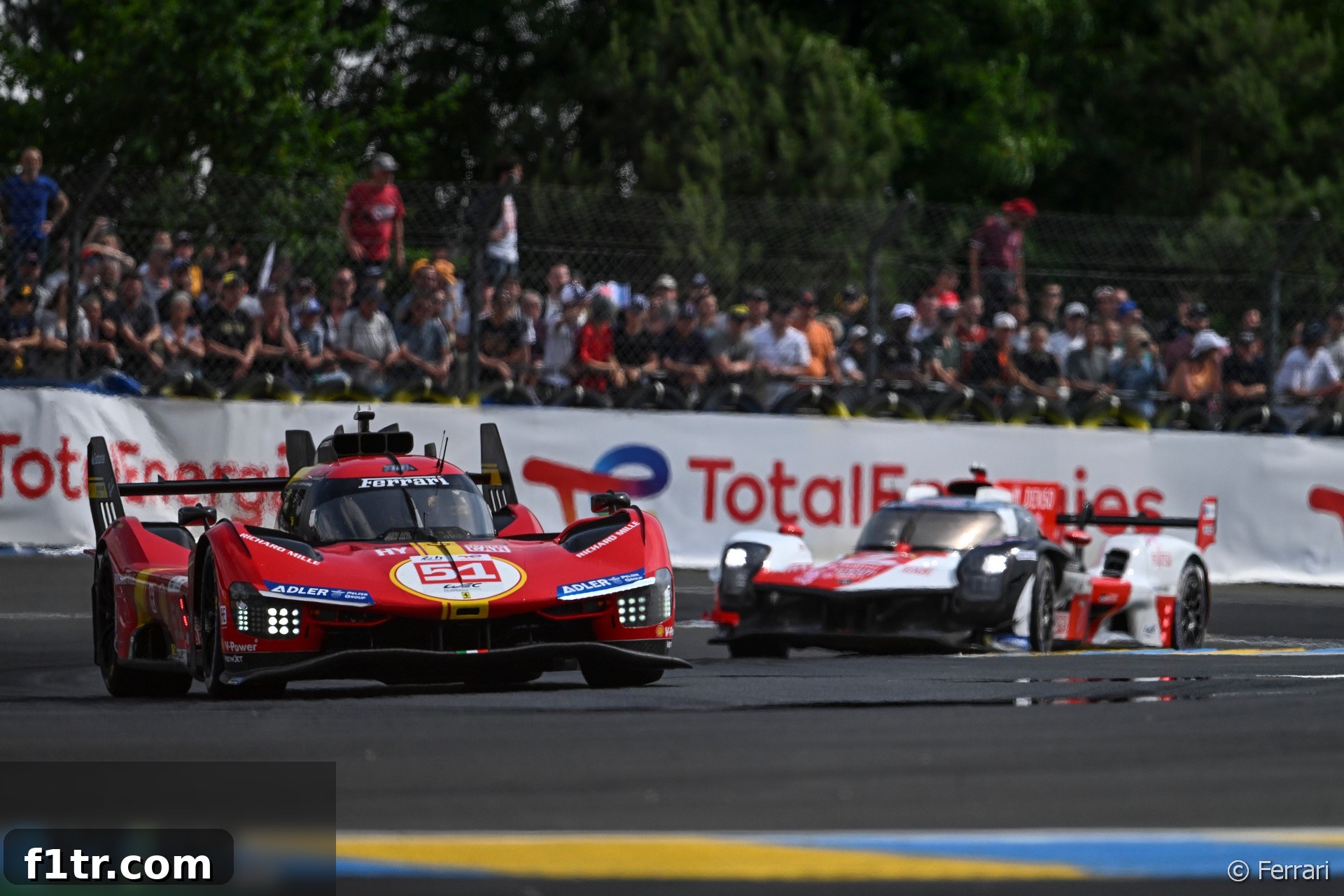
For Toyota’s GR010 Hypercars, the changes were substantial and immediate. Their minimum weight was increased by a significant 37 kilograms, making an already robust car even heavier. Additionally, the amount of energy the GR010 could consume per stint saw a 4MJ increase. While an energy increase might seem beneficial, it must be balanced against the added weight and the overall performance envelope. The net effect was that the GR010 became the heaviest Hypercar on the grid, outweighing its closest competitor, Ferrari’s 499P, by a considerable 16 kilograms. Ferrari’s challenger, while also affected by the BoP changes, faced a less severe impact, leading to questions about the equity of the adjustments.
The timing of these revisions exacerbated Toyota’s frustration. Implementing such pivotal performance parameters so close to the race start left teams with minimal time to adapt their strategies, setups, and driver approaches. For a race as grueling and demanding as Le Mans, where every detail matters, a sudden change of this magnitude can disrupt months of meticulous preparation and development.
Akio Toyoda’s Stern Rebuke: “Politics, Not Sport”
Akio Toyoda, a long-standing advocate for the purity of motorsport, did not mince words when expressing his disappointment. Speaking to the Toyota Times, he drew a stark distinction between what he believes motorsport should be and what transpired at Le Mans, famously stating, “What we are doing is ‘sport where athletes fight’. That is motor sports. It’s definitely not a motor ‘politics’ that exposes the stubbornness of manufacturers. I want to say I wanted drivers, engineers and mechanics to race in a place that looked ahead to the next 100 years. When I was watching the qualifiers, I thought, ‘I lost to politics’.”
Toyoda’s comments resonated deeply within the motorsport community, highlighting a crucial philosophical debate. For him, racing should be a direct contest of skill, engineering prowess, and human endurance, not an arena for backstage political maneuvering or arbitrary rule changes. His frustration stems from Toyota’s unwavering commitment to the WEC since its revival in 2012. He vividly recalled a period when Toyota stood almost alone in the top category, mentioning, “Audi withdrew in 2016, Porsche disappeared from 2018 and only Toyota remained in the top category of Le Mans and fought.” This steadfast dedication, he implied, should be recognized and rewarded with fair competition, especially as other manufacturers, including Ferrari, returned to the Hypercar class, which Toyota genuinely welcomed.
The chairman’s desire for an “open place where everyone is watching” versus a “closed political battle that no one can see” speaks volumes about his vision for the sport. He believes that true sport thrives on transparency and visible competition, where rivals push each other to their limits, a spectacle he is convinced fans yearn to witness. These remarks underscore a broader concern about the integrity of motorsport and the delicate balance between regulation and genuine competition.
The Race Weekend: Qualifying and the Main Event
The immediate impact of the BoP changes was evident during qualifying. Ferrari, less affected by the adjustments, showcased formidable pace, securing a dominant front-row lockout for the race. This performance undoubtedly fueled Toyoda’s belief that the political aspects had overshadowed the sporting integrity. The two Toyotas, which had previously demonstrated their strength by winning the opening three WEC races of the year, could only manage third and fifth positions on the grid, a stark contrast to their usual qualifying dominance.
Despite the setback, Toyota’s teams fought valiantly throughout the gruelling 24-hour race. The #51 Ferrari 499P, driven by Alessandro Pier Guidi, Antonio Giovinazzi, and James Calado, ultimately claimed victory, finishing a remarkable 81 seconds ahead of the #8 Toyota GR010, piloted by Sebastien Buemi, Brendon Hartley, and Ryo Hirakawa. This second-place finish, while a testament to Toyota’s resilience, highlighted the challenge presented by the BoP. Tragically, the second Toyota, the #7 entry, was forced to retire from the race due to significant damage incurred during a collision with backmarkers, further complicating the team’s aspirations for a stronger overall result.
The outcome inevitably led to reflections on whether a different BoP configuration might have altered the race’s conclusion. While Ferrari’s performance was undeniably strong, the narrative of “politics” influencing the results remained a significant talking point, particularly from Toyota’s perspective.
Pioneering the Future: Toyota’s Hydrogen Vision at Le Mans
Beyond the immediate frustrations of the 24 Hours race, Toyota also used the Le Mans platform to showcase its ambitious vision for the future of motorsport and sustainable mobility. The company unveiled a concept design for a future hydrogen-powered car, signaling a bold direction for endurance racing. Akio Toyoda is a fervent advocate for this technology, expressing his keenness to see hydrogen cars compete at Le Mans, where their introduction is planned within the next three years.
Toyoda elaborated on his conviction regarding hydrogen’s potential, contrasting it with the prevailing focus on Battery Electric Vehicles (BEVs). “Two weeks ago I ran the Fuji 24-hour race,” he recounted. “While many people around the world are talking about BEVs [battery electric vehicles] as an option, we have been fighting for the realisation of a hydrogen society, believing that hydrogen is also an option.” This statement underscores Toyota’s belief in a multi-pathway approach to decarbonization, where hydrogen plays a vital role alongside other electric solutions.
He acknowledged the public perception challenges surrounding hydrogen, stating, “Hydrogen has an image of an explosion, and the image that it is a dangerous fuel is hard to get rid of.” However, Toyoda expressed optimism about changing this narrative, confidently asserting, “I think that the image has been changed from ‘dangerous’ to ‘future’.” This commitment to overcoming technical and perceptual hurdles demonstrates Toyota’s long-term investment in hydrogen as a safe, viable, and powerful energy source for both road cars and competitive motorsport. Le Mans, with its tradition of innovation, serves as the ideal proving ground for such groundbreaking technologies, pushing the boundaries of what is possible in sustainable racing.
Looking Ahead: The Road to Sustainable Endurance Racing
The 2023 Le Mans 24 Hours will undoubtedly be remembered not just for Ferrari’s triumphant return to the top step of the podium, but also for the underlying tensions surrounding the Balance of Performance. Akio Toyoda’s outspoken criticism serves as a powerful reminder of the fundamental principles that should govern motorsport: fair play, open competition, and a genuine celebration of athletic and engineering excellence. His passionate defense of “sport” over “politics” resonates with many who believe that the integrity of racing must be preserved for future generations.
Beyond the immediate controversy, Toyota’s unwavering commitment to the WEC and its visionary pursuit of hydrogen technology underscore a broader narrative. Even amidst frustrations, Toyota remains a pivotal player in endurance racing, not only seeking victory but also pushing the boundaries of sustainable motorsport. The introduction of hydrogen power at Le Mans could redefine the future of the event, transforming it once again into a crucible for groundbreaking automotive innovation. As the WEC evolves, the hope remains that the spirit of fair competition, championed by figures like Akio Toyoda, will continue to drive the sport forward, ensuring that the spectacle on track truly reflects the efforts and ingenuity of its participants.