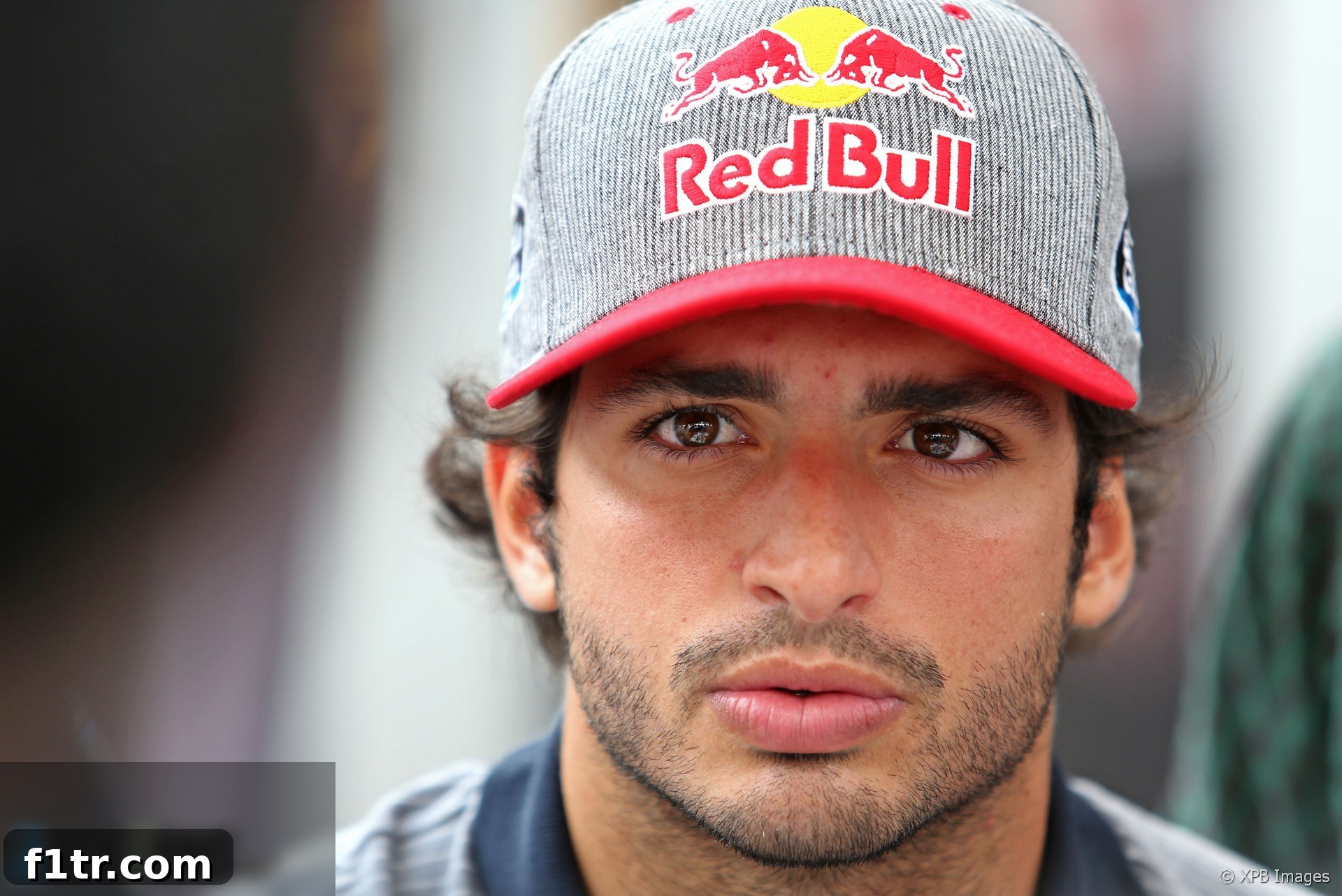
Throughout his formative years within the esteemed Red Bull Junior Team, it often felt as if the energy drink giant never quite afforded Carlos Sainz Jnr the full measure of recognition he deserved. Despite consistently proving his mettle and demonstrating undeniable talent, Sainz’s path to Formula 1 and ultimately to a top-tier team was paved with hurdles and a palpable sense of being an overlooked prodigy in the Red Bull stable.
The Genesis of a Talent: Sainz’s Junior Career and Red Bull’s Initial Oversight
The year 2014 stood as a significant marker in Carlos Sainz’s burgeoning career. Then a Red Bull-backed protégé, Sainz was meticulously carving his way to a resounding victory in Formula Renault 3.5 – a championship widely regarded at the time as a significant stepping stone to Formula 1, arguably on par with what GP2 (now Formula 2) represented. His dominant performance, characterized by seven wins and a commanding points lead, unmistakably highlighted his readiness for the pinnacle of motorsport.
However, despite this emphatic display of skill and championship-winning pedigree, Red Bull initially bypassed Sainz for a coveted promotion to their junior Formula 1 outfit, Toro Rosso. In a move that surprised many observers, the team instead fast-tracked Max Verstappen, plucking the prodigious Dutchman directly from Formula 3 after a single, albeit impressive, season. This decision set the stage for a narrative that would follow Sainz for years: consistently performing at a high level, yet always seemingly a step behind Red Bull’s primary focus.
A twist of fate, however, intervened to open the door for Sainz. It was only when four-time world champion Sebastian Vettel delivered the seismic news of his departure from Red Bull later that year that an unexpected opportunity presented itself. Daniil Kvyat was promptly promoted from Toro Rosso to the senior Red Bull Racing team, creating a vacant seat at Toro Rosso alongside Verstappen. Into this newly available slot, Sainz finally found his way onto the Formula 1 grid for the 2015 season, a debut earned not solely by his performance, but also by the fortuitous timing of a competitor’s strategic move.
The 2015 season saw Sainz and Verstappen, two highly-rated rookies, pitted against each other at Toro Rosso. While Verstappen ultimately scored the majority of points between the pair, it is crucial to note that Sainz endured considerably greater setbacks due to the car’s notoriously poor reliability. Mechanical failures and technical glitches often robbed Sainz of strong points finishes, painting an incomplete picture of his true performance relative to his teammate. Despite these challenges, Sainz consistently demonstrated raw speed, intelligent race craft, and a maturity beyond his years, indicating that the gap in points didn’t fully reflect their comparative talents. Their time as teammates was brief, however, as Verstappen was promoted to Red Bull Racing just four races into the 2016 season, further solidifying Red Bull’s focus on the Dutchman.
Establishing His Worth: Outshining Teammates and Navigating Red Bull’s Driver Program
While few would dispute that Max Verstappen has more than justified Red Bull’s unwavering faith in him, perhaps the energy drink giant should have cast a more discerning eye on the driver he left behind. After Verstappen’s promotion, Sainz was reunited with Daniil Kvyat at Toro Rosso – a driver with significantly more Formula 1 experience than Sainz at that point. The outcome of their year-and-a-half together was unequivocally one-sided, a clear testament to Sainz’s evolving prowess and consistency.
Over their combined seasons, Carlos Sainz comprehensively out-scored Kvyat by a staggering 90 points to just eight. This dominant performance against an established F1 driver should have served as a powerful signal to Red Bull about Sainz’s capability and potential. He consistently extracted the maximum from the Toro Rosso machinery, often delivering standout performances in the midfield and demonstrating excellent race management.
During this period, outward signs of friction between Sainz and the Red Bull camps began to emerge. In mid-2017, Sainz, understandably seeking career progression, remarked that he was “unlikely” to spend a fourth consecutive season at Toro Rosso – a perfectly reasonable observation given that no Red Bull junior driver had ever endured such a long tenure in the junior team. This candid assessment, however, was met with a swift and public rebuke from Toro Rosso team principal Franz Tost, who stated, “This is not a decision for Carlos Sainz. He has a Red Bull contract and Red Bull decides what they will do in the future.” This incident underscored the rigid hierarchy and limited agency afforded to drivers within Red Bull’s tightly controlled ecosystem, highlighting a growing disconnect between Sainz’s aspirations and the team’s plans for him.
Ultimately, Sainz departed Toro Rosso before the end of the 2017 season, loaned out to Renault for the final races. This move, while providing Sainz with a fresh environment and experience with a works team, also subtly indicated that Red Bull had no immediate slot or clear plan for his continued progression within their immediate structure. It was a temporary separation that foreshadowed a more permanent split, allowing Sainz to gain invaluable experience and demonstrate his adaptability outside the familiar Red Bull orbit.
The Missed Opportunity: Red Bull’s Driver Carousel Continues Without Sainz
By mid-2018, Red Bull once again found themselves in a familiar predicament, in urgent need of a driver to partner Max Verstappen at the senior team. With Sainz having proven his capabilities consistently and gaining further experience at Renault, surely this was his moment to finally secure a coveted place at Red Bull Racing? The opportunity seemed tailor-made for him.
Yet, in another perplexing decision that would ultimately prove costly, Red Bull opted against recalling Sainz from Renault. Instead, they promoted Pierre Gasly on the strength of a promising, though relatively brief, half-season at Toro Rosso. In retrospect, this decision appears increasingly questionable. Gasly, despite his talent, struggled immensely with the demands of the Red Bull car and the pressure of partnering Verstappen, leading to his demotion back to Toro Rosso halfway through the 2019 season. This quick turnaround highlighted the significant gamble Red Bull had taken, a gamble that backfired spectacularly and left them scrambling for another replacement.
In the intervening period, Carlos Sainz made the definitive decision to sever ties with the Red Bull driver program entirely, embarking on a bold new chapter with McLaren. This move proved to be a career-defining moment for the Spanish driver. Sainz didn’t just join McLaren; he thrived, blossoming into the undisputed star of the midfield throughout the 2019 season. His performances were characterized by remarkable consistency, astute racecraft, and an inspiring leadership presence within the Woking-based team. He delivered McLaren’s first podium finish in five seasons at the chaotic Brazilian Grand Prix, a momentous achievement that signaled the team’s resurgence and cemented his status as a premier midfield driver.
Sainz finished the 2019 season as the highest-placed driver outside the ‘big three’ teams (Mercedes, Ferrari, Red Bull), an astonishing feat. It is particularly noteworthy that he accumulated more points than both Pierre Gasly and his successor, Alexander Albon, managed during their combined stints at Red Bull Racing in the same year. This stark comparison eloquently underscored the magnitude of Red Bull’s misjudgment and the potent talent they had let slip through their fingers.
McLaren’s Shining Star and Ferrari’s Future
Ultimately, Red Bull’s repeated oversight became Ferrari’s significant gain. In a remarkable twist of fate, Carlos Sainz once again found himself thanking Sebastian Vettel. Just as Vettel’s initial departure from Red Bull had set in motion Sainz’s promotion to Formula 1 in 2015, it was Vettel’s second departure, this time from Ferrari, that created the perfect opportunity for Sainz to take up one of the most coveted seats in the sport. The poetic symmetry of his career trajectory, consistently influenced by the four-time champion’s movements, is undeniable.
Sainz’s move to Scuderia Ferrari for the 2021 season represented the ultimate vindication of his talent and perseverance. It offered him the grandest stage to demonstrate, unequivocally, why Red Bull should have paid closer, more consistent attention to his trajectory. His journey from an overlooked junior to a factory Ferrari driver is a testament to his unwavering determination, adaptability, and sheer skill.
Conclusion: A Legacy Forged Beyond Red Bull’s Shadow
Carlos Sainz Jnr’s journey through Formula 1 stands as a compelling narrative of a driver who consistently punched above his weight, often against the backdrop of perceived undervaluation by the very team that nurtured his early career. From his dominant junior series performance to his reliable consistency at Toro Rosso, and his transformative leadership at McLaren, Sainz repeatedly showcased the qualities of a top-tier F1 driver.
Red Bull’s decision-making regarding Sainz, characterized by initial overlooks and subsequent dismissals in favor of other talents, ultimately denied them a proven, stable, and highly capable asset. Sainz’s ability to not only survive but thrive after leaving the Red Bull umbrella, culminating in his dream move to Ferrari, serves as a powerful testament to his resilience and self-belief. His story is a poignant reminder that while talent can open doors, unwavering dedication and the courage to forge one’s own path can lead to even greater destinations, ultimately proving detractors wrong and solidifying a well-deserved place among Formula 1’s elite.
2021 F1 season
- Masi ‘basically gifted the championship’ to Verstappen says 2021 FIA steward Sullivan
- Las Vegas race backers looking to extend F1 deal beyond 2025
- Why Mercedes put ‘a reminder of joy and pain’ on display in their factory lobby
- Verdict on error in GT race suggests Mercedes would have lost 2021 Abu Dhabi GP appeal
- Title ‘stolen’ from Mercedes made us ‘underdogs people cheer for’ – Wolff
Browse all 2021 F1 season articles