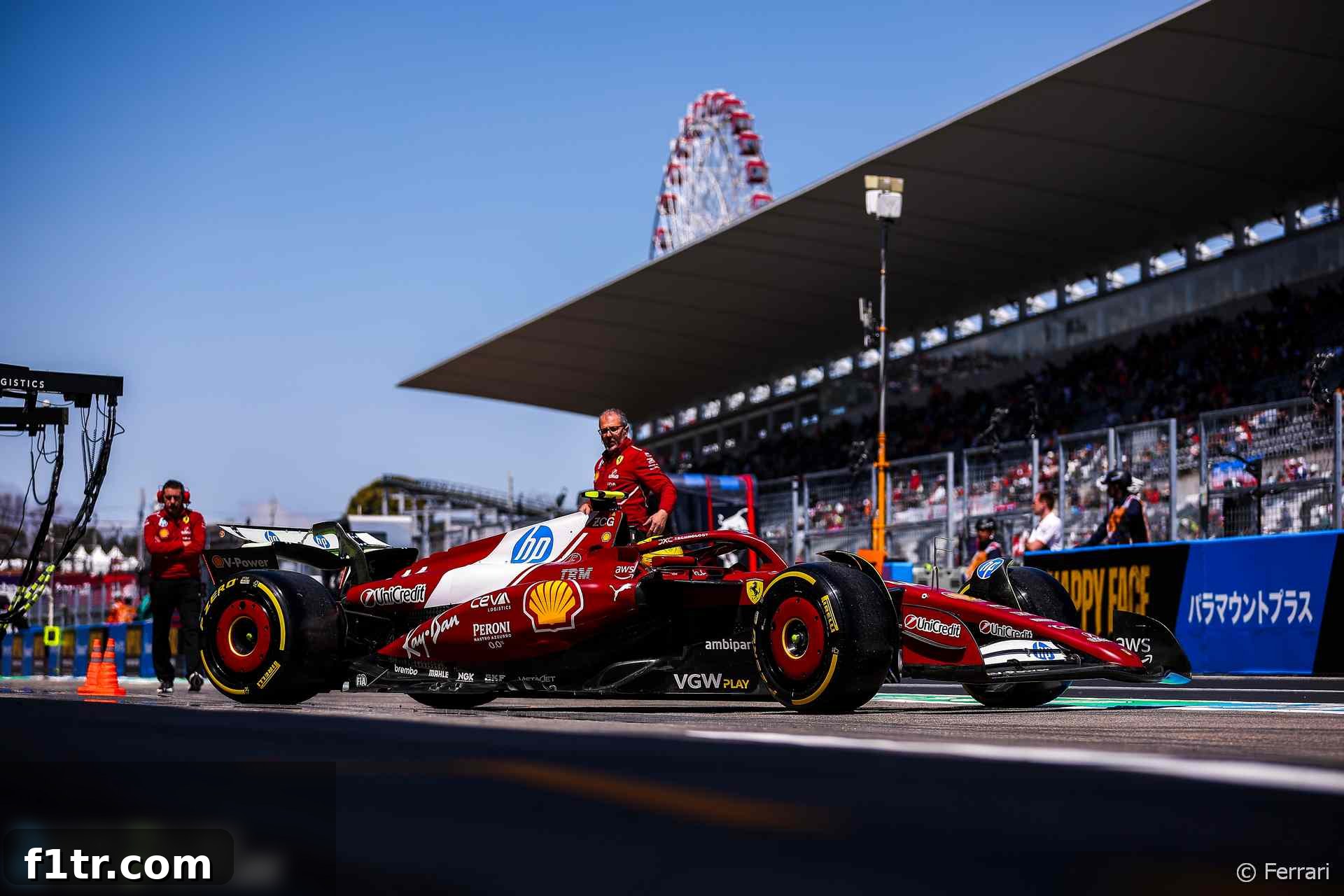
F1 Pit Lane Protocol Breaches: Hamilton & Stroll Issued Formal Warnings for Overtaking Infractions
Advert | Become a Supporter & Go Ad-Free
In a recent Formula 1 practice session, both Lewis Hamilton and Lance Stroll found themselves in the stewards’ crosshairs, receiving formal warnings for critical infringements of pit lane protocols. The incident involved the overtaking of rival cars in the pit lane’s fast lane while traversing the working lane, a clear violation of established regulations designed to ensure safety and order during high-speed motorsport events. Not only were the drivers sanctioned, but their respective teams also faced warnings, underscoring the collective responsibility in adhering to the stringent guidelines set by the race director.
The core of the issue stems from a specific breach of the race director’s instructions regarding how drivers are permitted to join the fast lane of the pits when exiting their garages. Formula 1’s pit lane is a meticulously controlled environment, bifurcated into a ‘fast lane’ where cars travel to and from the track, and an ‘inner’ or ‘working lane’ where teams operate on their vehicles. The rules are unequivocal: drivers are strictly forbidden from overtaking any cars already positioned in the fast lane by cutting through the inner or working lane. This regulation is not arbitrary; it’s a vital component of pit lane safety, preventing congestion, minimizing the risk of collisions, and maintaining a predictable flow of traffic.
Understanding the Pit Lane Fast Lane Rules and Their Evolution
The regulations governing the pit lane, particularly concerning the fast lane, have undergone significant tightening in recent seasons. This evolution is a direct response to an observed increase in drivers strategically queueing at the pit lane exit, often anticipating the beginning or resumption of a session. Such practices, while potentially offering a tactical advantage, can lead to chaotic situations if not managed with precise protocols. The updated rules aim to eliminate ambiguity and ensure that all drivers enter and navigate the fast lane in a structured, safe manner, preventing scenarios where aggressive maneuvering could compromise safety.
The stewards’ investigation revealed that both Hamilton and Stroll engaged in similar infractions during the second practice session. Specifically, they were found to have “overtook several cars in the fast lane whilst traversing the working lane to the practice start area.” Stroll’s incident occurred following the session’s second red flag, a period when drivers often scramble to maximize track time. Hamilton’s breach followed the third red flag, highlighting a pattern of opportunistic, yet non-compliant, behavior in a high-pressure environment. These incidents are not just minor procedural errors; they reflect a lapse in adherence to critical safety directives that could have broader implications.
The Race Director’s Explicit Instructions
The race director’s notes for this particular event provide an exceptionally detailed framework for pit lane conduct, leaving no room for misinterpretation. These notes precisely define the permissible methods for drivers to join the fast lane and unequivocally state that once a car is considered “inside” the fast lane, it should not be overtaken unless it stops due to an “obvious mechanical problem.” This exception is crucial, distinguishing between a driver deliberately circumventing rules and one dealing with an unavoidable vehicle malfunction.
The instruction outlines: “Any car(s) driven to the end of the pit lane prior to the start or restart of a free practice session [or] qualifying session must form up in a line in the fast lane and leave in the order they got there.” This emphasizes a ‘first come, first served’ principle, ensuring an orderly departure sequence and discouraging any attempts to gain position prematurely. Furthermore, the definition of when a car is considered to be “in the fast lane” is rigorously precise: “A car will be considered to be ‘in the fast lane’ when a tyre has crossed the solid white line separating the fast lane from the inner lane, in this context crossing means that all of a tyre should be beyond the far side, with respect to the garages, of the line separating the fast lane from the inner lane.” This meticulous definition ensures there’s no ambiguity about when a car has legally committed to the fast lane, thereby triggering the no-overtaking rule.
The guidelines also address scenarios after a session has commenced or restarted: “After the start or restart of a free practice session [or] qualifying session, if there is a suitable gap in a queue of cars in the fast lane, such that a driver can blend into the fast lane safely and without unnecessarily impeding cars already in the fast lane, they are free to do so.” This provision allows for safe merging under specific conditions, promoting fluidity while maintaining safety. However, a critical caveat is added: “During a free practice session and qualifying session a car driving in the inner lane, parallel to the fast lane, will not be considered to have blended into the fast lane at the earliest opportunity.” This clarifies that merely driving alongside the fast lane in the working lane does not grant a driver the right to bypass the queue or illegally overtake.
The Importance of Pit Lane Safety and Order
The pit lane is arguably one of the most dangerous areas in motorsport. It’s a confined space where mechanics, engineers, and support staff work in close proximity to high-speed vehicles. Strict adherence to pit lane rules is paramount for several reasons:
- Personnel Safety: Unpredictable movements or aggressive driving can lead to severe accidents involving pit crew members, who often operate under immense pressure and tight time constraints.
- Driver Safety: While less common, collisions in the pit lane can still result in damage to cars and injuries to drivers. Maintaining an orderly flow minimizes this risk.
- Fair Play and Sporting Integrity: Pit lane etiquette ensures that no driver gains an unfair advantage by circumventing queues or rules. It maintains the integrity of the sporting competition, where track performance, not rule-bending, should determine outcomes.
- Operational Efficiency: Clear rules facilitate the smooth and efficient operation of the pit lane, which is crucial during practice, qualifying, and especially during races where seconds can dictate victory or defeat.
The formal warnings issued to Hamilton and Stroll, along with their teams, serve as a potent reminder of the zero-tolerance policy Formula 1 maintains regarding safety and procedural compliance. While a warning might seem lenient compared to a grid penalty or a fine, it’s a significant mark on a driver’s record and indicates a serious breach that could lead to harsher penalties for future infractions. It also places teams on notice, reinforcing their responsibility to ensure their drivers are fully aware of and strictly adhere to all operational guidelines.
Advert | Become a RaceFans supporter andgo ad-free
Broader Implications for Driver Conduct and Team Responsibility
These incidents, though seemingly minor in the grand scheme of a race weekend, underscore a broader theme in modern Formula 1: the increasing scrutiny on driver conduct both on and off the track. With advanced telemetry and video evidence, stewards have unprecedented tools to monitor and penalize infringements. The precise language in the race director’s notes reflects a concerted effort to remove ambiguity from regulations, thereby minimizing arguments and ensuring consistent application of penalties.
Furthermore, the warning extended to the teams highlights the shared accountability. Teams are not just responsible for the performance of their cars but also for the discipline and conduct of their drivers. It implies a need for thorough briefings and constant reinforcement of rules, particularly in high-stress situations like practice sessions where drivers might be pushing limits or seeking every possible advantage. The potential for a team to incur a penalty for a driver’s pit lane infringement means that team strategists and engineers must also be vigilant in guiding their drivers.
Past instances have shown that repeated warnings or more severe breaches of pit lane regulations can lead to significant sporting penalties, including grid drops, fines, or even disqualifications. While Hamilton and Stroll received formal warnings on this occasion, it serves as a crucial precedent and a clear message to all competitors: pit lane rules are sacrosanct and any deviation will be met with official reprimand. This rigorous enforcement helps maintain the high standards of safety and professionalism expected in Formula 1.
Preventing Future Infractions: A Continuous Effort
To prevent future infractions, both drivers and teams must engage in a continuous learning and adaptation process. This includes:
- Detailed Briefings: Regular and thorough briefings on all updated regulations, especially those pertaining to safety-critical areas like the pit lane.
- Simulation and Training: Incorporating pit lane entry and exit procedures, including adherence to fast lane rules, into simulator training.
- Real-time Communication: Effective real-time communication between the pit wall and the driver to guide them through complex pit lane scenarios, particularly during red flag periods or session restarts.
- Proactive Self-Correction: Drivers and teams reviewing onboard footage and telemetry after each session to identify and correct any near-misses or minor procedural deviations before they escalate into formal warnings.
The incident involving Lewis Hamilton and Lance Stroll, while resolved with formal warnings, provides valuable insight into the meticulous nature of Formula 1 regulations and the unwavering commitment to safety. It serves as a reminder that every aspect of the sport, down to the precise movement within the pit lane, is governed by strict rules designed to protect all participants and uphold the integrity of the competition.
Don’t Miss a Beat from the World of Formula 1!
Get a daily email with all our latest stories – absolutely no marketing, no ads, just pure F1 news. Sign up today to stay informed:
Go Ad-Free for Just £1 Per Month and Enhance Your F1 Experience>> Find out more about supporting us and sign up today!
More from the 2025 Japanese Grand Prix
- McLaren must accept upsetting drivers at times, says Stella
- Verstappen ‘can test our car, I look forward to seeing his disappointment’ – Norris
- Verstappen’s McLaren domination claim ‘no joke’ despite Piastri’s doubt
- Extra mandatory pit stop won’t create more passing at tracks like Suzuka – Sainz
- Mercedes took note of Verstappen’s out-lap tactics after stunning Suzuka pole position
Browse all 2025 Japanese Grand Prix articles