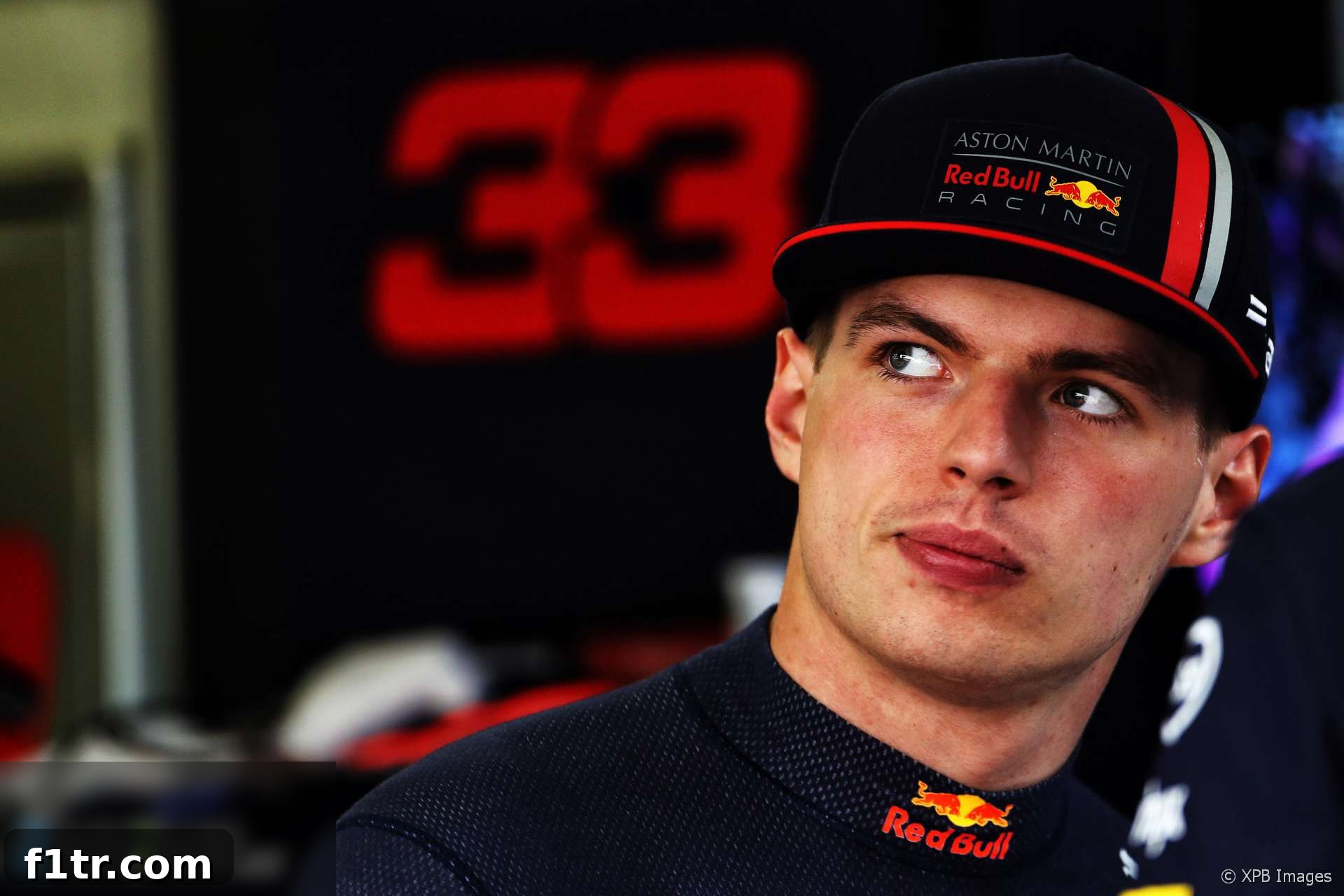
Honda’s Wavering F1 Commitment: Red Bull and Verstappen Face an Uncertain Future
In the high-stakes world of Formula 1 communications, Red Bull Racing’s recent announcement regarding Honda’s engine supply for the 2021 season was notably subdued. A crucial piece of news for the championship-contending team, it was delivered as a concise, two-line tweet: “We’ll be powered by Honda in 2021! The team are delighted to confirm that we have extended our partnership to use Honda hybrid power.”
Advert | Become a Supporter & go ad-free
Its sister team, Scuderia AlphaTauri (formerly Toro Rosso), offered an even briefer and somewhat more ambiguous statement: “It’s great to confirm that Honda Racing F1 will continue to supply the team into the new era of Formula 1.” The distinct lack of fanfare was striking. No official media release was distributed, no press conference held, and crucially, not a single word was uttered about Honda’s plans beyond the 2021 season. This minimalistic, almost reluctant, communication strategy left many within the Formula 1 community perplexed, with one senior figure reportedly describing it as ‘bizarre’.
The F1 world was left to interpret the silence, assuming various scenarios: a single-year extension for Red Bull, an open-ended commitment for AlphaTauri, or even the possibility that Honda might cease its supply to the senior team after 2021 while continuing with its junior outfit. Such vague pronouncements inevitably sow confusion and foster unwanted assumptions, rather than providing the clarity essential for long-term planning in top-tier motorsport. This ambiguity casts a significant shadow over the stability of Red Bull Racing, the future of its star driver Max Verstappen, and indeed, Honda’s enduring place in Formula 1.
Honda’s Recurring Departures: A Troubling F1 Legacy
To understand the current cautious stance, one must look to Honda’s past. This ‘will they, won’t they’ approach aligns perfectly with Honda’s historical engagement with Formula 1. Over the decades, the company has developed a reputation for making more exits from the sport—whether as a full factory team, an engine supplier, or both—than any other major automotive brand. This pattern of intermittent participation and withdrawal often contradicts the company’s stated ‘love for racing’, suggesting a deep-seated struggle to fully commit to F1’s relentless demands and spiraling costs.
Honda’s current tenure in Formula 1 could be classified as its fifth, sixth, or even seventh distinct involvement since its initial entry in 1964. The various banners under which these campaigns were conducted—Honda, Mugen, Mugen-Honda, Aguri—highlight a unique and often fragmented history. Compared to other long-standing F1 engine suppliers like Alfa Romeo, Ford, or Renault, Honda’s record in this ‘revolving door’ scenario is unparalleled. This cyclical nature of engagement and withdrawal naturally raises concerns about the longevity and stability of any new commitment from the Japanese manufacturer, placing a constant question mark over their partners’ futures.
Brazilian Grand Prix Victory vs. Boardroom Hesitation
The subdued nature of the 2021 extension is particularly perplexing given Honda’s recent on-track successes. The announcement came shortly after the Brazilian Grand Prix, where Max Verstappen delivered a commanding victory from pole position in his Honda-powered Red Bull. This triumphant performance was a powerful testament to the significant progress Honda had made with its power unit, showcasing its potential to challenge for race wins and even championships. Such a victory should, by all accounts, have solidified the case for continued and strengthened commitment.
However, it appears that when the future of Formula 1 was deliberated at a main board meeting following the Brazilian Grand Prix, there was less than total consensus among Honda’s leadership. This internal discord is widely believed to be the primary reason for the subsequent, half-hearted compromise and the notably limp announcements. Crucially, these statements were issued by Red Bull and AlphaTauri themselves, rather than directly by Honda. This delegation of communication further underscored a potential lack of unified enthusiasm or clear conviction from the parent company, amplifying existing doubts about the strategic importance of its Formula 1 program within its wider corporate objectives.
Advert | Become a RaceFans supporter andgo ad-free
Debunking the “Uncertainty” Excuse: Honda’s Self-Inflicted Cost Burden
Sources indicate that the executive board’s hesitant decision was influenced by “uncertainty surrounding the motor industry” and the substantial financial costs of Formula 1. While the global automotive landscape is undeniably undergoing profound transformations, driven by electrification and autonomous technologies, a lack of commitment is arguably the most potent manifestation of uncertainty. This rationale seems particularly tenuous given Formula 1’s proactive and extensive efforts to reduce costs from 2021 onwards. These measures include strict limits on engine dynamometer runs, the compulsory adoption of various standardized parts, and an impending budget cap, all meticulously designed to enhance the sport’s financial sustainability for all participants, especially engine manufacturers.
Honda President and CEO Takahiro Hachigo, during his address at the recent Tokyo Motor Show, notably downplayed ‘sport,’ mentioning it only in the context of ‘transport.’ His focus was squarely on the “joy of mobility” and “people’s life’s potential” under the ‘Honda e:Technology’ banner, emphasizing electric and hybrid advancements (e:HEV). Yet, the argument of ‘cost’ and ‘uncertainty’ has been a recurring theme in Honda’s previous F1 withdrawals, including its high-profile departure at the end of 2008. This begs the question: are these genuine, evolving concerns, or convenient pretexts for a corporate board that fundamentally struggles to align with Formula 1’s demanding and long-term strategic vision?
Honda’s Unique, Unprofitable F1 Business Model
Frankly, the excuses regarding costs have worn thin, especially considering Honda’s strategic choices within Formula 1. The company largely shoulders the blame for its financial burden within the sport. It operates on what is arguably the least cost-effective F1 business model: that of an engine supplier only, and a highly restricted one at that. Unlike fully integrated constructors or engine manufacturers supplying a wider array of customer teams, Honda holds no voting power on F1’s regulatory bodies. Crucially, it receives no share of Formula 1’s multi-billion-dollar annual revenues, a disadvantage that is projected to persist through to 2025 under the expected new revenue and governance structures.
Furthermore, Honda has steadfastly refused to supply more than two teams – even previously hinting at an F1 exit if pressured to expand its customer base. Its current partners, Red Bull and AlphaTauri, receive their power units on a ‘works’ basis, meaning they do not pay Honda for the engines. This unique arrangement means Honda foregoes significant customer income – a vital revenue stream that Mercedes, Renault, and Ferrari leverage to offset their immense research and development costs by supplying multiple client teams. Honda, conversely, is forced to absorb the entirety of its colossal F1 expenses across just two non-paying entities, rendering its financial model disproportionately heavy and its long-term commitment inherently precarious.
The Looming Crisis for Red Bull and Max Verstappen
Honda’s potentially fleeting commitment creates a precarious situation for its partner teams, Red Bull Racing and Scuderia AlphaTauri. The fundamental outlook for the global motor industry is unlikely to dramatically shift within the next 12 months, the critical period during which Honda’s main board will inevitably revisit its Formula 1 strategy. Concurrently, the global push for electrification and sustainable mobility will only intensify, placing further internal pressure on automotive manufacturers to prioritize these future technologies over traditional motorsport investments.
A Scarcity of Alternative Engine Suppliers
Currently, the Formula 1 landscape offers no readily available new engine suppliers. Even if a new manufacturer were to miraculously announce its entry today, it is highly improbable that they could develop a competitive power unit and establish the necessary infrastructure to be race-ready by the end of 2021. This leaves Red Bull with existing suppliers as its only recourse. However, Ferrari and Mercedes are highly unlikely to willingly supply power units to their most direct championship competitor. Mercedes, for example, already has a full roster of customer teams, making an additional supply agreement both logistically challenging and strategically undesirable.
This leaves a single, highly problematic option: Renault. The mere thought of a Red Bull-Renault remarriage likely elicits cynical laughter from Renault team principal Cyril Abiteboul, whose company endured numerous public criticisms and jibes during their often-contentious previous partnership with Red Bull. Moreover, there are no guarantees that Renault itself will maintain a long-term presence in Formula 1. The French manufacturer is also grappling with the pervasive ‘uncertainty’ within the motor industry, compounded by a series of internal corporate issues that could jeopardize its own F1 involvement.
While Formula 1 regulations theoretically empower the FIA to impose an engine supply deal on an existing manufacturer, such ‘shotgun marriages’ rarely foster the long-term collaboration and synergy essential for sustained success at F1’s elite level. Furthermore, given Red Bull’s corporate culture, its F1 entities have never been particularly known for their humility, making a reluctant, mandated partnership an even less appealing and potentially disruptive prospect.
Max Verstappen’s Critical Contractual Dilemma
This precarious engine situation has direct and profound implications for Red Bull’s prized asset, Max Verstappen. As one of the sport’s most highly sought-after talents, Verstappen’s contract with Red Bull is set to expire at the end of 2020. He must now weigh the wisdom of committing his long-term future to a team whose engine supplier cannot confidently plan beyond a 12-month horizon. The persistent uncertainty surrounding Honda’s commitment makes it significantly more likely that Verstappen will explore viable options with rival teams. The driver market for 2021 is already abuzz with activity, as both Sebastian Vettel and Lewis Hamilton also see their contracts expire at the end of next year. Verstappen, clearly, has highly attractive alternatives on the grid, placing immense pressure on Red Bull to secure a stable engine future.
Honda’s dithering approach, characterized by short-term commitments and ambiguous communication, creates a detrimental scenario for all involved. It offers little long-term comfort or strategic stability to its valued partners and drivers, who, under current contractual discussions between teams and Formula 1, need to formally commit to the 2021 F1 season by March 1st of next year. This looming deadline only heightens the pressure and exacerbates the profound uncertainty engulfing the Red Bull-Honda partnership.
Conclusion: The Specter of Another Honda F1 Exit
Ultimately, Honda’s persistent lack of clear, long-term commitment to Formula 1 could regrettably precede yet another, perhaps final, exit from the sport. This would leave both Red Bull Racing and Scuderia AlphaTauri in an unenviable and strategically vulnerable position. The company’s unique, and arguably flawed, business model as a restricted F1 engine supplier, coupled with its historical pattern of withdrawals and the current ambiguous communication, strongly suggests a deep-seated reluctance to fully embrace the sport’s intense financial and developmental demands.
While Formula 1 has made significant strides in implementing cost-reduction measures, Honda’s internal corporate struggles and recurring external justifications hint at a deeper, persistent strategic misalignment with the pinnacle of motorsport. For Red Bull Racing, this situation represents an existential threat to its championship aspirations, risking not only the departure of its generational talent in Max Verstappen but also a desperate scramble for a competitive engine supply. Unless Honda can offer a definitive, long-term commitment that truly assuages these profound concerns, the Formula 1 world should not be surprised if this current period of doubt ultimately culminates in another, potentially irreversible, farewell from the sport.
Advert | Become a RaceFans supporter andgo ad-free
Related 2021 F1 Season Articles
- Masi ‘basically gifted the championship’ to Verstappen says 2021 FIA steward Sullivan
- Las Vegas race backers looking to extend F1 deal beyond 2025
- Why Mercedes put ‘a reminder of joy and pain’ on display in their factory lobby
- Verdict on error in GT race suggests Mercedes would have lost 2021 Abu Dhabi GP appeal
- Title ‘stolen’ from Mercedes made us ‘underdogs people cheer for’ – Wolff
Browse all 2021 F1 season articles