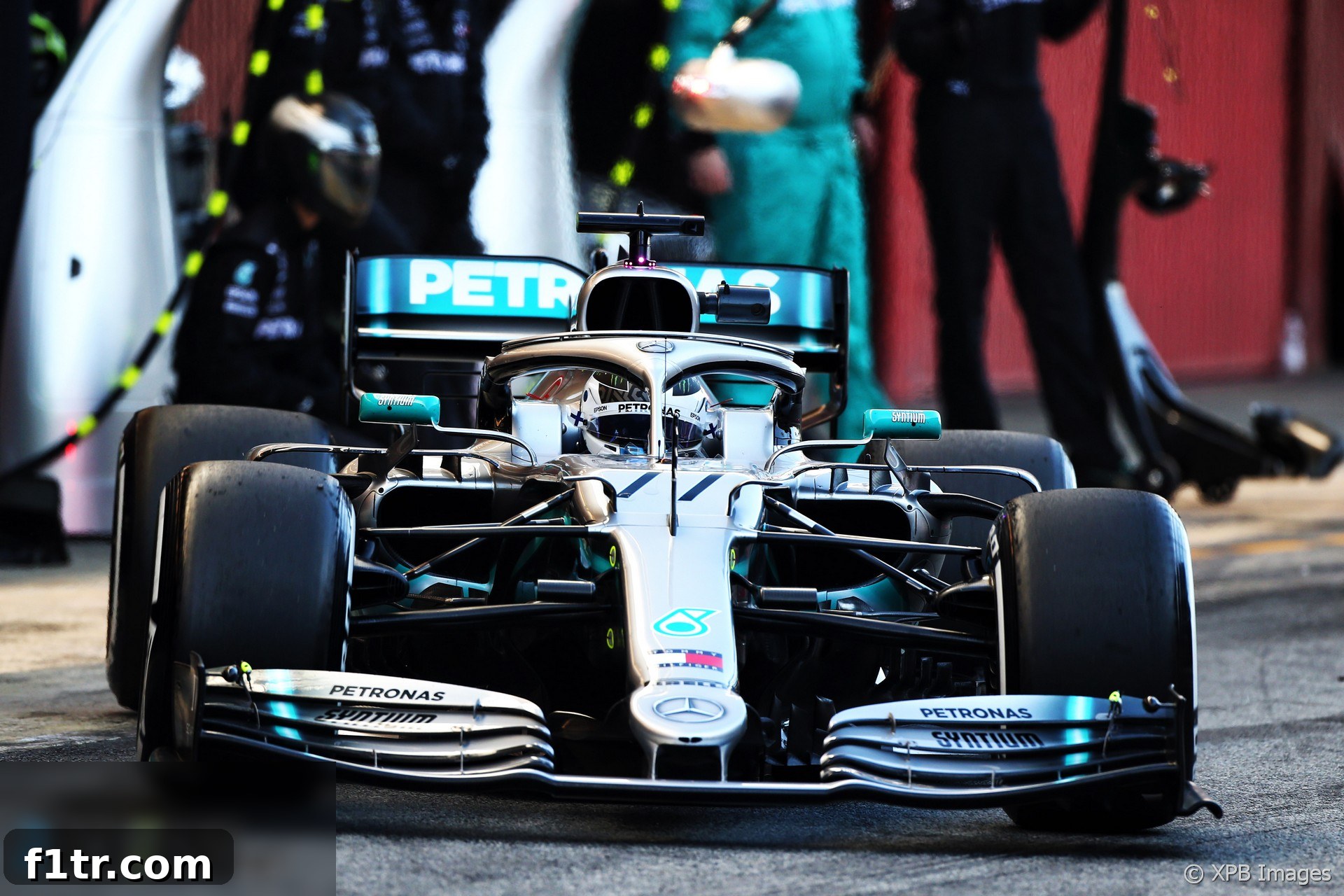
Valtteri Bottas Discusses Mercedes W10 Balance Challenges Amidst 2019 Season Preparations
Valtteri Bottas has openly addressed the ongoing balance issues with the Mercedes W10, indicating that the team is still working diligently to fine-tune their new challenger. His candid comments cast a slight shadow of uncertainty over Mercedes’ immediate prospects for victory at the inaugural race of the 2019 Formula 1 season, a sentiment that aligns with observations from pre-season testing.
When questioned about Lewis Hamilton’s recent remarks concerning “little hurdles” the team was striving to overcome with their new chassis, Bottas acknowledged the inherent difficulties of developing a cutting-edge F1 car. “Hurdles or obstacles, there’s always those in this sport and with a new car,” Bottas stated, highlighting the continuous challenges faced by all teams, especially during the critical pre-season testing phase in Barcelona.
The Finnish driver elaborated further on the specifics of their current situation, pinpointing the critical area of concern: “But definitely we have some kind of balance issues we still need to solve. Many things in the car we can still improve.” This frank admission underscores the immense complexity of modern Formula 1 machinery, where even the slightest imbalance can have profound effects on a car’s performance, driver confidence, and ultimately, lap times. For a team accustomed to dominance, any imperfection demands immediate and rigorous attention.
The Intricacies of F1 Car Balance: What It Means for the W10
In the high-stakes world of Formula 1, optimal car balance is not merely a preference; it is paramount to extracting maximum performance. Balance refers to how evenly the forces are distributed across the car, profoundly influencing everything from cornering stability to tire management and overall grip. A perfectly balanced car allows the driver to push harder through corners, generate maximum downforce, and maintain consistent performance throughout long race stints. When a driver like Valtteri Bottas speaks of “balance issues,” it typically implies a car that exhibits unpredictable behavior—perhaps prone to understeer, where the front wheels lose grip and the car resists turning, or oversteer, where the rear wheels lose grip, causing the back of the car to swing out.
Both understeer and oversteer scenarios severely compromise a driver’s ability to attack corners with confidence and precision. They can also lead to excessive tire wear, a critical factor in race strategy and overall performance degradation over a race distance. For the 2019 season, significant regulation changes, particularly concerning aerodynamics, added another layer of complexity. The introduction of simplified front wings, for example, was intended to promote closer racing by reducing the “dirty air” effect, but it also presented engineers with a fresh puzzle in terms of airflow management and downforce generation across the entire car.
Mercedes’ W10, like all new F1 cars, is a meticulously engineered interplay of mechanical grip, aerodynamic efficiency, and power unit delivery. Achieving harmony across all these elements during pre-season testing is the ultimate goal, a process that involves countless hours of simulation, wind tunnel testing, and on-track validation. Any deviation from perfection, as Bottas described, signals a need for intense analytical work back at the factory, where engineers dissect gigabytes of data to pinpoint the root causes and devise targeted solutions. This continuous feedback loop between driver and engineering team is the engine of performance improvement in Formula 1.
Mercedes’ Proven Resilience: Overcoming Hurdles
Despite the current challenges, Bottas expressed unwavering confidence in the Mercedes-AMG Petronas Formula One Team’s ability to overcome these hurdles. “I have faith in the team, we’ve been in difficult situations before with the car, we’ve had race weekends where we’ve been under-performing with the car. So any obstacle I feel it is possible to overcome,” he affirmed. This sentiment is deeply rooted in Mercedes’ formidable track record, which has seen them dominate the hybrid era of Formula 1 since 2014, securing multiple Constructors’ and Drivers’ championships against formidable opposition.
The depth of engineering talent, technical resources, and operational efficiency at Mercedes’ Brackley (chassis) and Brixworth (power unit) facilities is immense. Their technical departments are equipped with state-of-the-art simulation tools, cutting-edge wind tunnels, and rigorous testing rigs, all working in concert to identify and rectify performance deficits. Bottas emphasized the crucial role of collaborative effort: “But again it’s all about how to work and working together as a team for that. I trust everyone in our factory, I think the race team is really making sure with the starting point we have for the season that we’re going to the best possible shape for Melbourne.”
This collective trust highlights the unique culture within successful F1 teams, where every individual, from the design engineers crafting intricate components to the pit crew executing lightning-fast stops, plays a vital role. The ability to quickly diagnose complex problems, devise innovative solutions under immense pressure, and implement them effectively is a hallmark of a championship-winning outfit. For Mercedes, turning a seemingly “difficult situation” into a competitive advantage has become almost a signature move, demonstrating their unparalleled resilience and problem-solving capabilities in a highly competitive environment. This historical precedent gives weight to Bottas’s confidence.
Strategic Aerodynamic Upgrades: A Planned Evolution
The discussion around the W10’s development naturally extended to the topic of upgrades. Mercedes introduced a significant aerodynamic package to their car during the second week of pre-season testing. Bottas clarified that this was not a reactive or knee-jerk measure in response to the perceived strong performance of rivals, particularly Ferrari, during the initial testing days. Instead, it was a meticulously planned phase of their pre-defined development schedule.
“The package we have here has been developed for a long time, like the first package. It was not like last week we realised we needed to change something and brought something new, it was well planned a long time ago,” Bottas explained. This statement offers crucial insight into the sophisticated and protracted development timelines inherent in Formula 1. Aerodynamic components, which are fundamental to a car’s performance, often undergo months, if not years, of conceptualization, design, simulation, and wind tunnel validation before they ever make it onto the track. Teams typically have a tiered upgrade strategy, introducing different iterations of their car throughout testing and into the early races of the season.
The 2019 season was particularly interesting due to the revised aerodynamic regulations. Changes primarily focused on simplifying the front wings, brake ducts, and rear wings, aiming to reduce the “dirty air” effect and, in theory, improve the ability for cars to follow each other more closely. Such fundamental shifts in regulations mean that teams start with a fresh slate, and the learning curve is often steep. This dynamic typically translates to a more aggressive development race throughout the year, as teams continually unlock new performance avenues and optimize their understanding of the new rule set.
Bottas accurately predicted this continuous evolution: “I feel with the regulation change even though it’s not massive, [because of] how complex the cars are aerodynamically from the start of the season to the end of the year we’re going to see bigger improvements from each team compared to last year.” This outlook suggests that the car that begins the season in Melbourne will be significantly different, and almost certainly faster, than the car that finishes the season in Abu Dhabi. The team that can maintain the most consistent, effective, and efficient development trajectory often emerges victorious in such years.
Uncertainty for Melbourne and the Competitive Landscape of 2019
Despite the inherent optimism within the team and Mercedes’ proven capability to resolve technical issues, Bottas remained pragmatic about their immediate prospects for the first race in Melbourne, Australia. “If it’s going to be enough to win races that’s completely unknown at this point, time will show. But for sure we will try everything we can for that,” he stated. This cautious stance is typical of pre-season assessments, where teams rarely reveal their true pace or boast prematurely, understanding the volatile nature of early-season form.
Ferrari had shown impressive pace and reliability during the pre-season tests, leading many pundits and observers to label them as potential front-runners for the opening rounds. The battle between Mercedes and Ferrari was widely anticipated to be a fiercely contested one in 2019, and the early signs from testing only amplified this expectation. The competitive landscape in Formula 1 is never static; rivals constantly push each other to the limits, forcing continuous innovation and refinement. The perceived strength of Ferrari undoubtedly adds another layer of pressure on Mercedes to iron out their W10’s balance issues quickly and efficiently, leaving no stone unturned.
The true measure of a car’s performance only becomes unequivocally clear under actual race conditions: during the intensity of qualifying sessions, the sustained pressure of race stints, and the drama of head-to-head battles on track. Pre-season testing offers invaluable data and a crucial learning platform, but factors like varying fuel loads, different engine modes, and strategic tire choices can often obscure the genuine pecking order. Mercedes’ ultimate focus remains on maximizing their entire package, regardless of external perceptions or rival performances, and ensuring they arrive in Australia with the most competitive and balanced car possible.
Conclusion: A Challenging But Familiar Start for Mercedes
Valtteri Bottas’s insights provide a clear picture of Mercedes’ current state: a formidable team facing genuine technical challenges with their W10, specifically concerning car balance, but one that remains resolute and supremely confident in its collective ability to overcome them. The strategic planning behind their aerodynamic upgrades and their philosophy of continuous development underscore Mercedes’ pragmatic and determined approach to championship contention. While the prospect of immediate victory in Melbourne remains uncertain, the team’s illustrious history suggests they are more than capable of transforming initial hurdles into a dominant force as the season progresses.
The 2019 Formula 1 season promises to be a captivating journey of technical evolution, strategic battles, and intense on-track competition. With Mercedes at the heart of the fight for supremacy, overcoming these early balance issues will be crucial for their title aspirations, setting the stage for what is expected to be another thrilling chapter in the world of Formula 1.
Related 2019 F1 Season Articles
- Crying in the Melbourne car park at 2019 grand prix was my career low – Ocon
- McLaren Racing reports reduced £71 million loss in 2019
- Kvyat: Hockenheim podium last year was “my biggest achievement” so far
- How the FIA’s new encrypted fuel flow meter targets Ferrari’s suspected ‘aliasing’ trick
- “He smashed my office door”: 23 must-see moments from ‘Drive to Survive’ season two
Browse all 2019 F1 season articles