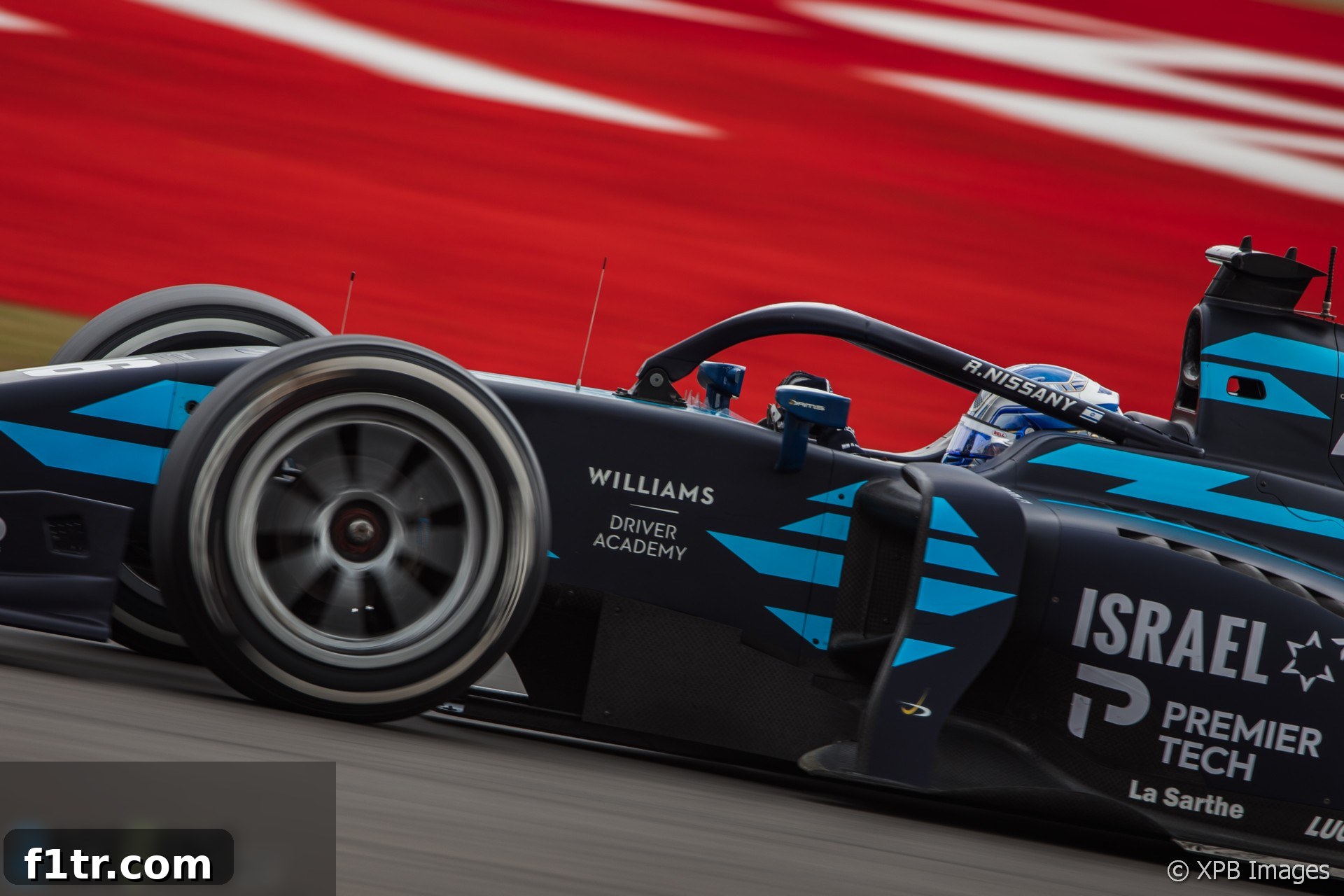
Silverstone Shocker: Nissany Penalized for Hauger Crash, ART Grand Prix Navigates Pit Lane Scrutiny
The recent Formula 2 feature race at Silverstone was a crucible of high-octane drama, unforgettable moments, and stern lessons in racing conduct. Amidst the thrilling battles for supremacy, two significant incidents captured headlines: a terrifying collision between Roy Nissany and Dennis Hauger that underscored the critical importance of driver safety, and a tense pit lane saga involving ART Grand Prix, highlighting the razor-thin margins of compliance in elite motorsport.
The Silverstone Collision: A Close Call for Hauger and Nissany
The racing world collectively held its breath at the onset of the Silverstone feature race when DAMS driver Roy Nissany was deemed entirely responsible for a horrifying crash involving PREMA Racing’s Dennis Hauger. The incident, which unfolded in the high-speed Stowe and Vale corner complex, served as a stark reminder of the inherent dangers in competitive motorsport and the vital role of safety innovations like the halo.
The collision’s genesis lay in Nissany’s aggressive defense of his position. Stewards meticulously reviewed telemetry and onboard footage, concluding that Nissany had made an “unpredictable and unsafe move to defend his position,” forcing Hauger’s car off the racing line. This maneuver had catastrophic consequences. Hauger, battling for control, was propelled over the notorious sausage kerb at the apex of Vale. These raised kerbs, designed to deter corner-cutting, can act as launch ramps if hit incorrectly, and in this instance, Hauger’s car became airborne.
What followed was a chilling sight: Hauger’s vehicle, now a projectile, soared through the air directly towards Nissany’s DAMS car. The impact was severe, striking Nissany’s car in the critical cockpit area. Crucially, the DAMS car’s halo – the revolutionary cockpit protection device introduced in 2018 – bore the brunt of the impact. The robust titanium structure absorbed a tremendous amount of force, a testament to its life-saving design. The force of the collision was so immense that it momentarily lifted both cars off the ground, a visual representation of the energy dissipated. Miraculously, both drivers were able to extract themselves from their damaged machines without assistance, albeit visibly shaken by the harrowing experience.
Stewards’ Verdict and Nissany’s Consequences
Post-race, the stewards launched an immediate and thorough investigation into the incident. Their findings were unequivocal: Roy Nissany was held wholly accountable for initiating the contact. In their official statement, the stewards clarified that Nissany “made an unpredictable and unsafe move to defend his position that initiated the contact with Hauger,” rather than merging into traffic in a safe and predictable manner. Adding to the clarity of the situation, Nissany himself did not dispute the decision, accepting full responsibility for the collision.
The consequences for Nissany were significant, reflecting the severity of the infraction and the potential for grave injury. He received a five-place grid penalty for the subsequent race in Austria, a sanction that can severely compromise a driver’s chances of a strong points finish in a highly competitive field. Furthermore, three penalty points were added to his FIA superlicence. This brings his total for the year to six points, placing him halfway towards an automatic race ban. The accumulation of twelve penalty points within a twelve-month period results in a one-race suspension, underscoring the FIA’s commitment to maintaining high standards of safe and fair driving conduct across all its championships. Such penalties not only affect a driver’s immediate race prospects but also contribute to their overall safety record and reputation within the motorsport community.
ART Grand Prix Under Scrutiny: Pit Lane Protocol Revisited
While the focus often remains on on-track heroics and collisions, the Formula 2 Silverstone event also shone a light on the equally critical area of pit lane safety and regulatory compliance. ART Grand Prix, a powerhouse team in the feeder series, found itself once again under the watchful eye of the stewards, narrowly avoiding further penalties concerning its pit stop procedures.
This was not ART’s first brush with such regulations this season. At the Spanish round, both their drivers, Frederik Vesti and Théo Pourchaire, were handed suspended five-place grid drops. That earlier infringement stemmed from the team’s mechanics failing to place tyres flat on their sides during pit stops – a seemingly minor detail with major safety implications. This rule mandates that removed tyres must be laid flat to prevent them from rolling away erratically within the confined and high-traffic environment of the pit lane, potentially endangering mechanics, other team personnel, or even passing cars.
Close Call at Silverstone: The Importance of Compliance
Following the Silverstone feature race, ART representatives were summoned to the stewards’ office once more. The subject of concern was similar to the Spanish incident: whether the front-left wheels of both Vesti’s and Pourchaire’s cars were not laid flat during their respective pit stops. The repeated nature of this concern highlighted a potential systemic issue or a need for reinforced training within the team’s pit crew, given the previous suspended penalties.
The tension for the ART team was palpable. Another breach could have triggered the suspended penalties, significantly impacting their championship aspirations. However, to the team’s considerable relief, the stewards opted to take no further action. After an extensive review of the evidence, including pit lane footage and team testimonies, the stewards ruled that ART had taken sufficient safety precautions. Their statement noted: “Having considered the matter extensively, the stewards determined that the actions of the pit stop personnel acted in a manner that prevented an unsafe incident. The stewards, therefore, take no further action.” This decision, while a reprieve for ART, serves as a powerful reminder of the meticulous attention to detail required in Formula 2, where every second and every procedural step is under intense scrutiny, and safety remains paramount.
Broader Implications for the Formula 2 Season
These incidents at Silverstone collectively underscore the incredibly demanding nature of Formula 2 racing. It is a championship where aspiring Formula 1 stars hone their skills, and where every decision, both on track and in the pit lane, carries significant weight. Driver conduct, adherence to safety regulations, and the constant evolution of safety measures are all critical components that shape the narrative of the season.
The Nissany-Hauger crash once again championed the halo as an indispensable safety device, likely averting a far more severe outcome. Simultaneously, ART’s pit lane episode serves as a testament to the rigorous enforcement of technical and safety regulations designed to protect all participants in the high-speed theatre of motorsport. As the Formula 2 season progresses, the lessons learned at Silverstone will undoubtedly influence driver behavior, team strategies, and the ongoing dialogue around safety in the competitive world of junior single-seater racing.
Formula 2 Insights
- Formula 2 to debut in Miami and Montreal after Iran war cancellations
- Ex-McLaren junior Dunne’s move to Alpine finally confirmed
- Schumacher says his IndyCar feels like ‘an F2 car, just with better tyres’
- The Formula 2 team with an older driver line-up than almost half the F1 grid
- FIA to award more F1 superlicence points to IndyCar drivers from 2026
Browse all Formula 2 articles