The exhilarating world of Formula 1, renowned for its cutting-edge technology and unparalleled speeds, was recently overshadowed by significant safety concerns and a notable communication breakdown during the Qatar Grand Prix weekend at the Losail International Circuit. Drivers expressed profound frustration after discovering critical Pirelli tyre problems not through official channels, but via media reports, sparking a wider debate on safety protocols, track design, and the vital relationship between the sport’s governing bodies and its competitors.
The alarm bells began to ring late on Friday night when Pirelli, Formula 1’s official tyre supplier, formally notified the FIA at 10:30 PM of evidence indicating structural faults developing in their tyres. This critical information, directly impacting driver safety and race integrity, remained undisclosed to the very individuals who would be pushing these vehicles to their limits. It wasn’t until around 1 PM the following day, after a public announcement had been made, that the drivers finally became aware of the perilous situation, leading to widespread disappointment and a sense of betrayal within the paddock.
Advert | Become a Supporter & go ad-free
Kevin Magnussen, a seasoned F1 competitor, voiced the collective sentiment of frustration. “We just wanted to understand the situation better,” he stated, reflecting on the lack of transparency. “We weren’t told until this afternoon and that’s a bit frustrating. We need to drive the cars, we want to know what’s going on.” His words underscore a fundamental expectation among drivers: immediate and direct communication regarding any issue that could compromise their safety or performance. The delay in relaying such crucial data not only undermines trust but also leaves drivers unprepared for the demanding conditions they face.
The extent of the communication failure was further highlighted by Valtteri Bottas, who candidly admitted, “I read it in the media. Somebody sent me a link.” It is an untenable situation for elite athletes to learn about potential life-threatening issues in their workplace through informal channels, effectively placing media outlets as their primary source of critical safety information. Bottas further revealed that the FIA “admitted that it was their bad that they didn’t communicate,” an acknowledgement that, while welcome, came only after significant driver outcry.
The Grand Prix Drivers Association (GPDA), an organization dedicated to representing the interests of Formula 1 drivers, swiftly took up the mantle. Its director, George Russell, engaged with key FIA F1 representatives, Nikolas Tombazis and Steve Nielsen, to address the systemic issue. Russell reported that both FIA officials “are aware and recognise the communication line between the FIA and the drivers isn’t strong enough, and we need to have better cooperation.” This admission from the FIA hints at a deeper, underlying need for improved protocols and a more integrated approach to safety management within the sport. The drivers, as the ultimate stakeholders in safety, possess invaluable first-hand experience that can, and should, inform crucial decisions.
Russell elaborated on the GPDA’s stance, emphasizing the practical implications of such oversights: “A lot of these things directly impact us and we can also give our first-hand view from the cockpit which can help aid some of these decisions.” He pointed to the Qatar incident as a clear indicator for the need for change, noting, “So they truly recognise that and I think this was a good example for them that we need to make some improvements in that communication process.” The cockpit perspective is unique and indispensable, offering insights into vehicle behavior, track conditions, and the limits of performance that no amount of data analysis can fully replicate. Ignoring this input is not only a procedural misstep but a missed opportunity to enhance overall safety and the quality of the racing itself.
Advert | Become a RaceFans supporter andgo ad-free
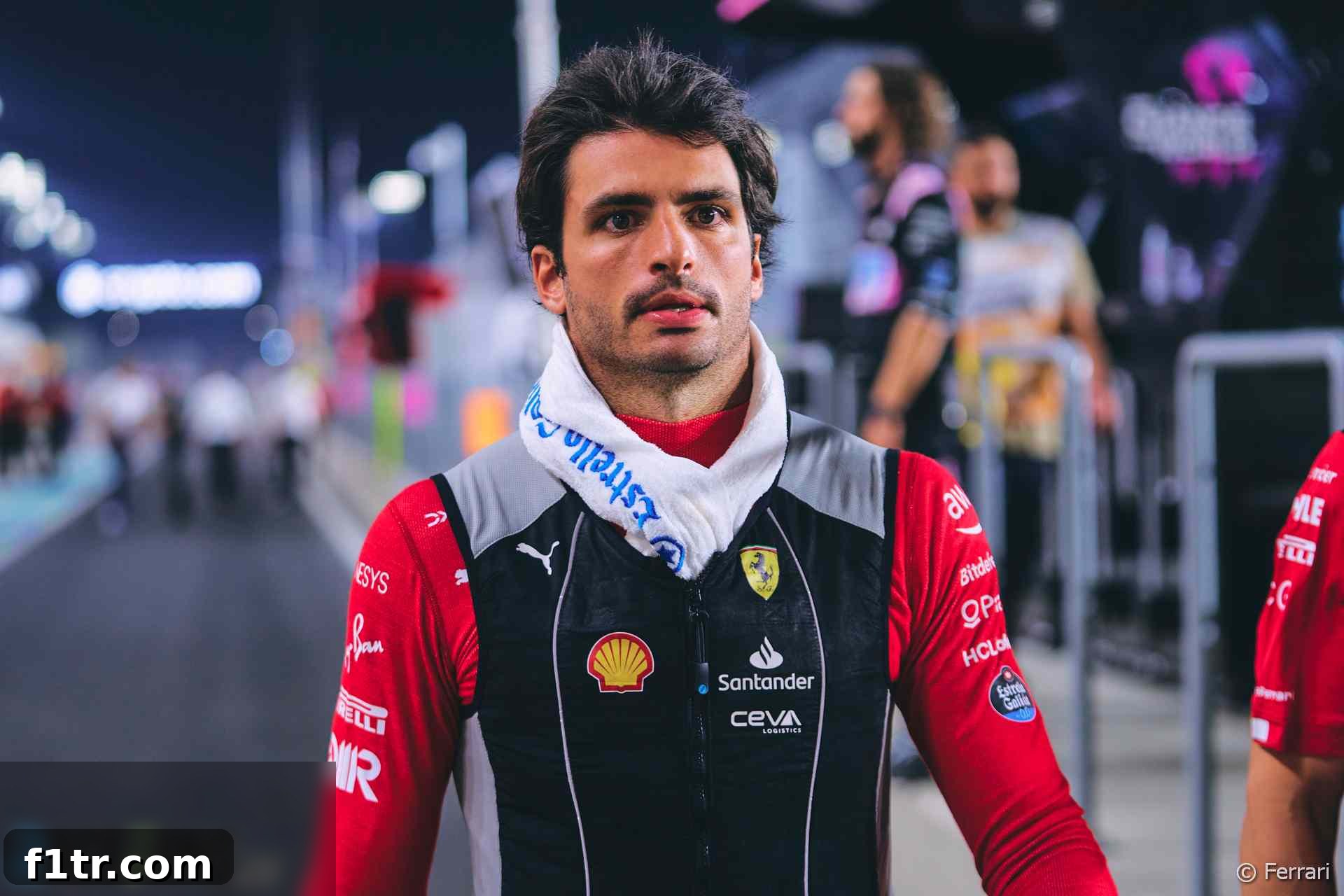
Beyond the communication fiasco, the specifics of the tyre problems at the Losail International Circuit brought another critical issue to the forefront: the persistent problem of track design, specifically the aggressive kerbs. Carlos Sainz Jnr of Ferrari was particularly vocal, expressing his deep dissatisfaction with how information regarding both the tyre failures and impending track limit alterations was disseminated. He, like his peers, learned of these changes through the media, exacerbating his concerns about driver safety and the integrity of the race weekend.
“We arrived today in the morning and we see the news in the press when no one informs us that there’s going to be track limits [changes],” Sainz decried. “No one tells us that the tyre is delaminating or anything like that and we have to learn things from the press which is clearly not how things should be done.” His strong words encapsulate a profound disappointment. The GPDA’s collective stance, as articulated by Sainz, was clear: “As the GPDA we were not happy with the situation and we hope that the collaboration starts getting better because reading things from the press when our safety is involved and our input should be considered is not good enough.” The sentiment points to a need for systemic change, where driver input is not merely acknowledged but actively solicited and integrated into decision-making processes, particularly concerning safety.
In response to the escalating tyre safety concerns, the FIA moved to consider tighter restrictions for the Grand Prix itself, including a potential maximum limit on tyre stint lengths. While acknowledging the necessity of such measures for safety, Sainz raised pointed questions about the FIA’s long-term approach to track design. He questioned why more proactive steps hadn’t been taken to address the known problems with Losail’s aggressive kerbs, issues that Formula 1 had already encountered during its previous visit to Qatar in 2021. The resurfacing and redesign of the circuit since then presented a golden opportunity to rectify these hazardous elements, an opportunity that, in the drivers’ view, was squandered.
“If it’s necessary for safety, we have to do it,” Sainz conceded regarding the stint limits. “But obviously [what] I don’t appreciate and I don’t like is that we were here in ’21, in the meantime, there’s been two years to react to these bad kerbs.” He highlighted a frustrating cycle: “There’s been a re-surface, a re-doing of the kerbs and for some reason the FIA persisted with this design of kerbs that are killing Pirelli’s tyres. I’m not blaming Pirelli, but at the same time clearly there’s something going on there.” This criticism zeroes in on the responsibility of circuit designers and the FIA in approving designs that place undue stress on F1 tyres, ultimately compromising safety and performance. The interaction between track elements and tyre integrity is a complex engineering challenge, and consistent failure to address known issues points to a potential gap in foresight or execution.
Advert | Become a RaceFans supporter andgo ad-free
Adding another layer to the discussion, Lewis Hamilton, initially praised the kerb design on Friday, before the full extent of the tyre problem came to light. However, following Saturday’s sprint race, his perspective shifted, prompting him to suggest that F1 should consider conducting dedicated tyre testing at challenging circuits like Losail. This proposal stems from a deep understanding of the sport’s technical demands and the constant evolution of both cars and circuits.
Hamilton didn’t mince words regarding the broader systemic issues. “We need some improvement on organisation skills, for sure, and procedures,” he asserted, highlighting administrative deficiencies. But his critique went deeper, focusing on the core product: “We ultimately need a better product, the tyre.” He acknowledged that the onus isn’t solely on Pirelli. “I don’t feel like it’s solely the manufacturer’s problem or fault. We have such limited testing, we don’t test at a track that has hardcore, high-speed corners like this.” This points to the constrained environment within which Pirelli operates, forced to develop tyres with minimal real-world extreme testing, particularly at circuits known for their aggressive characteristics.
To address this, Hamilton offered a tangible solution for future F1 seasons: “I even suggested in the meeting we should do the three days that we get at the beginning of the year we should do here because this is the most hardcore on the tyres of the whole year.” Using the pre-season testing allocation at such a demanding venue would provide invaluable data, allowing Pirelli to refine its compounds and constructions to withstand the extreme forces generated by modern F1 cars. It represents a proactive measure to mitigate future tyre-related incidents and enhance overall safety.
Furthermore, Hamilton connected the current tyre woes to the long-term trajectory of Formula 1’s technical regulations. He argued that the sport’s persistent tyre problems are partly a direct consequence of years of rule changes that have led to ever-heavier cars, coupled with unprecedented levels of downforce, capable of generating incredibly high cornering speeds. This combination places immense strain on the tyres, pushing them to their absolute limits.
“Whoever is making decisions in the FIA, the heaviest cars ever, more downforce than ever with all the fuel and everything, and then you have these tyre issues which is to be expected,” Hamilton explained. His historical perspective offered a stark comparison: “If you think of back in the day, they were just as fast with half the downforce but way more grip on the tyres when they had Bridgestone and Michelins. So they’ve definitely got to look at that because I think next year is going heavier again.” This observation highlights a critical paradox in modern F1: cars are faster than ever, yet their tyres struggle to cope, suggesting a fundamental imbalance in the regulatory philosophy. As the sport continues to evolve, with increasing weight and aerodynamic complexity, the challenge for tyre manufacturers will only intensify, making a holistic review of technical regulations imperative for sustained safety and performance.
Become a RaceFans Supporter
RaceFans is run thanks in part to the generous support of its readers. By contributing £1 per month or £12 per year (or the same in whichever currency you use) you can help cover the costs of creating, hosting and developing RaceFans today and in the future.
Become a RaceFans Supporter today and browse the site ad-free. Sign up or find out more via the links below:
- Become a RaceFans Supporter
- RaceFans Supporter FAQ
The Qatar Grand Prix weekend ultimately served as a stark reminder of the complex interplay between driver safety, regulatory oversight, track design, and technical innovation in Formula 1. The collective frustration expressed by drivers regarding the communication breakdown and persistent tyre issues underscores the urgent need for enhanced collaboration between the FIA, Pirelli, circuit operators, and the drivers themselves. By addressing these multifaceted challenges through improved communication protocols, proactive track design modifications, and a careful re-evaluation of technical regulations concerning car weight and downforce, Formula 1 can ensure a safer and more engaging spectacle for all, preserving its status as the pinnacle of motorsport while prioritizing the well-being of its most crucial assets: the drivers.
Advert | Become a RaceFans supporter andgo ad-free
2023 Qatar Grand Prix
- Albon fears Qatar GP conditions risked creating dangerous “wet bulb effect”
- Alonso: New-spec fireproofs and pre-race anthem timing made Qatar heat worse
- Magnussen admits he took “too long to learn” Losail circuit
- Analysis: Sargeant’s Qatar radio reveals his painful struggle to end point-less run
- Alfa Romeo ‘finally understand their upgrade’ Bottas believes as team target Williams
Browse all 2023 Qatar Grand Prix articles