The tale of Williams Racing’s resurgence in Formula 1 is, by any measure, nothing short of extraordinary. For two consecutive seasons, this once-dominant and revered team languished at the very bottom of the constructors’ standings. In 2019, a solitary point was painfully eked out, only after post-race penalties were levied against two other cars for minor technical infractions at the German Grand Prix. The following year, 2020, yielded an utterly barren score sheet – zero points, a stark and painful reminder of how far the mighty had fallen.
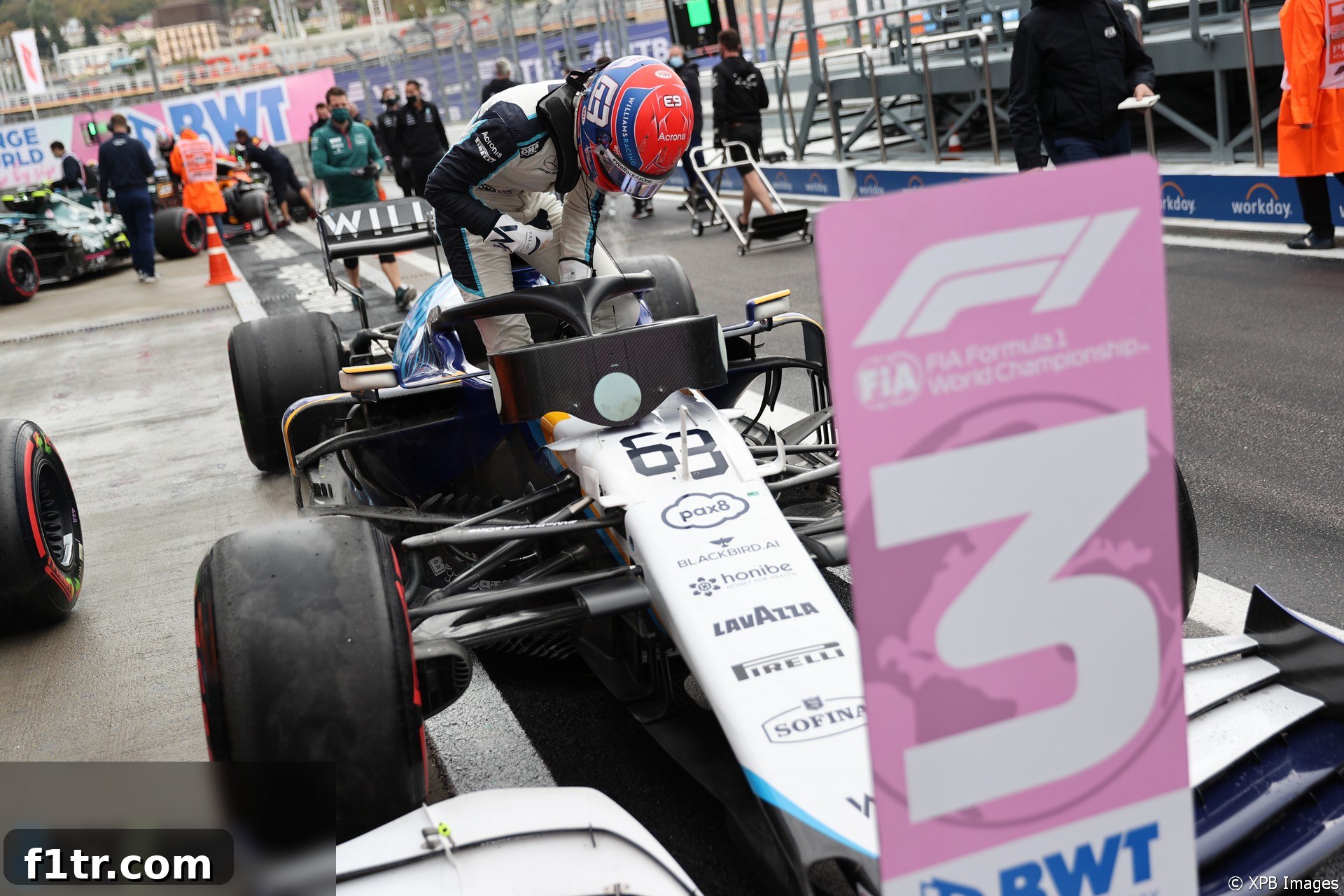
How dramatically the tides have turned for the Grove-based outfit. In a remarkable display of renewed competitive spirit, Williams has scored points in four of the last five Grand Prix events. This includes a stunning, if somewhat fortuitous, second-place finish during Belgium’s rain-drenched and subsequently curtailed race, a result that sent shockwaves through the paddock and ignited belief within the team.
As the Formula 1 circus heads towards the Turkish Grand Prix, the team – originally founded by the legendary Sir Frank Williams in 1977 and later sold to Dorilton Capital, a New York-based single-family investment office, in August 2020 – now commands eighth position in the Constructors’ Championship with a respectable tally of 23 points. This impressive haul is more than three times the points accumulated by ninth-placed Alfa Romeo and comfortably distances them from the point-less Haas F1 Team. The prospect of either, or indeed both, of these rivals overhauling Williams in the remaining seven races appears exceedingly slim, solidifying their significant step forward.
Undeniably, three of those four recent point-scoring races were significantly impacted by adverse weather conditions, and there’s no disputing that the Spa podium was a truly unique outcome born from extraordinary circumstances. However, looking at the broader picture, the team’s overall performance has demonstrably improved beyond any point witnessed during the preceding four years. A palpable sense of optimism and purpose has returned to the Williams garage; team members walk with a renewed spring in their steps, while drivers George Russell and Nicholas Latifi, who both joined the team during its darkest period, now radiate broad smiles during media sessions, reflecting their newfound confidence and the team’s upward trajectory.
Williams Racing now exudes the unmistakable glow of a proud and competitive Formula 1 team, one that no longer feels compelled to shy away from probing or challenging media inquiries after each race weekend. The clear consensus within the paddock is that the team is firmly on the ascendancy, a sentiment further underscored by Red Bull Racing’s strategic decision to place their talented junior driver, Alexander Albon, with Williams for the 2022 season. Just a year ago, it would have been inconceivable that Williams would be a destination of choice for an emerging Red Bull driver, highlighting the dramatic shift in perception and reputation.
“Morale is high, everyone is happy and you kind of feel that about the place,” confirmed Dave Robson, Williams’ Head of Vehicle Performance, during an interview in Sochi. He further elaborated on the crucial link between results and sustained team spirit: “which is the key about having a string of results and it not being a flash in the pan – [it] breeds more morale.” This positive feedback loop of performance and motivation is a powerful engine driving the team’s continued progress.
A significant portion of the credit for this remarkable turnaround is undoubtedly attributable to the astute leadership of CEO Jost Capito. Capito was recruited from the Volkswagen Group, where he previously helmed VW’s highly successful World Rally Championship-winning team before transitioning to lead the brand’s performance road car ‘R’ division. His extensive curriculum vitae is deeply rooted in various facets of motorsport, encompassing two-wheel racing, rally, and, crucially, Formula 1, making him an ideal fit for the challenge of rebuilding a historic F1 team.
Since assuming his pivotal role, Capito has expanded his executive responsibilities by taking on the additional title of Team Principal, demonstrating his hands-on commitment to the team’s operational and strategic direction. He also orchestrated the key appointment of Francois-Xavier Demaision as Technical Director, a move designed to inject fresh engineering expertise. Crucially, Capito has successfully instilled an ‘opportunist’ approach throughout the organisation, a philosophy that actively encourages team members to embrace calculated risks. “If we do as everybody else does, we will be behind them until our package is improved,” he explained during a conversation in Monaco in May, articulating the strategic imperative for thinking differently.
Capito further elaborated on this strategic approach in Sochi, providing deeper insight into his methodology. “If you have the ninth-fastest car, you can try things differently and not be always on the back foot and try to conserve what you have,” he observed. “Try something different that others might not try because they are up front and for them it would be risky. A couple of times, we’ve taken risks, with tyre choice for the weather and it worked out.” This proactive and daring mindset, epitomised by smart strategic choices in challenging conditions, directly led to George Russell’s sensational front-row qualifying result at Spa, which was subsequently converted into his celebrated podium finish on Sunday.
Integral to the successful execution of such a bold policy is the cultivation of a ‘no-blame culture’ within the team, a crucial element that Robson specifically praised Capito for championing. “Jost is supportive of those decisions,” Robson stated, highlighting the empowering environment. “Not that previous management weren’t, but Jost is proactive in reminding us that we are free to make those kinds of decisions and there won’t be any direct comebacks. Jost undoubtedly has a part to play in setting that scene and letting us do a good job.” This psychological safety allows engineers and strategists to explore unconventional strategies without fear of punitive repercussions, fostering innovation and brave decision-making.
Beyond the high-profile appointments of ‘FX’ Demaision and the strategic restructuring at the top management levels, surprisingly little else has changed structurally within the team. However, a profoundly significant transformation has occurred in the realm of internal and inter-departmental communications, which have been substantially strengthened. “It shows that the team works better as an overall team on communication. I’m surprised how much that can make the car faster without actually improving the car,” Capito remarked, underscoring the often-underestimated power of effective information exchange and collaboration.
That said, the team’s facilities at their Grove headquarters have undergone substantial upgrades, and more are anticipated in the pipeline. This investment has been particularly noticeable in the composites department, an area that had regrettably suffered neglect under previous management due to the stringent financial constraints imposed by challenging circumstances. Modernisation of such critical manufacturing capabilities is a cornerstone of long-term performance improvement.
“A lot of new machines came in at the end of last year, so the machine park is absolutely up to date,” Capito informed RaceFans, responding to a query about significant capital expenditure items. “Also, 3D printers were installed last year so they are not under the budget cap matrix. From that point of view we are in a much better position than we have been last year.” These targeted investments, strategically implemented before certain budget cap regulations came fully into force, have provided Williams with a crucial competitive edge in their manufacturing processes and design capabilities.
Capito candidly acknowledged the ongoing need for improvement: “Composites is one of the areas we have to improve, it’s one that is really obvious. But there are other areas that are as important as the composite area that have to be modernised,” indicating a comprehensive, multi-faceted approach to bringing the entire infrastructure up to contemporary Formula 1 standards.
Considering that barely a year has elapsed since Dorilton Capital’s acquisition of the financially distressed team, one might wonder how such a rapid and profound turnaround was achievable, irrespective of Capito’s undeniable management prowess. The fundamental answer lies in a revealing discussion held with former CEO Mike O’Driscoll during the 2019 Mexican Grand Prix weekend. O’Driscoll explained that, even amidst severe financial constraints, a rolling capital expenditure plan was meticulously maintained. This strategic foresight ensured that, even if immediate funding for major upgrades wasn’t available, the groundwork and planning for future investments were continuously in progress.
Thus, as O’Driscoll elucidated, Williams was strategically positioned and prepared for a significant financial injection when it eventually materialised. Whether this came in the form of a mega-buck sponsorship deal or, as ultimately happened, a complete buy-out – be it by a major manufacturer (Porsche, it is believed, had previously shown interest) or by deep-pocketed investors – the team had a clear roadmap for capital deployment. Therefore, when Dorilton Capital finalised the acquisition, it was not a matter of starting from scratch but rather of seamlessly “joining the dots.” The existing, well-researched upgrade programmes could be swiftly initiated with minimal delay simply by signing purchase orders, leveraging years of meticulous planning and preparation. This pre-existing foundation allowed Dorilton’s investment to have an almost immediate impact.
In conclusion, while Jost Capito rightly deserves immense credit for the team’s recent string of impressive results – and indeed, his transformative leadership has been pivotal – significant commendation must also be extended to the outgoing management, led by Claire Williams and Mike O’Driscoll. Their unwavering commitment and strategic foresight ensured that the company was in a state of preparedness at the time of sale. They painstakingly handed over a fully functioning entity, a team that possessed the talent, infrastructure (albeit needing modernisation), and spirit, but crucially, lacked the necessary financial resources to expedite the return of the illustrious Williams name to its rightful place of glory sooner. The current success is a testament to both dynamic new leadership and the diligent, often unseen, groundwork laid by those who came before.
News Focus
- No happy ending for Ricciardo’s made-for-Netflix redemption arc
- No ‘two alphas’ for Red Bull as team forms its longest-running driver line-up
- Will Mercedes come to the rescue of Ocon’s career a third time?
- How the midfield’s hottest team mate rivalry boiled over
- Petty officialdom or deserved decisions? Five drivers stripped of wins in 2024
Browse all News Focus articles