FIA Grants Lewis Hamilton Exemption for Jewellery Amidst Safety Regulations
In a significant development that has garnered widespread attention across the Formula 1 community, the Fédération Internationale de l’Automobile (FIA) has granted a specific exemption to seven-time world champion Lewis Hamilton regarding its long-standing requirement for drivers to abstain from wearing jewellery while competing in their cars. This decision marks a pivotal moment in the ongoing dialogue between the sport’s governing body and its athletes, highlighting the complex balance between stringent safety protocols and individual considerations.
The FIA’s stance on driver jewellery is rooted deeply in a commitment to ensuring the highest levels of safety within motorsport. The regulations, which have been in place for many years but saw a renewed emphasis on enforcement last season, strictly prohibit drivers from wearing any form of jewellery, including body piercings, metal neck chains, and watches, during races and official practice sessions. The primary concern behind these rules is the potential for severe injury, particularly in the event of a fire or high-impact crash. Metal objects can heat rapidly, causing burns, or snag on equipment, leading to additional injuries or impeding quick medical intervention. Furthermore, in an extreme scenario, such items could cause disfigurement or complicate emergency medical procedures.
The FIA’s Stance on Driver Jewellery: A Core Safety Measure
The rigorous enforcement of safety regulations is a cornerstone of Formula 1, a sport constantly pushing the boundaries of speed and technology. Over the decades, the FIA has progressively introduced and refined measures designed to protect drivers, from the evolution of helmets and fire-retardant racing suits to the implementation of the HANS device and the Halo cockpit protection system. The jewellery ban fits squarely within this comprehensive safety framework, aiming to mitigate every foreseeable risk.
While the rule itself is not new, its stricter application began ahead of the 2022 season, leading to direct conflict with Lewis Hamilton, known for his distinctive personal style and his collection of jewellery. Many of his preferred items, including specific body piercings, are not easily or painlessly removed, posing a practical challenge to compliance. This presented a unique dilemma: uphold an absolute rule for universal safety, or consider individual circumstances that might make adherence difficult or even medically problematic.
The Rationale Behind Strict Regulations
The governing body’s position is clear: safety cannot be compromised. The explicit mention of body piercings, metal chains, and watches in the rulebook underscores the specific dangers identified. In a fire, heated metal can cause deep burns, while in a crash, an impact could force a piercing through flesh, or a chain could become entangled, hindering a driver’s escape or a rescue team’s efforts. The FIA’s role is to legislate for the worst-case scenario, and from this perspective, the jewellery ban is a pragmatic and necessary precaution.
For Hamilton, however, the strict enforcement created a personal and professional hurdle. His jewellery, some of which carries significant personal meaning, became a point of contention that overshadowed parts of the early 2022 season. He publicly expressed his frustration, arguing that some items were permanently fixed and their removal could lead to health complications.
Lewis Hamilton’s Jewellery: A Point of Contention
Ahead of the initial practice sessions for the new Formula 1 season, the situation came to a head. Teams are required to submit self-scrutineering sheets confirming their compliance with all regulations, including the jewellery ban. Hamilton’s team reportedly did not confirm that their driver would be free of all prohibited items, setting the stage for a potential penalty or further confrontation with the FIA stewards. This administrative non-compliance brought the issue back into the spotlight, necessitating a formal review by the motorsport authorities.
The Specifics of Hamilton’s Situation
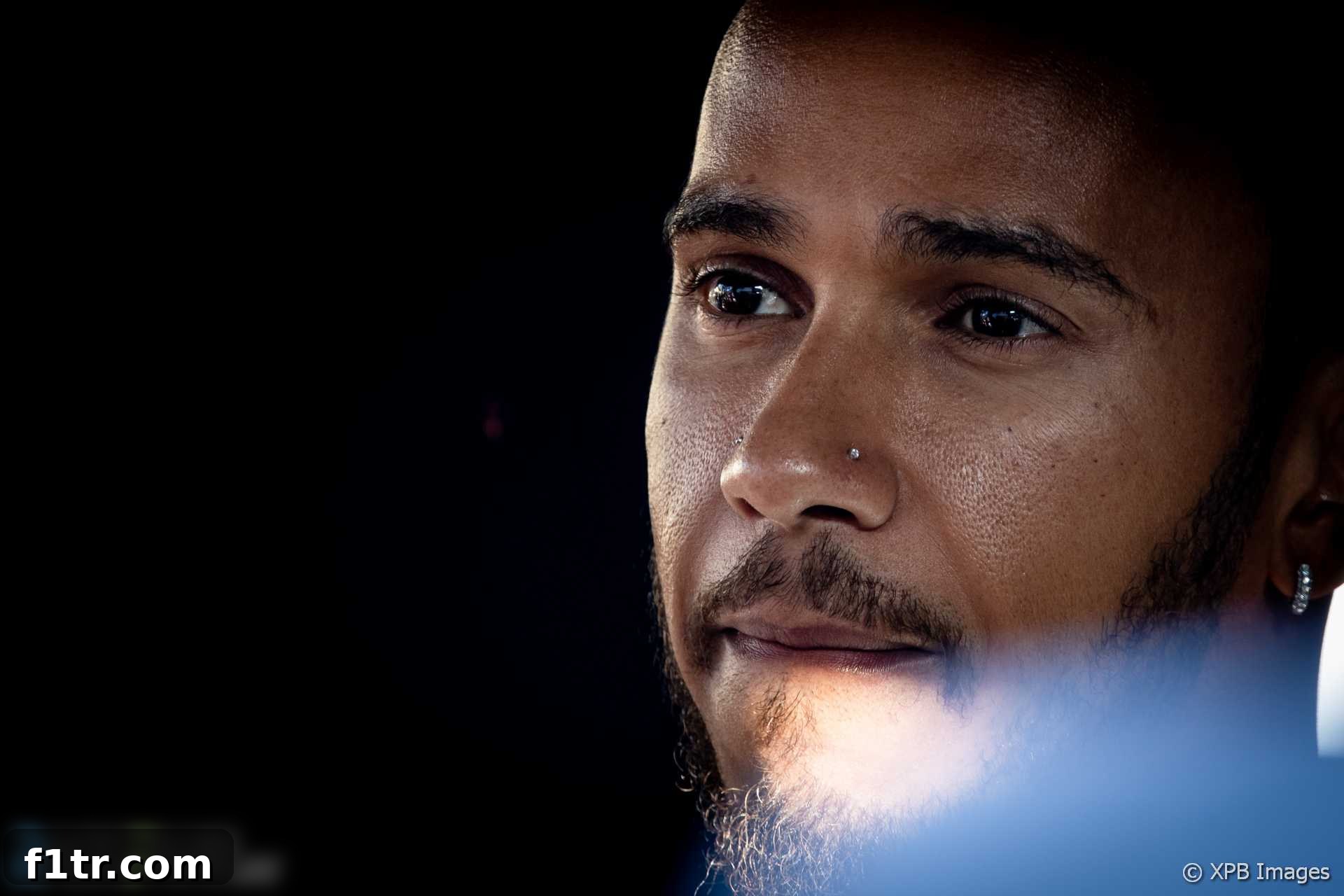
The core of the problem for Hamilton revolved around a particular nose stud, which he had explained previously was not easily removable. Last year, he detailed the difficulties he encountered: “It was like soldered in so it didn’t come loose,” he stated. He elaborated on the process of trying to comply, which had led to recurring medical issues. “They gave me, at the time, for many races, an exemption until I could find a solution. I then went and got it taken out and tried to find a solution, and put it in and put it out. It got infected because of that.” This history of medical complications stemming from attempts to remove the item proved crucial in the latest decision-making process.
The Exemption Process: A Medical Review
Recognizing the unique circumstances and the driver’s medical history, the FIA initiated a formal review. The stewards, tasked with overseeing the enforcement of regulations during a race weekend, sought counsel from the FIA medical delegate. This step underscores the diligent approach taken by the governing body, prioritizing both safety adherence and the welfare of the individual driver. The medical delegate’s assessment would be critical in determining the path forward.
The Steward’s Decision and its Implications
Following a thorough consultation, the FIA medical delegate provided a recommendation to the stewards. This advice was based on a comprehensive review of Hamilton’s medical report and a direct examination of the driver himself. The delegate confirmed the medical concerns associated with the repeated removal of one of Hamilton’s jewellery items. Specifically, the risk of disfigurement with frequent attempts at removal was highlighted as a genuine concern, validating Hamilton’s earlier claims about the difficulties he faced.
Based on this expert medical advice, the stewards determined to take no further action against Lewis Hamilton, effectively granting him an exemption. Their official statement noted: “The stewards consulted the FIA medical delegate, who viewed the medical report, examined the driver and concurred with the opinion therein. We have determined to take no further action as there are concerns about disfigurement with frequent attempts at removal of the device.” This decision represents a pragmatic resolution, acknowledging the spirit of the safety rule while accommodating an unforeseen medical impediment.
This exemption for Hamilton carries significant implications. It demonstrates the FIA’s flexibility and willingness to consider individual circumstances when supported by compelling medical evidence. While the core jewellery ban remains in effect for all drivers, this case sets a precedent for how such rules might be applied in situations where removal poses a genuine health risk. It avoids forcing a driver to choose between personal well-being and sporting participation, a balance that is essential for maintaining harmonious relations between the governing body and its competitors.
Broader Context: F1 Safety Evolution and Driver Welfare
The jewellery exemption for Lewis Hamilton, while specific, reflects a larger dynamic in Formula 1: the continuous evolution of safety standards and the increasing focus on driver welfare beyond just crash protection. Modern F1 safety encompasses a broad spectrum, from fire-retardant overalls and air-conditioned cockpits to rigorous medical checks and mental health support. The FIA’s commitment to safety is absolute, but its application must also be adaptable and humane, especially when individual physiological factors come into play.
Balancing Safety with Personal Freedom
This incident brings to the forefront the delicate balance between enforcing universal safety regulations and respecting individual expression and circumstances. Drivers are athletes, but also public figures with unique identities. Hamilton, in particular, uses his platform and personal style to express himself, and his jewellery has become an integral part of that image. The FIA’s decision, therefore, is not just about a rule, but about acknowledging that strict enforcement can sometimes inadvertently create new problems, which then require nuanced solutions.
The initial strict stance on the jewellery ban was met with mixed reactions from drivers and fans. Some argued that rules are rules and must be applied uniformly, while others felt that some aspects of personal expression, particularly when not overtly compromising safety, should be allowed. The resolution in Hamilton’s case suggests a pathway for addressing these complex issues through a process that is both rigorous in its safety assessment and compassionate in its consideration of individual welfare.
The Future of Jewellery Rules in Formula 1
While the exemption addresses Hamilton’s immediate situation, it also opens up questions about the long-term future of the jewellery ban in Formula 1. Will this lead to other drivers seeking similar exemptions for difficult-to-remove items? Or will it prompt the FIA to refine its guidelines, perhaps offering a more defined process for medical exemptions from the outset? The transparency and careful consideration demonstrated in Hamilton’s case will likely serve as a benchmark for any future discussions on the topic.
Long-term Impact on FIA Policies
The FIA’s primary goal will always be to ensure the safest possible environment for its participants. However, this case illustrates that safety protocols must be periodically reviewed and adapted to modern realities and individual circumstances. It’s plausible that the FIA might integrate this learning into its broader regulatory framework, perhaps clarifying procedures for medical exemptions across a range of driver-related rules. This incident, therefore, might not just be a one-off exception but a catalyst for more refined and empathetic policy-making within motorsport.
Ultimately, the decision to grant Lewis Hamilton an exemption underscores the FIA’s commitment to finding practical solutions within its overarching safety mandate. It ensures that one of the sport’s biggest stars can continue to compete without undue physical discomfort or medical risk, while also reaffirming that the core principles of driver safety remain paramount in the exhilarating world of Formula 1.
Related F1 Insights and Further Reading
- Understanding F1 Safety Regulations: From Helmets to Halos
- Driver Welfare in Motorsport: Beyond the Cockpit
- Lewis Hamilton’s Career: Navigating Challenges On and Off Track
- FIA Rule Enforcement: Past Controversies and Future Directions
- Personal Expression vs. Sporting Codes: A Global Perspective
Browse all Formula 1 News and Analysis