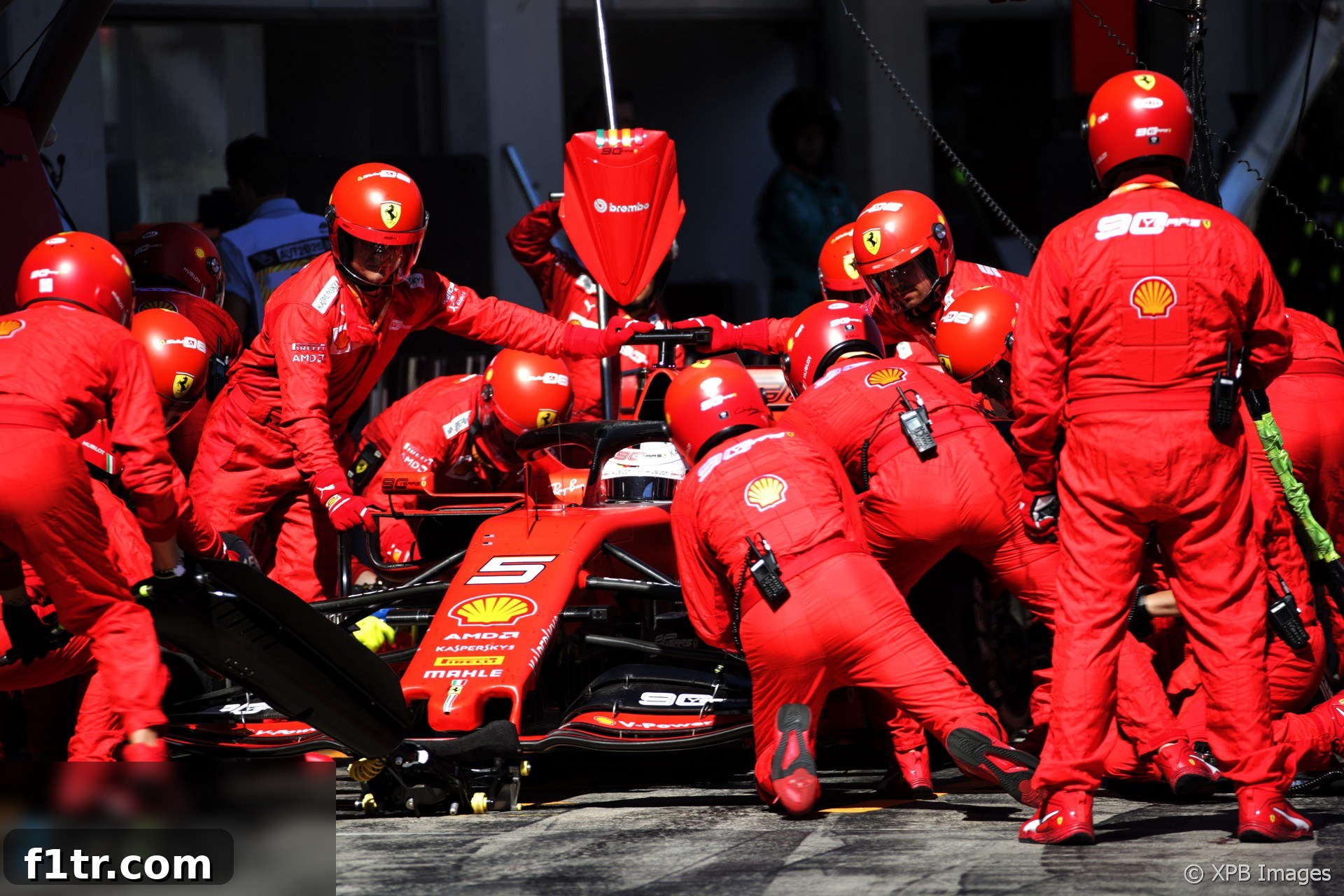
Formula 1, the pinnacle of motorsport, captivates millions with its blend of speed, technology, and strategic prowess. At the heart of this intricate dance is tyre management, a critical factor often determining a driver’s fate on race day. As the sport’s exclusive tyre supplier, Pirelli shoulders the immense responsibility of not only developing high-performance tyres but also playing a pivotal role in shaping the strategic landscape of races. Currently, Pirelli is actively exploring innovative solutions to foster more diverse and thrilling race strategies, moving beyond the often-predictable single-stop approach that has become commonplace.
The quest for strategic variation stems from a fundamental challenge: while multi-stop strategies might appear mathematically quicker in simulations, teams frequently opt for the less risky one-stop approach. This conservative mindset, though understandable from a team’s perspective, can sometimes lead to races with fewer overtakes and less dynamic strategic battles, diminishing the overall spectacle for fans. Pirelli’s motorsport director, Mario Isola, acknowledges this pattern, highlighting how the current parameters outlined in their “target letter” for F1 tyre compounds might inadvertently encourage this cautious methodology.
Isola explains that when simulations show one, two, or even three-stop strategies yielding very similar overall race times, teams invariably gravitate towards the single pit stop. “On paper, it’s not always the quickest,” he notes, referring to the simulation data. “If you look at the numbers and you try to make a simulation, you have numbers that are making the one-stop, two-stop, and three-stop very similar. But what we learned is that if you have one, two, and three-stop strategies that are very similar, everybody will target one stop because it’s less risky: no overtaking, no traffic, and so on.” This preference for minimal risk is deeply ingrained in Formula 1 culture, where every pit stop introduces variables like slow stops, traffic in the pit lane, or the need to aggressively overtake post-stop, all of which can cost precious track position and points.
To counteract this trend, Pirelli has been diligently experimenting with tyre characteristics to widen the strategic delta between different approaches. Last year, for instance, they aimed for a two-stop strategy to be approximately five seconds quicker than a one-stop over the course of a race. However, this proved insufficient to compel teams to deviate from their preferred one-stop plan. “We learned that five seconds is not enough because with five seconds they still target the one-stop,” Isola clarifies. This valuable insight has led Pirelli to refine its objectives. The current understanding suggests that a more substantial time advantage, likely in the range of eight to ten seconds, is required to genuinely incentivize teams to consider a multi-stop strategy as their primary option. Such a significant difference would make the risk of an extra pit stop worth taking, forcing teams to weigh the potential gain in pace against the inherent risks, thereby creating more diverse and unpredictable racing scenarios.
Achieving this ideal strategic window is far more complex than a simple mathematical calculation. As Isola points out, numerous other complications must be factored into the equation. The concept of “track position” is paramount in Formula 1. A driver might gain several seconds in raw pace on fresh tyres, but if they emerge from the pit lane into heavy traffic or behind a slower competitor, those gains can be quickly nullified. The critical factor often revolves around the last pit stop, which can define a driver’s final classification. “We’re making simulations when you change the tyre because the last pit stop is the one that is defining your final position in the classification,” Isola explains. “So it’s not just the mathematical calculation of the total race time, it’s a bit more complicated, considering that after the last pit stop you need a number of laps to gain your track position.” This means Pirelli must work closely with the teams and the FIA to model these complex interactions, ensuring that tyre characteristics promote both raw speed advantage and viable track position gains after a stop.
Beyond the raw speed differential, other factors significantly influence race strategy. The infamous ‘undercut’ and ‘overcut’ dynamics are highly dependent on tyre degradation rates and track characteristics. An undercut, where a driver pits early for fresh tyres to gain lap time while competitors remain on older, slower rubber, relies on the new tyres delivering immediate performance. Conversely, an overcut might be effective if the track is particularly sensitive to tyre temperature or if the existing tyres are performing unexpectedly well. Safety Cars, Virtual Safety Cars, and red flags can dramatically flip strategies on their head, offering “free” pit stops or compressing the field, compelling teams to react dynamically. Even circuit design plays a role; a track with high degradation will naturally encourage more stops, while a low-degradation circuit reinforces the one-stop preference. Pirelli’s goal is to design tyres that offer flexibility across a variety of these scenarios, promoting adaptive strategy rather than a rigid, predetermined plan.
The discussion around tyre strategy isn’t new, and Pirelli frequently faces scrutiny and feedback from teams. Recently, a faction of teams lobbied for a return to last year’s tyre specification, arguing it would lead to more exciting races. This proposal, however, was ultimately rejected in a vote among the teams at a recent race. Isola vehemently argued against such a move, characterizing it as an “overreaction.” He stressed the importance of a systematic and data-driven approach rather than hasty changes based on perceived issues. “It is not easy and we are working hard to try to achieve a better result for the show,” he emphasized. “And this is a good system. What I told [them] is that for me is not a good system to overreact to a situation, changing the specification if there is no issue.” Pirelli’s stance highlights the delicate balance between delivering a challenging product for the engineers and drivers, and contributing to the overall entertainment value for fans, all while maintaining the highest safety standards.
The continuous evolution of Formula 1 regulations, particularly concerning aerodynamics, also plays a significant role in how tyres perform and degrade. A car that generates more downforce places greater stress on the tyres, potentially increasing wear. Pirelli must design tyres that can withstand these forces while still offering the desired performance and degradation profile to encourage strategic diversity. This intricate relationship means that tyre development is never a static process; it’s a constant cycle of innovation, testing, and refinement, conducted in close collaboration with the FIA and all ten Formula 1 teams. Pirelli’s dedication extends beyond performance, encompassing sustainability initiatives and adapting to future changes, such as the potential elimination of tyre warm-up blankets, which would introduce another layer of complexity to tyre management and strategy.
Ultimately, Pirelli’s commitment to enhancing the Formula 1 spectacle is unwavering. By meticulously adjusting tyre compounds, carefully analyzing race simulations, and engaging in open dialogue with stakeholders, they aim to create a racing environment where strategic gambles are rewarded, and drivers are pushed to their limits in managing their equipment. The goal is to move beyond predictable outcomes and deliver the thrilling, multi-faceted strategic battles that fans crave, ensuring Formula 1 remains at the forefront of motorsport entertainment.
2019 F1 season
- Crying in the Melbourne car park at 2019 grand prix was my career low – Ocon
- McLaren Racing reports reduced £71 million loss in 2019
- Kvyat: Hockenheim podium last year was “my biggest achievement” so far
- How the FIA’s new encrypted fuel flow meter targets Ferrari’s suspected ‘aliasing’ trick
- “He smashed my office door”: 23 must-see moments from ‘Drive to Survive’ season two
Browse all 2019 F1 season articles