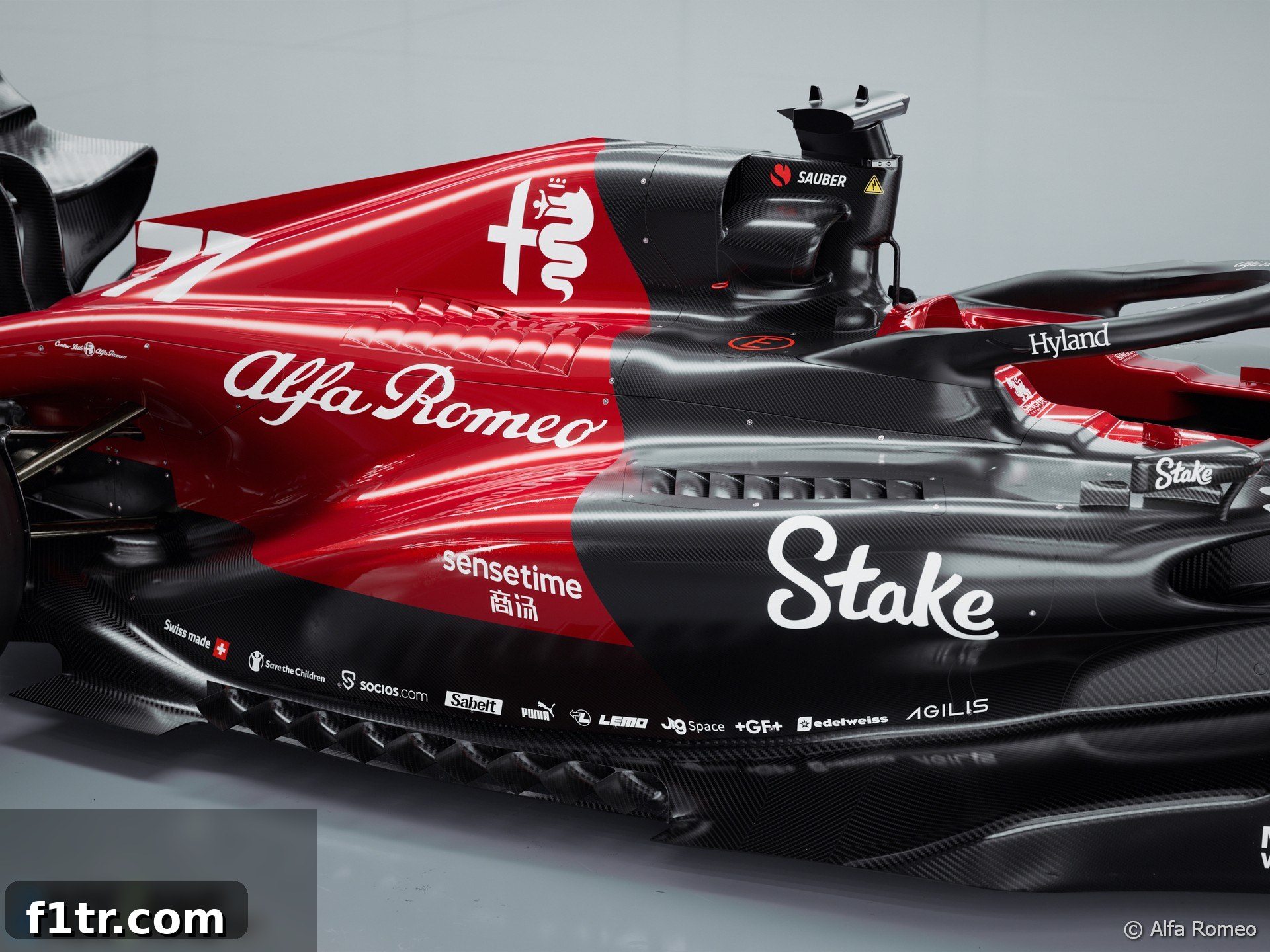
The highly anticipated 2023 Formula 1 season brought with it a series of intriguing technical challenges, not least among them being the revised floor regulations. For midfield contenders like Alfa Romeo, these changes sparked immediate concern, with the team expressing apprehension that such modifications could inadvertently hand a significant advantage to the sport’s larger, more well-resourced outfits.
Announced unexpectedly late in August of the previous year, the alterations to the dimensions of the cars’ floors added an unforeseen layer of complexity to an already demanding design process. Jan Monchaux, Alfa Romeo’s technical director, articulated the team’s frustration, highlighting the added burden as they meticulously crafted their 2023 challenger, the C43, which was recently unveiled to the world.
“We generally embrace change; it’s often a catalyst for new opportunities when the rulebook evolves,” Monchaux remarked, reflecting on the constant state of flux within Formula 1. “However, the timing of this particular decision was a source of considerable irritation for us. It was finalised very late in the development cycle, and experience has shown that such belated changes invariably tend to favour the bigger teams, those with significantly deeper pockets and more extensive engineering capabilities.”
The catalyst for these regulatory adjustments was the widespread issue of ‘porpoising’ that afflicted several teams during the 2022 season. This alarming aerodynamic phenomenon, characterised by rapid, violent oscillations of the car at high speeds, prompted serious health and safety concerns for the drivers. The FIA, F1’s governing body, acted decisively to mitigate these risks, implementing the floor changes with the express aim of reducing the severity of porpoising and ensuring driver well-being.
Monchaux elaborated on the specifics of the mandate: “The primary modifications were focused on the floor design. The FIA decreed that the floor edges needed to be raised by a modest-sounding 15 millimetres. While 15mm might not seem substantial on paper, in the hyper-sensitive world of Formula 1 aerodynamics, it was more than enough to send us back to the drawing board. It forced us to entirely re-evaluate and redesign the floor and the intricate rear-end architecture of the car to comply with these new rules. Despite the initial challenge, I am genuinely pleased with the progress our team has made in adapting to these constraints.”
The technical director acknowledged that the precise impact of these updated regulations would undoubtedly vary across the grid, depending on each team’s original aerodynamic philosophy and resources. However, he maintained a confident outlook, predicting that most, if not all, teams would eventually manage to recover the lap time initially lost due to the enforced changes.
“The rule change, in terms of its initial impact, I’d estimate it to be in the order of magnitude of about half a second per lap loss,” Monchaux explained, providing a tangible figure for the performance deficit. “I anticipate this figure will be more or less consistent across the board, perhaps fluctuating by a tenth here or there. Crucially, I have absolutely no doubt that the vast majority of teams will successfully claw back those initial losses. The real differentiator, then, becomes a matter of how much *additional* performance you’ve been able to engineer into your car by the time the season kicks off.”
For Alfa Romeo, however, the strategy extends beyond merely recovering lost ground. Monchaux stressed the paramount importance of a sustained development push throughout the entire season. He vividly recalled the fiercely competitive 2022 campaign, where Alfa Romeo narrowly secured a crucial sixth place in the Constructors’ Championship. The battle was intense, with Aston Martin pressing hard, and the outcome hinging on the final race. Indeed, had Sebastian Vettel finished just one position higher in Abu Dhabi, Alfa Romeo would have been relegated to seventh, highlighting the razor-thin margins in modern F1.
“We commenced last year’s season with exceptional strength, demonstrating impressive pace and consistency,” Monchaux reflected on the 2022 trajectory. “However, at a certain juncture, we found ourselves struggling more than we would have liked to continuously inject performance upgrades into the car. The upcoming 2023 calendar features an arduous 23-race schedule, and if there’s one invaluable lesson we absorbed from last year, it’s that the championship battle is never truly over until the very final lap in Abu Dhabi. It was precisely on that last lap that we clinched P6, maintaining a mere half-second advantage over Vettel.”
The unpredictability of Formula 1, coupled with the extended race calendar, underscores the need for unwavering resilience and adaptability. Monchaux’s sentiments resonated deeply with the team’s philosophy: “We experienced both exhilarating highs and challenging lows. As a team, and this insight emerged crystal clear from all our internal reviews, we simply cannot afford to surrender. Race one will unfold as it will. Perhaps we’ll start exceptionally strong, or perhaps we’ll face a degree of disappointment.
“Regardless of the initial outcome, the imperative is to turn the page immediately. There remain 22 more races on the calendar, an immense opportunity for growth and recovery. I have absolute faith that our dedicated trackside crew, alongside the formidable team of approximately 500 individuals back at our factory, will be pushing relentlessly. Their collective effort will be instrumental in recovering any lost ground, should that be necessary, or in building upon an initial advantage if we find ourselves contending at the higher end of the competitive midfield spectrum.”
The floor rule changes serve as a poignant reminder of the relentless technical arms race in Formula 1. For Alfa Romeo, a team continually striving to maximize its output with comparatively fewer resources than the giants of the sport, these late-breaking regulations present both a formidable hurdle and a renewed test of their ingenuity and determination. Their ability to rapidly adapt, innovate, and maintain a consistent development curve throughout the extended 2023 season will be crucial in defining their ultimate standing in what promises to be another thrilling championship battle.
2023 F1 season insights
- FIA president cleared of alleged interference in two 2023 races
- First week viewing figures for new Drive to Survive season fall again
- Max who? Drive to Survive season six prefers its favourite faces
- RaceFans’ complete 2023 season review
- The F1 drivers who pulled off the 10 biggest charges through the field in 2023
Browse all 2023 F1 season articles