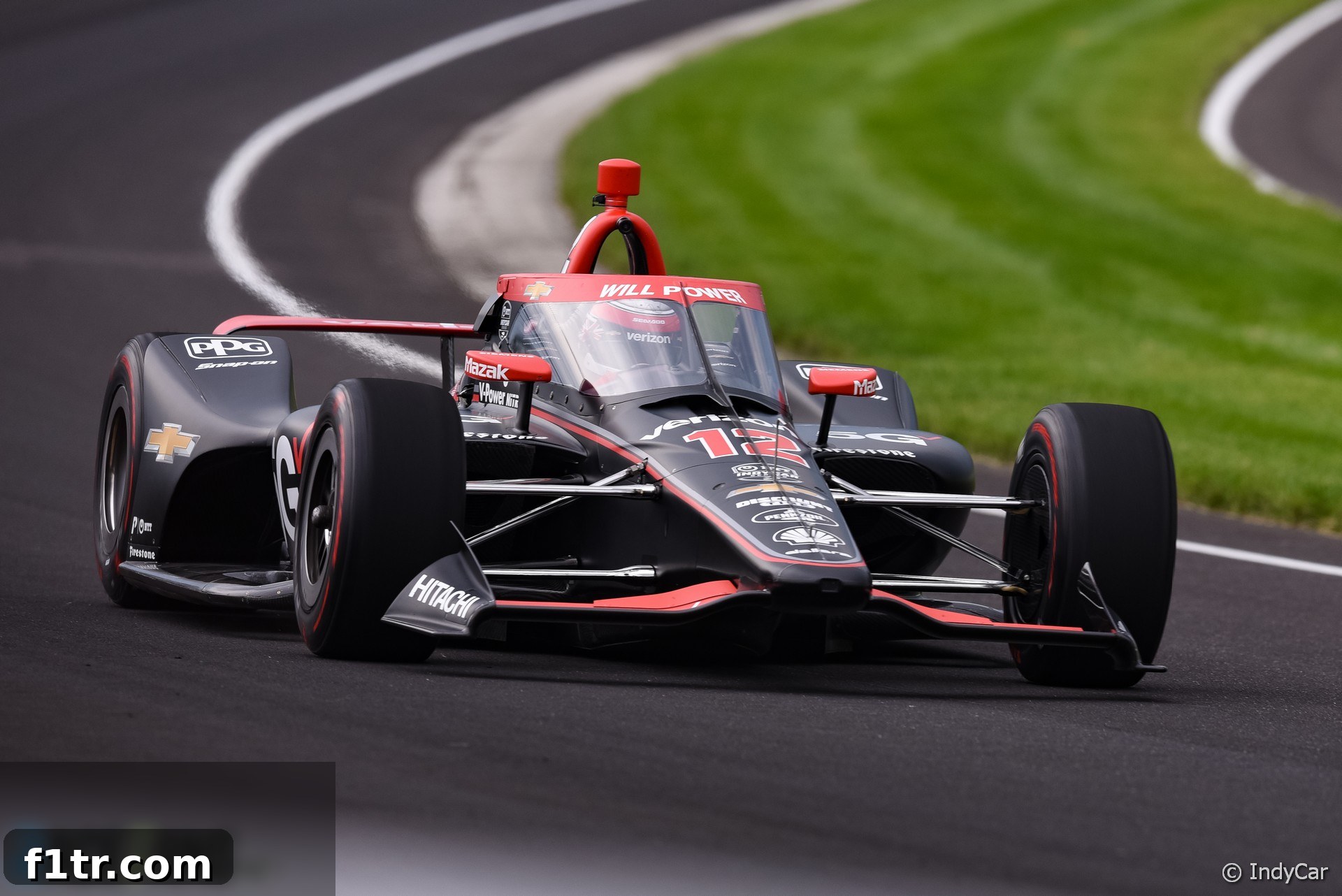
The exhilarating first day of time trials for the 105th running of the Indianapolis 500 set the stage for an unforgettable race, delivering a potent mix of high-speed heroics and heart-stopping drama. As qualifying concluded, five prominent drivers, including 2018 race winner Will Power of Team Penske, found themselves in a precarious position, forced to re-qualify on Sunday to secure one of only three remaining spots on the 11th row of the grid. The day was a stark reminder of the unforgiving nature of the “Greatest Spectacle in Racing,” where even champions are not immune to the pressures of qualifying.
Advert | Become a Supporter & go ad-free
High Stakes in the Last Row Shootout: Will Power’s Unexpected Battle
Tomorrow’s Last Row qualifying shootout promises to be one of the most intense sessions in recent memory. At the forefront of this high-pressure battle is Will Power, a former Indianapolis 500 champion and a cornerstone of the formidable Team Penske. For a driver of Power’s caliber and a team with Penske’s legacy, finding themselves in this position is both rare and deeply unsettling. His presence elevates the shootout from a mere fight for the final spots to a compelling narrative of a champion fighting to avoid elimination from a race he once conquered.
Power will be joined by a diverse group of competitors, each with their own compelling story. Simona de Silvestro, driving for the Penske-supported, female-led Paretta Autosport team, adds another layer of intrigue. Her return to the Speedway, representing a pioneering effort in motorsport, makes her qualifying attempt not just a personal challenge but also a significant moment for representation. For her, securing a spot on the grid would be a monumental achievement for herself and her groundbreaking team.
Veteran drivers Charlie Kimball and Sage Karam also find themselves in the same challenging predicament. Both have considerable experience at Indianapolis, and their presence underscores that no driver, regardless of their past performance or familiarity with the circuit, is guaranteed a spot. Their fight is one of seasoned professionals battling against the clock and the field to extend their Indy 500 dreams for another year. Rookie RC Enerson completes the quintet. For Enerson, the sheer dream of making his first Indianapolis 500 start hangs in the balance, a daunting challenge for any newcomer.
All five drivers will have multiple opportunities to lay down their best four-lap average speed during a crucial 75-minute session, scheduled to begin at 1:15 pm local time. The stakes could not be higher: the slowest two drivers from this group will be agonizingly bumped from the starting field, their hopes of competing in the 105th Indianapolis 500 dashed. This “Bump Day” scenario is a signature element of Indy 500 qualifying, a crucible of pressure that has produced some of the sport’s most memorable moments and heartbreaks.
The Dalton Kellett Conundrum: A Qualifying Rule Explained
The closing minutes of Saturday’s qualifying session were filled with palpable tension and a degree of confusion, largely centered around Canadian sophomore Dalton Kellett. He initially clung to the 30th and final guaranteed grid position of the day, a spot that ensures direct entry into the 33-car field without the need for a last-row shootout. The drama intensified when Will Power made a valiant attempt to bump his way back into the top 30 with a four-lap average qualifying speed of 229.228 mph. This was agonizingly close, just short of Kellett’s then-current average of 229.250 mph, leaving Power on the outside looking in.
In a move that initially puzzled many, Kellett returned to the track in the final five minutes, withdrawing his initial guaranteed run to re-qualify. His subsequent four-lap average of 228.323 mph was notably slower than his initial time, and indeed, slower than the fastest runs posted by Power, Kimball, Karam, and De Silvestro, who were all vying for a top-30 spot at that critical juncture. However, due to a key qualifying rule, Kellett’s decision did not jeopardize his already secured position.
The rule states that once a driver has completed a qualifying run and is classified within the top 30 positions, their spot is guaranteed unless another driver successfully bumps them out by posting a faster time. Kellett was already safely in 30th before he made his second, slower attempt. His withdrawal of the initial time and subsequent slower run meant that he simply replaced his own faster time with a slower one, but because no other driver had *beaten* his initial guaranteed speed when he made his first run, his 30th position remained secure. This nuance meant he would hold onto his position on the outside of the tenth row, despite clocking an average speed that would have placed him in the last-row shootout if it had been his original attempt against the field. This unique scenario highlighted the intricate and sometimes counter-intuitive rules that govern Indy 500 qualifying.
Dixon’s Dominance: Setting the Benchmark for the Fast Nine Shootout
While the lower end of the field grappled with survival, the top end saw a masterclass performance from six-time and defending IndyCar champion, Scott Dixon. The 2008 Indy 500 winner, affectionately known as “The Iceman,” wasted no time in asserting his authority, setting the benchmark for the entire day right from the start of time trials. His incredible four-lap average of 231.827 mph stood unchallenged for the next six hours, a testament to his precision, speed, and the raw power of his Honda engine. This stellar run secured him a coveted spot in the Fast Nine Shootout, where the ultimate prize is pole position for next Sunday’s legendary Indy 500.
The Fast Nine Shootout is another jewel in the crown of Indy 500 qualifying. It’s a high-octane, single-attempt session where the nine fastest qualifiers from Saturday battle it out. Each driver gets just one four-lap run to set the quickest average speed and claim the prestigious pole position. Starting at 3:00 pm local time on Sunday, this session is a pure test of nerve and speed, offering no second chances and often delivering breathtaking performances that echo through the annals of motorsport history.
Chip Ganassi Racing’s Force and Palou’s Scare
Scott Dixon was not alone in representing the might of Chip Ganassi Racing. His three talented teammates also qualified for the Fast Nine Shootout, showcasing the team’s exceptional depth and engineering prowess. This dominant showing from Ganassi cemented their position as a leading contender for the Borg-Warner Trophy.
Joining Dixon were 2013 Indy 500 winner Tony Kanaan, a beloved veteran who continues to defy expectations with his speed and experience. Marcus Ericsson, steadily building his IndyCar career, also demonstrated impressive pace to secure his spot. The fourth Ganassi driver to make the Fast Nine was the young Spaniard Alex Palou, who had an otherwise stellar day marred by a dramatic incident. Palou crashed heavily in Turn 2 during the third lap of his second qualifying run, a testament to how quickly things can go wrong at the Speedway’s daunting speeds. Mercifully, Palou was uninjured, a testament to the safety improvements in modern IndyCars. Despite the terrifying incident, his earlier time was strong enough to keep him in the Fast Nine. His crew immediately began working tirelessly to repair his primary car overnight, highlighting the immense effort required behind the scenes to keep these machines race-ready.
Stellar Performances Across the Fast Nine Grid
Beyond the Ganassi quartet, several other drivers delivered outstanding performances to earn their place in the Fast Nine. Colton Herta, one of IndyCar’s brightest young stars, was second quickest overall with a blistering four-lap average of 231.648 mph. His speed signals another strong showing for Andretti Autosport, a team synonymous with Indy 500 success. Herta will be joined by his Andretti Autosport teammate, 2014 Indy 500 winner Ryan Hunter-Reay, further solidifying the team’s presence at the front.
Adding a touch of veteran magic to the Fast Nine is three-time Indy 500 winner Helio Castroneves. “Spider-Man,” known for his iconic fence climb celebrations, is chasing a historic fourth Indy 500 victory, a feat achieved by only three other legends in the race’s history. Driving an Andretti-supported Meyer Shank Racing Dallara/Honda, Castroneves proved he still has the pace and hunger to compete at the very highest level.
The only Chevrolet-powered runners to break into the Fast Nine were the determined duo of Ed Carpenter and his teammate Rinus VeeKay. Carpenter, a renowned “oval specialist” and team owner, consistently excels at Indianapolis, and his presence is almost a given at the sharp end of the qualifying charts. VeeKay, a rapidly rising talent, continued to impress, showcasing the strength of Ed Carpenter Racing against the dominant Honda powerplants.
Advert | Become a RaceFans supporter andgo ad-free
Notable Qualifiers: Rookies, Champions, and Penske’s Mixed Fortunes
Beyond the elite nine, Saturday’s qualifying saw a mix of strong rookie showings and a challenging day for some established champions, particularly within Team Penske.
Pietro Fittipaldi, making his Indy 500 debut, emerged as the fastest rookie in the field, securing an impressive 13th place. His performance suggests a promising future on the oval. Fellow rookie Scott McLaughlin, driving for Team Penske, ended the day as the fastest of his team’s quartet, qualifying in 17th position. While a solid effort for a rookie, it still highlights the competitive nature of the field and the learning curve for even accomplished drivers transitioning to oval racing.
For Team Penske as a whole, it was a day of mixed fortunes. While McLaughlin put in a respectable effort, Josef Newgarden, a two-time IndyCar Series champion, qualified 21st, and 2019 Indy 500 winner Simon Pagenaud placed 26th. Coupled with Will Power’s precarious position in the Last Row Shootout, this indicated that the Penske cars were not finding the outright qualifying speed they might have hoped for, underscoring the relentless challenge of the Indianapolis Motor Speedway.
Among the nine previous Indy 500 winners in the field, their qualifying positions varied widely. 2016 winner Alexander Rossi qualified 10th, narrowly missing out on the Fast Nine but still in a strong starting position. Two-time and defending champion Takuma Sato qualified 15th, poised to make another aggressive charge. Two-time winner Juan Pablo Montoya, making a highly anticipated return, secured the 24th spot. These seasoned champions, regardless of their qualifying position, bring invaluable experience and race craft to the field, making them threats come race day.
What Comes Next: Pole Position and Last Row Showdowns
As the dust settles on a thrilling Saturday, the stage is now set for a dramatic Sunday. The Fast Nine Shootout will determine the coveted pole position, a symbolic and strategic advantage for the 500-mile race. Simultaneously, the Last Row Shootout will deliver an intense battle for survival, with two dreams ending and three moving forward. The Indianapolis Motor Speedway continues its tradition of delivering unparalleled motorsport drama, promising another day of unforgettable action as the grid for the 105th Indy 500 is finalized.
Drivers Advancing to the Fast Nine Shootout
- Scott Dixon 231.827 mph
- Colton Herta 231.648 mph
- Tony Kanaan 231.639 mph
- Ed Carpenter 231.616 mph
- Rinus VeeKay 231.483 mph
- Helio Castroneves 231.164 mph
- Alex Palou 231.145 mph
- Ryan Hunter-Reay 231.139 mph
- Marcus Ericsson 231.104 mph
Drivers Competing in Last Row Qualifying
- Will Power
- Simona de Silvestro
- Charlie Kimball
- Sage Karam
- RC Enerson
Advert | Become a RaceFans supporter andgo ad-free