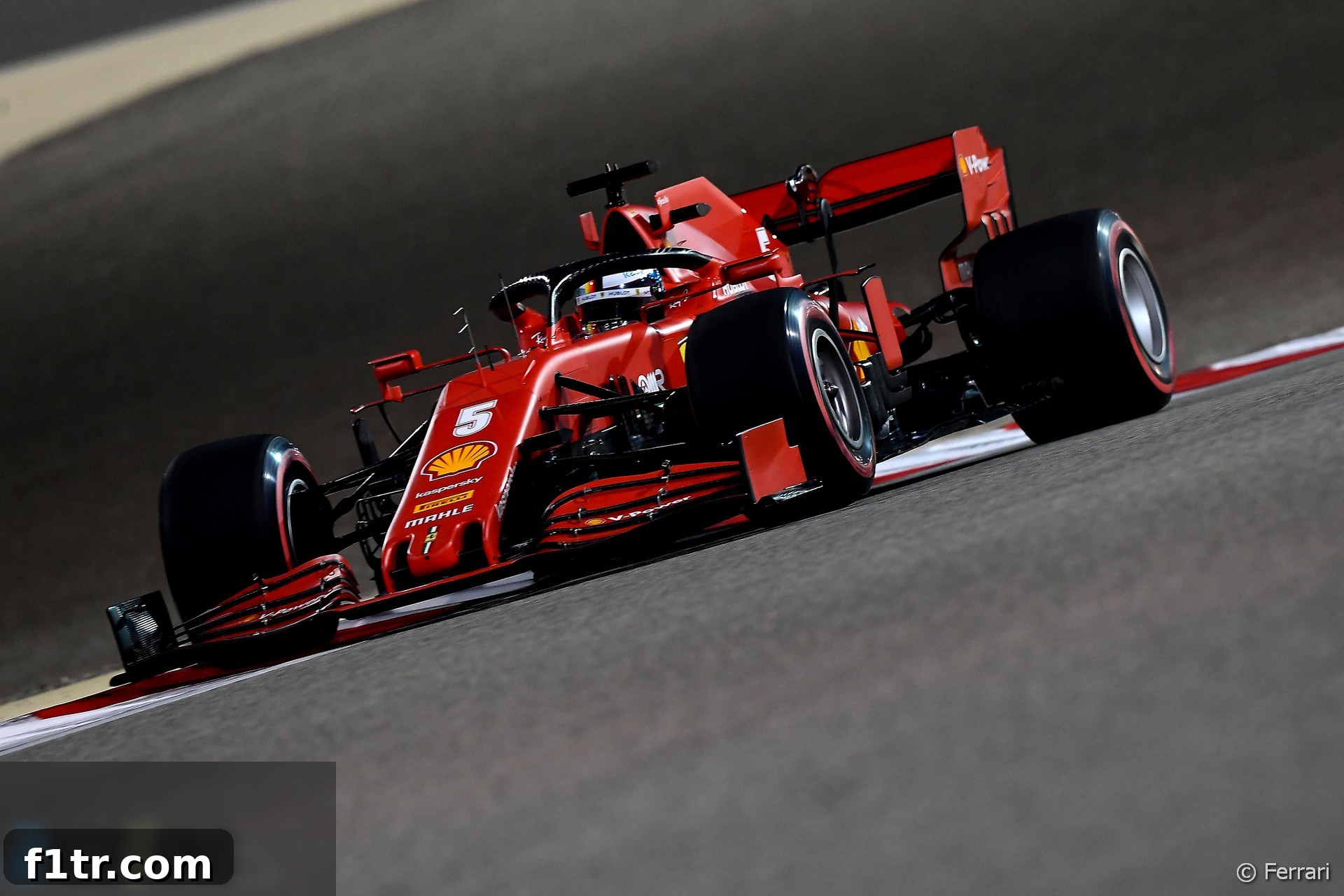
Vettel Raises Major Safety Concerns for Sakhir GP Qualifying: A Recipe for Chaos on F1’s Shortest Track
The highly anticipated Sakhir Grand Prix, featuring a unique and incredibly short ‘Outer Track’ layout, has swiftly become a focal point of discussion within the Formula 1 paddock. While the compact 3.5-kilometre circuit promises thrilling, high-speed action, it has also sparked significant safety concerns, particularly regarding the inherently perilous qualifying sessions. Leading the chorus of apprehension is four-time world champion Sebastian Vettel, who has voiced profound worries about the potential for incidents stemming from the large speed differences expected between cars on track.
Advert | Become a Supporter & go ad-free
The Challenge of the Sakhir Outer Track: A Confluence of Factors
Vettel’s concerns are not isolated; several drivers have echoed similar sentiments regarding the hazardous combination of factors at play this weekend. The brevity of the Sakhir Outer Track, coupled with the standard 20-car grid, creates an unprecedented challenge for managing track density. Unlike longer circuits where drivers have ample space to manage differing speeds, this compact layout drastically reduces the margin for error. Drivers on a flying lap, pushing their cars to the absolute limit, will inevitably encounter others who are either on a cool-down lap, an out-lap, or preparing for their own timed run – all operating at vastly different speeds.
The Peril of Speed Differentials and Congestion
The core of the problem lies in the significant speed delta between cars with varying objectives during qualifying. A driver aiming for a pole position time will be traveling at maximum velocity, often approaching corners at breakneck speed. Conversely, a driver on a cool-down lap will be deliberately slowing down, often weaving to manage tire temperatures, creating a movable obstacle. On a circuit as short as the Sakhir Outer Track, these speed differences translate into incredibly rapid closing speeds, leaving little time for reaction and potentially forcing evasive maneuvers that could lead to collisions or compromised laps. Vettel candidly predicted that “the whole track is short, obviously, and there will be the same amount of cars, so I guess Q1 will be very tight.”
The “Cool-Down Lap” Conundrum: Exacerbating the Risk
A critical factor exacerbating these risks, as explained by Vettel, is the necessity of slow cool-down laps. Modern Formula 1 tires require careful thermal management. After a blistering flying lap, drivers must deliberately reduce their speed significantly to bring tire temperatures down and preserve their structural integrity for subsequent runs or the race itself. This process, while essential for tire performance and longevity, transforms slow-moving cars into potential hazards on an already congested, short circuit. “The other thing that doesn’t help is we have to go really slow in the cool laps to bring the tyres down [in temperature],” explained Vettel. He concluded, “That’s probably the worst factor. One thing is looking for traffic, the other one is having such a big speed deltas. So it will be a mess. I hope that nothing happens and we all go through without being impeded or having trouble with traffic.”
A Warning Sign from Formula 2: The Schumacher-Nissany Incident
The concerns regarding potential collisions during qualifying were vividly reinforced during Friday’s Formula 2 session on the very same circuit. The incident involving Mick Schumacher and Roy Nissany, where their cars made contact amidst a busy 22-car qualifying session, served as a tangible warning. This real-world precedent underscored the inherent dangers of a high-density, high-speed environment with varying car speeds on a short track. While F2 cars possess different characteristics, the underlying dynamics of managing traffic in such conditions remain strikingly similar, providing a sobering preview of the challenges F1 drivers and race control will face.
Race Control and Driver Responsibility: Navigating the Perilous Qualifying
Given the heightened risks, the role of the FIA and race stewards will be more critical than ever during the Sakhir Grand Prix qualifying. Close monitoring of track conditions, driver conduct, and potential impeding instances will be paramount. Race control will likely need to be swift and decisive in addressing any infractions, potentially issuing penalties to maintain safety and fairness. However, the ultimate responsibility also lies with the drivers. Navigating this potentially chaotic session will demand exceptional situational awareness, disciplined car placement, and a high degree of sportsmanship. Drivers will need to communicate effectively with their engineers and rely on their vast experience to find clear track and avoid contributing to a dangerous situation. While the desire for a perfect lap is immense, safety must remain the absolute priority for all competitors.
Team Strategy and Ferrari’s Prospects Amidst the Chaos
Beyond the safety concerns, the unique qualifying conditions will undoubtedly influence team strategies. Teams might opt for different approaches to out-laps and cool-down laps, hoping to find momentary lulls in traffic. The timing of car releases from the pit lane will be meticulously planned, as even a slight misjudgment could result in a driver being caught in a dense pack. The pressure on engineers to provide accurate real-time traffic information will be immense, potentially making or breaking a qualifying attempt.
Intriguingly, despite his concerns about the overall safety and congestion, Sebastian Vettel expressed a somewhat more positive outlook regarding Ferrari’s qualifying chances on the shorter Sakhir Outer Track compared to the full Grand Prix layout used the previous week. This nuanced perspective suggests that the characteristics of the compressed circuit might marginally suit the SF1000 better, or at least expose its weaknesses less severely than a longer, more technically diverse track. The Outer Track, with its emphasis on straights and high-speed sections, might allow Ferrari to leverage aspects of their package, such as top speed or DRS efficiency, that are less pronounced on circuits with a wider variety of corner types.
Advert | Become a RaceFans supporter andgo ad-free
Vettel’s prediction of “Q1 it should be fine to make it through to Q2” and the hopeful “Q3, I think could be possible, maybe it’s a little bit better than last week” indicates a slight uplift in confidence for the Scuderia. Making it into the final qualifying segment has been a significant challenge for Ferrari throughout the 2020 season, making any prospect of Q3 a notable achievement. As Vettel rightly observed, “The midfield has always been tight this year, so it will be even tighter” on this short circuit. The compressed lap times mean that the smallest performance differences, measured in thousandths of a second, will determine grid positions. For Vettel, in his penultimate race with Ferrari, navigating this chaotic and intensely competitive session to secure a strong grid slot would be a testament to his skill and a glimmer of positivity in what has been a challenging farewell season.
Conclusion: A High-Stakes and Potentially Volatile Qualifying Session Awaits
The Sakhir Grand Prix qualifying session is poised to be one of the most talked-about and potentially volatile events of the 2020 Formula 1 season. Sebastian Vettel’s well-founded concerns about extreme speed differences and the high probability of incidents underscore the unique challenges presented by the Sakhir Outer Track. The combination of a short, high-speed layout, the necessity of slow cool-down laps, and a full 20-car grid creates a scenario ripe for drama and potential chaos. While the safety implications are clear and require utmost vigilance from both drivers and race control, this unique challenge also promises an incredibly intense and unpredictable spectacle for fans. For Ferrari, and for Vettel, this potentially ‘messy’ qualifying session might just offer a slim, yet significant, opportunity to showcase their capabilities and punch above their weight, even as they navigate a treacherous path through a congested field. All eyes will be on Bahrain as drivers push the limits, hoping to emerge unscathed and with a strong grid position from what could be a truly memorable qualifying session.
2020 F1 season
- Grosjean to make F1 test return tomorrow for first time since Bahrain horror crash
- Pictures: Wrecked chassis from Grosjean’s Bahrain fireball crash to go on display
- Bottas vs Rosberg: Hamilton’s Mercedes team mates compared after 78 races each
- F1 revenues fell by $877 million in Covid-struck 2020 season
- Hamilton and Mercedes finally announce new deal for 2021 season
Browse all 2020 F1 season articles