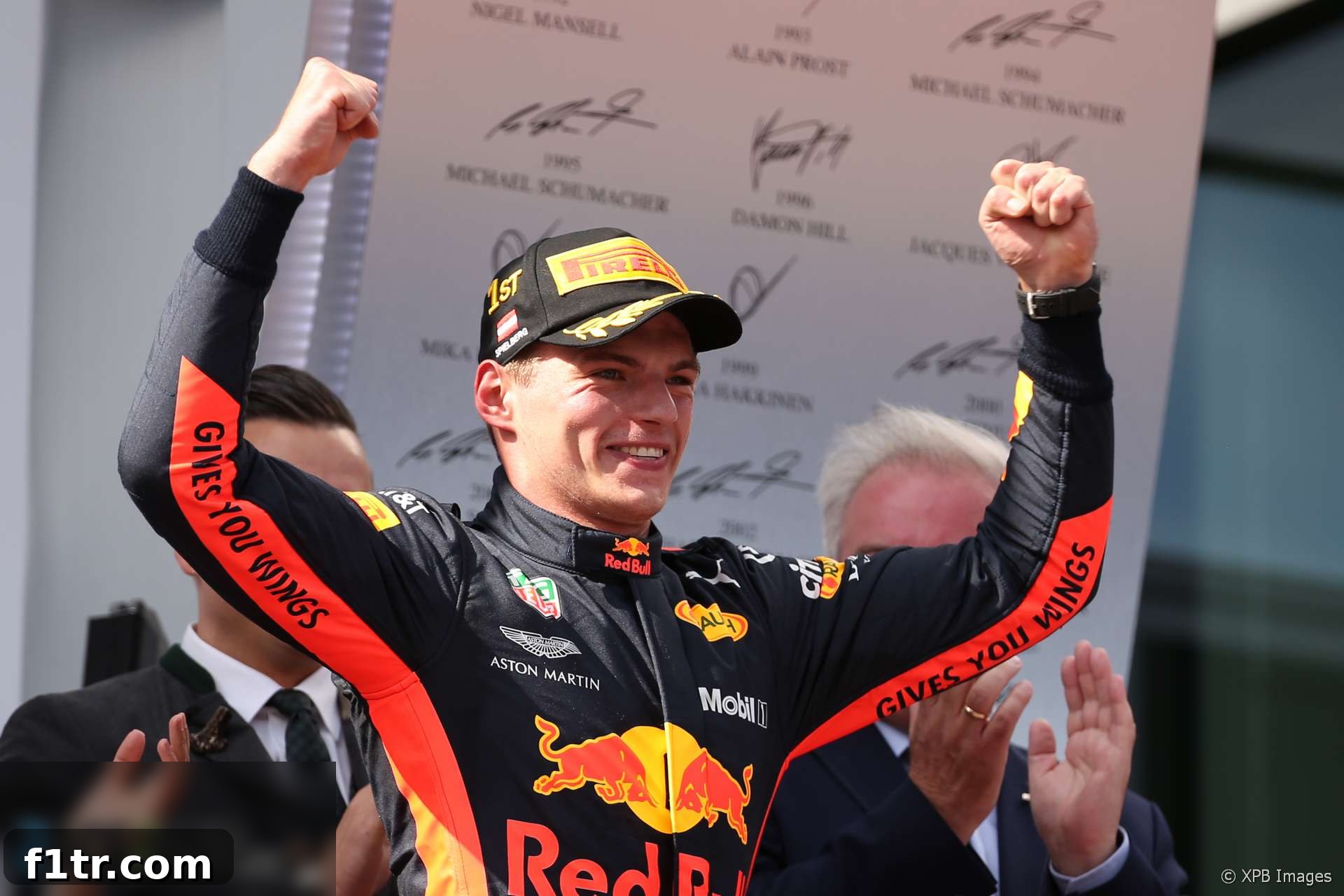
Austrian Grand Prix 2018: Max Verstappen’s Shock Victory Amidst Mercedes’ Unprecedented Disaster
The 2018 Formula 1 season delivered one of its most enthralling and unpredictable chapters at the picturesque Red Bull Ring in Spielberg, Austria. What was anticipated to be a fierce battle for supremacy among the sport’s top contenders quickly devolved into a dramatic spectacle of strategic missteps, mechanical failures, and an unforeseen triumph. At the heart of this unfolding drama was Max Verstappen, who capitalised brilliantly on the chaos to seize a stunning victory, marking a significant milestone for both himself and Red Bull Racing on their home turf. Conversely, the race etched itself into the annals of Mercedes-AMG Petronas F1 Team’s history for all the wrong reasons, as both of their formidable Silver Arrows suffered an ignominious double retirement, profoundly shaking the championship landscape and sparking intense debate about team strategy.
Mercedes’ Dominant Start Crumples into Calamity
From the moment the lights went out, Mercedes appeared to be in a commanding position. Both Valtteri Bottas and Lewis Hamilton executed perfect starts, fending off initial advances from Verstappen and Kimi Raikkonen to establish a comfortable one-two lead by the end of the first lap. The characteristic precision and blistering pace of the Mercedes W09 seemed set to dictate the rhythm of the race, promising another dominant display from the reigning constructors’ champions. The early laps saw the two silver cars pull away from the chasing pack, building a seemingly unassailable lead and suggesting a straightforward path to victory. However, fate had a cruel twist in store, as what started as a dream scenario swiftly unraveled into a nightmare for the Brackley-based squad.
The first sign of trouble for the German outfit came on lap 14 when Valtteri Bottas, who had been running strongly in second position, was forced to pull off the track. A hydraulic issue, reportedly linked to a gearbox problem, brought his race to an abrupt and premature end. This mechanical failure was a bitter blow for Bottas, denying him crucial points and dampening Mercedes’ spirits. The sudden retirement triggered the deployment of a Virtual Safety Car (VSC), a period that would become the epicenter of Mercedes’ ultimate downfall. Yet, the team’s woes were far from over, as an even more significant setback awaited Lewis Hamilton, turning a single retirement into a full-blown team catastrophe.
The Virtual Safety Car Blunder: A Costly Tactical Error that Haunts Mercedes
The pivotal moment that irrevocably altered the course of Hamilton’s race, and arguably the trajectory of the championship battle, occurred during the Virtual Safety Car period triggered by Bottas’s retirement. The VSC provides a unique opportunity for drivers to make a ‘cheap’ pit stop, losing significantly less time to their rivals than under green-flag conditions, as all cars must reduce their speed to a predetermined delta. While Red Bull and Ferrari swiftly brought their leading drivers, Max Verstappen and Kimi Raikkonen, respectively, into the pits for fresh tires, Mercedes inexplicably left Lewis Hamilton out on track, choosing to extend his stint on older rubber. This decision proved to be a catastrophic miscalculation, sparking disbelief among commentators and fans alike.
When Hamilton eventually pitted under conventional green-flag conditions several laps later, the time lost was immense. The strategic advantage gained by competitors who had made their stops under the VSC allowed both Red Bull’s Max Verstappen and Ferrari’s Kimi Raikkonen to leapfrog the championship leader, relegating Hamilton from a potential race-winning position to fourth. The frustration was palpable, not just in the Mercedes pit wall but also within Hamilton’s cockpit. His race engineer, Pete Bonnington, offered a rather blunt explanation over the radio: “We were just waiting to see what everyone else did,” a comment that only amplified the incredulity of the situation. A visibly furious Hamilton later lamented, “We’ve just thrown away a win,” succinctly capturing the magnitude of the tactical blunder that had cost him dearly.
Despite the crushing setback, Hamilton, ever the fighter, attempted to recover. He pushed hard, trying to regain lost ground and challenge for a podium finish. However, a second pit stop in an attempt to find fresh tire pace and re-engage in the battle at the front proved futile, further highlighting the compromised nature of his race. As the Grand Prix neared its conclusion, and the team seemingly resigned itself to a fourth-place finish – a remarkable achievement given the earlier tactical misstep, but still far from their expectations – disaster struck again. On lap 64, Lewis Hamilton’s car ground to a halt due to a sudden and complete loss of hydraulic pressure. This marked an unprecedented double retirement for Mercedes in the hybrid era, a stark reminder of the fragile nature of even the most dominant machinery in Formula 1. The implications for the drivers’ and constructors’ championships were immediate, profound, and set the stage for a tense remainder of the season.
Verstappen’s Masterclass: Seizing the Opportunity for a Home Victory
Amidst Mercedes’ unfolding drama, Max Verstappen was driving a superb and remarkably mature race. Starting from fourth on the grid, he managed to hold his position through the intense opening laps and quickly demonstrated impressive pace, keeping pace with the leading Mercedes cars. His team, Red Bull Racing, executed a flawless strategy, capitalising on the VSC period to bring him in for fresh tires at the optimum moment. This astute tactical decision, combined with Mercedes’ error, elevated Verstappen to the race lead, a position he would defend with remarkable skill and unwavering focus for the remainder of the Grand Prix.
For a considerable period, it appeared Red Bull was poised for an incredible one-two finish at their home circuit. Daniel Ricciardo, celebrating his 29th birthday, was running strongly in second place, showcasing a competitive rhythm that suggested a dominant weekend for the Milton Keynes squad. The prospect of both Red Bull cars on the podium at the Red Bull Ring was tantalizing for the home crowd and the team’s management. However, the capricious nature of Formula 1 intervened once more. On lap 53, Ricciardo’s car began trailing smoke, and he was forced to retire due to a gearbox failure, mirroring the fate of Mercedes’ Bottas earlier in the race. This unfortunate event denied Red Bull a dream result, but it did not diminish the brilliance of Verstappen’s drive nor the significance of his impending victory.
With Ricciardo out, Verstappen’s primary challenger became Kimi Raikkonen. The veteran Finn, driving with characteristic precision and relentless pace for Ferrari, closed the gap to the leader in the final stages. Raikkonen pushed hard, showcasing the formidable performance of the SF71H, consistently setting strong lap times and keeping the pressure on the young Dutchman. However, Verstappen remained unflustered. He masterfully managed his tires, despite some concerns about blistering, and maintained a sufficient buffer, ultimately crossing the finish line to claim his first victory of the 2018 season, his maiden win at the Red Bull Ring, and Red Bull’s first win at their home circuit. The roar from the ‘Orange Army’ – Verstappen’s dedicated and fervent fan base – was deafening, celebrating a truly deserved triumph that would be remembered as one of his career highlights.
Ferrari’s Strategic Gain: Sebastian Vettel Reclaims Championship Lead
While Kimi Raikkonen secured a strong second place, bringing valuable points for Ferrari and showcasing the Scuderia’s impressive race pace, it was Sebastian Vettel who reaped the most significant championship reward from the chaotic Austrian Grand Prix. Starting from sixth on the grid due to a grid penalty for impeding Carlos Sainz Jr. in qualifying, Vettel faced an uphill battle from the outset. However, he navigated the opening laps cautiously, avoiding incidents that plagued others, and crucially, his team made the correct and swift decision to pit him under the VSC, a move that proved instrumental in his race.
This astute tactical move, combined with Mercedes’ strategic blunder for Hamilton and the retirements of Bottas and Ricciardo, allowed Vettel to steadily climb through the field. As Hamilton struggled with his compromised strategy and eventually retired, Vettel found himself in a remarkable third position, a testament to his race craft, Ferrari’s reliability, and the team’s astute strategic calls. This podium finish was not just a solid points haul; it was a pivotal moment in the championship narrative. By securing third place, Sebastian Vettel reclaimed the lead in the Drivers’ Championship from Lewis Hamilton, swinging the momentum back in Ferrari’s favour after a few challenging races. The gap was narrow, but the psychological advantage was considerable, setting the stage for an intense and fiercely contested second half of the season between the two championship protagonists.
Midfield Heroes: Capitalizing on the Chaos and Delivering Unexpected Results
The high attrition rate among the front-running teams opened the door for several midfield contenders to score unexpectedly strong points, turning the 2018 Austrian Grand Prix into a memorable outing for many. Haas F1 Team, in particular, enjoyed a standout performance, securing their best-ever combined result in Formula 1 history, a monumental achievement for the American outfit.
Led by an impressive and faultless drive from Romain Grosjean, who took a superb fourth place, and ably supported by Kevin Magnussen in fifth, Haas demonstrated exceptional pace and reliability throughout the race. This double-points finish underscored the immense potential of the American team and provided a much-needed boost after a challenging start to their season marked by several missed opportunities. Their performance was a clear indication that when the top teams falter, there are hungry and capable contenders ready to seize the opportunity and deliver remarkable results, showcasing the depth of talent within the Formula 1 grid.
Force India also profited immensely from the chaos unfolding ahead of them. Both Sergio Perez and Esteban Ocon delivered solid, measured drives to secure sixth and seventh places, respectively. They expertly navigated the race, managing their tires and avoiding incidents, taking full advantage of Nico Hulkenberg’s retirement in the Renault and Carlos Sainz Jnr suffering a slow pit stop with his other Renault. These valuable points were critical for Force India in their intense battle within the constructors’ championship, significantly bolstering their position against rivals in the midfield.
Further down the field, two-time world champion Fernando Alonso once again showcased his extraordinary skill, determination, and legendary racecraft. Starting from the pit lane due to a power unit change, the McLaren driver executed a masterful recovery drive, weaving his way through the field with characteristic flair and aggression to finish in an astonishing eighth place. This points finish, from such an unpromising starting position, was a profound testament to Alonso’s enduring talent and his unparalleled ability to extract every ounce of performance from his machinery, regardless of its inherent limitations or starting grid disadvantages.
The final points-paying positions were filled by the Sauber F1 Team, marking a highly successful day for the Swiss outfit and highlighting their significant progress throughout the season. Charles Leclerc continued to impress in his rookie season, bringing his car home in a well-deserved ninth place, showcasing his burgeoning talent and consistent pace. His teammate Marcus Ericsson rounded out the top ten, securing the final point. Their consistent performance in a chaotic race underscored Sauber’s upward trajectory and potential, particularly with Leclerc’s rising star power attracting considerable attention.
Championship Implications and Beyond: A Race That Reshaped the Season
The 2018 Austrian Grand Prix was far more than just another race; it was a pivotal moment that dramatically reshaped the dynamics of the Formula 1 season. Max Verstappen’s commanding victory not only delivered a morale-boosting win for Red Bull at their home Grand Prix but also solidified his reputation as a genuine front-runner capable of winning under immense pressure and capitalizing on every opportunity. For Mercedes, the double retirement was a sobering wake-up call, exposing vulnerabilities in both their mechanical reliability and strategic decision-making that had rarely been seen in the hybrid era. The sight of both Silver Arrows out of contention was almost unthinkable before this event, creating headlines and prompting deep introspection within the team.
Lewis Hamilton’s frustration was palpable, not just from the loss of a guaranteed win but from the relinquishing of his championship lead. The tactical blunder under the VSC would be dissected and debated for weeks, serving as a stark reminder that even the most dominant teams are not immune to errors. Sebastian Vettel’s third-place finish, therefore, was magnified in importance, placing him back at the helm of the drivers’ standings and igniting the championship battle with renewed intensity. The margin between the two rivals remained slim, but the psychological advantage gained by Ferrari and Vettel was significant, setting the stage for a thrilling back-and-forth contest throughout the remainder of the season, promising fans an exhilarating fight for the ultimate prize.
Beyond the championship contenders, the Austrian Grand Prix served as a powerful reminder of the unpredictable nature of Formula 1. The midfield teams, particularly Haas and Force India, demonstrated that consistency, reliability, and seizing opportunities are just as crucial as raw pace in the highly competitive world of motorsport. Fernando Alonso’s spectacular recovery drive underscored the enduring talent of seasoned veterans, while Charles Leclerc continued to cement his status as a future star. This race encapsulated all the elements that make Formula 1 so compelling: high-stakes drama, strategic gambles, the agony of defeat, and the euphoria of unexpected victory, solidifying its place as one of the most memorable races of the 2018 season.