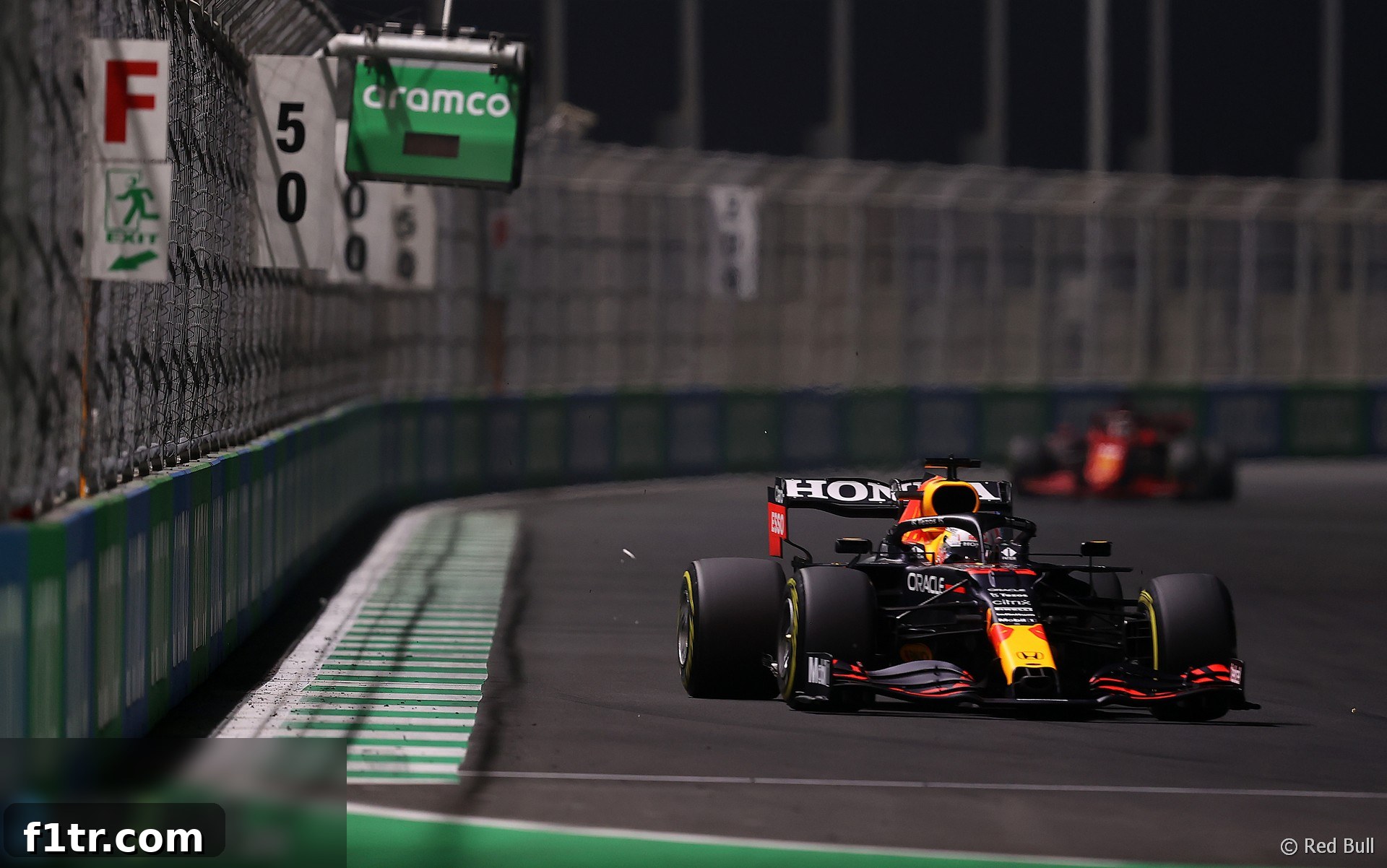
Max Verstappen has vehemently expressed his dissatisfaction with the tumultuous Saudi Arabian Grand Prix, branding the fiery battle with Lewis Hamilton as “not what Formula 1 should be.” The Red Bull Racing driver, who finished second amidst a flurry of penalties and on-track tangles, conveyed a profound sense of frustration, claiming the sport is becoming “more about penalties than racing.” This sentiment encapsulates the contentious nature of a race that saw the championship rivals collide, exchange positions under controversial circumstances, and ultimately set the stage for one of F1’s most dramatic title deciders.
A Championship Showdown on Jeddah’s Streets
The 2021 Formula 1 season had already delivered an exhilarating spectacle of wheel-to-wheel racing and psychological warfare between Max Verstappen and Lewis Hamilton. As the championship caravan arrived in Jeddah for the inaugural Saudi Arabian Grand Prix, the stakes couldn’t have been higher. With only two races remaining, every point, every position, and every on-track maneuver held immense weight in the battle for the drivers’ title. The new Jeddah Corniche Circuit, a high-speed street track with numerous blind corners and tight sections, promised a thrilling but potentially chaotic event, and it delivered on that promise – perhaps beyond what many had anticipated.
From the moment the lights went out, the intensity of the rivalry was palpable. Both drivers, acutely aware of the championship implications, pushed their cars and the limits of track etiquette to the absolute maximum. The fast-paced nature of the Jeddah circuit, combined with the aggressive racing styles of Verstappen and Hamilton, created an environment ripe for confrontation. Early in the race, it became evident that race control and the stewards would play a significant role in adjudicating the unfolding drama, as incidents involving track limits and questionable overtaking maneuvers began to accumulate, setting a precedent for the rulings that would follow.
The Escalation of Conflict: Off-Track Advantages and Contentious Decisions
The Saudi Arabian Grand Prix saw several flashpoints that fueled Verstappen’s post-race frustration. On multiple occasions, the Red Bull driver was deemed to have gained an illegal advantage by leaving the track while defending or attacking. Formula 1 regulations are clear: drivers must not gain a lasting advantage by exceeding track limits. While racing on the edge is inherent to the sport, the interpretation and application of these rules became a central theme of the Jeddah race, particularly in the context of Verstappen’s aggressive driving style.
These early incidents led to directives from race control for Verstappen to cede positions back to Hamilton, creating a tense back-and-forth between the drivers and their respective teams. The decision-making process by the race stewards and race director came under intense scrutiny, with fans and pundits debating the consistency and fairness of the rulings. Verstappen’s perception that he was being unfairly targeted or subjected to overly strict interpretations of the rules began to crystallize as the race progressed. He found himself constantly battling not just his championship rival on track, but also the directives from the pit wall and the potential for penalties, a scenario he clearly found antithetical to the spirit of pure racing.
The Heart of the Conflict: The Lap 38 Collision
The most dramatic and controversial moment of the race unfolded on lap 38, igniting a heated debate that reverberated through the Formula 1 community. Following an earlier incident where Verstappen was instructed by his race engineer, Gianpiero Lambiase, to strategically allow Hamilton to pass on the exit of Turn 22 to avoid a penalty for gaining an off-track advantage, the stage was set for collision.
As Verstappen slowed significantly down the main straight, approaching the final corner complex, to let Hamilton through, Hamilton himself appeared reluctant to pass. In a critical sequence of events, Verstappen braked sharply in the middle of the track. Hamilton, seemingly caught off guard and unwilling to overtake in what he perceived as a potentially dangerous situation or perhaps suspicious of a tactic, consequently ran into the back of the Red Bull. The contact damaged Hamilton’s front wing, though he was able to continue, albeit with reduced performance for a short period.
Verstappen’s explanation post-race highlighted his confusion: “I slowed down. I wanted to let him by, so I’m on the right. But he didn’t want to overtake and then we touched. I don’t really understand what happened there.” His perspective suggested he was following instructions, and Hamilton’s reluctance to pass was the root cause of the contact. Conversely, Hamilton’s perspective, though not explicitly stated in the immediate aftermath, implied a scenario where passing a suddenly slowing car in the middle of the track, especially at that speed, was not straightforward or safe. The stewards, after reviewing the telemetry and video evidence, later issued Verstappen a five-second time penalty for causing the collision, and both drivers were summoned to address the incident, further underscoring its complexity and the difficulty in assigning singular blame.
Verstappen’s Outcry: “More About Penalties Than Racing”
The cumulative effect of the penalties, the on-track incidents, and the perceived unfairness culminated in Max Verstappen’s strong post-race remarks. Despite finishing a commendable second and being voted F1’s ‘Driver of the Day’ by the fans – a point of ironic detachment given his profound frustration – Verstappen did not mince words.
On his radio, returning to the pits, he stated, “Luckily the fans have a clear mind about racing, because what happened today is unbelievable. I’m just trying to race and this sport lately is more about penalties than racing. For me, this is not Formula 1.” These powerful statements reveal a driver deeply unhappy with the way the race was managed and officiated. Verstappen, known for his aggressive and uncompromising racing style, felt that the constant intervention from race control and the looming threat of penalties stifled true competition and deviated from what he believes the essence of Formula 1 should be – pure, unadulterated racing.
His sentiments resonated with a significant portion of the fanbase who also felt the regulatory interventions overshadowed the on-track spectacle. The ‘Driver of the Day’ vote served as a powerful testament to the fans’ appreciation for his fighting spirit and relentless pursuit, regardless of the controversies. However, for Verstappen, the immediate aftermath was dominated by a sense of injustice and a feeling that the sport was losing its core identity. His frustration wasn’t merely about losing positions or receiving penalties; it was a deeper concern about the direction of Formula 1 and the balance between enforcing rules and allowing drivers to race freely.
Tactical Battles and Tyre Degradation
Beyond the contentious incidents, the Saudi Arabian Grand Prix was also a demanding test of strategy and tyre management. The high-speed nature of the Jeddah circuit placed immense strain on the Pirelli tyres, particularly the medium compounds. Verstappen’s race was further complicated by his tyre strategy and the prolonged battles with Hamilton, which undoubtedly took a toll on his rubber.
After the dramatic lap 38 collision and eventually surrendering the lead permanently, Verstappen found himself falling back from Hamilton’s Mercedes. His worn medium tyres, as he admitted, were “lacking a bit of rubber towards the end.” This tyre degradation was a critical factor in his inability to challenge Hamilton effectively in the latter stages of the race. The continuous close-quarters racing, the frequent bursts of acceleration and heavy braking required to navigate the street circuit, all contributed to accelerating tyre wear. Even the most skilled drivers cannot overcome the fundamental limitations of worn tyres, and in a high-stakes championship battle, even a slight disadvantage in grip can be decisive. This strategic element, combined with the on-track drama, painted a complete picture of a race where every variable played a crucial role.
Beyond the Chequered Flag: Penalties and Points
The repercussions of the Saudi Arabian Grand Prix extended beyond the immediate race result. In addition to the five-second time penalty for the lap 38 collision, Max Verstappen also accrued one penalty point for leaving the track and gaining an advantage. This brought his total penalty points for the current 12-month period to five. While this tally was not immediately critical, it served as a reminder of the strict disciplinary framework within Formula 1, where accumulating twelve penalty points within a year can lead to a race ban – a severe consequence for any driver, let alone one fighting for a world championship.
The outcome of the race had profound implications for the championship standings. With Hamilton taking the victory and Verstappen finishing second, the two rivals entered the final race of the season in Abu Dhabi tied on points. This unprecedented scenario set up a winner-takes-all grand finale, further intensifying the pressure and the narrative surrounding their epic rivalry. The controversies and penalties from Jeddah became an integral part of this overarching story, fueling anticipation for a climatic conclusion.
The Larger Debate: Sporting Integrity vs. Spectacle
The Saudi Arabian Grand Prix undoubtedly ignited a wider debate within Formula 1 about the delicate balance between sporting integrity and the spectacle of racing. The constant back-and-forth between the drivers, the frequent interventions from race control, and the multitude of penalties raised questions about the consistency of stewarding decisions and the impact on the purity of competition. While aggressive driving adds excitement, there is a fine line between hard racing and exceeding the acceptable boundaries. Jeddah became a microcosm of this ongoing tension, highlighting how challenging it is for race officials to manage such high-stakes contests objectively and consistently.
Many argued that the race director’s involvement in negotiating penalties and positions added an unwelcome layer of complexity, detracting from the straightforward competition on track. Others maintained that such interventions are necessary to ensure fairness and safety, especially on a demanding new circuit. Regardless of individual perspectives, the Saudi GP undeniably left a lasting impression, not just for its thrilling racing but also for the contentious nature of its officiating, shaping discussions about the future direction of Formula 1 regulations and their implementation.
Conclusion: A Season-Defining Battle
The 2021 Saudi Arabian Grand Prix will forever be remembered as one of the most chaotic, controversial, and captivating races in recent Formula 1 history. It was a race that pushed both drivers and officials to their absolute limits, leaving Max Verstappen deeply frustrated and vocal about his perception of the sport. His assertion that the race was “not what Formula 1 should be” encapsulated the sentiment of a driver who felt stifled by regulations and penalties in a championship battle defined by raw speed and unyielding determination.
As the dust settled on the demanding streets of Jeddah, the championship was left hanging in the balance, poised for a winner-takes-all showdown in Abu Dhabi. The controversies, the collisions, and the critical decisions made by the stewards all contributed to a narrative that transcended mere racing, delving into the very essence of competition, sportsmanship, and the rules that govern one of the world’s fastest sports. The Saudi GP was more than just a race; it was a pivotal chapter in an unforgettable championship saga, amplifying the anticipation for a truly historic season finale.
2021 Saudi Arabian Grand Prix Articles
- Mercedes seal record eighth consecutive constructors title as Hamilton misses driver’s crown
- Analysis: Is Jeddah circuit’s layout fit for F1 or a “recipe for disaster”?
- Hamilton closes on another Schumacher record with first ‘hat-trick’ of 2021
- How Hamilton and Verstappen’s roughest scrap yet played out on the radio
- Brawn defends Masi following criticism of Saudi Arabian GP decisions
Browse all 2021 Saudi Arabian Grand Prix articles