The 2019 Formula 1 season brought an exhilarating mix of established rivalries and emerging talents, with the Spanish Grand Prix serving as a crucial early barometer for team and driver performance. As the first European race of the calendar, Barcelona’s Circuit de Catalunya often provides a clear picture of the pecking order and strategic directions for the teams. While Mercedes continued their dominant streak, the race weekend also highlighted standout individual performances and unfortunate struggles that shaped the midfield battles and beyond. This comprehensive review delves into the highs and lows, celebrating the drivers who excelled under pressure and dissecting the challenges faced by those who faltered.
Among the stellar performances, Daniil Kvyat, Max Verstappen, and Daniel Ricciardo truly shone, demonstrating skill, resilience, and strategic acumen that set them apart. Their drives in Barcelona captivated fans and showcased the raw talent that makes Formula 1 so thrilling.
Stars of the Barcelona Grand Prix
Daniil Kvyat: The Resurgent Torpedo
Daniil Kvyat’s performance at the Spanish Grand Prix was a testament to his persistent talent and renewed confidence since his return to Formula 1. In qualifying, he delivered a superb Q2 lap that was not only swift but incredibly precise, proving enough to comfortably secure his passage into Q3. This was a significant achievement, especially considering his teammate, Alexander Albon, was eliminated earlier in Q2. Although Kvyat couldn’t quite replicate that blistering pace in the final qualifying session, starting ninth on the grid was an outstanding result for the Toro Rosso team.
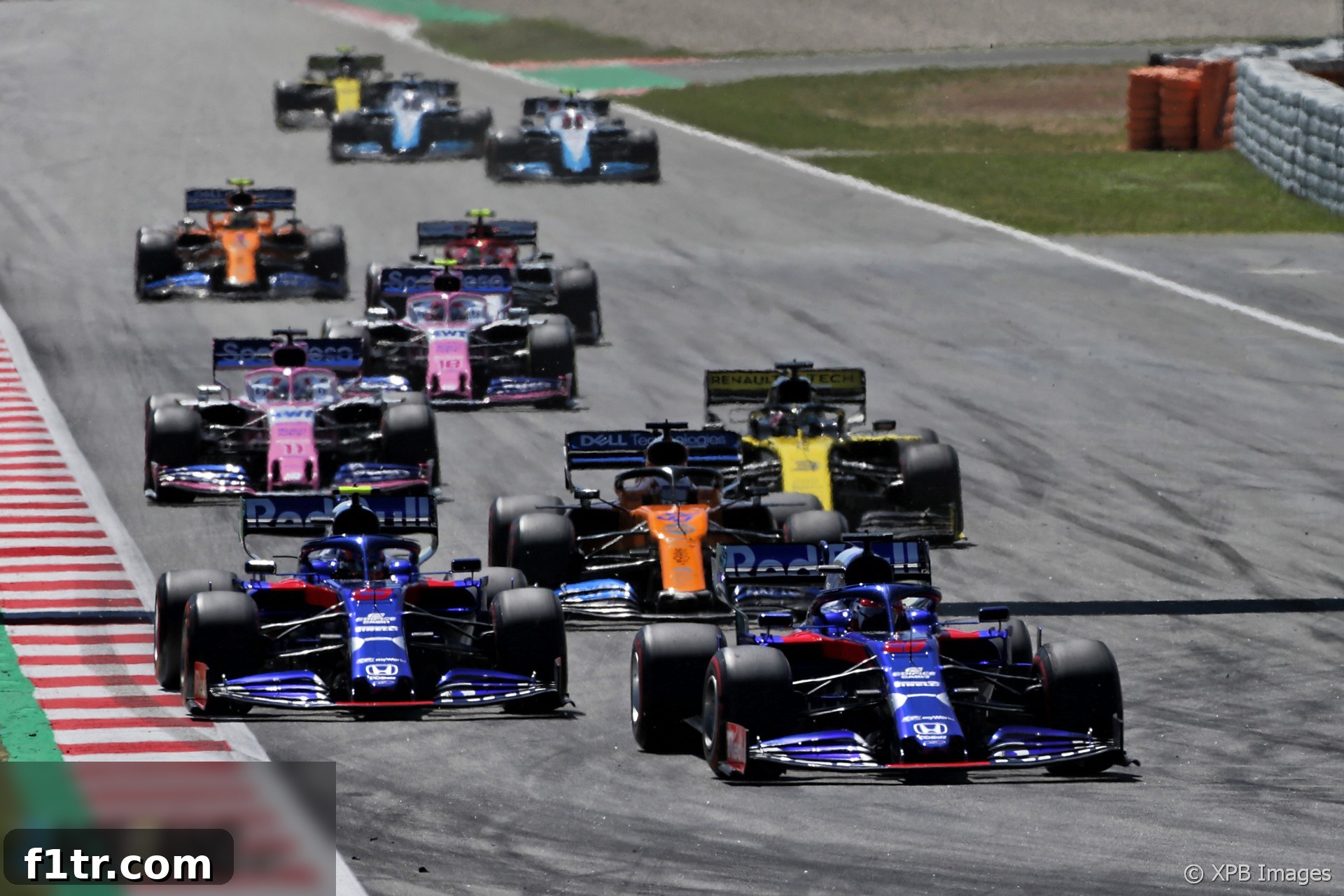
As the lights extinguished for the race, the Russian driver demonstrated cool composure, navigating the chaotic opening lap safely and maintaining his top-10 position. During his initial stint, Kvyat found himself locked in a tight battle behind Kevin Magnussen’s Haas. Despite his best efforts, the slippery air and the nature of the Circuit de Catalunya made overtaking a formidable challenge, preventing him from getting close enough to launch a meaningful attack. However, a strategic pit stop for fresh soft tyres breathed new life into his race. With the added grip and pace, Kvyat finally had the ammunition he needed to challenge the Haas driver. Utilizing the potent DRS assistance, he executed a decisive overtake on Magnussen before even reaching Turn One, a move that highlighted his race craft and commitment.
His race was then complicated by an unfortunate incident during a Safety Car period. Kvyat pitted promptly, aiming to capitalize on the opportunity for fresh rubber, but the Toro Rosso pit crew was not ready. He remained stationary on the jacks for an agonizingly long period, watching helplessly as two crucial positions slipped away. Despite this frustrating setback, Kvyat showcased incredible resilience and determination. By the chequered flag, he had managed to regain one of those lost positions, recovering to finish ninth, precisely where he had started. It was a fine weekend performance that, but for the pit stop mishap, could have easily yielded an even better result for the popular driver.
Max Verstappen: Consistently Challenging the Frontrunners
Max Verstappen continued his impressive run of form in Barcelona, once again asserting his dominance over his teammate and proving to be a consistent thorn in the side of the Ferraris. Throughout the weekend, Verstappen remained largely untroubled by his Red Bull stablemate, Pierre Gasly, consistently extracting the maximum from his Honda-powered machine. In a fiercely contested qualifying session, he managed to split the two factory Ferrari cars, securing a prime starting position that highlighted the true potential of the Red Bull package.
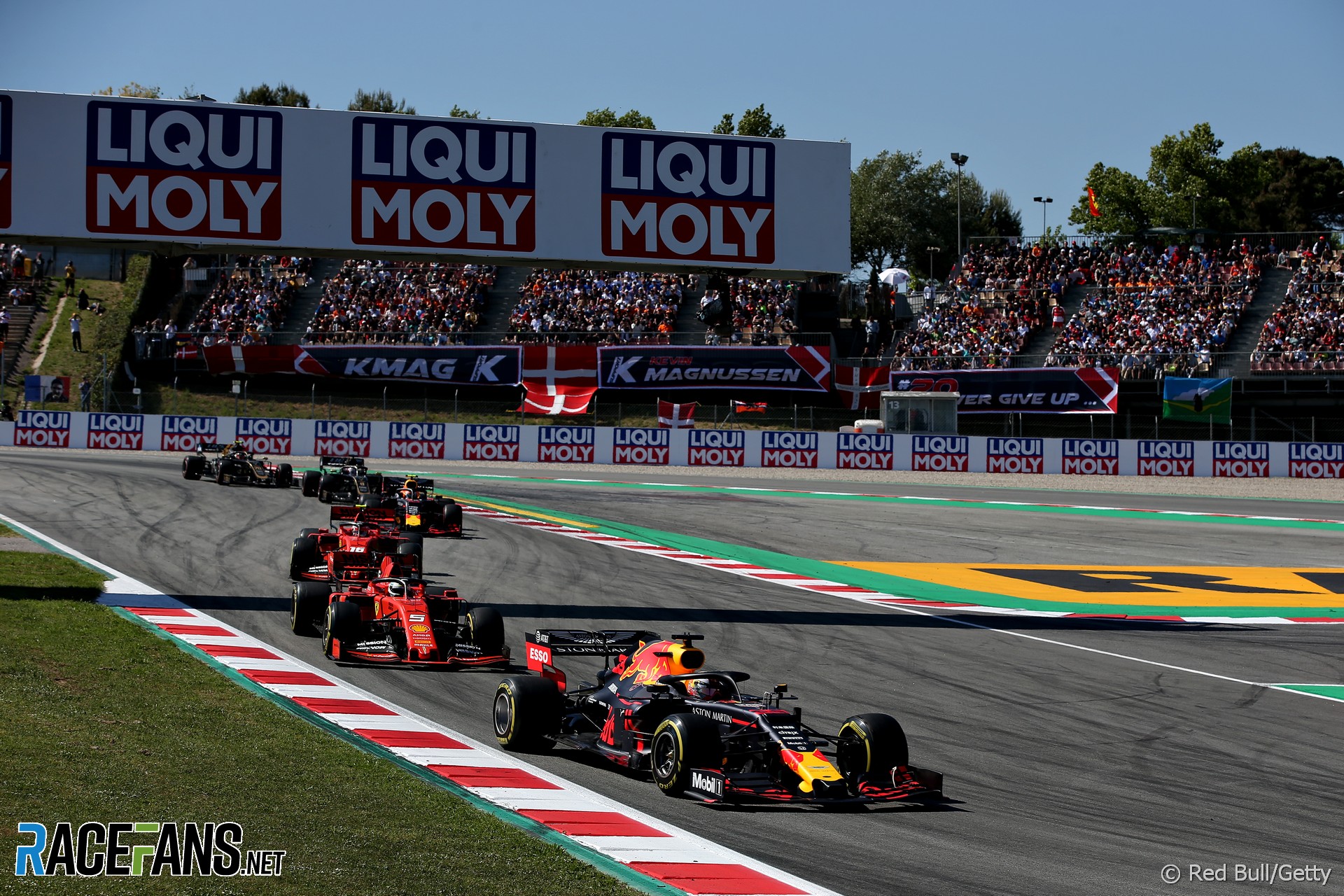
The race start proved to be a pivotal moment for Verstappen. As the two Ferraris, Sebastian Vettel and Charles Leclerc, tripped over each other in the opening corners, Max masterfully seized the opportunity. He expertly navigated the chaos, emerging in a strong third position, a place he would stubbornly defend for the remainder of the race. From that point onwards, he never looked back, settling into a rhythm that saw him operate in a league of his own.
Verstappen spent the majority of the Grand Prix in a somewhat solitary third place. While the Mercedes duo upfront were undeniably out of reach in terms of pure pace, Verstappen’s consistent speed and error-free driving meant he was comfortably superior to both Ferrari drivers. He meticulously managed his tyres and maintained a robust pace, never allowing the red cars behind him to mount a serious challenge. His cool head was particularly evident during the Safety Car restart, where he maintained perfect control and ensured a clean getaway, consolidating his podium position. Securing the final spot on the podium was not just a testament to his individual skill but also a crucial result for Red Bull Racing, reaffirming their status as strong contenders for best of the rest behind the dominant Mercedes.
Daniel Ricciardo: A Resilient Drive Against the Odds
Daniel Ricciardo’s weekend in Spain was a classic display of his ability to extract performance from a challenging car, coupled with the frustration of external factors hindering his ultimate result. While his Renault teammate, Nico Hulkenberg, experienced a disastrous qualifying session that ended in Q1, Ricciardo, with his characteristic flair, dragged his R.S.19 into Q3. This was a significant achievement for Renault, showcasing their potential, even if it was primarily down to Ricciardo’s individual brilliance. Unfortunately, his excellent qualifying effort was immediately hampered by a three-place grid penalty carried over from the previous race in Baku, forcing him to start outside the top ten.
Despite the setback, Ricciardo approached the race with his usual attacking spirit. For much of the opening stint, he found himself locked behind the McLaren of Carlos Sainz Jnr. This was a challenging battle, as Sainz was driving exceptionally well in his home race, and the McLaren proved to be a difficult car to pass on the technical Barcelona circuit. However, Ricciardo, known for his opportunistic overtaking, eventually found a way past Sainz in one of the few decisive moves witnessed before the deployment of the Safety Car. This pass was a clear demonstration of his race craft and determination to climb through the field.
Regrettably, his team’s strategic call during his pit stop under the Safety Car proved to be overly conservative. Renault opted to put Ricciardo on the hard compound tyres, a decision that ultimately backfired. While aiming for durability, the hard tyres lacked the necessary pace to compete effectively in the closing stages of the race, especially against rivals on softer compounds. As a direct consequence, Ricciardo, who had fought so hard, gradually fell out of the points-scoring positions. It was a bitter pill to swallow for the Australian, whose individual performance undoubtedly deserved a better reward, highlighting the fine margins and crucial strategic decisions that define Formula 1 success.
Strugglers of the Spanish Grand Prix
Lance Stroll: A Weekend of Unforced Errors
Lance Stroll’s Spanish Grand Prix weekend was one to forget, characterized by a series of unfortunate incidents and a persistent lack of pace. The Canadian driver’s troubles began early, with his Free Practice One session ending abruptly and dramatically in the wall. He buried his Racing Point car in the Armco barriers, causing significant damage. This incident not only cost him valuable track time but also forced the Racing Point team to scramble, necessitating a fresh batch of their latest upgraded parts for the rest of the weekend, placing additional strain on the crew. The next day, in qualifying, Stroll continued to struggle immensely with finding a competitive one-lap pace, leading to his elimination in Q1. This marked his ninth consecutive Q1 exit, a concerning statistic that underscored his ongoing difficulties in extracting qualifying performance from his machinery.
The race brought little respite for Stroll. In a heated wheel-to-wheel battle with Lando Norris through the demanding Turns One and Two, Stroll was deemed to have left the McLaren driver insufficient racing room. The inevitable collision between the two young talents brought out the Safety Car, neutralizing the race and impacting numerous strategies. While the race stewards, after careful review, reasonably categorized the incident as a racing incident, it was widely acknowledged that Stroll had a greater opportunity to avoid the contact had he shown better awareness and granted his competitor more space. This unfortunate sequence of events capped off a weekend that highlighted the areas where Stroll needed to improve his consistency and race craft.
Nico Hulkenberg: A Costly Lock-Up and Strategic Gamble
Nico Hulkenberg’s Spanish Grand Prix weekend was a microcosm of the struggles faced by the Renault team during that period, compounded by a costly personal error. Renault as a constructor was grappling with a deficit in outright pace compared to their direct midfield rivals, and Hulkenberg’s incident in Q1 only exacerbated their problems. During his crucial qualifying lap, the German driver suffered a significant lock-up heading into Turn Four. This unforced error caused him to clumsily slide into the wall, damaging his front wing. Although he managed to limp his car back to the pits, the damage necessitated a front wing change, forcing him to revert to an older specification. This meant that, per regulations, he had to start the race from the pit lane, a severe disadvantage at a circuit like Barcelona where track position is paramount.
Starting from the pits, Hulkenberg and the Renault team opted for a daring long-game strategy: a one-stop approach. He began the race on the medium compound tyres, planning to extend that stint as long as possible before switching to the softs for the final phase. This high-risk strategy relied heavily on tyre preservation and the hope of unforeseen circumstances, such as a Safety Car, playing into their hands. When the Safety Car was indeed deployed later in the race, the team faced a critical decision. They ultimately chose to prioritize track position over pitting for fresh tyres, hoping to gain places by staying out while others pitted. In the end, Hulkenberg finished a somewhat flattering 13th position. While a recovery from a pit lane start is commendable, the overall pace and the compounding errors during the weekend meant it was a far cry from the points-scoring potential his teammate, Daniel Ricciardo, managed to achieve.
And the Rest: The Wider Picture
The 2019 Spanish Grand Prix once again highlighted the sheer dominance of Mercedes. The Silver Arrows secured another commanding one-two finish in both qualifying and the race, reaffirming their iron grip on the championship. Valtteri Bottas initially took pole position by a surprisingly significant margin of six-tenths of a second over his teammate, Lewis Hamilton, whose final Q2 lap was compromised by an under-charged battery. However, a fractionally better start for Hamilton – partly aided by Bottas experiencing an unexpected clutch oscillation – allowed the reigning champion to seize the lead almost immediately. From that point, the outcome felt like a foregone conclusion, with Hamilton expertly controlling the pace to claim a comfortable victory.
Ferrari’s performance, or rather their lack thereof, at a track where they had shown formidable pace during pre-season testing, was a profound disappointment and did not bode well for their championship aspirations. Sebastian Vettel, in an attempt to challenge the Mercedes drivers at the start, aggressively locked up his tyres, flat-spotting one of them and inadvertently delaying his teammate, Charles Leclerc, in the crucial opening stint. The team then opted to split their strategies, leaving Vettel to lose more time behind Leclerc before eventually reversing the order. The deployment of the Safety Car further scuppered Leclerc’s hopes of executing a successful one-stop strategy to secure third place, forcing him to settle for a frustrating fifth position, closely following Vettel home.
Pierre Gasly, under immense pressure in the Red Bull, showed tantalizing signs of improvement in Barcelona, demonstrating slightly better pace and fewer errors. However, he ultimately finished last of the frontrunners, a position that continued to highlight the significant gap between his performance and that of his teammate, Max Verstappen.
Haas had initially looked strong and dominant in the midfield battle, showcasing solid pace that placed them comfortably ahead of many rivals. However, the Safety Car period inadvertently brought their competitors within striking distance, unraveling their advantage. The situation was further complicated by an intense internal battle between Kevin Magnussen and Romain Grosjean. Magnussen aggressively elbowed past Grosjean, and their subsequent close-quarters duel proved detrimental, leaving Grosjean vulnerable to opportunistic overtakes from Carlos Sainz Jnr and Daniil Kvyat, both of whom capitalized on the Haas drivers’ squabble.
Carlos Sainz Jnr, despite admitting to a mistake in qualifying that allowed his teammate Lando Norris to out-qualify him, delivered a superb recovery drive in the race. He showcased strong race pace and excellent judgment, culminating in a forceful and decisive pass on Grosjean to secure eighth place and four valuable points for McLaren. Norris, however, spoiled his own race early on by running wide at the start before his unfortunate collision with Lance Stroll.
Kimi Raikkonen once again proved to be the faster of the two Alfa Romeo drivers, demonstrating flashes of his characteristic speed. However, his race was compromised on Lap 1 when he got a bit too ambitious and “greedy” at Turn Four, running wide and off the track. This uncharacteristic error effectively ended his chances of extending his impressive points-scoring streak. His teammate, Antonio Giovinazzi, continued to struggle to find consistent pace and form. After picking up a five-place grid penalty for an unscheduled gearbox change, he only managed to beat the perennial backmarkers from Williams in the race, highlighting a challenging start to his season.
Sergio Perez quietly went about his business, largely flying under the radar for the majority of the weekend. Unfortunately, his Racing Point car consistently lacked the outright pace required to genuinely compete for points, leaving him to battle in the lower midfield. Meanwhile, Williams continued their painful season, once again stuck firmly at the back of the grid. George Russell, however, maintained his impeccable record of outperforming his more experienced teammate, Robert Kubica, in both qualifying and the race, showcasing his immense potential amidst the team’s struggles.
Video: Every F1 driver’s 2019 Spanish Grand Prix weekend reviewed
Over to You: Share Your Views
The 2019 Spanish Grand Prix delivered a captivating mix of strategic battles, individual brilliance, and unfortunate setbacks. From Max Verstappen’s consistent challenge to the dominant Mercedes to Daniil Kvyat’s resilient drive and Daniel Ricciardo’s battle against strategic missteps, the race offered plenty for fans to dissect. We also saw the frustrations of Lance Stroll’s error-prone weekend and Nico Hulkenberg’s recovery from a pit-lane start, underscoring the relentless demands of Formula 1. Who impressed you the most, and whose performance left you wanting more?
Vote for the driver who impressed you most last weekend and find out whether other RaceFans share your view here:
- Vote for your 2019 Spanish Grand Prix Driver of the Weekend
Related 2019 Spanish Grand Prix Content
- 2019 Spanish Grand Prix Star Performers
- Top ten pictures from the 2019 Spanish Grand Prix
- Another Mercedes one-two sets up Hamilton vs Bottas title fight
- Paddock Diary: Spanish Grand Prix day four
- Mercedes’ return to dominance makes Schumacher’s wins record realistic for Hamilton
Browse all 2019 Spanish Grand Prix articles