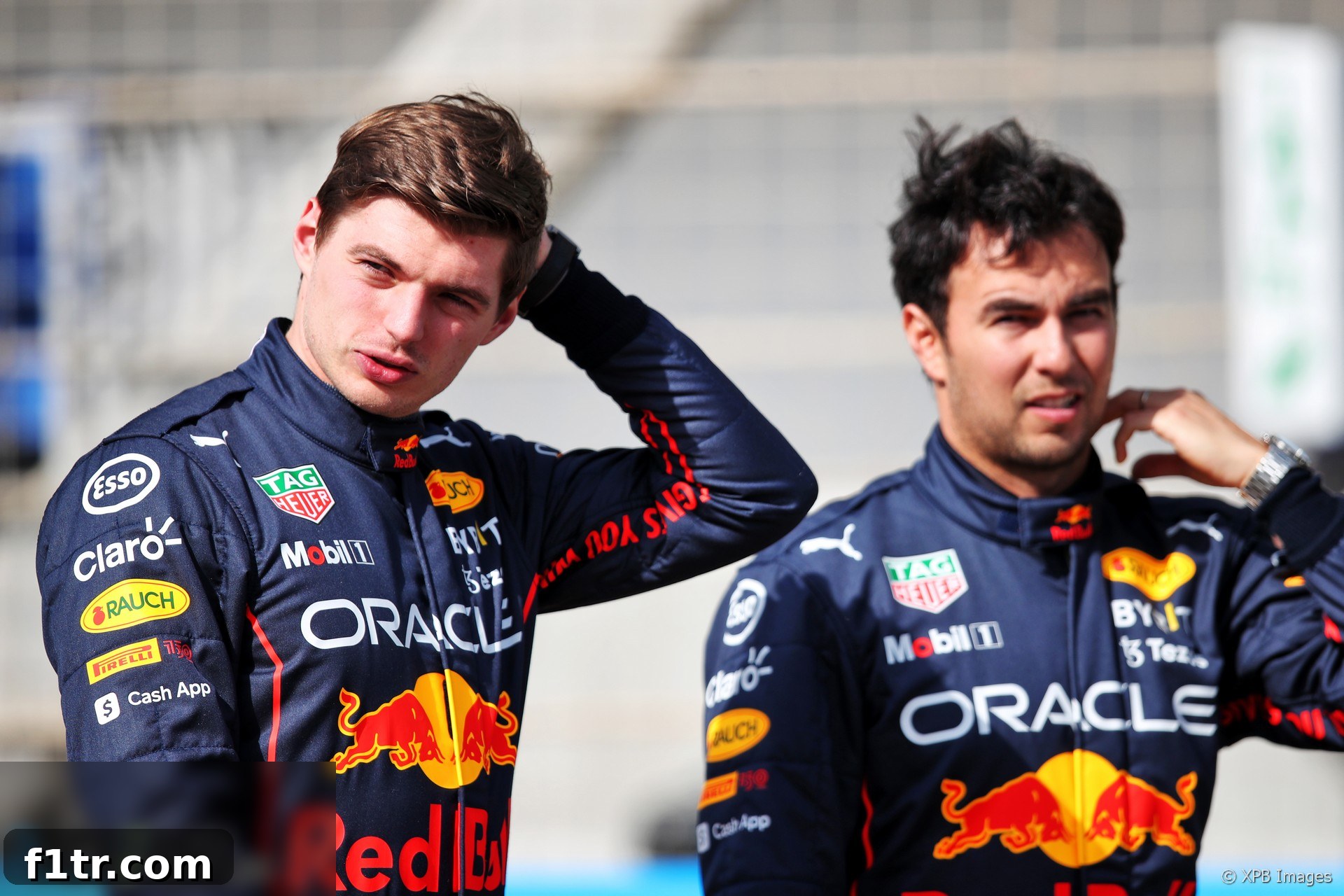
Max Verstappen burst onto the Formula 1 scene as a prodigious talent, making his debut at a mere 17 years old in 2014. From his very first moments in a Grand Prix car, the young Dutchman quickly established himself as a force to be reckoned with. Unafraid to push limits and make his presence known, he immediately turned heads – and occasionally spun cars – as he honed his skills with Red Bull’s junior team, Toro Rosso.
Advert | Become a Supporter & go ad-free
Formula 1’s youngest-ever competitor garnered immediate paddock attention for his raw speed and audacious overtakes. This remarkable talent was swiftly recognized by Red Bull, leading to his rapid promotion to the senior team just five races into the 2016 season. His Red Bull debut at the Spanish Grand Prix was nothing short of historic, as he became the sport’s youngest race winner at 18 years and 228 days old. That day, a true star was born, destined to reshape the landscape of Formula 1.
Red Bull’s top brass, particularly motorsport advisor Helmut Marko and team principal Christian Horner, had clearly identified Verstappen’s extraordinary potential. They made it abundantly clear they had no intention of letting such a generational talent slip through their fingers. Their unwavering faith was spectacularly repaid in 2021 when Verstappen secured his maiden world championship title, marking Red Bull’s first drivers’ championship since 2013 and cementing his place in the pantheon of F1 greats.
Verstappen’s Long-Term Commitment and Red Bull’s Vision
As Red Bull entered a new era, navigating the landscape post-Honda’s departure as a full factory engine supplier, the team made a monumental statement about their future. They secured Max Verstappen with a groundbreaking contract extension, ensuring his tenure with the team until 2028. This new five-year deal, reportedly valued at an astonishing £42 million (€50m) per season, underscores Red Bull’s long-term commitment to Verstappen as the focal point of their championship aspirations. It’s a testament to his value, not just as a driver, but as the cornerstone around which the entire team is built, offering unparalleled stability and a clear direction for the years ahead.
This unprecedented commitment highlights Red Bull’s strategy: investing heavily in a proven champion and building a formidable team structure around him. Such a lengthy and lucrative contract is a rarity in the volatile world of Formula 1, signifying Red Bull’s absolute belief in Verstappen’s ability to deliver multiple world championships. For Verstappen, it provides the security and resources to continuously challenge for titles, knowing he has the full backing of one of the sport’s most competitive outfits.
The Elusive Teammate: The Challenge of Partnering a Prodigy
The success of a Formula 1 team often hinges not just on its lead driver, but also on the strength and consistency of their teammate. Last year, Sergio Perez often served as the perfect wingman, notably playing a crucial role in the title-deciding race in Abu Dhabi. However, a persistent question has lingered within the paddock: who is the ideal long-term teammate for Max Verstappen? Perez, who became the fourth driver in as many years to partner Verstappen, has arguably faced one of the toughest jobs in F1. The question remains: is he finally the answer Red Bull has been searching for?
Red Bull’s history with second drivers, particularly since Verstappen’s ascendancy, has become a significant talking point. The team has famously promoted talent from within its junior program, often moving drivers from Toro Rosso (now AlphaTauri) to the senior squad. However, with Perez, Red Bull bucked this long-standing trend, strategically opting for a more experienced, proven driver from outside their system. This shift reflected a recognition that partnering Verstappen requires a unique blend of speed, consistency, and mental fortitude. Over the course of his first year, Perez arguably made a better fist of this demanding role than his predecessors, demonstrating an ability to support the team’s championship ambitions.
Advert | Become a RaceFans supporter andgo ad-free
The Ricciardo Era: From Friendship to Fierce Rivalry
Max Verstappen’s promotion from Toro Rosso just five races into the 2016 season saw him join Daniel Ricciardo at Red Bull, replacing Daniil Kvyat, who was demoted back to the junior team. This move was a clear indication of the direction Red Bull was heading, prioritizing Verstappen’s raw speed and potential. Initially, the pairing seemed harmonious, with both drivers pushing each other to new heights. Ricciardo, already a multiple race winner, initially held the upper hand, but Verstappen’s rapid development quickly leveled the playing field, creating an intense internal rivalry.
However, the dynamic between the two began to shift. Just two years after Verstappen joined, Ricciardo dropped a bombshell: his 2018 departure to Renault, a move that sent shockwaves through the F1 world. The news was revealed by RaceFans as the summer break began, catching many by surprise. Rumors of a bumpy relationship and growing tension between the two had long circulated within the paddock, even before their infamous collision at the 2018 Azerbaijan Grand Prix. This incident, where both drivers retired after an aggressive on-track battle, was seen by many as a culmination of the mounting pressure and rivalry within the garage. Ricciardo left Red Bull with seven Grand Prix wins to his name, describing his decision as “by far the toughest decision” of his life, hinting at the challenging environment he navigated alongside Verstappen.
The Tumultuous Tenures of Gasly and Albon
In Ricciardo’s wake, the team called up Pierre Gasly from Toro Rosso. Hopes were high for the young Frenchman, but his relationship with the senior team turned sour almost immediately. The transition from the more relaxed environment of Toro Rosso to the high-pressure, championship-contending Red Bull team proved to be a formidable challenge for Gasly.
“Red Bull was my first chance to drive for a top team and prove to everyone what I could do in one of the best cars in the world,” Gasly later recalled. “So after a really good year with Toro Rosso in 2018, I got the call from Helmut Marko to let me know they wanted me at Red Bull. I wish I could tell you it was exactly what I thought it would be — what I wanted it to be. But it wasn’t. It just wasn’t.”
Gasly pinpointed a turning point early in his Red Bull stint: “From the moment I made my first mistake in a car, I felt like people there slowly began to turn on me. I’d had a crash in winter testing and from that moment on the season never really got going.” He described his experience as a “very public dressing down,” feeling “eaten” up by the media and claiming “nobody” truly stuck up for him within the team. “For whatever reason, I was never going to be a fit in that seat — it was just never going to work,” he concluded, highlighting the immense pressure and perceived lack of support that ultimately doomed his promotion.
The fallout from Gasly’s struggles led to his demotion back to Toro Rosso midway through the 2019 season. His place was taken by Alexander Albon, another promising talent from the junior program, who was given the next opportunity to try his luck alongside Verstappen. The British-Thai driver had a longer stint in the cockpit than Gasly, staying with the team for a season and a half. While Albon displayed flashes of potential and secured two podium finishes, he was seldom able to match Verstappen’s relentless pace or consistent performance. The gap between the two drivers, particularly in race trim, remained a persistent challenge for Red Bull, ultimately leading to the decision to drop Albon from his race seat to make way for a more experienced option in Sergio Perez.
Advert | Become a RaceFans supporter andgo ad-free
Sergio Perez: The Experienced Wingman
The arrival of Sergio Perez at Red Bull marked a significant strategic shift for the team. Eschewing their usual policy of promoting from within, they sought a seasoned veteran who could provide consistent points and support Verstappen in a championship battle. Perez swiftly impressed the team, proving his worth by contributing significantly to Red Bull’s triumphant fight against Mercedes in 2021. His victory in Baku demonstrated his ability to capitalize on opportunities, and his defensive driving, particularly in Abu Dhabi, provided crucial ammunition against their main title rival. Red Bull, recognizing his immediate impact, quickly moved to end any speculation over his future by extending Perez’s deal by a year, securing his services for the 2022 season.
That one-year deal for Perez stands in stark contrast to the lengthy, multi-year contract his teammate has just signed. Verstappen will be celebrating his 30th birthday when it’s next time to discuss his contract terms, underscoring the vastly different positions and long-term security each driver holds within the team. Perez is intimately familiar with the cutthroat nature of motorsport; his initial three-year deal to drive for Racing Point was abruptly cut back to a single season in 2020, ironically after he had played a pivotal role in triggering the team’s takeover of Force India. This unexpected turn of events, however, serendipitously opened up the opportunity for him to join Red Bull in the first place, highlighting the unpredictable twists and turns of an F1 career.
The Future Dynamics: Harmony or Rivalry?
As the Formula 1 landscape undergoes a radical transformation with new regulations, a pivotal question emerges: will the harmony that largely characterized the relationship between Verstappen and Perez shift in their second year together? The sweeping changes to car design and aerodynamics present a genuine opportunity for Perez to potentially close the gap to Red Bull’s undisputed number one driver. Having been dropped into an unfamiliar car with minimal testing at the beginning of last year, Perez openly admitted he was still getting used to the intricacies of the RB16B as the season concluded. He faced a steep learning curve, often struggling to adapt to the notoriously sharp front-end and unique driving characteristics of Adrian Newey’s designs, which Verstappen had mastered over many seasons.
Now, with a full season under his belt and the fresh slate of new technical regulations, Perez believes he has a genuine chance to bridge the performance gap to a teammate many drivers have struggled to measure up against. “All of us on the grid are starting from zero this season so it is set to be an exciting year,” he stated, expressing optimism for the challenges ahead. This sentiment suggests a renewed determination to not just support, but also challenge Verstappen more consistently.
With Max Verstappen firmly locked into Red Bull for the long term, Sergio Perez has a golden opportunity to prove he not only deserves to stay in the coveted second seat but can also elevate his performance to new heights. The upcoming season will reveal whether he continues in his dutiful number two role, effectively serving as a strategic asset for the team, or if the competitive fires ignite, leading to a Lewis Hamilton/Nico Rosberg-style rivalry between the pair. We all remember how that iconic battle concluded, and the prospect of such an intense internal dynamic within Red Bull promises to add another captivating layer to the unfolding Formula 1 narrative.
News Focus
- No happy ending for Ricciardo’s made-for-Netflix redemption arc
- No ‘two alphas’ for Red Bull as team forms its longest-running driver line-up
- Will Mercedes come to the rescue of Ocon’s career a third time?
- How the midfield’s hottest team mate rivalry boiled over
- Petty officialdom or deserved decisions? Five drivers stripped of wins in 2024
Browse all News Focus articles