Ferrari Drivers Dismiss “Silly” Collision Claims Amidst Heated Mercedes Rivalry
In the high-stakes world of Formula 1, where every point can dictate a championship, on-track incidents often spark intense debate and accusations. Such was the case during the 2018 season, as the rivalry between Scuderia Ferrari and Mercedes-AMG Petronas F1 Team reached a boiling point. Following a series of notable collisions involving their star drivers, Ferrari’s Sebastian Vettel and Kimi Raikkonen found themselves strenuously refuting suggestions that these incidents were anything but accidental, dismissing the claims of intentional contact as “silly” and “unnecessary.”
The Silverstone Showdown: Hamilton vs. Raikkonen
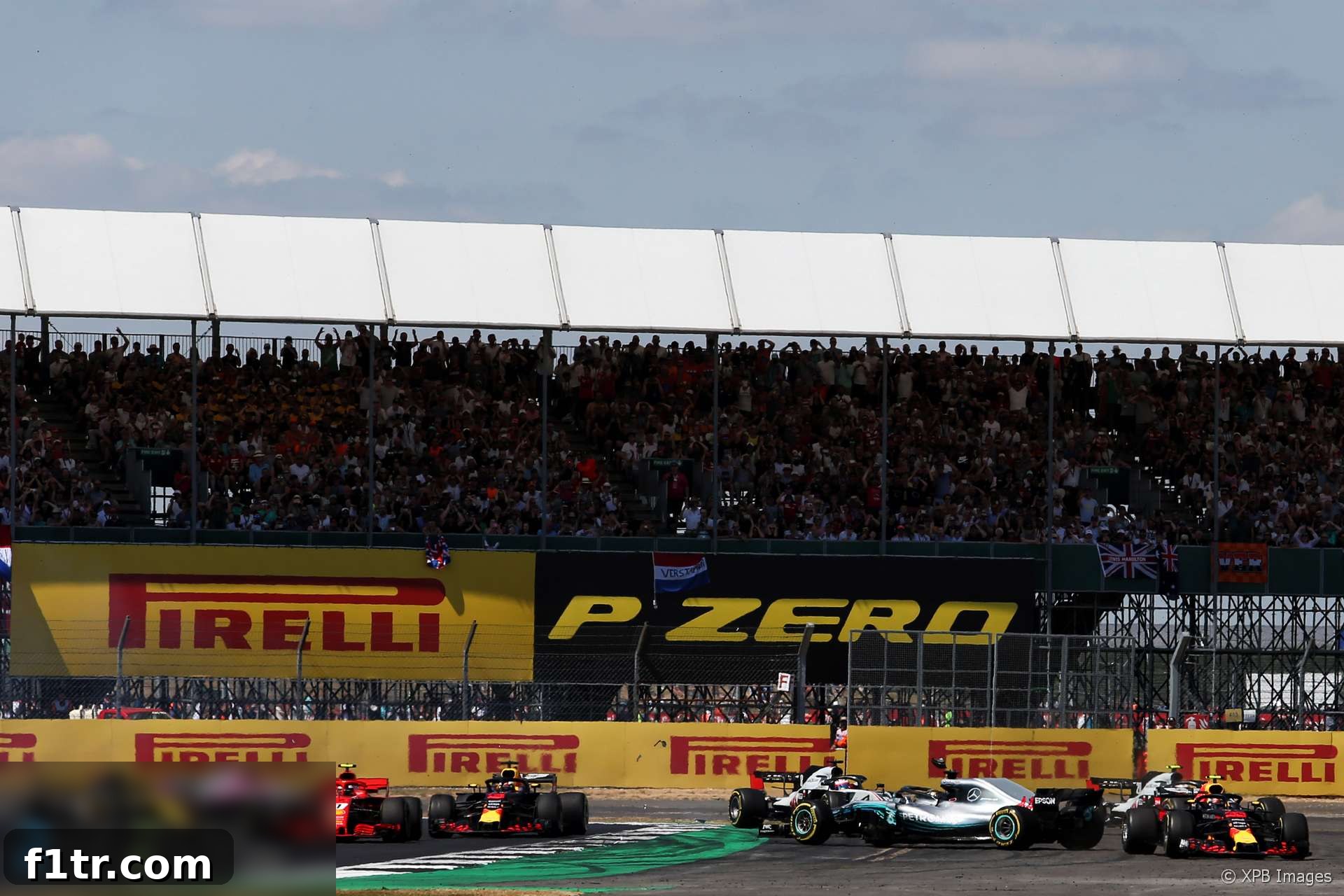
The controversy surged prominently after the British Grand Prix, a crucial race in the championship calendar. On the very first lap of the Silverstone event, a dramatic tangle unfolded between Ferrari’s Kimi Raikkonen and Mercedes’ home hero, Lewis Hamilton. The collision, which occurred during the opening corners, sent Hamilton spinning and forced him to recover from the back of the pack. While Hamilton impressively fought his way back to a podium finish, the incident left a bitter taste, especially given the context of previous encounters between the two championship-contending teams.
Mercedes driver Lewis Hamilton, visibly frustrated and perhaps seeking to highlight a pattern, made thinly veiled references to Ferrari’s “interesting tactics” at the start of the race when questioned about the incident. His comments ignited a firestorm of speculation and discussion among fans and media alike, prompting both Ferrari drivers to step forward and staunchly deny any malicious intent behind the contact.
Advert | Become a Supporter & go ad-free
Echoes from Le Castellet: Vettel vs. Bottas
The Silverstone clash was not an isolated event; it echoed a similar incident that had occurred just two weeks prior at the French Grand Prix. In that race, Sebastian Vettel, driving for Ferrari, was involved in a first-lap collision with Mercedes’ Valtteri Bottas. Vettel had locked up and made contact with Bottas, damaging his own front wing and incurring a time penalty, ultimately compromising his race. The back-to-back nature of these incidents, both involving a Ferrari and a Mercedes driver on the opening lap, fueled the narrative that perhaps Ferrari was employing an aggressive, albeit controversial, strategy to gain an early advantage over their primary rivals.
This pattern, particularly in pivotal early-race moments, naturally led to suspicions from the Mercedes camp and observers. The championship battle between Hamilton and Vettel was incredibly tight, and any perceived advantage, or disadvantage inflicted upon a rival, could have monumental consequences for the title fight. Therefore, Hamilton’s “interesting tactics” remark, while not a direct accusation of deliberate foul play, certainly implied a calculated aggression that crossed a line for him and his team.
Ferrari’s Firm Denial: “Silly” and “Unnecessary”
However, Sebastian Vettel and Kimi Raikkonen were quick to push back against these suggestions, emphasizing the inherent risks and unpredictable nature of racing at the highest level. Vettel, reflecting on the situation, expressed his disbelief regarding the notion of intentional contact.
“Things can happen, but I think it’s quite silly to think that anything that happened was deliberate,” Vettel stated unequivocally. He further elaborated on the difficulty, if not impossibility, of precisely orchestrating a crash that would benefit one’s own race without significant personal detriment. “At least I would struggle to be that precise to take somebody out. In France, I lost my wing, so I screwed my race. I think it’s easy to obviously attack and have a great move and also easy to have an incident.”
Vettel’s perspective highlighted the self-defeating nature of deliberately colliding with a competitor. As he pointed out, his own race in France was severely hampered by the contact, demonstrating that such incidents often carry a heavy price for all parties involved. He also defended his teammate, Kimi Raikkonen, regarding the Silverstone clash. “I only saw it briefly on the monitor,” Vettel said, “I don’t think there was any intention, and I find it a bit unnecessary to even go there.” This unified front from Ferrari underscored their stance that these were simply racing incidents, a natural consequence of aggressive, wheel-to-wheel competition.
Raikkonen’s Perspective: The Unpredictability of Racing
Kimi Raikkonen, known for his stoic demeanor, also firmly rejected any insinuation of foul play. His explanation focused on the split-second decisions and mechanical limitations that often lead to unintended contact in the heat of battle. “Things happen sometimes,” Raikkonen explained. “I locked a wheel, unfortunately, we touched, we both paid a price for it, and that’s how it goes sometimes.”
Raikkonen’s candid admission of locking a wheel provided a technical explanation for the collision, reinforcing the idea of a genuine racing error rather than a calculated maneuver. His point that “we both paid a price for it” further supported the argument that these incidents were detrimental to both parties, diminishing the likelihood of them being intentional. He also subtly pointed out the potential bias in the accusations, noting, “It’s easy to say after the last couple of races that we are doing something, but we’ve been hit very many times ourselves. That’s just how it goes unfortunately.” This comment suggested a degree of frustration with the narrative that Ferrari was uniquely aggressive, implying that such incidents are a common, albeit regrettable, part of Formula 1 racing.
Examining Intent in Motorsport: Racing Incident vs. Deliberate Act
The discussion surrounding these collisions touches upon a fundamental aspect of motorsport: distinguishing between a “racing incident” and a deliberate act. Stewards in Formula 1 are tasked with making these difficult judgments, often relying on telemetry, multiple camera angles, and driver testimonies. A racing incident is generally understood as an unavoidable clash that occurs due to the inherent risks of competitive driving, often resulting from misjudgment, loss of control, or close quarters action. A deliberate act, however, implies malice or a willful disregard for safety and fair play, carrying far more severe penalties.
In both the French and British Grand Prix incidents, the stewards ultimately deemed them racing incidents, with Vettel receiving a penalty for his role in France due to being largely at fault for the contact, but without any suggestion of intent to deliberately cause a crash. Raikkonen also received a penalty at Silverstone, again for causing a collision, but the decision did not imply a premeditated act. These rulings, while not absolving the drivers of responsibility for the contact, supported Ferrari’s contention that the incidents were not deliberate attempts to take out a rival.
The Broader Championship Implications
Beyond the immediate controversy, these clashes highlighted the intense pressure and the razor-thin margins defining the 2018 Formula 1 World Championship. With Ferrari and Mercedes locked in a fierce battle for both the Drivers’ and Constructors’ titles, every race, every point, and indeed, every on-track interaction, was scrutinized. The perception of aggressive tactics, whether founded or not, added another layer of psychological warfare to the already high-stakes competition.
The championship was a pendulum swing between Lewis Hamilton and Sebastian Vettel, with each driver pushing the limits of their machinery and their rivals. In such an environment, the line between aggressive, hard racing and overly assertive, potentially dangerous driving becomes incredibly fine. Drivers are expected to be tenacious, but also to race fairly and safely. The Ferrari-Mercedes collisions served as a stark reminder of this delicate balance, fueling countless debates among fans about sportsmanship, strategic aggression, and the spirit of Formula 1.
Advert | Become a RaceFans supporter andgo ad-free
Conclusion: A Rivalry Forged in Fire
Ultimately, Sebastian Vettel and Kimi Raikkonen’s steadfast denials underscored their belief that the incidents at the British and French Grand Prix were genuine racing errors, born from the cut and thrust of top-tier motorsport rather than any nefarious intent. While the accusations of “interesting tactics” certainly added spice to an already enthralling championship narrative, the drivers maintained that deliberately crashing is counterproductive and goes against the very spirit of fair competition. The 2018 season continued to be a captivating spectacle, with the Ferrari and Mercedes rivalry cemented as one of the most intense in recent memory, where every overtake, every pit stop, and indeed, every on-track contact, was magnified under the relentless pressure of a championship fight.
2018 F1 season
- F1 feared “death knell” for Drive to Survive after Ferrari and Mercedes snub
- McLaren staff told us we were “totally crazy” to take Honda engines in 2018 – Tost
- ‘It doesn’t matter if we start last’: How Red Bull’s junior team aided Honda’s leap forward
- Honda’s jet division helped F1 engineers solve power unit problem
- McLaren Racing losses rise after Honda split
Browse all 2018 F1 season articles