The 2019 Bahrain Grand Prix: Leclerc’s Breakthrough, Mercedes’ Dominance, and Historic F1 Moments
The 2019 Bahrain Grand Prix delivered a captivating spectacle, showcasing the raw talent of a rising star, the relentless efficiency of a championship-winning team, and numerous historical footnotes. For a significant portion of the weekend, it appeared destined that Charles Leclerc would etch his name into Formula 1 history as the first driver since Pastor Maldonado seven years prior to secure both his maiden pole position and his first Grand Prix victory in the same weekend.
Leclerc, driving for Ferrari, had commanded the Bahrain International Circuit with a stunning performance in qualifying, followed by a dominant display in the race itself. His pace was undeniable, and a debut victory seemed within grasp. However, the cruel hand of fate intervened when a Ferrari power unit failure began to plague his SF90 in the closing stages. This heartbreaking setback ultimately denied the 21-year-old his inaugural win, leaving him to settle for third place despite his heroic efforts to manage the ailing car.
Despite the bittersweet conclusion, Leclerc’s breakthrough weekend was laden with statistical milestones that firmly established him as a future force in Formula 1. His pole position on Saturday was a testament to his blistering speed and precision.
Leclerc’s Historical Milestones and Records
On that momentous Saturday, Charles Leclerc became the second-youngest F1 driver ever to claim pole position for a Grand Prix. This remarkable achievement placed him in an elite company, narrowly missing out on a record that has withstood numerous challenges in recent seasons, notably from Max Verstappen. The coveted record still belongs to his Ferrari teammate, Sebastian Vettel, who achieved his first pole at the 2008 Italian Grand Prix.
Beyond his age, Leclerc’s pole position carried a unique national significance. He became the very first, and to date, the only driver from Monaco to start a Formula 1 race from pole position. This historic feat proudly placed Monaco as the 21st country to produce a pole-sitting driver in the sport’s storied history. Coincidentally, Bahrain holds another specific national distinction: it remains the only track where a Polish driver has ever started from pole, a record set by Robert Kubica, also back in 2008.
The weekend continued to yield firsts for Leclerc. His third-place finish not only marked his first career podium but also made Monaco the 28th country to produce a driver who has stood on an F1 podium. Adding another feather to his cap, Leclerc also set the fastest lap of the race for the first time in his burgeoning career. These combined achievements underscored a pivotal moment in his journey, signaling his arrival as a serious contender at the pinnacle of motorsport.
The F1 Race Count Conundrum: A Closer Look
During the formation lap, Formula 1’s world feed displayed a graphic proclaiming Charles Leclerc to be “the 99th driver to take pole position in the 999th F1 world championship race.” While celebrating Leclerc’s achievement, this statement, though close, was not strictly accurate in its historical context.
The discrepancy arises from the complex history of the Formula 1 World Championship. Not all races counted towards the official World Championship were strictly run under “Formula 1 rules” from its inception in 1950. In its early years, the championship included races such as the Indianapolis 500, which operated under different regulations. This nuanced distinction means there are two ways to accurately phrase the statistic:
- Leclerc “became the 99th driver to take pole position in the 999th world championship race” (which includes all races officially part of the championship, regardless of specific F1 rules).
- Alternatively, and perhaps more accurately for the purists focusing solely on F1-specific regulations, he “became the 88th driver to take pole position in the 973rd F1 world championship race” (counting only those races that adhered strictly to Formula 1 technical regulations).
Understanding this historical detail provides a deeper appreciation for the statistical landscape of Formula 1, as explained in the video below:
Mercedes’ Dominant Start and Hamilton’s Fortuitous Win
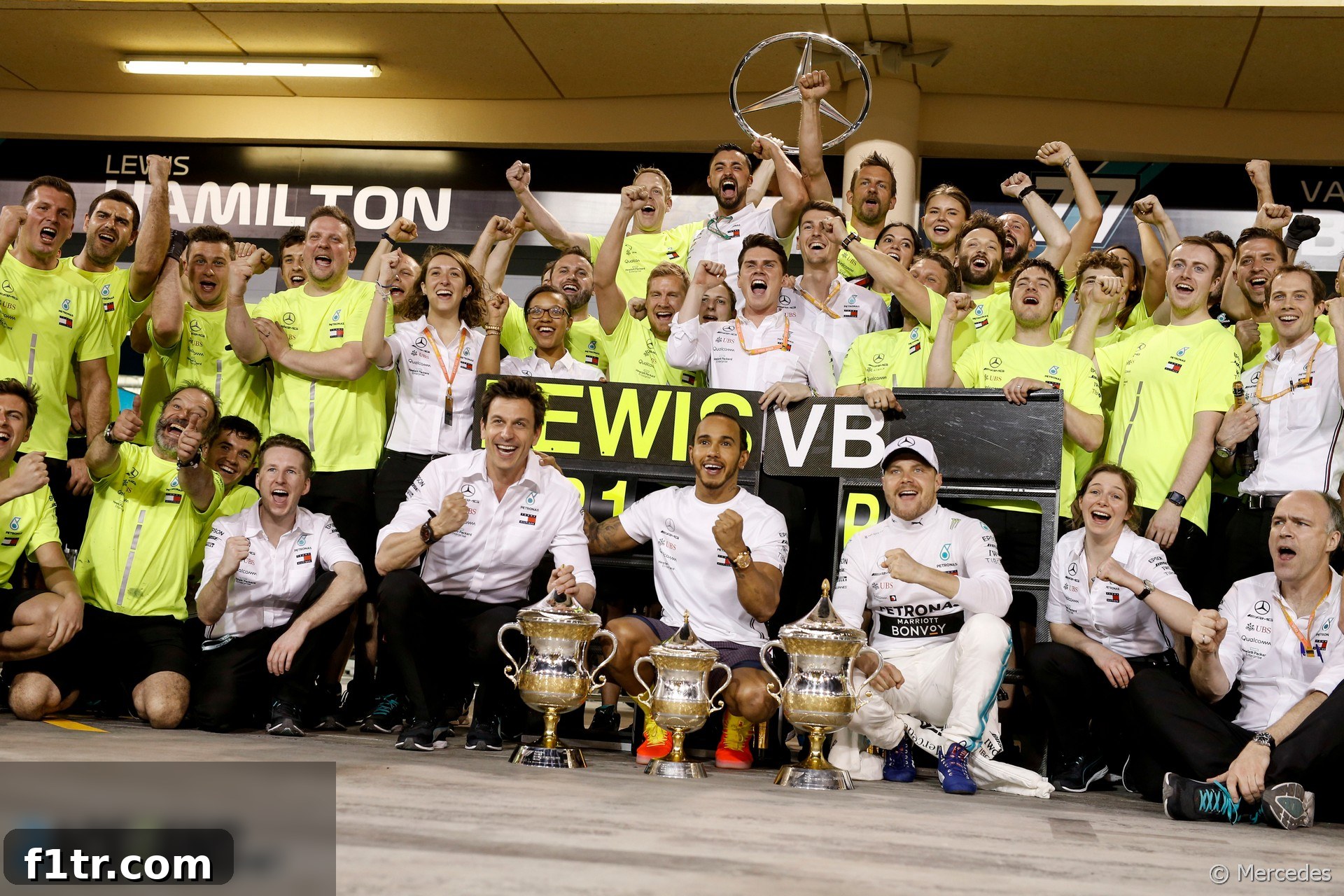
While Leclerc battled bravely, his misfortune was unequivocally Lewis Hamilton’s gain. The reigning world champion and Mercedes driver, ever gracious, openly admitted he was fortunate to secure his 74th career F1 race victory. This win brought him 17 triumphs closer to equalling the all-time record held by the legendary Michael Schumacher, whose son, Mick, coincidentally made his Formula 2 debut that same weekend at a track where Turn 1 was renamed in honour of his father five years prior.
The victory in Bahrain, combined with their win in the season opener in Australia, meant Mercedes started the 2019 season with two consecutive one-two finishes. This was a surprising first for the dominant Silver Arrows. Despite their unparalleled success throughout the V6 hybrid turbo era, and even their similarly successful 1955 campaign, they had never before achieved this back-to-back perfect start. Indeed, only Leclerc’s fastest lap in Bahrain prevented them from scoring a maximum 88 points from the first two weekends, underscoring their formidable early-season form.
Midfield Drama and Rookie Achievements
The Bahrain Grand Prix was not without its moments of high drama further down the grid. One of the race’s most peculiar incidents involved the almost synchronised demise of both Renault drivers, Daniel Ricciardo and Nico Hulkenberg, within mere seconds of each other at Turn 1 on Lap 54. This unusual double retirement, seemingly due to MGU-K failures, drew comparisons to McLaren’s double retirement while running one-two at the 1997 Luxembourg Grand Prix, a rare and impactful turn of events for the French team.
Renault’s double misfortune proved beneficial for others, most notably Lando Norris. The McLaren rookie inherited the ‘best of the rest’ spot, finishing an impressive sixth. This marked McLaren’s best result in over 12 months, signaling a potential resurgence for the Woking-based outfit, which hadn’t secured a top-six finish since Fernando Alonso’s fifth place at Melbourne the previous year. Norris’s confident drive highlighted his potential and the team’s improved performance.
Another impressive rookie, Alexander Albon of Toro Rosso, joined Norris in collecting his first F1 points, securing a commendable ninth place. This achievement carried a unique historical resonance for Thailand, as these were the first points scored by a Thai driver since Prince Birabongse Bhanudej Bhanubandh, better known as ‘B Bira,’ drove his privately-entered Maserati 250F to fourth place in the French Grand Prix at Reims 65 years prior. That very race, in a striking parallel to 2019, also produced a Mercedes one-two, with the legendary Juan Manuel Fangio winning ahead of Karl Kling in a pair of iconic W196s.
The 2019 Bahrain Grand Prix will be remembered as a race of highs and lows, of emerging talent and established dominance, and a contest rich with statistical significance. It set a compelling tone for the rest of the Formula 1 season, promising more thrilling battles and record-breaking moments.
Have you spotted any other interesting stats and facts from the Bahrain Grand Prix? Share them in the comments below!
More from the 2019 Bahrain Grand Prix
- Top ten pictures from the 2019 Bahrain Grand Prix
- 2019 Bahrain Grand Prix Star Performers
- Hamilton hails luckless Leclerc after thrilling Bahrain GP
- Mercedes start season with back-to-back one-twos for the first time
- Paddock Diary: Bahrain Grand Prix day four
Browse all 2019 Bahrain Grand Prix articles