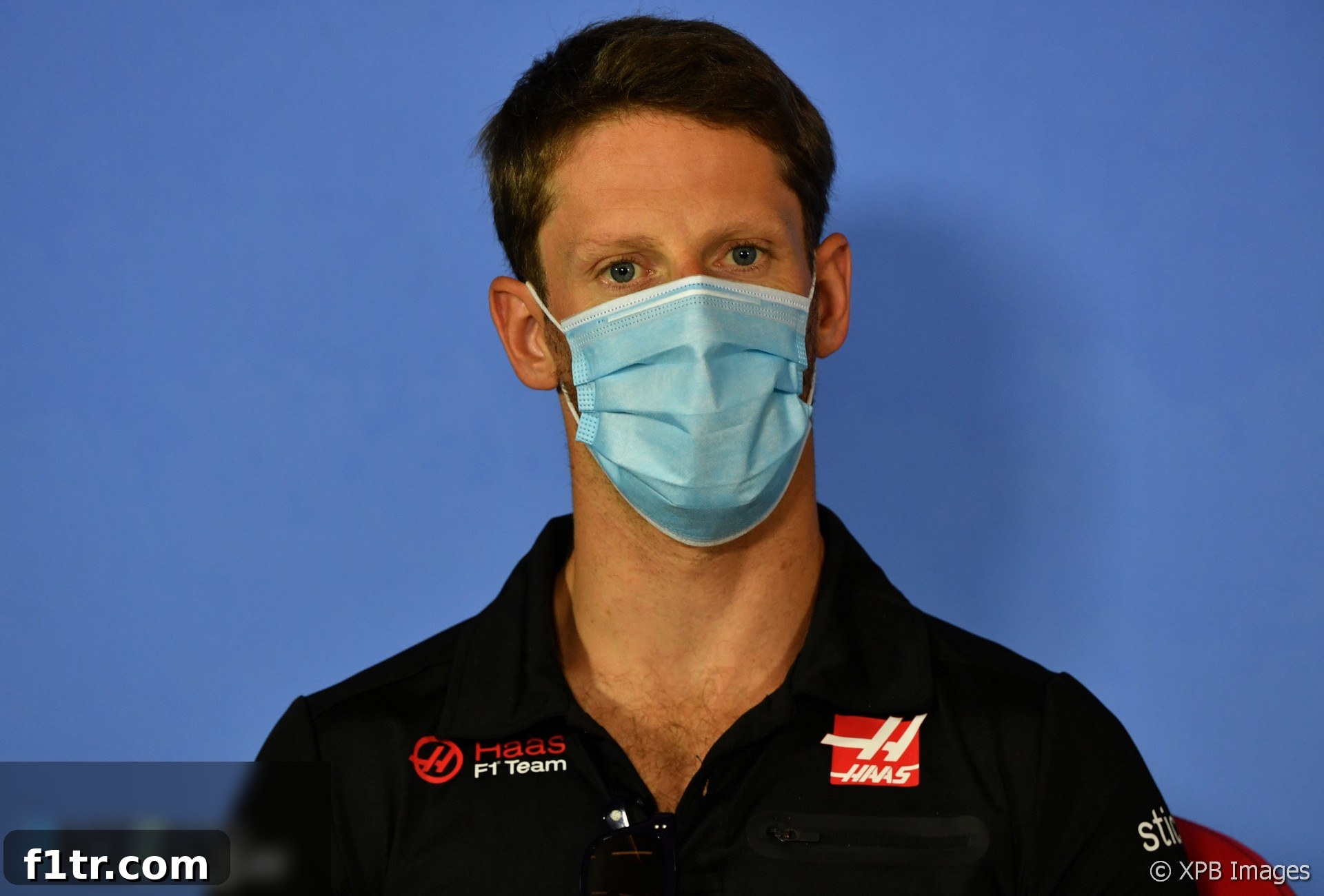
The future of the Haas Formula 1 team in the sport beyond the upcoming 2021 season remains shrouded in uncertainty, a situation candidly acknowledged by veteran driver Romain Grosjean. As the team grapples with a significant decline in performance and mounting financial pressures, questions persist regarding its long-term commitment to the pinnacle of motorsport. Grosjean, one of the team’s most experienced drivers, openly admitted that he has “no idea” whether the American outfit will continue its presence on the F1 grid, highlighting a pervasive sense of unease within the squad.
Become a Supporter & go ad-free
The situation comes on the heels of Haas F1’s most challenging year to date, having slumped to a disappointing ninth place in the constructors’ championship in the preceding season. This stark downturn in fortunes stands in sharp contrast to the team’s promising debut just four years prior, when it burst onto the scene with impressive results and a reputation for efficiency. Team owner Gene Haas, a prominent figure in American manufacturing and motorsport, has reportedly expressed significant disappointment with the team’s recent trajectory and its inability to recapture the competitive edge it once displayed.
Uncertainty Looms Over Haas F1’s 2021 Future, Grosjean Admits
During a recent FIA press conference, when pressed about his own plans and, inevitably, the team’s prospects for 2021, Grosjean did not mince words. He characterized the team’s future as “the elephant in the room,” a clear indication of the pervasive unspoken anxiety within the Haas camp. This frank admission underscores the gravity of the situation, suggesting that the team’s continued participation in Formula 1 is far from a foregone conclusion. The financial landscape of Formula 1, coupled with the unique challenges faced by independent teams, has amplified the pressure on outfits like Haas to justify their substantial investment.
“Is Haas going to be here next year or not? That’s obviously a question,” Grosjean stated, articulating the core concern that weighs heavily on the minds of team personnel and fans alike. The impending decision by Gene Haas holds significant implications, not only for the team’s employees and drivers but also for the broader competitive balance of the sport. A withdrawal would undoubtedly leave a void on the grid, raising questions about the sustainability of smaller, privately funded teams in an increasingly high-stakes environment.
Grosjean also touched upon the volatile nature of the driver market, which had been significantly “shaken up quite quickly this year” following major announcements, particularly from Ferrari. These moves often trigger a cascade of changes across the grid, opening up or closing off opportunities for drivers like Grosjean. The Frenchman acknowledged the need to assess his own options in this rapidly evolving landscape. “What are the other places available? Obviously the market got shaken up quite quickly this year with the Ferrari announcement and the following things. So we will see,” he remarked, hinting at the proactive evaluation of his career prospects.
Beyond the immediate contractual considerations, Grosjean expressed a deeper introspection regarding his long-term aspirations. “What are the opportunities? Personally, I see also what I would like to do and what I feel like doing in the future,” he reflected, suggesting that his decisions extend beyond simply securing another Formula 1 seat. This personal dimension adds another layer of complexity to his current situation, as he navigates both the team’s precarious future and his own evolving career path. “So I guess looking a little bit but also not rushing everything and just seeing how things are going.” This measured approach reflects the uncertainty but also a clear head in evaluating the best next steps.
Become a RaceFans supporter andgo ad-free
Inside the Decision-Making Process: Gene Haas Holds the Key
The lack of concrete information regarding Haas F1’s future plans is a significant point of concern. Grosjean candidly admitted to knowing “nothing” about the team’s intentions, firmly believing that “the decision hasn’t hasn’t been made.” This suggests that the fate of the team hangs in the balance, with no definitive declaration yet issued by the owner, Gene Haas. Such prolonged uncertainty can be unsettling for an entire organization, impacting morale and planning.
“So there’s nothing to be said,” Grosjean continued, emphasizing the need for patience amidst the ambiguity. For now, the focus for the team, he stressed, must remain on performance. “We just need to go racing and do races as we did in Austria, get the best out of the team, out of the strategy, out of the drivers and show the best we can do.” This sentiment highlights the professional resilience required in such situations, where the team’s immediate task is to perform optimally on track, irrespective of external pressures.
Ultimately, the power to decide rests solely with the team’s founder. “Gene knows the answer, I guess, or doesn’t know but will tell the answer at one point,” Grosjean mused. “And until that point, I can’t really give you any direction.” This statement underscores the centralized nature of the decision-making process within Haas F1, with Gene Haas’s personal assessment of the team’s value and sustainability driving the ultimate outcome. His investment in Formula 1 has always been tied to a return on brand exposure for his machinery company, and the recent dip in performance inevitably impacts this equation.
Despite the prevailing uncertainty, Grosjean conveyed a strong desire for Haas to remain in Formula 1. “I hope obviously for Formula 1, I hope for everything that Haas will be here on the grid next year,” he articulated. He firmly believes that Haas has carved out a unique and valuable niche in the sport since its inception. “I think out of all the new teams that came to Formula 1, it’s obviously the one that was the most successful, the most solid baseline. So there’s definitely a place for for Haas in Formula 1.” This perspective reflects a genuine appreciation for the team’s initial impact and its potential to contribute positively to the competitive landscape of Grand Prix racing.
The Haas F1 team’s journey since its 2016 debut has been a testament to the challenges and rewards of entering Formula 1. Initially hailed for its innovative approach, leveraging technical partnerships to achieve immediate competitiveness, the team quickly established itself as a credible midfield contender. However, the intricacies of car development, coupled with a fiercely competitive environment and evolving regulations, have made sustained success incredibly difficult. The struggle to translate promising early seasons into consistent front-running performance has been a source of frustration, leading to the current re-evaluation of its long-term viability.
Become a RaceFans supporter andgo ad-free
The Broader Implications for Formula 1’s Grid
The potential withdrawal of a team like Haas would resonate throughout Formula 1. Maintaining a healthy and diverse grid is crucial for the sport’s appeal, ensuring a robust field of competitors and varied narratives. Haas, as a relatively recent entrant and the only American-owned team, represents a specific facet of F1’s global ambition. Its departure would not only reduce the number of cars on the track but also signify the enduring financial hurdles for independent teams, even with the impending introduction of a budget cap designed to level the playing field. The ongoing global economic climate, particularly influenced by the unforeseen events of the time, further complicates the financial outlook for all motorsport entities.
The decision Gene Haas faces is not just a business calculation; it’s a pivotal moment that could influence the landscape of Formula 1 for years to come. Will the allure of future technical regulations and a more equitable financial structure be enough to convince him to commit for the long haul? Or will the current performance struggles and the substantial costs outweigh the perceived benefits of continued participation? These are the questions that define the current period of suspense for Haas F1.
Ultimately, as Grosjean pragmatically concluded, “But again, I’m not the one taking the decision, so time will tell.” The Formula 1 community, from rival teams and drivers to passionate fans, now awaits the official word from Gene Haas, a decision that will undoubtedly shape the future trajectory of the team and potentially influence the wider composition of the 2021 Formula 1 grid.
2020 F1 season
- Grosjean to make F1 test return tomorrow for first time since Bahrain horror crash
- Pictures: Wrecked chassis from Grosjean’s Bahrain fireball crash to go on display
- Bottas vs Rosberg: Hamilton’s Mercedes team mates compared after 78 races each
- F1 revenues fell by $877 million in Covid-struck 2020 season
- Hamilton and Mercedes finally announce new deal for 2021 season
Browse all 2020 F1 season articles