Advert | Become a Supporter & go ad-free
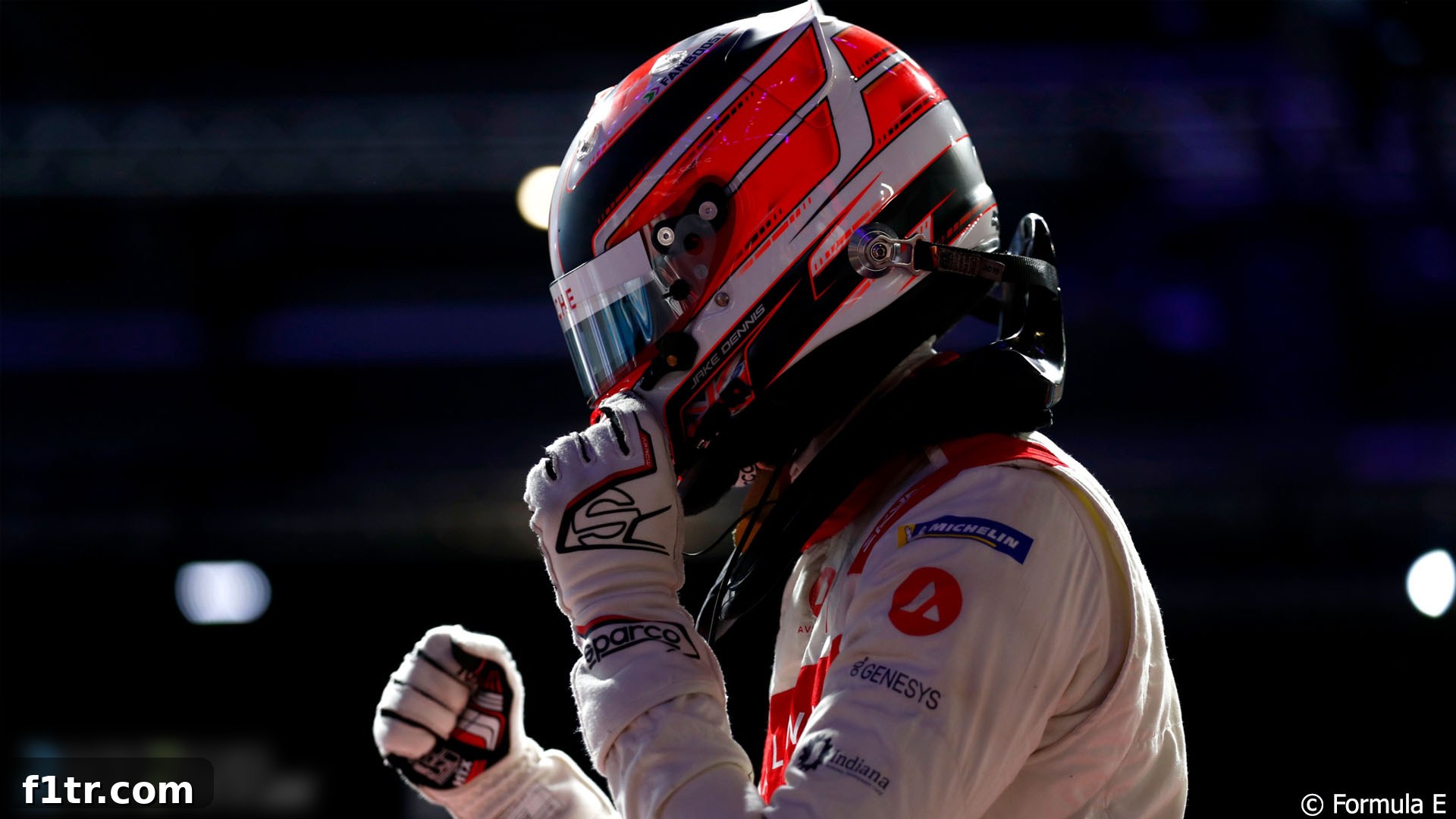
Jake Dennis Secures Dominant Home Victory at London E-Prix Amidst High Drama
The electrifying atmosphere of the London E-Prix delivered a spectacular display of motorsport, culminating in a dominant pole-to-flag victory for local hero Jake Dennis. The British driver, representing Andretti, showcased unparalleled composure and pace, leading every single lap of the race as rivals behind him engaged in intense battles and several significant clashes. This opening race of the London double-header proved to be a pivotal moment in the ABB FIA Formula E World Championship, injecting fresh excitement and re-shaping the title landscape.
Held at the unique ExCeL London circuit, which blends indoor and outdoor sections, the London E-Prix is renowned for its challenging layout and unpredictable nature. This particular event lived up to its reputation, serving up a thrilling spectacle that combined strategic brilliance, daring overtakes, and unfortunate incidents, all contributing to a memorable weekend of electric racing. Dennis’s flawless performance stood in stark contrast to the chaos that unfolded around him, cementing his status as a formidable contender on home soil.
Qualifying Sets the Stage: Dennis on Pole, Sette Camara Shines
The foundation for Dennis’s commanding race win was laid earlier in the day during a gripping qualifying session. The Andretti driver demonstrated exceptional skill and speed, expertly navigating the demanding circuit to secure his second career pole position. His final qualifying lap was a masterclass, decisively beating Mercedes EQ’s Stoffel Vandoorne, a leading championship contender, and sending a clear message to the rest of the grid about his intentions for the race.
The second row of the grid featured Mercedes EQ’s Nyck de Vries alongside Sergio Sette Camara of Dragon Penske. Sette Camara’s qualifying performance was particularly outstanding, as he managed to extract an impressive single-lap pace from his generally uncompetitive race car. This unexpected front-row presence from the Dragon driver added an intriguing element to the starting grid, promising an interesting challenge for the established frontrunners and highlighting the raw talent that can still shine through against equipment limitations in Formula E.
Strategic Innovations: Attack Mode and Energy Management Rules
The London E-Prix introduced specific strategic parameters designed to enhance racing and energy management. For this first race of the double-header, teams were required to utilize two activations of Attack Mode, each lasting six minutes. Attack Mode, a unique feature of Formula E, allows drivers to temporarily access a higher power output by driving through an off-line activation zone. This strategic element adds an extra dimension to the racing, forcing teams to make crucial decisions about when to deploy the boost, often sacrificing track position for a temporary speed advantage.
Adding another layer of complexity, teams had been informed a day prior that the usable energy for the London races would be significantly limited to 46kWh. This represented a substantial six-kilowatt-hour reduction from the standard race allowance, a move likely implemented to encourage more conservative energy usage and create closer battles towards the end of the race. Such a constraint demanded meticulous energy management from all drivers and their engineers, influencing driving styles, overtaking opportunities, and overall race pace. The interplay between these energy limitations and the timing of Attack Mode activations became a critical factor in determining success.
Opening Lap Carnage: Championship Contenders Hit Hard
The start of the London E-Prix was nothing short of dramatic, with a multi-car collision immediately reshaping the championship narrative. As the field thundered into the first corner, a significant incident unfolded involving three prominent championship contenders: Sam Bird, Mitch Evans, and Edoardo Mortara. The impact was severe, sending plumes of carbon fiber and bodywork scattering across the track. Sam Bird’s race ended almost instantly, his Jaguar suffering irreparable damage, a devastating blow to his title aspirations just seconds into the contest.
Edoardo Mortara, another key protagonist in the championship fight, also bore the brunt of the collision. His Venturi car sustained heavy damage, including major chunks of carbon fiber and crucial wheel covers from his front wing being strewn along the pit straight. Mortara was forced to make an immediate pit stop for repairs, rejoining the race significantly down the order and laps behind the leaders. This early setback delivered a severe blow to his hopes of challenging Stoffel Vandoorne for the championship, making a strong points finish virtually impossible.
Mid-Race Action: Overtakes, Collisions, and Strategic Plays
As the race progressed beyond the initial chaos, the battles intensified. On lap four, Sergio Sette Camara, demonstrating his impressive pace, executed a well-timed move up the inside of Turn 1 to overtake Nyck de Vries for third position. De Vries had previously locked up his wheels while navigating the challenging Custom House section on the previous lap, potentially compromising his tire performance and opening the door for the opportunistic Dragon driver.
The relentless nature of Formula E continued to take its toll. On lap five, another incident occurred when Oliver Rowland and Lucas di Grassi made contact. The collision was significant enough to dislodge Rowland’s front right wheel cover, which subsequently added to the growing collection of carbon fiber debris littering the track. These early race incidents highlighted the tight margins and aggressive racing prevalent on the London circuit, where even minor errors could lead to costly consequences and damaged machinery.
Attack Mode Strategy Unfolds at the Front
With the initial flurry of incidents subsiding, the focus shifted to the strategic deployment of Attack Mode. Nyck de Vries was among the first of the front-running drivers to activate his Attack Mode, a tactical move that quickly paid dividends. He managed to reclaim third position from Sergio Sette Camara, who subsequently activated his own Attack Mode but by then found himself behind the Mercedes EQ driver.
Race leader Jake Dennis and second-placed Stoffel Vandoorne executed their first Attack Mode activations in close succession. Both drivers navigated the designated zone seamlessly, maintaining their respective first and second positions. Dennis showcased exceptional race management, preventing Vandoorne from utilizing his temporary power advantage to launch a challenge for the lead. Despite his best efforts, Sette Camara was unable to re-overtake De Vries during their first Attack Mode phase, illustrating the difficulty of making clean passes even with the power boost on the tight London circuit.
Penalties and Retirements Mount in Chaotic Climax
As the race entered its final stages, with approximately 23 minutes remaining, drivers began to activate their second and final Attack Mode periods. Second-placed Stoffel Vandoorne was instructed by his team to activate his boost before race leader Jake Dennis, a common strategy designed to put pressure on the leader. However, Dennis responded brilliantly, skillfully covering off Vandoorne’s attempt and maintaining his comfortable lead, showcasing his control and experience.
The latter part of the race witnessed a dramatic increase in incidents, leading to a cascade of penalties and retirements. Oliver Rowland’s challenging race came to an end with 21 minutes on the clock as his visibly damaged car was retired. The race stewards were kept busy, issuing multiple five-second time penalties for various infringements. Sebastian Buemi received a penalty for contact with Jean-Eric Vergne, while other drivers were also seen missing parts of bodywork as the grueling nature of the circuit took its toll.
Further penalties followed swiftly: Robin Frijns was handed a five-second time penalty for moving under braking, a dangerous maneuver that can destabilize a following car. Antonio Giovinazzi received the same penalty for causing a collision with Oliver Turvey, an incident that ultimately led to Giovinazzi becoming the third retirement from the race. Jean-Eric Vergne also faced the wrath of the stewards, being penalized for a separate collision with Alexander Sims. This relentless series of incidents underscored the high-pressure environment and aggressive driving in the intense fight for positions.
Heartbreak, Heroics, and Championship Impact
The final lap of the London E-Prix delivered both heartbreak and heroics. Sergio Sette Camara, who had driven an exceptional race and looked poised to score his and the Dragon Penske team’s first points of the 2022 season, suffered a cruel fate. In a truly devastating turn of events, his car dramatically slowed and came to a halt on the very last lap, just meters from the finish line. This gut-wrenching retirement robbed him of a well-deserved points finish, a bitter end to an otherwise valiant effort.
Conversely, the closing moments saw a remarkable recovery drive yield crucial championship points. While Maximilian Günther managed to nurse his car across the finish line, he ultimately conceded sixth place to Mitch Evans. Evans’s performance was nothing short of spectacular; after qualifying in a lowly 14th position, he systematically carved his way through the field, combining shrewd strategy, brilliant overtakes, and adeptly navigating the race’s numerous incidents to secure an incredible sixth-place finish. This outstanding result was absolutely vital for his title contention, keeping him firmly in the championship hunt despite the significant challenges he faced during the race.
On the other side of the championship spectrum, Edoardo Mortara, after his early race collision and subsequent pit stop, finished a distant 18th, more than a minute off the lead. His hopes of challenging Stoffel Vandoorne for the title suffered a severe and potentially insurmountable blow, highlighting the unforgiving nature of Formula E when things go wrong.
Podium Celebration and Championship Standings Shift
As the checkered flag signaled the end of a captivating race, Jake Dennis crossed the line comfortably ahead, securing a magnificent home victory in London. This triumph marked his second home victory in Formula E and his third career win overall in the fiercely competitive electric single-seater series. His dominant performance was a testament to his exceptional talent and the robust package provided by the Andretti team. Joining him on the podium were the two Mercedes EQ drivers: Stoffel Vandoorne in a well-earned second place, who delivered a consistent and intelligent race to consolidate his championship lead, and Nyck de Vries in third, capping off a strong recovery drive after his earlier lock-up.
Further solidifying his dominance, Jake Dennis also secured the bonus point for setting the fastest lap of the race, adding to his impressive haul. The implications for the championship standings following this eventful race were significant and immediately felt. Stoffel Vandoorne, with his composed second-place finish, extended his advantage at the top of the championship table. He now holds a substantial 26-point lead over his closest rival, Mitch Evans, who, despite his incredible recovery drive, still faces a challenging task to close the gap.
With just three races remaining in the season, every point becomes exponentially more valuable, setting the stage for an utterly thrilling and unpredictable conclusion to the ABB FIA Formula E World Championship. The London E-Prix proved to be a pivotal moment, showcasing the high stakes, intense competition, and dramatic twists that make Formula E one of the most exciting motorsport series in the world.
London E-Prix Race 1 Official Results: Top Finishers
| Position | Driver | Team |
|---|---|---|
| 1 | Jake Dennis | Andretti |
| 2 | Stoffel Vandoorne | Mercedes EQ |
| 3 | Nyck de Vries | Mercedes EQ |
| 4 | Nick Cassidy | Envision |
| 5 | Oliver Askew | Andretti |
| 6 | Mitch Evans | Jaguar |
| 7 | Antonio Felix da Costa | DS Techeetah |
| 8 | Maximilian Günther | Nissan e.Dams |
| 9 | Lucas di Grassi | Venturi |
| 10 | Pascal Wehrlein | Porsche |
| 11 | Sebastien Buemi | Nissan e.Dams |
| 12 | Andre Lotterer | Porsche |
| 13 | Jean-Eric Vergne | DS Techeetah |
| 14 | Alexander Sims | Mahindra |
| 15 | Oliver Turvey | NIO 333 |
| 16 | Robin Frijns | Envision |
| 17 | Dan Ticktum | NIO 333 |
| 18 | Edoardo Mortara | Venturi |
| DNF | Sergio Sette Camara | Dragon Penske |
| DNF | Antonio Giovinazzi | Dragon Penske |
| DNF | Oliver Rowland | Mahindra |
| DNF | Sam Bird | Jaguar |
Advert | Become a RaceFans supporter andgo ad-free
More Formula E Action and Insights
Dive deeper into the world of electric motorsport with these related articles:
- McLaren to quit Formula E at end of season
- Wehrlein beats Jaguar pair to title in dramatic Formula E finale
- Wehrlein’s London win sets up thrilling three-way title showdown in finale
- Da Costa takes hat-trick of wins in chaotic second Portland race
- Da Costa inherits Portland win from Evans after Cassidy spins lead away
Browse all Formula E articles