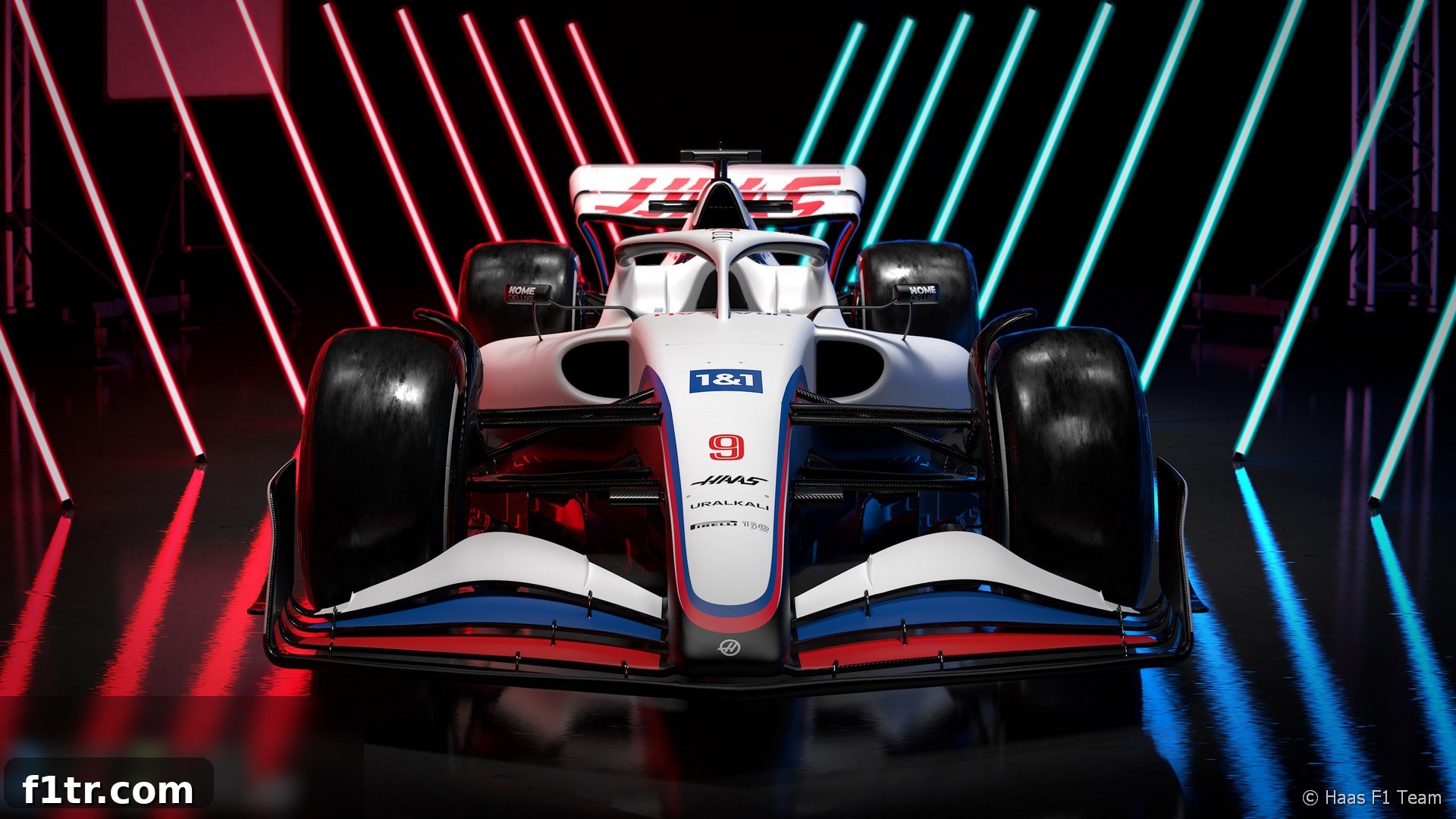
The highly anticipated reveal of the Haas VF-22 marked a significant moment for the team and Formula 1 enthusiasts, offering a first glimpse into the cars that will contest the 2022 Formula 1 season. However, team principal Guenther Steiner was quick to temper expectations, confirming that the digital renderings unveiled on Friday would not precisely mirror the car that takes to the track. This candid admission set the stage for an exciting period of anticipation as the sport gears up for a revolutionary season.
Advert | Become a Supporter & go ad-free
Haas VF-22: The Evolving Design from Render to Reality
The images of the VF-22 presented to the world are understood to reflect the car at an earlier stage in its complex design process. This practice is not uncommon in Formula 1, where teams often use initial renders for launch events while safeguarding the ultimate aerodynamic and mechanical developments until the last possible moment. The true test will begin at the Circuit de Catalunya near Barcelona on February 23rd, where the new generation of F1 cars will make their collective public debut.
“I think how different it looks in Barcelona you will see in two weeks,” Steiner stated, providing a clear timeline for the reveal of the car’s final form. “It will be a little bit different, obviously. We are not saying now that it is exactly the same.” This transparency from the Haas boss is refreshing, acknowledging the dynamic nature of Formula 1 car development, where every tweak and refinement can yield crucial tenths of a second on track. The renderings represent “a stage of development,” according to Steiner, indicating a direction rather than a final product. This strategic release allows Haas to meet marketing obligations and build excitement while keeping rivals guessing about their ultimate package.
Pre-Season Testing: The First Real Look at the VF-22
While the initial renders offer a tantalizing preview, the Barcelona test sessions are where the rubber truly meets the road. These tests are paramount for every team, but particularly for Haas, given their unique development strategy. It will be the first opportunity for the VF-22 to run extensively, revealing its true shape, performance characteristics, and any immediate areas for improvement. Fans and analysts alike will be scrutinizing every angle for differences from the launch specification, searching for clues about the team’s design philosophy and potential competitive edge.
Steiner also provided insight into the car’s progression beyond testing, suggesting that the version seen in Barcelona will bear a close resemblance to that used for the season-opening Bahrain Grand Prix next month. “In the moment between the test and the race we will not have a lot of changes planned for the moment,” he confirmed. This indicates a period of intense data analysis and fine-tuning rather than wholesale redesigns, highlighting the tight development cycles and the impact of the sport’s budget cap regulations on how quickly teams can introduce significant upgrades.
Embracing the Challenges of a “Complete New Car” for 2022
The 2022 Formula 1 season ushers in the most radical technical regulation changes in decades, fundamentally altering how cars generate downforce. The reintroduction of ground effect aerodynamics, combined with simplified front and rear wings and 18-inch wheels, mandates a completely fresh approach to car design. For Haas, this means abandoning the philosophy of carrying over designs and embracing the monumental task of building a car from scratch. Steiner is acutely aware of the complexities involved, acknowledging that the VF-22 will present new challenges.
“It’s a complete new car,” he emphasized, reflecting on the magnitude of the undertaking. “It’s always exciting when you go out the first time, where will the gremlins be?” This speaks to the inevitable teething problems that accompany any entirely new F1 machine. Unlike the previous season, where the VF-21 was largely a carry-over chassis due to development freezes and a strategic decision to focus resources entirely on 2022, the VF-22 represents a fresh slate. The VF-21, a known quantity, had fewer mechanical mysteries. A completely new car, however, is a different beast altogether, prone to what the sport affectionately refers to as “gremlins”—unforeseen reliability issues, minor glitches, or unexpected performance quirks.
The Importance of “Solid Laps” and Data Collection
The expectation for the initial testing phase, as outlined by Steiner, is not immediate headline-grabbing pace, but rather sustained reliability and extensive data gathering. “So the expectation is to go out there and do solid laps. That is the first expectation because if you are reliable and you can get going, you learn a lot, you can develop, you can get data so you can get the best set-up for the first race on the car and just do a good session.” This foundational work is critical. Without a robust and reliable car that can consistently complete laps, teams cannot gather the invaluable data needed to understand the car’s behaviour, correlate simulation models with real-world performance, and optimize settings for various track conditions.
For Haas, having sacrificed the 2021 season by not developing their car and finishing last in the Constructors’ Championship, the pressure on the VF-22 is immense. Their strategy was a calculated gamble: pour all resources into the 2022 regulations, hoping to emerge from the pack when everyone effectively starts from zero. This approach means that reliability and efficient learning during testing are not just desirable, but absolutely essential for Haas to make good on their ambitious plan and justify their year-long investment in this new project.
Advert | Become a RaceFans supporter andgo ad-free
The 2022 F1 Season: A Defining Moment for Haas
The 2022 F1 season is poised to be one of the most exciting and unpredictable in recent memory. With the sweeping regulatory changes designed to promote closer racing and greater competition, every team has an opportunity to reset and potentially leapfrog their rivals. For Haas F1 Team, the VF-22 is not just a new car; it represents the culmination of a dedicated, high-stakes development cycle and a pivotal moment for the team’s future in Formula 1.
The journey from an initial render to a championship contender is long and arduous, filled with technical hurdles, strategic decisions, and the constant pursuit of perfection. As the VF-22 undergoes its initial shakedowns and extensive testing in Barcelona, the world will be watching to see how Haas has interpreted the new rules and whether their gamble to prioritize 2022 will pay off. Guenther Steiner’s pragmatic approach sets realistic expectations, but beneath that, the hope for a significant step forward is palpable. The “gremlins” may appear, but the determination to overcome them and achieve solid, consistent performance remains the primary goal for Haas as they embark on this thrilling new chapter.
Related Articles: 2022 F1 Season Insights
- Mercedes told me “you’re wrong” about 2022 car’s problems – Hamilton
- FIA confirms all 10 F1 teams complied with 2022 cost cap
- Steiner “not ashamed” of panning “slow” Schumacher in Drive to Survive
- Albon believes year out of F1 improved him as a driver
- Hamilton sees diversity gains in F1 years on from his ‘traumatising’ experience of racism
Browse all 2022 F1 season articles