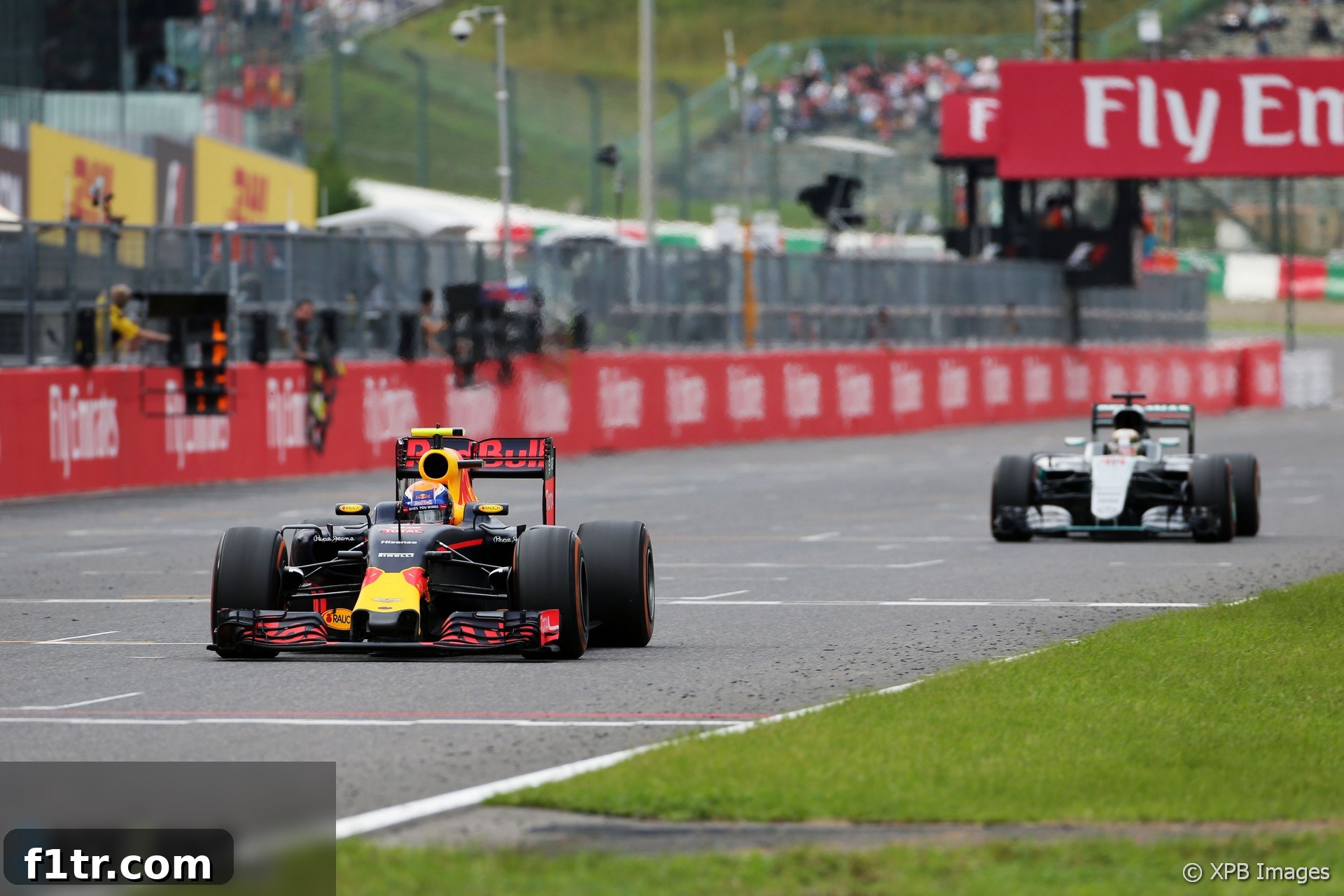
In a dramatic twist that sent ripples through the high-stakes world of Formula 1, the Mercedes-AMG Petronas Formula 1 Team officially announced the withdrawal of its protest against Red Bull Racing driver Max Verstappen. This significant decision, which concluded a brief but intense period of speculation, was heavily influenced by seven-time World Champion Lewis Hamilton, the driver at the center of the on-track incident, who publicly declared his lack of support for the team’s challenge. The events unfolded in the immediate aftermath of the thrilling 2016 Japanese Grand Prix, adding another layer of complexity to an already captivating championship battle.
Advert | Become a Supporter & go ad-free
The controversy ignited following a contentious defensive maneuver executed by Verstappen against Hamilton during the penultimate lap of the race at Japan’s iconic Suzuka Circuit. Initially, the race stewards of the Japanese Grand Prix had confirmed that Mercedes had lodged a formal protest regarding Verstappen’s driving, indicating that a definitive decision would be made at the subsequent round of the championship in Austin, USA. However, before the matter could be fully investigated by the adjudicating body, the FIA (Fédération Internationale de l’Automobile), the governing body for motorsports, confirmed Mercedes’ withdrawal of the protest, effectively closing the case and allowing the original race results to stand without further judicial intervention.
Lewis Hamilton’s Principled Stance and the Spirit of Racing
The pivotal moment in this unfolding drama was Lewis Hamilton’s vocal disavowal of his team’s protest via social media. Despite the immediate advantage a successful protest could have offered him in the drivers’ championship, Hamilton firmly distanced himself from the challenge, emphasizing his preference for resolving racing disputes on the track rather than through technicalities in a boardroom. His initial public statement, which was quickly deleted, powerfully conveyed his philosophy:
“There is no protest from either myself or Mercedes,” Hamilton originally posted. “One idiot said we have but it’s not true. Max drove well, end of. We move on.” This blunt and unequivocal message immediately drew global attention, as it directly contradicted the prevailing reports of Mercedes’ formal protest. The swift removal and replacement of this post further highlighted the internal discussions and the public relations tightrope walked by the team.
Hamilton subsequently issued a revised statement, which, while more diplomatic, still powerfully reinforced his personal stance. His updated post read: “There is no protest from myself. Just heard the team had but I told them it is not what we do. We are champions, we move on. End of!” This refined message provided crucial insight into Hamilton’s unwavering commitment to fair play and the spirit of competition. His refusal to endorse a technical challenge that could elevate his own position, particularly in a high-stakes championship year, was widely interpreted as a profound statement on sportsmanship, resonating deeply within the global motorsport community.
The Controversial Incident: Aggressive Defense at Suzuka’s Turn 16
The heart of the dispute centered on Max Verstappen’s defensive driving against Lewis Hamilton at Turn 16 of the challenging Suzuka International Racing Course. According to the original announcement by the stewards, Mercedes had formally alleged: “A protest has been lodged by Mercedes AMG Petronas F1 Team against car 33 driven by Max Verstappen of Red Bull Racing.” The core of their complaint was that Verstappen “drove erratically and in a dangerous manner, forcing car 44 [Lewis Hamilton] to take evasive action at turn 16.”
This incident ignited significant debate among Formula 1 fans, expert pundits, and former racing drivers. Verstappen, celebrated for his audacious yet often brilliant defensive and attacking maneuvers, had executed a late move to defend his second-place position from Hamilton, who was aggressively pursuing a pass. Formula 1 regulations regarding defensive driving are designed to ensure safety while preserving the intensity of wheel-to-wheel racing. Drivers are permitted one change of direction to defend their line; however, moving under braking is generally prohibited and can result in penalties due to the inherent safety risks it poses. Hamilton’s claim of being “forced to take evasive action” suggested a potential violation of these critical regulations, which formed the basis of Mercedes’ initial protest.
The high-pressure timing of Verstappen’s maneuver, occurring on the penultimate lap of the race, significantly intensified the tension surrounding the incident. Hamilton was pushing relentlessly to secure second place, a result that would have been critically important in his ongoing and fiercely contested championship battle against his teammate, Nico Rosberg. In the world of F1, where results are often determined by mere fractions of a second, any perceived unfair advantage or dangerous driving tactic is subjected to intense scrutiny, reflecting the sport’s commitment to both competition and driver safety.
Championship Implications and the Ethos of Competition
At the conclusion of the Japanese Grand Prix, Max Verstappen crossed the finish line in a highly impressive second place, with his Red Bull car finishing less than eight-tenths of a second ahead of Lewis Hamilton’s Mercedes. Had Mercedes’ protest been successfully upheld, and had Verstappen been subsequently penalized for his defensive driving, the most probable outcome would have been his demotion from second place. This would have automatically promoted Hamilton to second, placing him directly behind his race-winning teammate, Nico Rosberg, who had delivered a dominant performance at Suzuka.
The stakes involved were extraordinarily high. With the 2016 Formula 1 World Championship rapidly approaching its conclusion, only four rounds remained, and Lewis Hamilton was facing a substantial deficit, trailing championship leader Rosberg by 33 crucial points. In this context, every single point held immense value in the fiercely contested title fight. A hypothetical promotion to second place would have allowed Hamilton to reduce Rosberg’s lead by a valuable three points, potentially reigniting his championship challenge with renewed momentum. However, Hamilton’s principled decision to publicly distance himself from the protest underscored a profound commitment to sporting integrity that, for him, transcended any immediate tactical advantage. It powerfully affirmed his conviction that a Formula 1 championship should be earned and decided on the race track, through sheer speed, skill, and strategic execution, rather than through post-race judicial appeals and technical rulings.
This particular episode also cast a glaring spotlight on the broader philosophical underpinnings of racing. While every team and driver is naturally driven by the relentless pursuit of points, victories, and championships, the core values of fair competition and the fundamental integrity of the sport frequently emerge as paramount considerations. Hamilton’s unwavering stance served as a powerful reminder that certain battles are best fought directly, driver-to-driver, in the heat of on-track competition, without the intervention of external authorities. His actions conveyed a clear and compelling message about his personal values and his vision for how the pinnacle of motorsport should conduct itself, prioritizing genuine sporting achievement above all else.
Advert | Become a RaceFans supporter andgo ad-free
The Role of FIA Stewards and the Evolution of F1 Regulations
The initial involvement of the FIA stewards in the Mercedes protest served to highlight their indispensable role in upholding fair play and ensuring strict adherence to the intricate regulations within Formula 1. When a protest is formally lodged, the stewards are tasked with an exhaustive review process, meticulously analyzing telemetry data, scrutinizing onboard camera footage, and carefully considering driver testimonies to render an impartial and informed judgment. The very prospect of a decision being deferred until the subsequent race in Austin underscored the inherent complexity of such on-track incidents and the extensive, careful deliberation required to reach a just conclusion. While Mercedes’ ultimate withdrawal of the protest meant that the stewards were not required to issue a definitive ruling on this specific incident, it nonetheless served as a potent reminder of the constant vigilance and thorough investigation necessary to maintain the highest standards of sporting integrity in Formula 1.
Moreover, controversial incidents such as the one involving Verstappen and Hamilton frequently contribute to ongoing, critical discussions about the clarity, precision, and consistent enforcement of F1’s comprehensive sporting regulations. The delicate balance between encouraging aggressive, thrilling, and wheel-to-wheel racing action, and simultaneously ensuring paramount driver safety, remains a perennial and significant challenge for the sport’s governing bodies. Debates surrounding contentious issues like “moving under braking” or permissible “defensive changes of line” are common and often lead to refinements in future directives and interpretations of the rules. This specific event, although it concluded without a penalty, undeniably played a role in shaping a broader understanding of what constitutes acceptable and fair defensive driving tactics among all drivers and teams within the highly competitive F1 paddock.
A Definitive Statement of Character and Sporting Ethos
The ultimate decision by Mercedes to withdraw its protest, a move profoundly influenced by Lewis Hamilton’s personal and public objection, transcended a mere procedural outcome. Instead, it evolved into a powerful and definitive statement about character, sportsmanship, and the deeply ingrained ethos of championship racing. Hamilton’s outspoken stance not only skillfully navigated Mercedes away from potential public relations challenges but also significantly reinforced his image as a racing driver who prioritizes winning (or accepting defeat) with dignity and on pure merit, rather than through contentious technicalities or appeals. Furthermore, this incident subtly, yet significantly, redefined the dynamic relationship between a driver and their team in such high-stakes scenarios, illustrating that the final decision regarding an appeal of a sporting incident could indeed be swayed by the athlete’s personal moral compass and deeply held convictions.
This episode is widely remembered as a poignant moment where the “spirit of racing” unequivocally prevailed. It vividly exemplified the intricate interplay between relentless competitive drive, the strict framework of regulatory rules, and the profound personal values held by the sport’s most prominent protagonists. While the fiercely fought 2016 championship ultimately concluded with Nico Rosberg claiming the title, this incident remains a notable and enduring chapter in the rich history of Formula 1, serving as a powerful showcase of the intense pressures, complex moral dilemmas, and the unwavering quest for sporting excellence that collectively define the pinnacle of global motorsport.
2016 Japanese Grand Prix Insights and Analysis
- 2016 Japanese Grand Prix Predictions Championship results
- 2016 Japanese Grand Prix team radio transcript
- Second Driver of the Weekend win for Rosberg
- Themes of 2016 continue in average Suzuka race
- Top ten pictures from the 2016 Japanese Grand Prix
Browse all Japanese Grand Prix articles