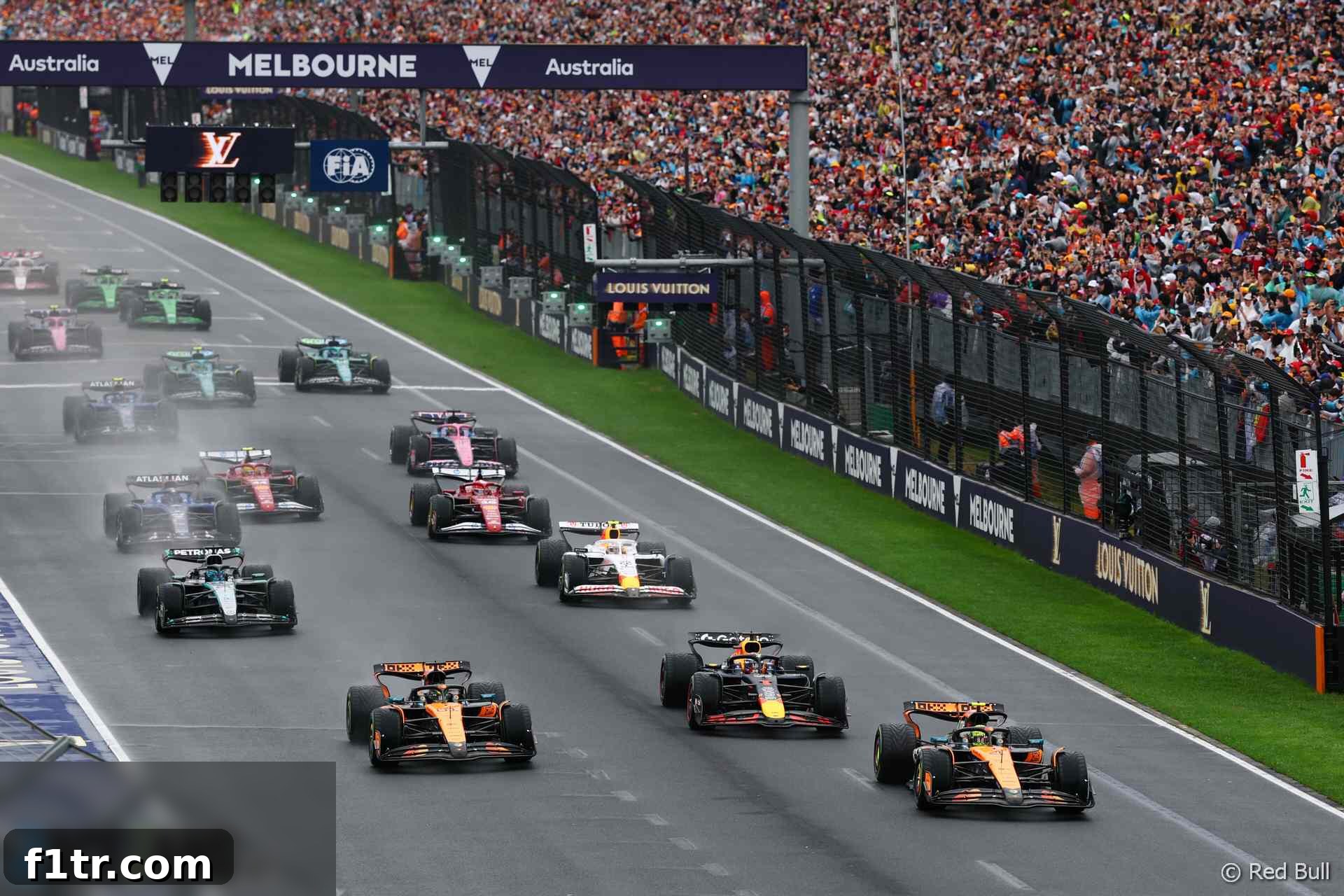
The highly anticipated 2026 Formula 1 season is poised to be a landmark year, ushering in an era of unprecedented change. Motorsport’s pinnacle series is undergoing its most radical transformation in over a decade, with sweeping revisions to both power unit regulations and chassis design. These changes are not merely incremental; they represent a fundamental rethinking of what a Formula 1 car looks and feels like, aiming to enhance racing, attract new manufacturers, and push the boundaries of automotive technology. Beyond the technical revolution, the grid itself is expanding, welcoming new contenders and promising a more vibrant and competitive championship.
For the first time since 2014, the very heart of the F1 car – its engine – has been completely re-envisioned. This audacious move opens the door for a seismic shift in the pecking order, reminiscent of Mercedes’ dominant entry into the hybrid era. Manufacturers now face the immense challenge and exciting opportunity to out-develop their rivals, potentially rewriting the competitive landscape for years to come. Complementing these engine innovations are drastic changes to chassis regulations, ensuring that the cars of 2026 will not only sound different but also exhibit distinct aerodynamic profiles and handling characteristics.
Adding another layer of excitement, the Formula One Management (FOM) has, after much deliberation, agreed to expand the grid. The addition of an 11th team means the paddock will swell to 22 cars, marking the largest line-up seen since Haas joined the championship a decade ago. This expansion signifies a growing appetite for the sport and provides more opportunities for drivers and engineers to compete at the highest level. As the 11 teams meticulously prepare to unleash this new breed of racing machines onto the 24 circuits that comprise the 2026 world championship, fans can anticipate a season filled with unexpected twists and thrilling developments.
The Engine Revolution: Powering the Future of F1
The 2026 power unit regulations stand as the cornerstone of Formula 1’s new direction, crafted with a dual purpose: to enhance sustainability and to entice new manufacturers into the sport. While the fundamental V6 hybrid turbo architecture remains, key components have been significantly altered. The internal combustion engine (ICE) and kinetic energy recovery system (MGU-K) largely carry over, but the thermal energy capture device, known as the MGU-H, has been completely removed. This deletion is a monumental shift, addressing concerns over the MGU-H’s immense complexity, exorbitant development costs, and its perceived lack of relevance to road car technology.
In place of the MGU-H, the emphasis has dramatically shifted towards electrical power. The amount of electrical energy teams can generate and deploy has been substantially increased, moving towards a 50/50 split between internal combustion and electrical power. This radical change is designed to make Formula 1 power units more efficient and environmentally friendly, aligning the sport with global automotive trends. However, this increased reliance on electrical energy presents a significant engineering challenge. There are legitimate concerns within the paddock that teams may struggle to recover sufficient electrical energy over a full lap, particularly at high-speed circuits like Monza and Las Vegas, where sustained high power output is crucial. Managing this energy deployment and recovery will become a critical differentiator, adding a fascinating strategic dimension to races.
The new regulations have largely succeeded in their mission to attract fresh blood. Audi’s full factory entry, Red Bull’s ambitious partnership with Ford, and Honda’s renewed commitment to Aston Martin are clear testaments to the appeal of the revised engine formula. This influx of manufacturers promises a heightened level of innovation and competition, as each seeks to gain a technical edge in this new era. Conversely, Renault’s decision to shutter its long-standing engine programme, opting instead for a customer Mercedes deal for Alpine, highlights the immense investment and strategic realignments required to compete under these stringent new rules.
A Growing Grid: New Teams and Shifting Alliances
The 2026 grid will feature a vibrant mix of continuity and change, with the entry of Cadillac marking a pivotal moment. Operating initially under the Andretti brand, Cadillac’s arrival is the headline change to the team line-up. With bases established at the historic Silverstone circuit in the UK and in Indianapolis, USA, this transatlantic operation underscores the global ambition of the team. Cadillac will commence its Formula 1 journey utilizing customer Ferrari power units, a pragmatic approach to gain immediate competitiveness. However, their long-term vision is clear: to introduce their own bespoke Cadillac power unit from 2029, showcasing a formidable commitment to the sport as a full-fledged manufacturer.
Under the stewardship of experienced team principal Graeme Lowden, Cadillac has strategically prioritized experience in its inaugural driver selection. The seasoned duo of Valtteri Bottas and Sergio Perez, both returning to the grid after a year on the sidelines in 2025, form the oldest driver line-up in the championship. This wealth of experience is invaluable, with the pair boasting a combined 527 Grand Prix starts and 16 victories. Their proven track records, which include driving for teams that collectively won every constructors’ championship between 2017 and 2023, will be instrumental in guiding the new team through its crucial formative years.
Another significant addition to the manufacturer roster is Audi, which has fully integrated the Swiss-based Sauber team. Audi will debut its own power unit, meticulously developed at its state-of-the-art facility in Neuburg, Germany. This represents a full factory effort, signaling Audi’s serious intent to challenge at the front. The team has opted for continuity in its driver line-up, retaining Nico Hulkenberg and the promising Gabriel Bortoleto, ensuring a blend of experience and youthful exuberance as they embark on this new chapter.
The Red Bull Racing family also faces a dramatic transformation. Their long and successful partnership with Honda-designed power units concludes, as Red Bull embarks on an ambitious and challenging engine project through its own Red Bull Powertrains division in Milton Keynes. While an initial tie-up with Porsche for 2026 did not materialize, Red Bull swiftly pivoted to forge a strategic alliance with Ford, leveraging the American giant’s extensive expertise in hybrid power unit development. This formidable Red Bull-Ford partnership will power the reigning champion, Max Verstappen, who will aim to extend his dominance into this new regulatory era. He will be joined by Isack Hadjar, who hopes to thrive in an environment that has proven challenging for previous teammates like Yuki Tsunoda, Liam Lawson, and Sergio Perez.
Red Bull’s sister team, Racing Bulls (formerly AlphaTauri/Visa Cash App RB), will similarly benefit from the new Red Bull-Ford power units. Their driver line-up features the experienced Liam Lawson alongside the sole rookie on the 2026 grid, Formula 2 graduate Arvid Lindblad. These are the only announced driver changes across the entire grid since the conclusion of the previous season, highlighting a general trend towards stability among the established teams amidst a period of widespread technical change.
Adding another layer to the engine manufacturer merry-go-round, Honda, despite announcing its fourth departure from F1 in 2020, makes yet another return. Their highly regarded power units will now be supplied exclusively to Aston Martin, signaling a serious push for the British team to achieve championship contention. This partnership brings together Honda’s engineering prowess with Aston Martin’s growing infrastructure and ambition, creating a potent combination.
Meanwhile, the French marque Renault has made the significant decision to shutter its longstanding engine program, which has been a part of Formula 1 for almost five decades. Alpine, Renault’s works team, will consequently transition to a customer Mercedes engine supply deal, a contract previously held by Aston Martin. This shift marks a notable change in strategy for the French outfit, likely driven by cost efficiencies and a desire to consolidate resources. Mercedes team principal Toto Wolff has already hinted that the number of teams supplied by the three-pointed star’s engines may be reduced after 2030, suggesting further strategic realignments within the sport in the coming years.
Revamped Race Calendar & Sprint Format Evolution
The 2026 Formula 1 calendar introduces several notable adjustments, most prominently the addition of a second Grand Prix in Spain, while sadly bidding farewell to Italy’s iconic Imola circuit. Imola, which made a welcome return to the calendar during the pandemic-affected 2020 season, steps aside to make way for a brand-new street circuit in Madrid. Known colloquially as the “Madring,” this exciting urban venue will host its inaugural Spanish Grand Prix towards the end of the European season, following F1’s traditional single visit to Monza, Italy.
The Circuit de Catalunya in Barcelona will retain its place on the calendar, maintaining its familiar slot from the previous season, though its official designation will now be the Barcelona-Catalunya Grand Prix. The championship will maintain a robust schedule of 24 Grand Prix races, complemented by six sprint events. However, the distribution of these sprint races has undergone a significant overhaul.
In previous seasons, sprint races were often clustered towards the end of the championship, with three of the final six rounds featuring the format. This arrangement was widely perceived as an attempt to prolong the championship battle. For 2026, F1 has drastically altered this approach, with none of the end-of-season rounds hosting sprint events. Instead, the focus shifts to new and varied venues, suggesting an experimental phase to broaden the appeal and test the format across different circuit characteristics.
Three venues will host sprint races for the very first time in 2026: the challenging street circuits of Montreal and Singapore, and the historic Zandvoort. Shanghai and Miami will continue to host sprint events, while Silverstone, a fan-favorite, makes a return to the sprint calendar, having last hosted one when the format was initially introduced in 2021. This strategic repositioning indicates F1’s ongoing commitment to the sprint format, despite mixed fan reactions and a persistent debate surrounding its effectiveness. It appears the sport is actively exploring different circuit types to optimize the sprint weekend experience, possibly with the long-term goal of integrating more sprint events into future seasons.
To provide teams with ample preparation time for such a monumental rules overhaul, Formula 1 has significantly increased the duration of pre-season testing. Five days of intensive running have been scheduled for the end of the current month at the familiar Circuit de Catalunya, a venue renowned for its comprehensive testing capabilities. This will be followed by two separate three-day tests at the Bahrain International Circuit during February, allowing teams to gather crucial data in different climatic conditions before the 2026 championship officially commences in Australia. This extended testing period is vital for teams to understand the nuanced behaviors of their new cars and to iron out any initial reliability or performance issues.
Chassis & Aerodynamic Innovation: Reshaping the Cars
The changes introduced for the 2026 Formula 1 season are truly far-reaching, encompassing both the revolutionary power unit regulations and a significant redesign of the chassis. This comprehensive overhaul aims to produce cars that are not only faster and more efficient but also promote closer and more exciting racing.
One of the most visually striking and functionally significant innovations is the introduction of active aerodynamics. For 2026, teams will be permitted to dynamically adjust the angle of their front and rear wings at specific points on the track. This groundbreaking technology allows cars to shed downforce when it’s not needed, such as on long straights, significantly reducing drag and maximizing top speed. This active aero system is a sophisticated departure from previous passive designs, demanding advanced control systems and intricate aerodynamic mapping. Its primary goal is to improve efficiency and straight-line performance, crucial for optimizing energy usage with the new power units.
This implementation of active aerodynamics has, by necessity, spelled the end for the Drag Reduction System (DRS). DRS, often considered a somewhat artificial aid to overtaking, had been a staple in F1 since 2011. While DRS is gone, F1 drivers will still have a proximity-based passing aid at their disposal. When a driver is within one second of the car ahead, they will be able to deploy an extra burst of electrical power, providing a temporary boost for overtaking maneuvers. This new system aims to facilitate closer racing and genuine overtaking opportunities, offering a more organic and skill-based advantage compared to the more straightforward ‘open wing’ mechanism of DRS. The strategic deployment of this “overtake boost” will add another layer of tactical depth to races.
In a concerted effort to make the cars nimbler, more agile, and ultimately more raceable, the FIA has also specified narrower and shorter maximum dimensions for the 2026 cars. Furthermore, the minimum weight limit for the cars has been reduced. These changes are designed to address concerns about the ever-increasing size and weight of modern F1 machinery, which has sometimes hindered close-quarters racing and made cars less responsive. While these changes are considered relatively modest in isolation, their combined effect, alongside the new power units and active aerodynamics, is intended to produce a generation of cars that are more responsive and provide a greater challenge for drivers. However, meeting the new, lower weight limit will present a significant engineering hurdle for all teams, potentially influencing design choices and material usage across the grid.
The synergy between these engine and chassis regulations is designed to create a completely new driving experience and a fresh spectacle for fans. From the sound of the more electrically-focused power units to the dynamic visual shifts of the active aero wings, and the enhanced agility of lighter, smaller cars, every aspect of Formula 1 is set for a dramatic evolution. The challenge for teams will be immense, but the potential rewards – a more sustainable, competitive, and thrilling sport – are even greater.
Team Preparations and Car Launches
In a year defined by such monumental regulatory changes, the unveiling of the 2026 Formula 1 cars carries exceptional weight. Unlike the previous season’s joint livery launch, “F1 75,” Formula One Management (FOM) has opted for teams to make their own arrangements to present their new machines. This decentralized approach allows each team to craft a unique narrative around their design philosophy and technical innovations for the upcoming season. However, it is widely understood that the designs showcased at these initial launches will merely be the starting point. Given the extensive nature of the rules overhaul, all car designs are anticipated to undergo significant evolution and refinement before the first Grand Prix of the season kicks off in March.
The intense development race behind the scenes is already in full swing, with engineers pushing boundaries to interpret the new regulations and extract every ounce of performance. These car launches serve as the first public glimpse into the myriad solutions and concepts that teams have devised. They are crucial moments for setting the tone for the season, generating excitement, and offering a peek into the strategic directions each constructor is taking. The anticipation is palpable, as fans and analysts alike eagerly await to see how each team has tackled the engineering puzzle of 2026.
The teams have announced the following eagerly awaited launch dates:
- 15th January: Red Bull and Racing Bulls Season Launch
- 20th January: Audi F1 Team Launch
- 23rd January: Ferrari Launch Event and Alpine Livery Launch
- 8th February: Cadillac Livery Launch
- 9th February: Aston Martin AMR26 Launch
Over to You: Shaping the Future of F1
The 2026 Formula 1 season represents a true inflection point for the sport. With revolutionary power unit regulations, innovative chassis designs, the return of major manufacturers, and an expanded grid, the stage is set for a truly transformative year. The success of these regulations will ultimately be judged on the quality of racing, the competitiveness of the field, and the sustainability credentials achieved. What are your expectations for this groundbreaking season? How do you believe F1 should measure the success of these radical changes? We invite you to share your thoughts and predictions in the comments below.
Formula 1
- Verstappen loathes F1’s new generation of cars – but what do his rivals reckon?
- The ‘throwback weekend’ is back in fashion. But it’s a flawed concept – especially for F1
- Is Formula 1’s double race cancellation a blessing in disguise?
- Todt admits Schumacher crashed on purpose – but did it really cost him two titles?
- 25 of the most memorable radio exchanges from the ‘Max and GP show’
Browse all Formula 1 articles