The opening race of the 2022 Formula 1 season in Bahrain delivered a stunning surprise as Haas F1 Team, long considered an underdog, clinched fifth place and a remarkable 10 points. This single evening’s performance outscored their combined tally from the previous 50 race weekends, a testament to their bold strategic decision to halt development on their 2021 car and pour all resources into the radically new 2022 regulations. This early success not only vindicated their choice but also signaled their potential return as a regular midfield contender after three challenging seasons.
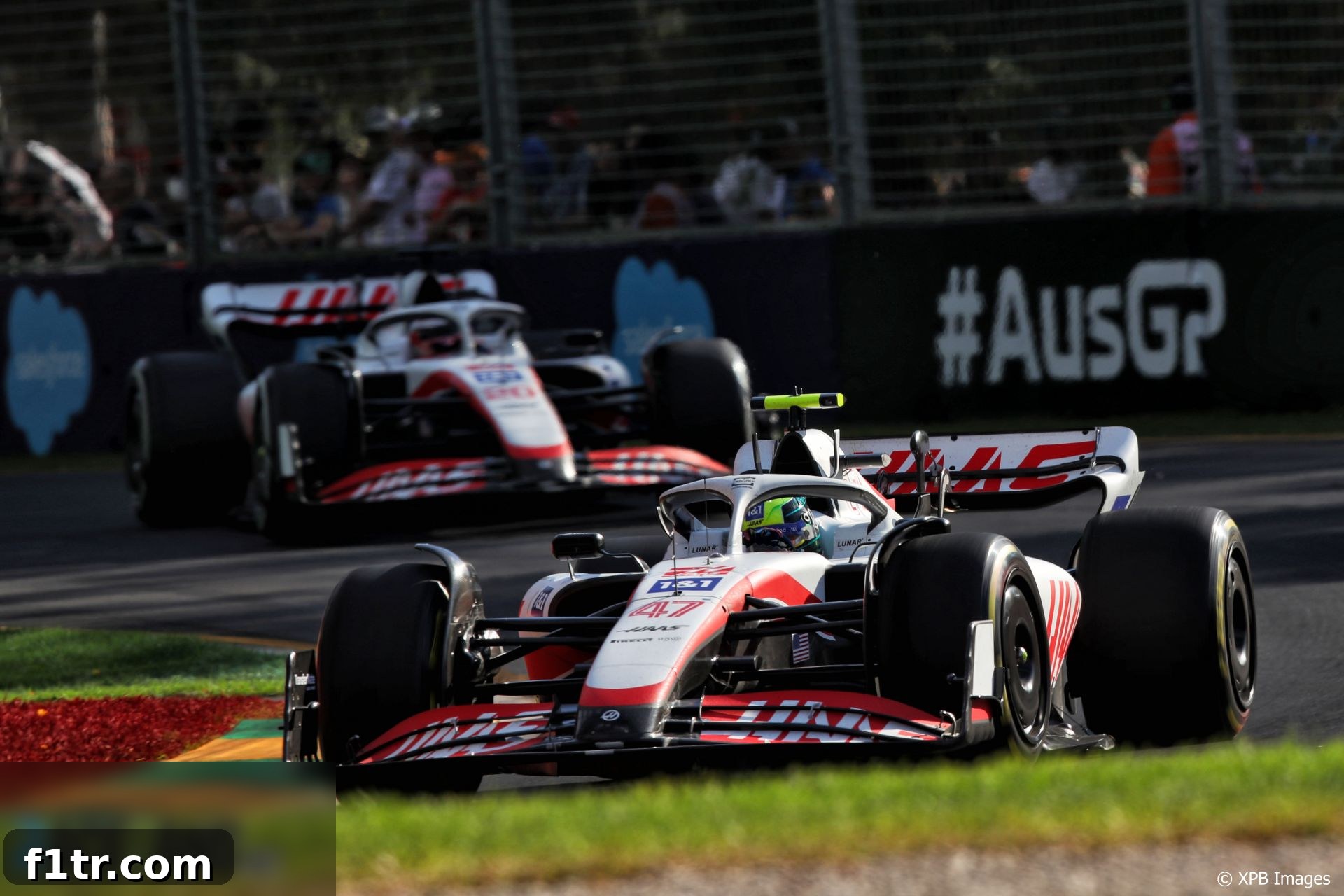
Following this triumph, Kevin Magnussen added another two points in Saudi Arabia, further cementing the team’s resurgence. However, the momentum appeared to dissipate under the Australian sun. In Melbourne, the VF-22 seemed to lose its competitive edge, with Magnussen qualifying 17th and Mick Schumacher 15th, before concluding the race in a disappointing 13th and 14th respectively. This stark contrast left many questioning: what precisely transpired with the VF-22 in Melbourne that caused its impressive pace from the initial two night races to seemingly vanish?
The Australian Anomaly: Unraveling Haas’s Pace Discrepancy
The sudden drop in performance was a puzzle even for the team. Kevin Magnussen, reflecting on the qualifying struggles, admitted, “Well, we’re still kind of working on trying to find answers for that. But I think we just didn’t really nail the start setup for this track.” His candid assessment highlighted the intricate challenges presented by the 2022 cars.
The Sensitive Nature of the 2022 Ground Effect Cars
The 2022 regulations introduced sweeping changes to Formula 1, most notably the return of ground effect aerodynamics and the adoption of new 18-inch wheels. These innovations were designed to promote closer racing but also made the cars exceptionally sensitive to setup. Teams quickly learned that finding the optimal performance window was a delicate balancing act, and even minor deviations could significantly impact lap times and tire performance. Haas, like others, found themselves navigating this new frontier, where precision in setup was paramount.
Albert Park’s Radical Transformation: More Impactful Than Anticipated
Adding another layer of complexity was the major reworking of the Albert Park circuit. For the first time since 2019, Formula 1 returned to a significantly altered layout, designed to increase average lap speeds by well over 10km/h and create more overtaking opportunities. While teams prepared for these changes, Haas quickly discovered their impact was more profound than initially expected. Magnussen elaborated, “It was a bit different to what we expected. We, I guess, expected it to be kind of similar to the old track, but it’s actually fairly different. And I just think we missed the starting setup and then had a pretty long way to go to get to a good spot with the car.” The team simply couldn’t adapt their initial setup philosophy to the revised characteristics of the track.
Friday Frustrations and Qualifying Woes
The struggles began early in the weekend. On Friday, after Magnussen reported not feeling well, Haas completed their full practice program. What they learned was concerning: the car was difficult to get into its optimal performance window. The balance issues were particularly pronounced in low-fuel conditions, which are critical for qualifying pace, compared to the more stable feel in race trim with a heavy fuel load. Haas ended Friday ranked a dismal 16th and 18th overall, a stark contrast to their early season form.
With only an hour of additional practice available, it proved insufficient for Haas to fully resolve their balance issues. The qualifying session itself devolved into a chaotic affair, further hindering their efforts. Red flags punctuated the session, disrupting flying laps and strategic timings. Magnussen was eliminated in Q1 for the first time since his return to the sport, a significant setback. Schumacher, while managing to scrape into Q2, found himself at the bottom of the timesheets in the second phase, highlighting the car’s inherent lack of pace. “Qualifying was a mess with the red flag and all that just hit us in a bad spot and then I was out in Q1, so that’s a bummer,” Magnussen stated, though he remained cautiously optimistic about the team’s ability to “move forward” in the race. Schumacher echoed this sentiment, believing their Sunday pace would be an improvement after a “poor Friday.”
Race Day: A Battle Against Inconsistency and Driver Errors
The start of the race offered a glimmer of hope for Haas. Mick Schumacher impressively gained a position and then capitalized on Carlos Sainz Jnr’s poor start on hard tires to pass the Ferrari. Kevin Magnussen, also on hard tires, executed a clean overtake on Zhou Guanyu, moving into 14th, just behind his teammate. However, the underlying balance problems that had plagued the VF-22 during practice and qualifying soon began to resurface at the most critical juncture of the weekend.
As the race progressed, the car’s inconsistent handling became more apparent. On lap 12, Schumacher ran wide on the exit of the fast chicane at Turn 10, allowing Magnussen to pass. Shortly after, Zhou Guanyu also made his way past Schumacher on the exit of Turn 11. Just a few laps later, Magnussen himself encountered trouble, running off the circuit into Turn 9. While he skillfully cut across the grass and avoided Sainz’s earlier gravelly fate, the excursion cost him 13th place to Zhou. His race engineer inquired, “All okay, Kev?”, to which Magnussen replied apologetically, “Yeah, my bad. Sorry.” These incidents underscored the difficulty the drivers faced in managing a car that was clearly not performing optimally.
The race continued with strategic maneuvers and further challenges. Under a Virtual Safety Car period triggered by Max Verstappen’s retirement, Magnussen pitted for medium tires, returning to the track and subsequently passing Nicholas Latifi and Yuki Tsunoda. Meanwhile, Schumacher was overtaken by Fernando Alonso’s Alpine, leaving Zhou sandwiched between the two Haas drivers. As the laps dwindled, Alonso’s medium tires began to grain severely, bringing Schumacher right up behind the slowing Alpine. However, a half-hearted attempt to pass on the run to Turn 1 resulted in Schumacher locking up and running wide, allowing Zhou to pass him for a second time. Magnussen then skillfully slipped past Alonso on the way to Turn 3. Yet, Magnussen’s own medium tires began to fade, creating another dynamic. On lap 56, Schumacher, benefiting from the slipstream, passed his teammate on the run to Turn 3, with Magnussen graciously not holding up the younger driver. The team principal, Gary Gannon, informed Schumacher after the checkered flag, “So we’re P13. Kevin, P14.” Schumacher, still reflecting on his performance, offered, “Sorry for all the mistakes,” to which Gannon reassuringly replied, “It’s okay man. We’re learning every race.”
Reflections and the Road Ahead for Haas
Despite the challenging weekend where the team clearly missed the mark both in the garage with setup and on the track with execution, Team Principal Guenther Steiner remained remarkably magnanimous about Haas’s fortunes. “It didn’t work out as we planned,” Steiner acknowledged. “The car was strong and the drivers did a good job, so we know if we qualify better we can score points, and that is what we keep on trying to do. As I always say, this year we’ve got a car that can score points, we’ve just had a difficult weekend. It’s one of three which was difficult, here we go again in Imola.” His unwavering confidence in the VF-22’s potential, despite the Australian blip, was evident.
Mick Schumacher, while less certain about the exact root causes of the team’s lack of pace in Australia, expressed confidence that they would thoroughly analyze the data and arrive at solutions before the next race. “I think that there’s still some stuff that we need to understand, I’m not 100 percent sure about why we are where we are right now,” Schumacher admitted. “But it’s down to us to analyze it, to understand it and just bounce back in Imola, hopefully. Right now the main priority is to figure out why we are where we are.” His focus was clearly on methodical problem-solving and a stronger showing at the upcoming Grand Prix.
For Kevin Magnussen, the conclusions to be drawn from the Australian Grand Prix weekend were notably clearer. The event served as a stark demonstration of just how sensitive these new 2022 ground effect cars are to setup and the crucial process of unlocking optimal tire performance. Magnussen highlighted that a failure to get either of these critical factors into the correct operating range early in the weekend inevitably leads to a difficult and unrewarding race. This was an important lesson, particularly significant given that the next event in Imola would be the first sprint weekend of the season, meaning only a single practice session before qualifying. This drastically reduced preparation time underscores the importance of starting a weekend with a strong baseline setup.
Comparing the weekends, Magnussen explained, “In Jeddah, the car we put on track was good, we were in the right window with the car for that track and I just had to kind of get up to speed. We didn’t really need to do any big changes to the car. Whereas this weekend it’s been a different story. We haven’t started in the same way as we did in Bahrain and Jeddah. I think with the field this year, if you miss your window a little bit, you’ll see it very visibly in the standings because it’s closer this year. So I’m not panicking.” His calm assessment reflected an understanding that while the Australian outing was disappointing, it wasn’t indicative of a fundamental flaw in the VF-22, but rather a misstep in adapting to a unique set of circumstances.
The Australian Grand Prix, while a setback, served as a crucial learning experience for Haas. It highlighted the unforgiving nature of the 2022 regulations and the fierce competitiveness of the midfield. The team’s ability to analyze, adapt, and return to form in Imola would be a true test of their newfound potential and resilience. Their initial success in Bahrain proved the car’s capability; the challenge now lies in consistently finding that sweet spot across varied circuits and conditions. Haas’s journey in the 2022 season promised to be one of intriguing highs and intense learning curves.
2022 F1 season
- Mercedes told me “you’re wrong” about 2022 car’s problems – Hamilton
- FIA confirms all 10 F1 teams complied with 2022 cost cap
- Steiner “not ashamed” of panning “slow” Schumacher in Drive to Survive
- Albon believes year out of F1 improved him as a driver
- Hamilton sees diversity gains in F1 years on from his ‘traumatising’ experience of racism
Browse all 2022 F1 season articles